
Game Developers Conference
Game Developers Conference (GDC, now the GDC Festival of Gaming) is the professional event for the games industry. It publishes recorded talks and interviews, annual industry survey reports such as the State of the Game Industry, and news articles.
Documents

What Do We Mean When We Say Indiepocalypse?
The term "Indiepocalypse" describes a natural economic market correction rather than a catastrophic industry collapse.
- The 'Indiepocalypse' is an economic market correction caused by a supply surge that has outpaced consumer demand, ending the era of easy success for indie developers.
- Market saturation is driven by lowered barriers to entry, forcing new releases to compete directly against a massive backlog of discounted legacy titles.
- Because consumers are constrained by time rather than capital, success now favors games that are radically unique, highly shareable, or streamer-friendly.
Sid Meier's Psychology of Game Design
Game design functions primarily as a psychological contract between the developer and the player, defined by an unholy alliance where the designer empowers the user while the player suspends disbelief.
- Game design is a psychological contract where designers must prioritize the player's sense of agency and emotional journey over strict realism or mathematical logic.
- Designers should foster player competence by providing early rewards and managing setbacks to ensure challenges feel fair and surmountable.
- To optimize development costs and immersion, designers should leverage existing player imagination and established tropes instead of relying on excessive exposition or high-cost assets.
Less is More: Designing Awesome AI for Games
The primary objective of game artificial intelligence is to support the core player experience by creating believable, rather than technically brilliant, characters.
- Game AI should prioritize believability over technical complexity, as players naturally anthropomorphize behavior and fill in narrative gaps.
- Over-engineering AI systems often leads to the 'uncanny valley,' where minor inconsistencies in complex logic break player immersion.
- Effective AI design treats behavior as a perception problem, utilizing simple tools like ray-casting and basic state machines to align with the player's mental model.
Made Out Of Meat: Health Systems In Video Games
Video games frequently rely on abstract hit-point systems that reduce characters to indestructible vessels, effectively ignoring the nuances of human fragility.
- Game health systems can be categorized into three tiers: abstraction (a single HP bar), simplification (tracking damage to specific body parts, as seen in the roguelike 'Ivan'), and simulation (integrating physical damage into the laws of the game world).
- Moving beyond basic HP bars to limb-based damage systems introduces meaningful, lasting consequences that force players to adapt their playstyle, such as losing an arm to prevent off-hand equipment usage or losing legs to alter movement mechanics.
- The human physical experience is defined by the interplay of fragility, resilience, and the ability to adapt; games that incorporate these elements create more compelling challenges than those relying on 'Superman-style' invulnerability.

The Early Days of id Software
The founding of id Software marked a pivotal shift in PC gaming, driven by a breakthrough in smooth, pixel-by-pixel scrolling that enabled the creation of the Commander Keen trilogy.
- Between the early 1990s and mid-1990s, id Software produced 28 games in five and a half years, including industry-defining titles like Wolfenstein 3D, Doom, and Quake.
- The studio pioneered the modern game engine licensing model, which was catalyzed by a technical breakthrough in smooth, pixel-by-pixel scrolling used in the Commander Keen trilogy.
- Development efficiency was maintained by a strict policy of not reusing code between major projects, ensuring every title was built on a fresh, optimized foundation.
Building a Paper Prototype For Your Narrative Design
Narrative paper prototyping functions as a critical, low-risk methodology for validating a game’s core premise, structural integrity, and player agency before initiating expensive digital development.
- Paper prototyping validates a game's narrative structure, pacing, and player agency before committing to expensive digital development.
- Treating a narrative outline as a board game allows designers to test the hero’s journey and decision-making mechanics without technical implementation.
- The prototyping process requires defining the player’s role, primary goals, central conflicts, and available resources using simple, disposable materials.

You Don't Need a F-ing Publisher
The modern gaming landscape has fundamentally shifted, rendering traditional publishing agreements optional rather than mandatory.
- Traditional publishing agreements are no longer mandatory, as digital distribution platforms now provide developers with direct access to global markets.
- Developers should only engage a publisher if the partner provides specialized value or strategic reach that demonstrably exceeds the studio's independent capabilities.
- Due diligence must include interviewing developers of the publisher's past underperforming projects to assess how the partner handles adversity and maintains professional integrity.
A Geographer's Guide to Building Game Worlds
Successful world-building in the gaming industry relies on the principle of realization, which prioritizes narrative cohesion and logical consistency over exhaustive, hyper-realistic detail.
- Effective world-building prioritizes narrative cohesion and internal logical consistency over exhaustive, hyper-realistic detail to maintain player immersion.
- Every environmental element must serve an intentional narrative purpose to avoid the immersion-breaking effects of arbitrary asset placement or backfilling.
- Developers must conduct rigorous cultural forensics and consult local experts to avoid the legal, financial, and reputational risks associated with cultural generalization or unintended allegories.
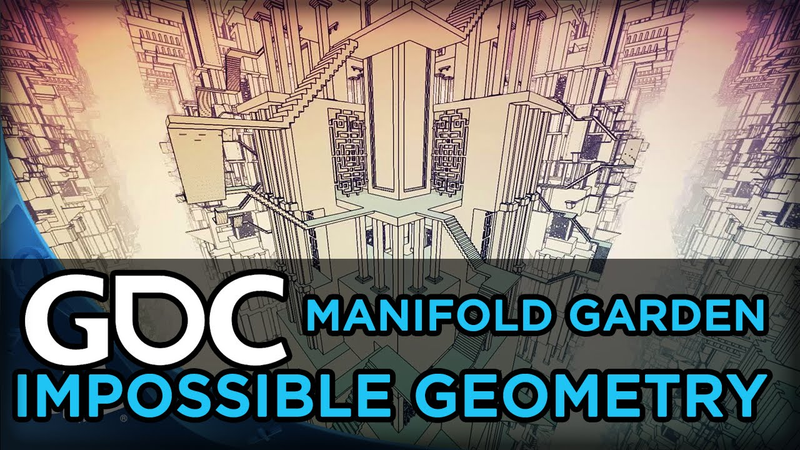
Manifold Garden: Level Design in Impossible Geometry
Manifold Garden redefines spatial navigation in puzzle-exploration games by integrating impossible geometry through a three-torus structure.
- Manifold Garden utilizes a three-torus mathematical structure to create an infinitely repeating world, effectively removing the need for traditional level boundaries or invisible walls.
- The game replaces standard navigation with gravity-shifting mechanics and continuous loops, forcing players to rely on the architecture itself as the primary navigational tool.
- To prevent player disorientation in non-Euclidean spaces, the design uses a dual-layered approach: macro-level iconic architecture for progression and micro-level repetitive patterns for visual cues.
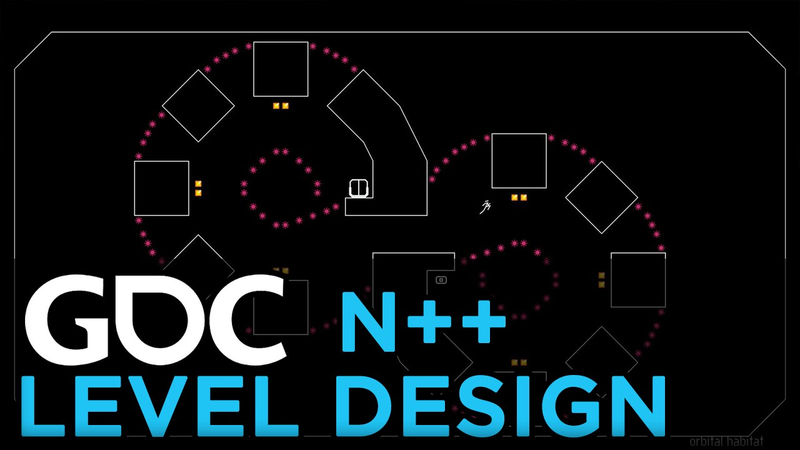
Empowering the Player: Level Design in N++
The design philosophy behind N++ centers on the seamless integration of a high-inertia, momentum-based physics model with precisely crafted environmental constraints.
- N++ utilizes a standardized 44-by-23 tile grid optimized for 720p displays to ensure a consistent, performance-driven platforming experience.
- The game’s design philosophy centers on a high-inertia, momentum-based physics model where environmental geometry functions as a canvas for player-driven problem-solving.
- Level production is managed through a version-controlled archive of level fragments, allowing developers to revert iterations and avoid over-cluttering during the polishing phase.
Practical Law 101 For Indie Developers: Not Scary Edition
Independent game developers must prioritize the establishment of formal corporate entities to shield personal assets and centralize intellectual property ownership.
- Establish a formal corporate entity immediately to centralize intellectual property ownership and provide a liability shield for personal assets.
- Use written work-for-hire and publishing agreements to define project scope, payment terms, and exit strategies, preventing disputes and ensuring creative work is legally owned by the studio.
- Secure brand identity through federal trademark registration before product launch, as copyright protection does not extend to abstract game mechanics.
The Witcher 3: Optimizing Content Pipelines for Open-World Games
Managing content optimization in large-scale open-world games requires robust, scalable systems to address the accumulation of inefficient assets, such as high-polygon models, missing level-of-detail (LOD) meshes, and misplaced entities.
- Managing 500,000 placed entities in an open-world environment requires a custom, database-driven pipeline to identify and resolve technical errors like excessive vertex counts and improper asset placement.
- Developers can effectively track and resolve performance bottlenecks by querying engine properties—such as mesh size, material usage, and light radius—directly from the game build into an SQL database.
- Visualizing technical debt by mapping errors onto 4K images of the game world allows artists and designers to teleport directly to specific coordinates, significantly increasing workflow efficiency compared to traditional spreadsheet-based tracking.