
Game Developers Conference
Game Developers Conference (GDC, now the GDC Festival of Gaming) is the professional event for the games industry. It publishes recorded talks and interviews, annual industry survey reports such as the State of the Game Industry, and news articles.
Documents
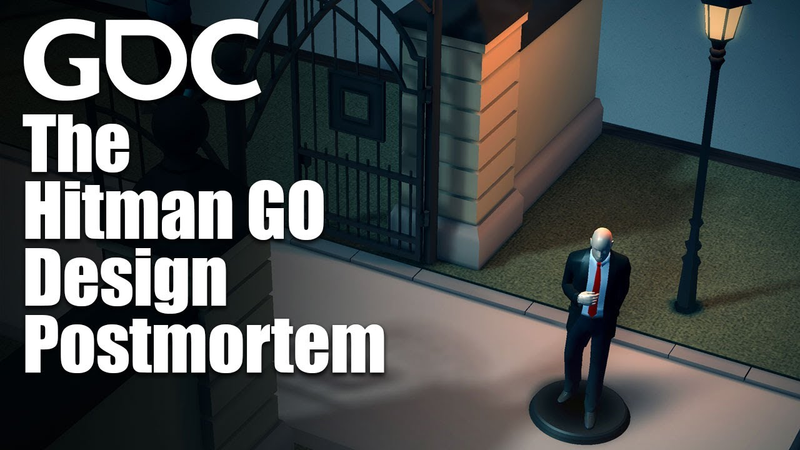
The Hitman GO Design Postmortem
The transition of Square Enix Montreal from cancelled AAA console development to mobile production necessitated a strategic pivot that prioritized creative incubation and brand adaptation.
- Square Enix Montreal developed Hitman GO within a six-month production window by utilizing a small, agile team and an incubation process that allowed staff to propose mobile-first concepts for established brands.
- The core gameplay mechanics were prototyped in just two weeks, focusing on turn-based strategy and diorama-style visuals to differentiate the title from traditional AAA stealth games.
- The team adopted a 'bottom-up' design philosophy, embracing unconventional ideas and constraints—such as the board game aesthetic—to solve the challenge of adapting a complex franchise for mobile platforms.
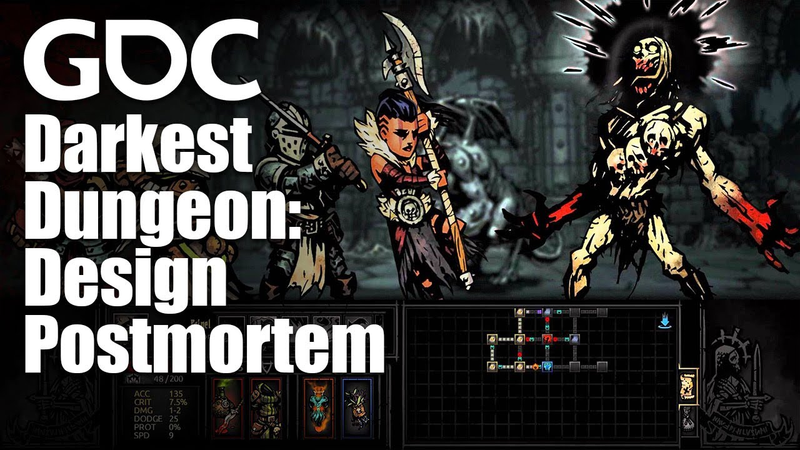
Darkest Dungeon: A Design Postmortem
Darkest Dungeon centers on the philosophy that the human experience of adventuring is defined by psychological trauma and permanent consequences rather than traditional power fantasies.
- Darkest Dungeon features approximately 70,000 words of text to support its Affliction system, which includes 15 character classes, seven distinct afflictions, and four virtues to simulate human emotional responses.
- The developers intentionally designed the game to prioritize the 'sword arm' over the 'sword,' focusing on the psychological state of heroes rather than traditional RPG power fantasies to create moments of triumph through the possibility of failure.
- The 'corpse' mechanic, introduced during Early Access to eliminate dominant combat strategies, caused significant player backlash because it was implemented as a major gameplay change that altered the experience for existing customers.
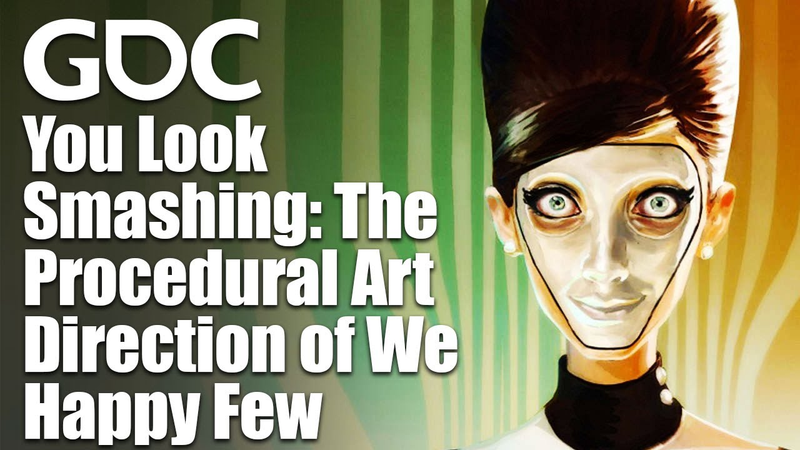
You Look Smashing: The Procedural Art Direction of We Happy Few
We Happy Few explores the psychological tension of a dystopian 1960s England, where a society maintains forced, drug-induced happiness to suppress collective trauma.
- Compulsion Games utilized a hybrid approach for 'We Happy Few,' combining procedural generation for road layouts, island geometry, and filler buildings with handcrafted interiors to ensure high-fidelity narrative and gameplay spaces.
- The art direction was built on three core pillars: conformity, paranoia, and suspicion, drawing inspiration from the British sitcom 'Keeping Up Appearances' and the film 'Hot Fuzz' rather than conventional gaming tropes.
- Procedural systems introduced significant environmental composition challenges, such as unnatural gaps between buildings and repetitive block patterns, which required extensive playtesting and the implementation of specific placement rules to resolve.
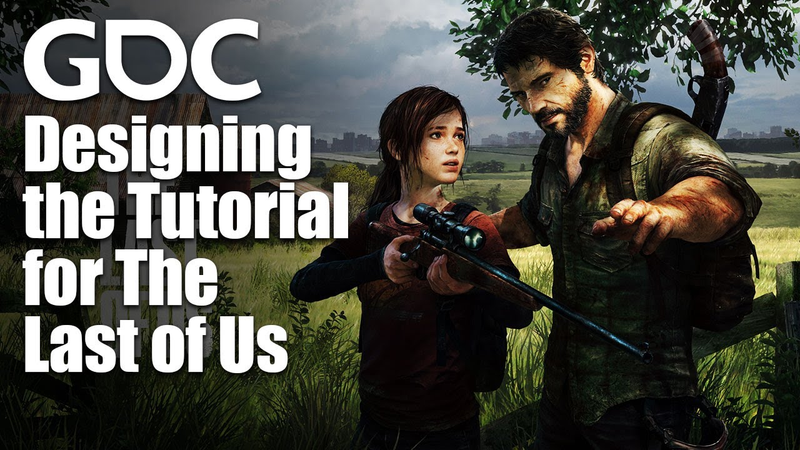
Designing the Tutorial for The Last of Us
Professional adaptability and a commitment to continuous learning are essential for navigating the complexities of modern game development.
- Effective combat tutorials should prioritize spatial design and companion modeling over intrusive, text-heavy prompts to teach complex mechanics.
- Designers improved AI performance and player agency in The Last of Us by shifting from cramped environments to more open, flexible layouts.
- Companion characters serve as vital teaching tools by actively modeling stealth behaviors and guiding players through combat systems.
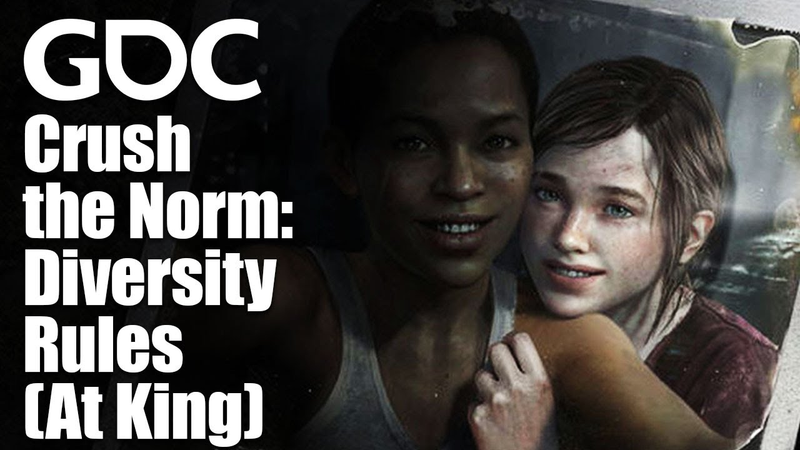
Crush the Norm: Diversity Rules (At King)
Game development requires a fundamental shift in character creation, moving away from reliance on traditional stereotypes toward a process that prioritizes personality and narrative depth before defining physical attributes.
- King has spent the last 18 months embedding a diversity mapping framework into its development pipeline to systematically move character design away from traditional Western stereotypes.
- The diversity mapping framework functions as an analytical tool that benchmarks character rosters against industry norms to identify and mitigate biases like the centering of whiteness and uniform body types.
- Effective character creation requires prioritizing personality and narrative depth before defining physical attributes to ensure more inclusive and original global representation.
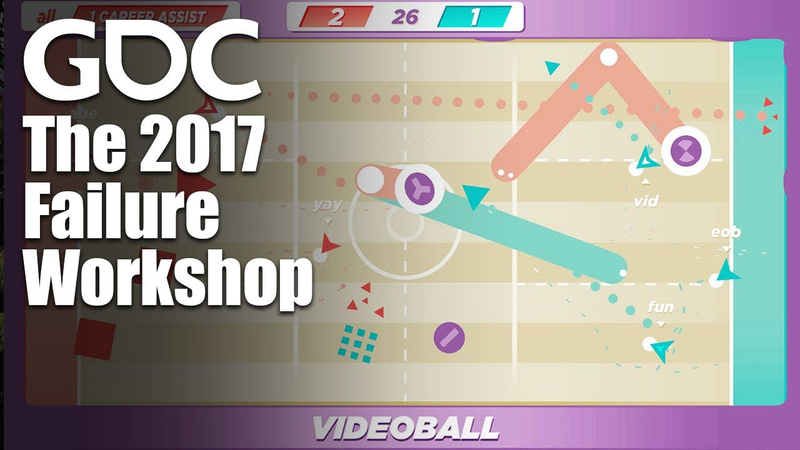
The 2017 Failure Workshop
The 2017 Failure Workshop examines the systemic operational and strategic pitfalls that lead to the collapse of independent game studios and projects.
- Excessive feature creep and over-scoping are the primary drivers of studio failure, as demonstrated by the collapse of projects like CityStream and Video Ball.
- Technical innovation and critical acclaim cannot compensate for poor business planning or structural instability, as evidenced by the dissolution of the Dutch studio Game Oven.
- Forcing an artificial e-sports identity and unnecessary cross-platform complexity, as seen in Video Ball, dilutes the core user experience and confuses the target audience.
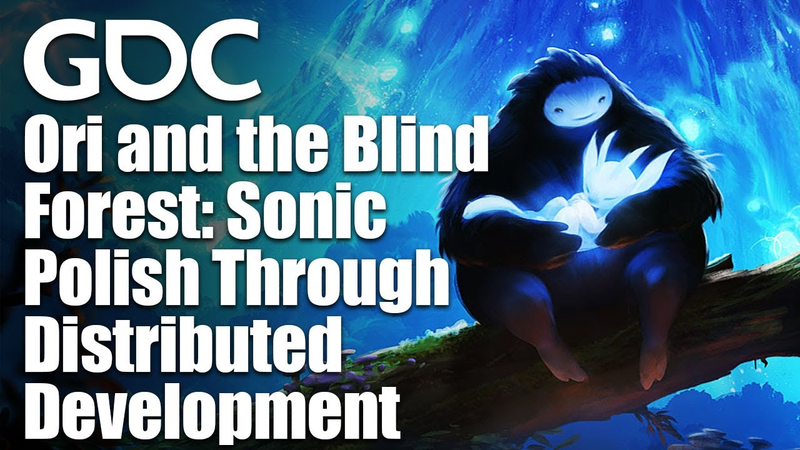
Ori and the Blind Forest: Sonic Polish Through Distributed Development
The development of Ori and the Blind Forest demonstrates that high-quality, immersive game design can be achieved through a decentralized, flat organizational structure rather than traditional hierarchical management.
- Moon Studios operated with a flat organizational structure, removing traditional management layers and placing the responsibility for resource management and project success on every individual team member.
- In the absence of formal management, the team resolved creative conflicts through a process where issues were addressed until everyone reached consensus, the dissenting party conceded, or the project deadline forced a final decision.
- The 'Ori and the Blind Forest' audio team avoided repetitive, gimmicky combat stingers by opting for a non-trigger-based music system, allowing for longer, more cohesive melodies that maintained player immersion over the 8-to-10-hour experience.
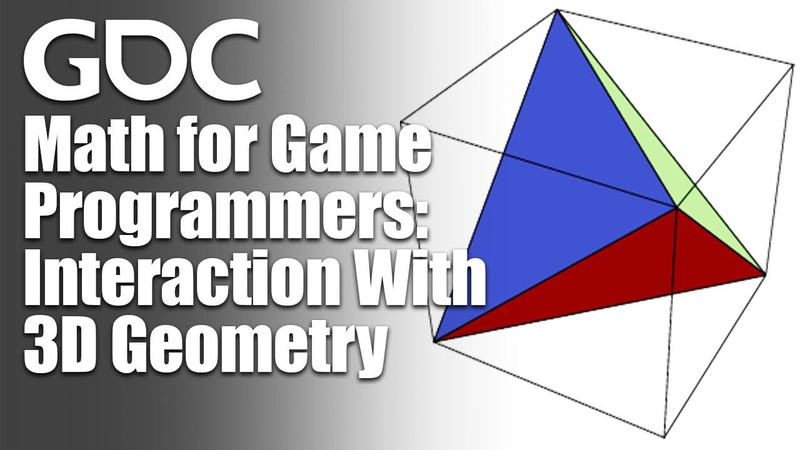
Math for Game Programmers: Interaction With 3D Geometry
Effective 3D game development relies on a rigorous application of vector arithmetic, including dot and cross products, to manage lighting, navigation, and collision detection.
- Achieving stable physics simulations requires moving beyond forward Euler integration, which often introduces energy gain, in favor of Runge-Kutta methods for rigid bodies and implicit integration for soft-body systems.
- Complex physics engines rely on Jacobians and simultaneous equation solving to maintain stability and prevent simulation collapse during high-fidelity interactions.
- Tetrahedron summation is the preferred method for calculating volume, center of mass, and inertia tensors, providing more realistic object movement than simple bounding boxes.
The Design of Time: Understanding Human Attention and Economies of Engagement
Human attention serves as the primary currency in the modern digital landscape, necessitating a fundamental shift in how developers approach game design.
- Game designers must shift from aggressive engagement tactics to models prioritizing player autonomy and long-term psychological well-being to avoid the diminishing returns caused by player normalization of repetitive stimuli.
- Sustainable engagement is achieved by engineering social ecosystems that foster community interaction and collective investment rather than relying on superficial retention metrics.
- Designers should implement varied temporal rhythms, such as daily rituals and multi-year objectives, to cultivate anticipation and habituation that feels rewarding rather than coercive.
BioShock Infinite: Scoring in the Sky, a Postmortem
The musical direction for BioShock Infinite represents a deliberate departure from the grand, large-scale orchestral scores characteristic of the series' predecessors.
- The score moved away from traditional large-scale orchestral arrangements in favor of a minimalist ten-piece string ensemble to emphasize emotional intimacy and character-driven narrative.
- The composition utilized aleatoric writing and unquantized performances to create organic, visceral textures that reflect the game's 1912 setting and its underlying dystopian themes.
- A recurring open-fifth motif was implemented as a foundational anchor to symbolically represent the core narrative themes of infinity and time.
Seven Years in Alpha: The Thumper Postmortem
The development of Thumper represents a seven-year journey by a two-person team to redefine the rhythm genre through a concept termed rhythm violence.
- Building a custom engine allowed the two-person team to achieve native 4K resolution at 60 frames per second on PS4 Pro while meeting the strict performance requirements of virtual reality.
- The developers bypassed the overhead of object-oriented abstractions and garbage collection by utilizing lean technical architecture, specifically stack and pool allocators.
- Custom tools, including bespoke vertex shaders for track deformation and URL-based object linking, proved more effective for the game's specific aesthetic than general-purpose engines.

Epic and Interactive Music in Final Fantasy XV
The development of Final Fantasy XV required a sophisticated approach to interactive audio, necessitating the creation of the proprietary Magni system to bridge the gap between traditional, melody-driven orchestral scores and dynamic gameplay.
- Square Enix developed a proprietary tool called Maggie (Music API Gate for Gaming Interaction) to maintain the melodic integrity of Final Fantasy XV's orchestral score while enabling seamless, interactive transitions.
- The system utilizes 'vertical remixing' through mode transitions, which control layer volumes, pitch, and low-pass filters to adjust music based on player actions and environmental triggers.
- To ensure musical transitions feel natural rather than like simple cross-fades, the system synchronizes changes with musical accents, sometimes requiring a wait of up to two bars to maintain rhythmic coherence.