
Game Developers Conference
Game Developers Conference (GDC, now the GDC Festival of Gaming) is the professional event for the games industry. It publishes recorded talks and interviews, annual industry survey reports such as the State of the Game Industry, and news articles.
Documents
Automated Testing and Instant Replays in Retro City Rampage
The development of Retro City Rampage demonstrates the efficacy of a deterministic game engine architecture in streamlining quality assurance and feature implementation.
- Implementing a deterministic game engine architecture by prioritizing input recording over state logging enables high-efficiency file sizes for features like instant replays and leaderboard playback.
- Deterministic design allows for automated cross-platform testing and precise bug reproduction, significantly reducing the time and labor required for manual quality assurance cycles.
- Achieving determinism requires decoupling the game loop from rendering processes, utilizing fixed update loops, and enforcing strict state sandboxing to ensure consistent gameplay across different hardware.

Playtesting: Avoiding Evil Data
Effective game design relies on the ability to distinguish between genuine usability friction and misleading feedback, often categorized as evil data.
- Prioritize observed player behavior over subjective player-suggested solutions to avoid 'evil data' that can compromise core design integrity.
- Conduct playtesting through direct, firsthand observation in environments that mirror the intended final context rather than relying on surveys or secondhand reports.
- Observe players without providing external guidance or instructions to identify authentic interaction patterns and the root causes of usability bottlenecks.

Shigeru Miyamoto's 1999 GDC Keynote
The evolution of interactive entertainment necessitates a fundamental shift in how developers approach game design, moving away from purely technical engineering toward a discipline that balances artistic vision with hardware constraints.
- Game developers must balance artistic vision with a granular understanding of hardware constraints, such as memory maps and processing limitations, to ensure concepts are realistically implementable.
- Prioritizing functional, engaging gameplay over graphical fidelity or narrative complexity is essential to avoid common development pitfalls.
- The development of The Legend of Zelda: Ocarina of Time utilized a modular team structure to conduct targeted experiments in 3D movement, camera systems, and real-time processing.
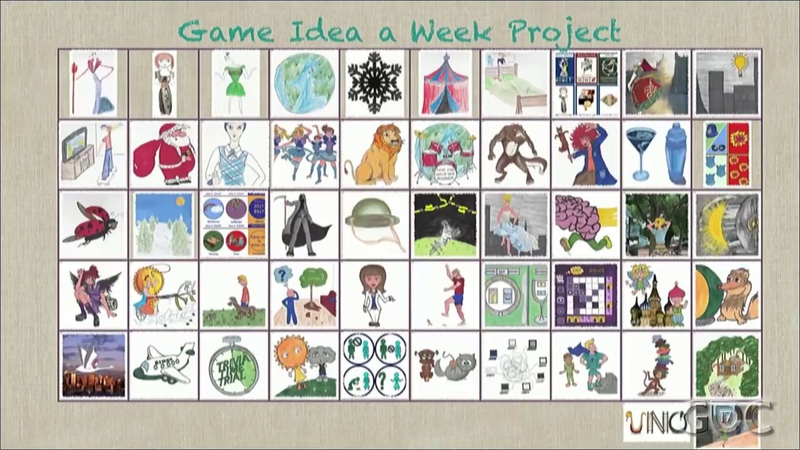
Friendship, Curiosity & Challenge: Focusing Your Career as an Indie Dev
The career of an independent game developer is often defined by a lack of structure, which can lead to professional stagnation or burnout.
- Independent developers should define a concise set of three core values to serve as a decision-making framework, preventing professional stagnation and burnout caused by a lack of structure.
- Core values act as a filter for all professional activities, including feature implementation, marketing strategies, project selection, and team collaboration.
- When evaluating potential projects or features, developers should discard any options that do not align with their established core values to ensure resources are focused on personally fulfilling work.
An Approach to Holistic Level Design
Holistic level design functions as a synthesis of gameplay, visual presentation, and narrative, moving beyond the traditional practice of treating these elements as isolated, additive components.
- Holistic level design integrates gameplay, visual presentation, and narrative into a unified system rather than treating them as isolated, additive components.
- Designers should prioritize player intentionality by using environmental affordances and consistent visual language to guide goal-oriented decisions instead of relying on explicit tutorials.
- World-building becomes a driver for engagement when environmental details, loot, and NPCs are specifically crafted to reflect core narrative themes and power dynamics.
Level Design Workshop: Singleplayer vs. Multiplayer Level Design: A Paradigm Shift
Designing effective game environments requires a fundamental shift in priorities depending on whether the experience is intended for single-player narrative exploration or competitive multiplayer engagement.
- Single-player level design focuses on immersive storytelling and guiding players through narrative beats using visual landmarks known as 'weenies'.
- Multiplayer level design prioritizes competitive integrity and movement fluidity, requiring rigorous management of sightlines to ensure fair outcomes.
- Asymmetrical layouts are preferred over strict symmetry in multiplayer design to improve map readability and player orientation.
The Power of the Abstract
The pursuit of hyper-realistic graphics and standardized polish often limits the expressive potential of digital games, obscuring the medium’s capacity to communicate complex human emotions.
- Prioritizing hyper-realistic graphics often limits a game's ability to communicate complex human emotions and psychological states.
- Abstraction serves as a more effective design tool than representational accuracy for conveying surreal narratives and fostering meditative, intellectually challenging experiences.
- Designers are utilizing glitch aesthetics, subverted spatial logic, and mechanical dissonance to create 'anti-games' that prioritize emotional resonance over technical fidelity.

The Rain World Animation Process
The animation process for the indie game Rain World centers on the use of procedural animation to create a believable, autonomous ecosystem.
- Rain World utilizes a procedural animation system that separates physics simulations from cosmetic visuals, allowing for performance efficiency and easier tuning of creature behaviors.
- The game’s AI and animation are deeply integrated, where locomotion is driven by pathfinding algorithms that treat creatures as physics objects moving toward destinations in a tile-based environment.
- Creature personality is an emergent property of the game's systems; by making AI motivations and environmental interactions visible to the player, users project intent and personality onto non-scripted behaviors.
Halo 4: Content Performance Tips & Techniques
Maintaining a consistent 30 frames per second on the Xbox 360 hardware required a rigorous, performance-driven workflow that balanced high-fidelity visual goals with strict technical constraints.
- Maintaining a consistent 30 FPS on Xbox 360 hardware required establishing strict per-mission frame budgets and using diagnostic tools like heat maps, debug view frustum analysis, and PIX timing captures to identify CPU and render thread bottlenecks.
- GPU load was reduced by minimizing draw calls, addressing excessive small triangles, and replacing expensive shaders with specialized, stripped-down versions.
- Rendering efficiency was improved through aggressive distance culling, the use of proxy geometry and occlusion cards, and breaking down large meshes.
Project Discovery: Lessons From Scientific Research in EVE Online
Project Discovery serves as a pioneering model for integrating citizen science into the AAA gaming landscape, specifically within the massive multiplayer online game EVE Online.
- Project Discovery, a collaboration between CCP Games and MMOS, successfully integrated citizen science into EVE Online, resulting in over 25 million protein location classifications by players.
- The project utilizes a consensus-based validation system where each data sample requires between 15 and 50 independent player submissions to ensure scientific accuracy.
- Scientific outcomes from the initiative include the identification of approximately 100 new protein candidates related to 'rods and rings' structures, which were subsequently published by researchers.
The Sound of No Man's Sky
The audio architecture of No Man’s Sky represents a fundamental shift from traditional event-driven sound design toward a highly flexible, state-driven system capable of supporting an infinite, procedurally generated universe.
- No Man’s Sky utilizes real-time ray casting to dynamically adjust audio layers and filters based on environmental variables, replacing the need for manual sound emitter placement in a procedurally generated universe.
- The 'Pulse' music engine deconstructs original compositions into 16,000 individual elements, remixing them in real-time based on player movement and location to create a non-linear, evolving soundtrack.
- The 'Rock Alien' synthesizer employs feedback-based pipe modeling and phoneme filtering to generate creature vocalizations that scale biologically according to specific in-game traits like size and behavior.
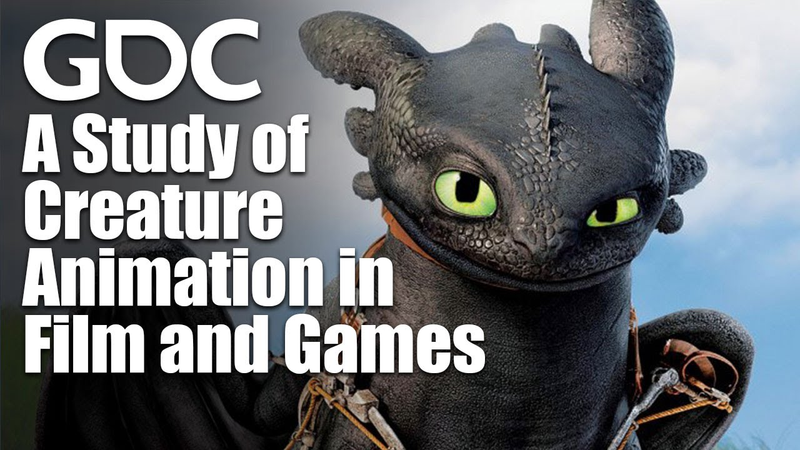
A Study of Creature Animation in Film and Games
Creature animation serves as a critical bridge between fantastical design and audience immersion, requiring a delicate balance between artistic performance and rigid technical constraints.
- Game creature animation requires robust, multi-angle rigs that function from every perspective to maintain gameplay integrity, unlike the shot-specific shortcuts used in film.
- Studios are adopting modular animation strategies, such as reusable cycles for secondary motions, to manage high-volume workloads and prioritize time for manual polish.
- Effective creature animation serves as a diagnostic tool that identifies necessary behavioral adjustments that are often missed during the initial design phase.