
Game Developers Conference
Game Developers Conference (GDC, now the GDC Festival of Gaming) is the professional event for the games industry. It publishes recorded talks and interviews, annual industry survey reports such as the State of the Game Industry, and news articles.
Documents
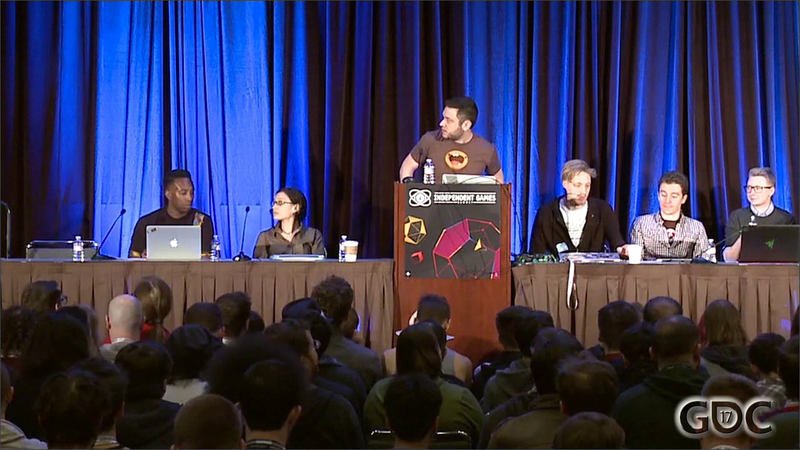
The 2017 GDC Tech Toolbox
Custom tool development serves as a critical catalyst for modern game production, enabling studios to overcome technical constraints while fostering creative iteration.
- Custom internal tool development is essential for overcoming technical constraints and enabling small teams to achieve high-fidelity results that off-the-shelf software cannot support.
- Procedural pipelines, as seen in titles like No Man's Sky, utilize modular texture layers, XML metadata, and shader-based processing to increase visual variety while maintaining memory efficiency.
- Development productivity is significantly improved by tools like Dark Config, which allow for the hotloading of configuration files to accelerate the design iteration cycle.
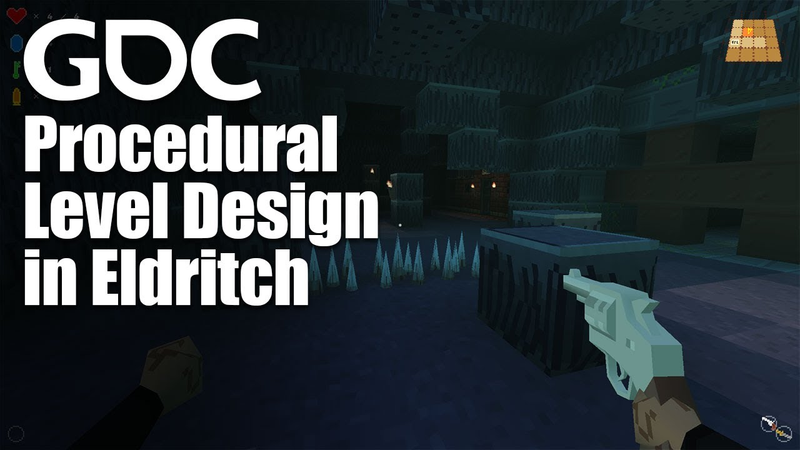
Procedural Level Design in Eldritch
Procedural level generation serves as the foundational architecture for Eldritch, enabling a solo developer to overcome the constraints of an eight-month production cycle while delivering the high replayability essential to the roguelike genre.
- Procedural generation is best utilized when game design requires perennial discovery, preventing players from memorizing space and forcing them to learn systems instead.
- To generate Eldritch's levels, the developer used Prim's algorithm to create a 3D maze, then populated it with 12m x 12m x 8m modular chunks built in a voxel engine.
- By utilizing rotation and mirroring of modular assets, the developer reduced the required number of unique module configurations from 64 down to 24.
The 2016 GDC Animation Microtalks
Professional game animation requires a shift from isolated asset creation toward a deep, integrated understanding of gameplay mechanics and character performance.
- Game animation success requires shifting focus from isolated asset creation to a deep integration with gameplay mechanics and authentic, real-world movement.
- Bridging the gap between artistic vision and technical implementation is best achieved through a symbiotic, collaborative relationship between animators and programmers.
- Animators should prioritize context and emotional resonance over purely technical execution to increase player immersion and character relatability.

Storytelling Tools to Boost Your Indie Game's Narrative and Gameplay
Integrating traditional narrative structures with flow theory serves as a powerful strategy for indie game developers to deepen player engagement and refine mechanical progression.
- Integrate narrative structures with flow theory to align mechanical progression with emotional development, ensuring that gameplay challenges feel earned and meaningful.
- Structure the player's emotional journey using a narrative arc that includes an inciting incident, a low midpoint, a critical black moment, and a decisive conclusion.
- Establish a baseline of normality before introducing conflict to provide the necessary context and empathy required for players to engage with subsequent challenges.
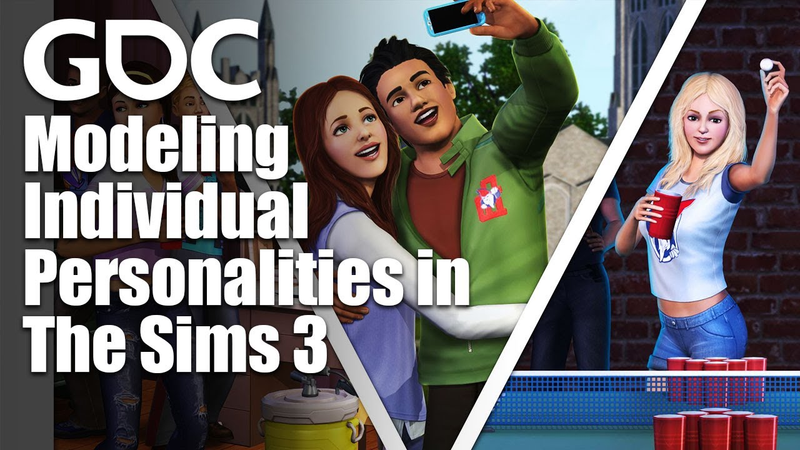
Modeling Individual Personalities in The Sims 3
The Sims 3 centers on the objective of fostering emergent narrative through a dynamic, autonomous simulation of life.
- To optimize performance, The Sims 3 replaced the inefficient iteration of all object interactions with a memory-efficient map that links specific 'Commodity' desires directly to the interactions capable of satisfying them.
- Instead of choosing the single highest-scoring action, which results in robotic behavior, the game utilizes a Boltzmann distribution to select actions, ensuring a natural variety of choices while still prioritizing high-utility tasks.
- The engine employs a data-driven architecture that allows developers to define complex interconnections between personality traits and social interactions without modifying the core codebase, ensuring long-term maintainability.

Practical Contract Law 201 for Indie Developers: Moderately Scary Edition
Contracts function as the foundational rulebooks for independent game studios, providing the necessary clarity and predictability to navigate business relationships and mitigate risks associated with both failure and unexpected success.
- Prioritize robust work-for-hire agreements that explicitly transfer all project-related intellectual property to the studio, avoiding fragmented 'Franken-contracts' that jeopardize ownership.
- Secure leverage in development agreements by withholding the formal transfer of intellectual property rights until all final payments are successfully processed.
- Mitigate financial risk from scope creep by implementing rigorous scope-of-work documentation, formal change-order processes, and mandatory kill fees.
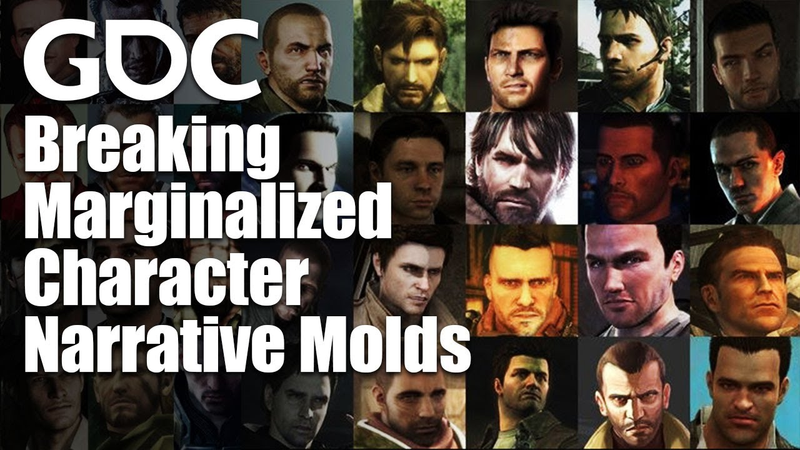
Breaking Marginalized Character Narrative Molds to Write Better, Richer Characters
The prevailing reliance on the cisgender, able-bodied white male as the default protagonist in video games frequently results in generic, imperialist archetypes that lack genuine relatability.
- Developers must move beyond the default cisgender, able-bodied white male protagonist to avoid generic, imperialist archetypes and foster deeper character relatability.
- Authentic representation requires grounding protagonists in specific, deliberate cultural and personal histories, as demonstrated in the narrative approach of Treachery in Beatdown City.
- Writers should avoid reducing marginalized characters to one-dimensional stereotypes or trauma-based plot devices, a failure observed in titles like Mafia III and Watch Dogs 2.
The State & Future of Board Game Design
The board game industry is currently undergoing a period of rapid expansion, characterized by a 10 to 20 percent annual increase in new titles and a increasingly sophisticated player base.
- The board game industry is experiencing rapid growth with a 10 to 20 percent annual increase in new titles, leading to a hyper-competitive market where high-quality design alone no longer guarantees commercial success.
- Designers are increasingly shifting away from self-publishing via crowdfunding toward traditional publishing models to better manage the financial and operational risks of global manufacturing and marketing.
- To remain viable amid low royalty margins, designers must adopt multi-disciplinary, iterative workflows and treat their work with an entrepreneurial mindset rather than focusing solely on creative expression.
Mad Skillz for Directing Dialogue
Effective dialogue direction in video games requires a shift from viewing voice recording as a purely technical task to treating it as a collaborative creative process.
- Establish a single director as the sole conduit for feedback to prevent 'direction by committee,' which wastes time and confuses performers.
- Provide scripts and character briefs to actors well before recording sessions to allow them to internalize roles and reduce performance anxiety.
- Avoid line readings, which often lead to mimicry; instead, provide context or ask actors to recall personal experiences that mirror a character's emotional state.
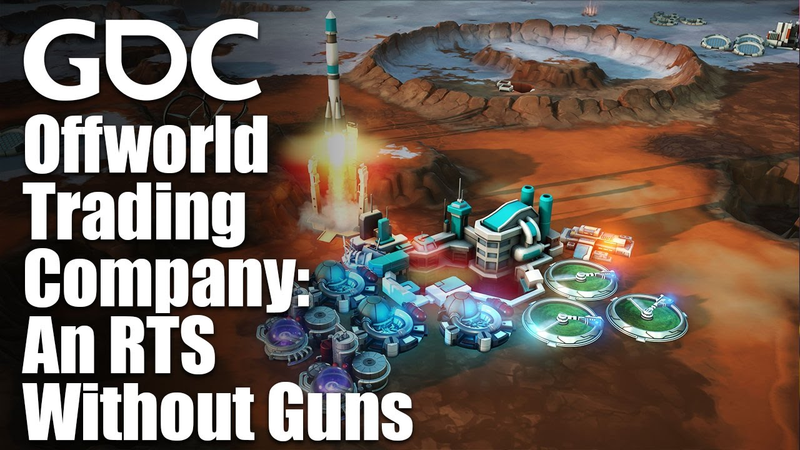
Offworld Trading Company: An RTS Without Guns
Offworld Trading Company reimagines the real-time strategy genre by replacing traditional military combat with a dynamic, player-driven free market.
- Offworld Trading Company differentiates itself from traditional RTS games by focusing exclusively on the 'macro' economic layer, removing unit micro-management to create a distinct sub-genre.
- The game's market mechanics utilize a dynamic pricing system where buying black market items, such as pirates or sabotage tools, increases their cost for all players, naturally limiting their frequency and impact.
- Early access development allowed the team to replace a standard setup screen with a reverse-auction mechanic for starting locations, a core feature that was iterated upon for 12 months prior to the official launch.

GDC Founder Chris Crawford's Dragon Speech
The evolution of interactive entertainment hinges on the transition from simple mechanical play to a sophisticated medium capable of conveying the full spectrum of human emotion.
- The game industry’s focus on commercial viability and incremental complexity is stifling the medium's maturation into a serious art form.
- Interactive entertainment should shift from simple mechanical play toward the development of complex artificial personalities and emotional systems that simulate the human condition.
- Prioritizing the preferences of a vocal, expert demographic has narrowed the scope of game design, leading to a reliance on repetitive mechanics over broader human experiences.
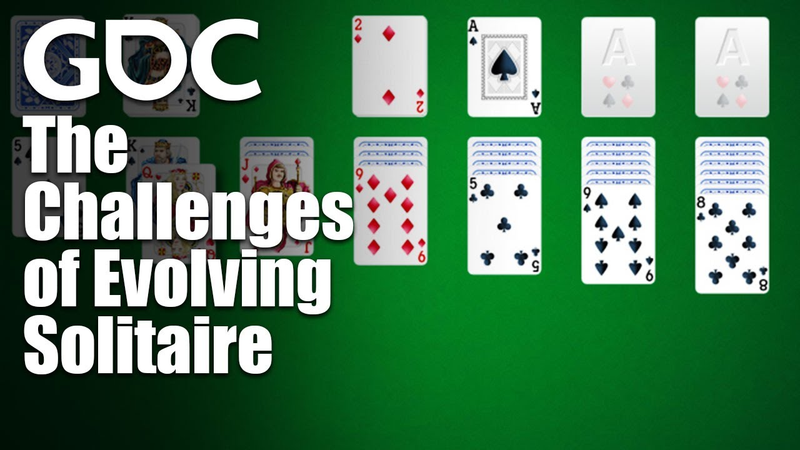
Don't Change a Thing! The Challenges of Evolving Solitaire
Managing a massive digital product suite like Solitaire requires a delicate balance between driving revenue growth and maintaining the loyalty of a deeply entrenched user base.
- Managing a product with over 200 million downloads requires prioritizing iterative refinement over radical overhauls to avoid alienating a habitual user base.
- A dual-layered feedback approach combining quantitative performance metrics with qualitative, free-form user commentary provides the most actionable insights for feature adjustments.
- Targeted updates to progression systems and visual design have demonstrated the ability to boost positive player sentiment by ten percentage points within a two-week timeframe.