
Game Developers Conference
Game Developers Conference (GDC, now the GDC Festival of Gaming) is the professional event for the games industry. It publishes recorded talks and interviews, annual industry survey reports such as the State of the Game Industry, and news articles.
Documents
Achieving Two Worlds, Every Year: How Magic the Gathering Sustainably Doubled Its Worldbuilding
To sustain a release cadence of two new worlds annually, Magic: The Gathering has fundamentally restructured its creative operations by integrating game design and worldbuilding into a singular, collaborative pipeline.
- Magic: The Gathering doubled its release cadence to two new worlds annually by integrating game design and worldbuilding into a single, collaborative pipeline rather than using siloed handoffs.
- The production process relies on a concentrated three-week 'concept push' to finalize a comprehensive world guide that serves as the blueprint for all subsequent creative and mechanical development.
- To ensure aesthetic consistency across a global, outsourced illustration network, the team uses the finalized world guide to provide rigid narrative and visual boundaries for hundreds of individual card assets.
Still Grooving: Game Dev Life Set to Live Music
This presentation explores the emotional and professional realities of independent game development, focusing on the lifecycle of the title Hyper Light Drifter.
- Developers should prioritize creative 'love' and thematic resonance over exhaustive perfectionism, as the core player experience is defined by atmosphere rather than just mechanical systems.
- The labor invested in game development acts as a value multiplier, where thousands of hours of team effort can generate hundreds of years of collective engagement for the global player base.
- A sustainable career requires rejecting rigid work-life balance models in favor of a fluid, rhythmic approach to productivity that emphasizes intentionality and variety.
eSports Day: Building eSports: Twitch, Rocket League, and H1Z1: King of the Kill
Building a sustainable esports ecosystem requires a holistic strategy that transcends top-tier professional leagues to prioritize grassroots engagement and long-term infrastructure.
- Sustainable esports ecosystems require integrating competitive features like private matchmaking, skill-based leaderboards, and custom rule sets directly into the game’s core architecture.
- Developers should adopt a 'walk, not run' growth strategy that prioritizes grassroots community engagement and iterative development over immediate, large-scale event production.
- Success in titles like the Rocket League Championship Series is driven by balancing in-house management with strategic partnerships to foster fan loyalty and viewership.

Cuphead's Animation Process and Philosophy
The development of the 2D action game Cuphead is defined by a commitment to the aesthetic and production techniques of 1930s animation.
- Studio MDHR maintains the aesthetic of 1930s animation by utilizing traditional paper-based animation, hand-inked frames, and watercolor backgrounds rather than digital simulations.
- The design process for Cuphead bosses prioritizes simplicity and solid shapes, avoiding overly complex details that would be difficult to animate or rotate in 2D space.
- To ensure technical feasibility, animators create rough blue-pencil sketches before committing to final designs, as the high-stakes nature of paper animation makes late-stage changes labor-intensive.
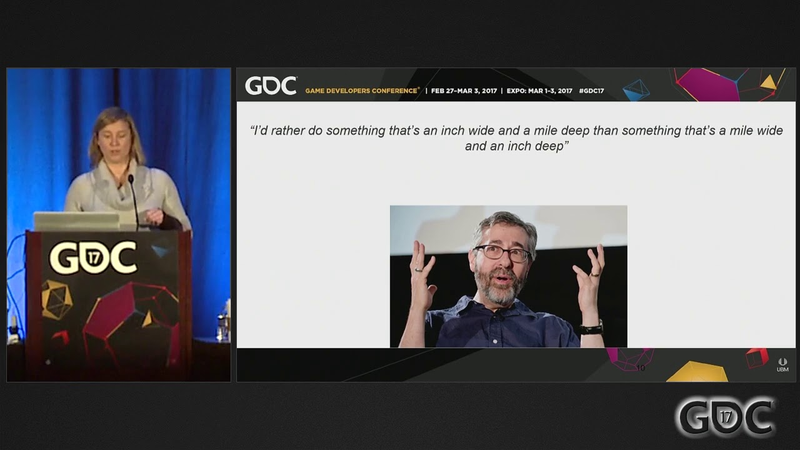
Rewarding Exploration in Deus Ex: Mankind Divided
The design philosophy behind the Prague city hub in Deus Ex: Mankind Divided centers on the creation of dense, interconnected environments that prioritize player agency and environmental storytelling.
- The Prague city hub design prioritizes player agency by replacing linear progression with dense, interconnected environments that reward curiosity with loot, narrative secrets, or alternate mission paths.
- Designers strictly enforced a policy of physical accessibility, ensuring that any location visible to the player can be reached without the use of artificial barriers or 'magic locks.'
- Narrative gating, such as district curfews, is implemented through diegetic justifications rather than arbitrary design choices to maintain immersion.
The Gamer's Brain: How Neuroscience and UX Can Impact Design
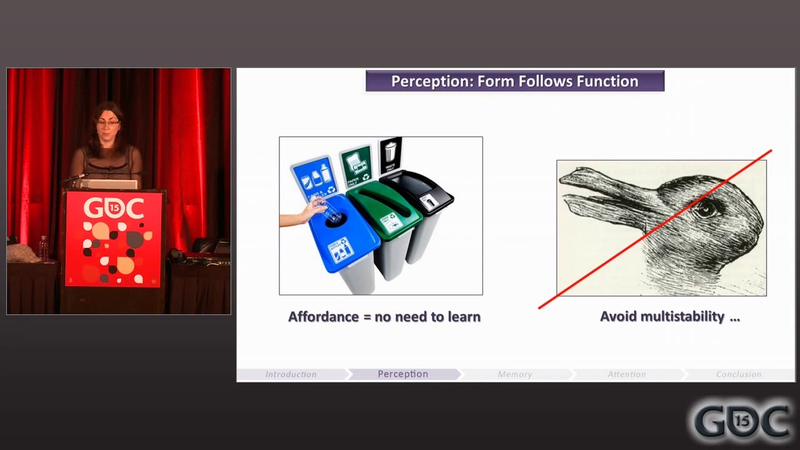
Game design success relies on aligning interactive systems with the natural constraints and processing patterns of the human brain.
- Designers must treat human attention as a finite resource by minimizing cognitive load and avoiding multitasking, which is fundamentally ineffective for player processing.
- Interface design should utilize Gestalt laws—such as proximity and similarity—and the concept of affordance to ensure game objects communicate their functions intuitively without explicit instruction.
- To combat memory decay and cognitive biases, developers should replace front-loaded tutorials with context-rich gameplay that introduces mechanics only when they are immediately relevant.
Deciding What to Make: A Greenlight Process for Commercial Indies
The greenlight process for independent game development requires a strategic approach to risk management, particularly as the industry landscape becomes increasingly crowded and competitive.
- Prioritize 'Platonic scope' by evaluating which project concept can most accurately achieve its ideal, authentic vision within the constraints of your specific time and financial resources.
- Utilize the 'inverse pyramid test' for design, which ensures that projects remain functional and coherent experiences even if they must be scaled back due to budget or schedule limitations.
- Integrate 'exposure design' by treating marketing as a core component of the game design process, focusing on the small percentage of the game visible to the public to clearly communicate its value proposition.
Realistic Performances in Games
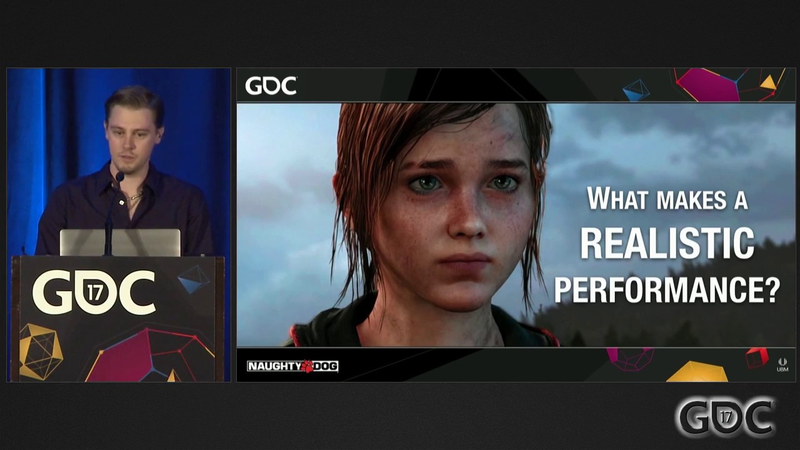
Achieving realistic character performances in modern gaming requires a deeply iterative and collaborative development process that bridges the gap between traditional cinematic storytelling and responsive gameplay.
- Achieving realistic character performance requires an iterative workflow that bridges the gap between traditional cinematic storytelling and responsive, non-linear gameplay.
- Studios maintain emotional authenticity by seamlessly blending scripted cutscenes with in-game cinematics, ensuring narrative consistency despite player-driven environmental changes.
- Technical immersion is supported by dialogue management systems that use dynamic audio panning and volume control to compensate for real-time camera movement.
The Secret of Eternal (Product) Life: Lessons from J.R.R Tolkien and John Madden
Achieving long-term success in the video game industry requires a fundamental shift away from the pursuit of fleeting technical spectacle toward the cultivation of deep, iterative, and culturally resonant experiences.
- Long-term franchise success is achieved by prioritizing consistent gameplay refinement and accessibility over the pursuit of cutting-edge technical spectacle.
- Developers should avoid 'creeping featurism' by focusing on core mechanics, which allows products to endure beyond the lifecycle of a single console generation.
- Drawing from J.R.R. Tolkien’s methodology, developers must establish a coherent, well-defined cosmology before launching sequels to ensure narrative consistency.
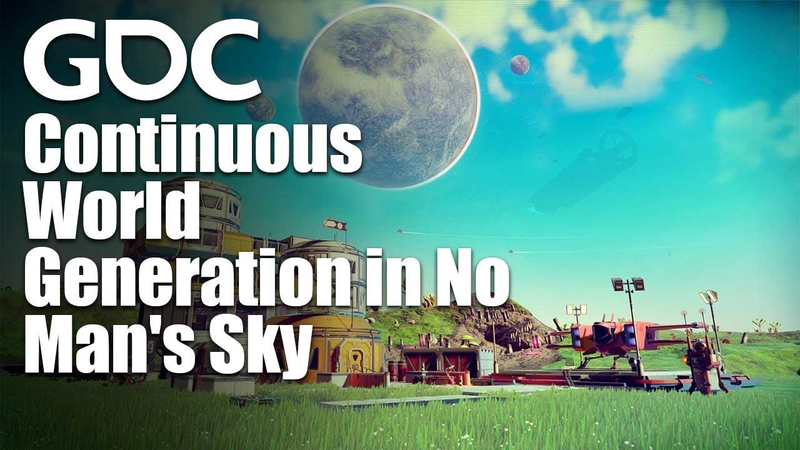
Continuous World Generation in No Man's Sky
No Man’s Sky achieves a seamless, galaxy-wide exploration experience through a custom C++ engine designed to handle real-time, procedural world generation.
- No Man’s Sky utilizes a custom C++ engine that balances procedural generation with artistic control by prioritizing developer-facing tools over purely autonomous algorithms.
- The engine simulates terrain on a sphere using an octree structure projected onto a cube, which eliminates flat-plane wrapping artifacts and manages complex gravity and coordinate systems.
- To optimize performance and memory, the system employs dynamic levels of detail and a multi-threaded job system that offloads generation tasks across diverse hardware.
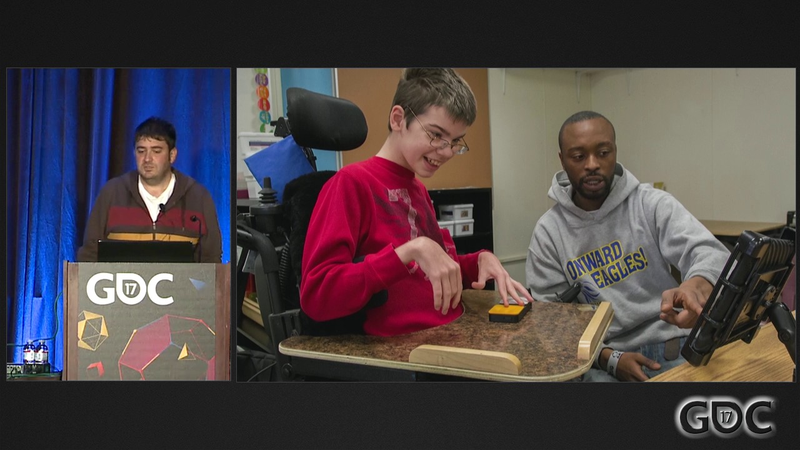
Raising the Bar: 2016's Accessibility Advancements
Accessibility in the gaming industry is defined as the systematic removal of environmental barriers that prevent individuals with medical conditions from participating in digital play.
- Approximately 22 percent of the United States adult population lives with a disability, representing a significant market demographic for the gaming industry.
- Accessibility is shifting from niche consideration to a standard expectation, as evidenced by advanced features in high-profile titles like Uncharted 4, including color-blind symbolic indicators and motor-impairment assistance.
- Industry progress is increasingly driven by platform-level and engine-level solutions, such as system-wide button remapping on consoles and Steam, which remove the need for individual developer intervention.

The Flash Games Postmortem
Flash technology served as the primary catalyst for the modern independent game industry, offering a low-barrier, cross-platform environment that enabled rapid prototyping and global distribution.
- Flash served as the primary catalyst for the modern independent game industry between 2006 and 2011 by providing a low-barrier, cross-platform environment for rapid prototyping and global distribution.
- The professionalization of the Flash ecosystem was driven by platforms like Mochi Media and Kongregate, which introduced revenue-sharing models, transparent bidding, and analytics that enabled developers to pursue full-time careers.
- The industry hit a critical turning point in 2010 when Apple rejected Flash on mobile platforms due to performance and security concerns, triggering a shift toward social gaming and mobile-native development.