
Game Developers Conference
Game Developers Conference (GDC, now the GDC Festival of Gaming) is the professional event for the games industry. It publishes recorded talks and interviews, annual industry survey reports such as the State of the Game Industry, and news articles.
Documents
Game Studio Management: Making It Great
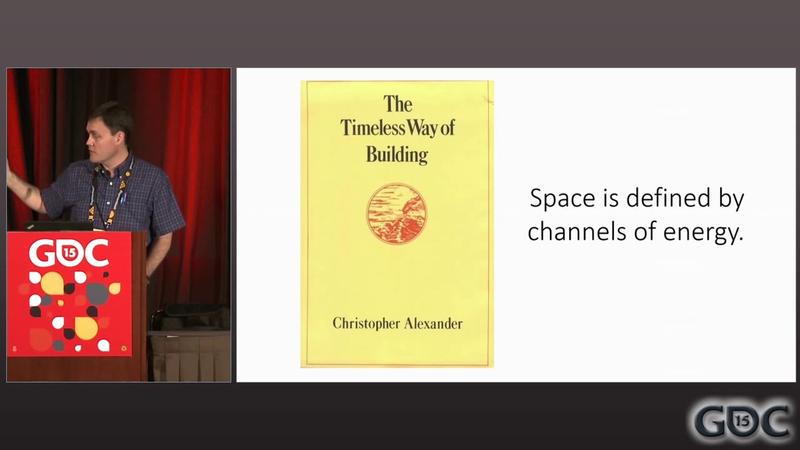
Effective game studio management functions best when organizations are treated as complex information networks rather than rigid hierarchies.
- Treat game studios as complex information networks rather than rigid hierarchies to ensure critical data flows efficiently across projects, processes, and people.
- Categorize all internal communication into distinct buckets of facts, opinions, and emotions to design deliberate systems that prevent project delays and morale degradation.
- Prioritize team social dynamics, such as conversational turn-taking and diversity, over individual IQ to foster collective intelligence and innovation.
UX Methodologies for Holistic Product Design
This analysis outlines a holistic approach to User Experience (UX) design in game development, emphasizing the role of the UX designer as a synthesizer of goals across engineering, product management, and game design.
- UX designers function as central synthesizers who align engineering, product management, and game design goals to prevent communication silos.
- The design process should prioritize lightweight, iterative outputs—such as box-wireframes and information architecture flows—over high-fidelity visual polish to maintain flexibility.
- Physical, large-format printouts of design maps serve as a critical reference point for cross-disciplinary teams to resolve misunderstandings and reduce development delays.
Peter Molyneux Explains the Design of Black and White
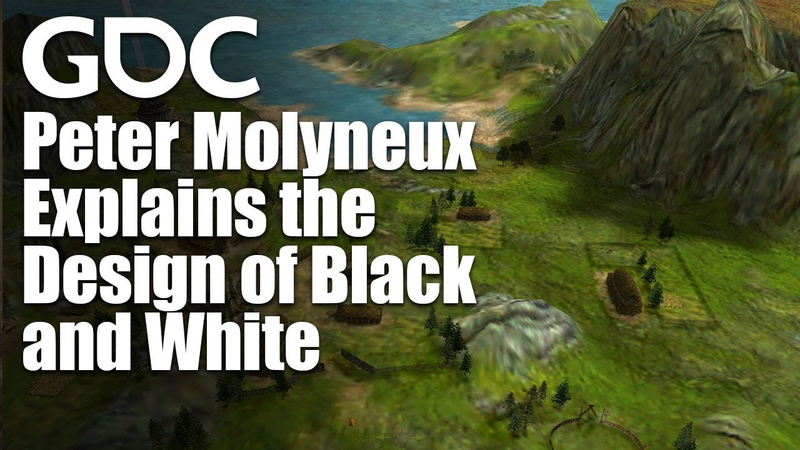
The design philosophy behind Black & White centers on creating a deeply immersive, personality-driven god simulation that prioritizes emotional engagement over traditional mechanical difficulty.
- The core design of Black & White prioritizes emotional engagement and player agency over traditional mechanical difficulty to evolve the god-game genre.
- The game utilizes a minimalist, icon-free interface that relies on intuitive mouse gestures for navigation and spellcasting to maintain immersion.
- The central companion creature functions as a learning entity that evolves its physical and behavioral traits based on the player's moral reinforcement and AI-driven mimicry.
Lessons Learned from Creating a Virtual Reality Engine
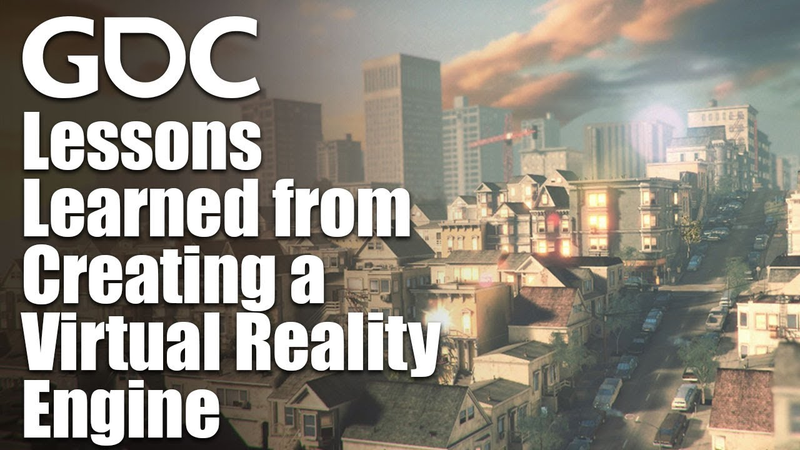
This presentation outlines the development process and technical lessons learned from building a custom virtual reality (VR) engine, known as the Horror Engine.
- The 'Horror Engine' project demonstrates that integrating a secondary 'social screen' allows non-VR users to manipulate environments, fostering collaborative and inclusive gameplay experiences.
- Building a custom engine from scratch using C++, DirectX 11, and Windows sockets provides a deeper understanding of rendering pipelines and hardware integration compared to relying on pre-built plugins.
- Successful engine development requires rigorous pre-planning, specifically the use of visual flowcharts to map data flow and class relationships before writing any code.

Designing with Physics: Bend the Physics Engine to Your Will
This presentation addresses the common challenge of achieving solid, responsive physics in indie games without requiring custom engine development.
- Combat 'floatiness' by increasing gravity beyond realistic levels, as the issue is a design-driven limitation of default engine settings rather than a purely technical failure.
- Improve simulation stability and perceived weight by implementing significant mass ratios between objects rather than using uniform mass defaults.
- Mitigate tunneling and jitter in fast-moving objects by reducing the fixed time step and enabling continuous collision detection.
Rules of the Game: Five Techniques from Quite Inventive Designers
Successful game design hinges on rigorous iteration and the early implementation of functional systems rather than reliance on abstract concepts.
- Prioritize functional systems and 'pizzazz' during prototyping to validate core mechanics and communicate project potential to stakeholders early.
- Utilize early visualization tools like flowcharts and heat maps to identify logic errors and system imbalances before formal playtesting commences.
- Design enemy variety through distinct movement patterns, timing, and counter-mechanics rather than superficial aesthetic changes to ensure each encounter requires a unique strategic response.
It Takes Two to Tango: Integrating UX Research and Production at EA
Electronic Arts transformed its approach to user experience research by shifting from informal, designer-led playtesting to a rigorous, integrated professional discipline.
- The 2010 cancellation of NBA Elite served as the primary catalyst for EA to transition from informal, designer-led playtesting to a rigorous, integrated user experience research discipline.
- Effective research requires an embedded model where researchers function as core project members rather than external consultants to ensure insights align with production constraints.
- EA utilizes statistical tools like confidence intervals to help developers differentiate between stable game features and those posing high-risk, polarized outcomes.

Legends of Game Design
The evolution of the video game industry from its inception in the late 1970s through the late 1990s reflects a transition from experimental, individual-driven development to a sophisticated, large-scale commercial enterprise.
- The video game industry evolved from an experimental, individual-driven field in the late 1970s into a large-scale commercial enterprise by the late 1990s.
- The transition from coin-operated arcade machines to home console and PC platforms allowed developers to move beyond hardware constraints and prioritize immersive, high-quality player experiences.
- Independent studios like id Software were instrumental in this era, pioneering 3D gaming technology and establishing rapid development cycles.
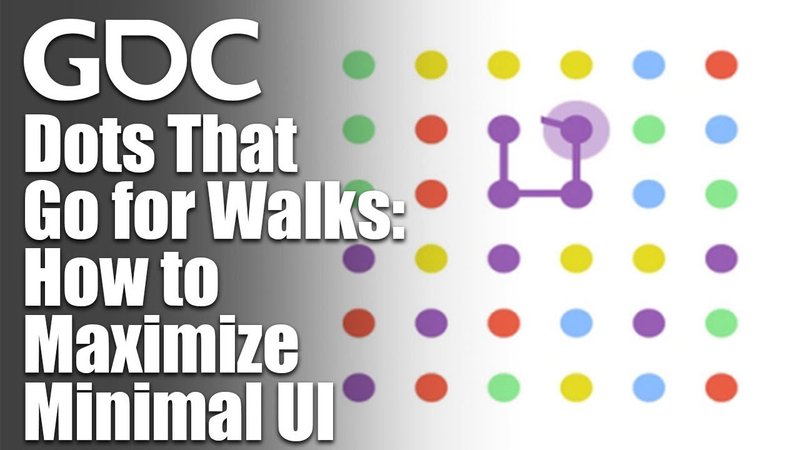
Dots That Go for Walks: How to Maximize Minimal UI
Minimalist user interface design functions as a strategic exercise in restraint, prioritizing clarity and the deliberate use of negative space to prevent digital environments from feeling inert.
- Minimalist UI design prioritizes the reduction of cognitive load by ruthlessly eliminating non-essential elements to keep the core gameplay as the focal point.
- Functional components should be integrated directly into illustrative assets rather than using superfluous, standalone UI features.
- Typography should be used as a primary tool to guide player behavior and establish brand tone, ensuring instructions are not overlooked by users.
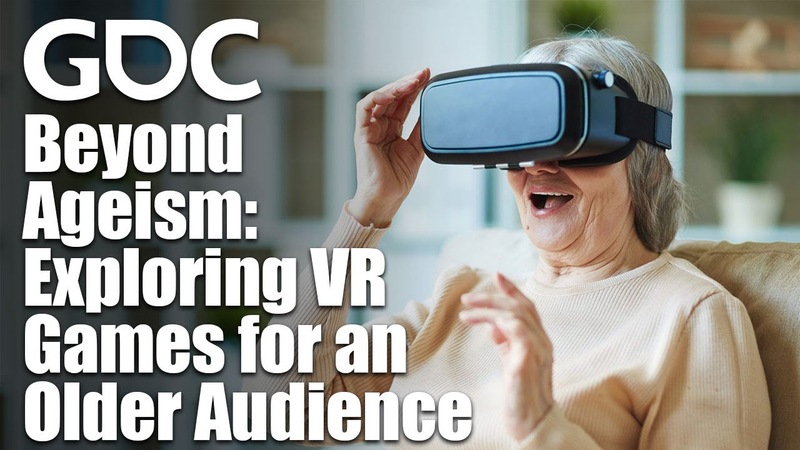
Beyond Ageism: Exploring VR Games for an Older Audience
The gaming industry possesses a significant, untapped opportunity in the 50-plus demographic, a segment that demonstrates a robust interest in immersive technology.
- The 50-plus demographic represents a significant, untapped market for VR that values high-quality, challenging, and aesthetically mature content rather than simplistic brain-training games.
- Developers should prioritize inclusive design by implementing seated play modes, adjustable UI scaling, and intuitive motion controls to accommodate physiological needs related to vision, hearing, and balance.
- Successful engagement requires avoiding ageist tropes and instead focusing on mechanics centered on exploration, social interaction, and lifelike aesthetics that respect the player's intelligence.

(Opportunity) Cost Effective Marketing & PR for Indies
Indie game marketing is most effective when developers shift their perspective from a purely technical mindset to a consumer-centric one.
- Treat marketing as a game design problem by identifying your objective—getting the player to the game—and systematically removing barriers to that goal.
- Conduct a competitive audit by analyzing similar titles to determine your game's market position, pricing strategy, and unique selling points.
- Perform a SWOT analysis (Strengths, Weaknesses, Opportunities, Threats) to objectively evaluate your game from a consumer's perspective, focusing on the 'tip of the iceberg' that players actually see.
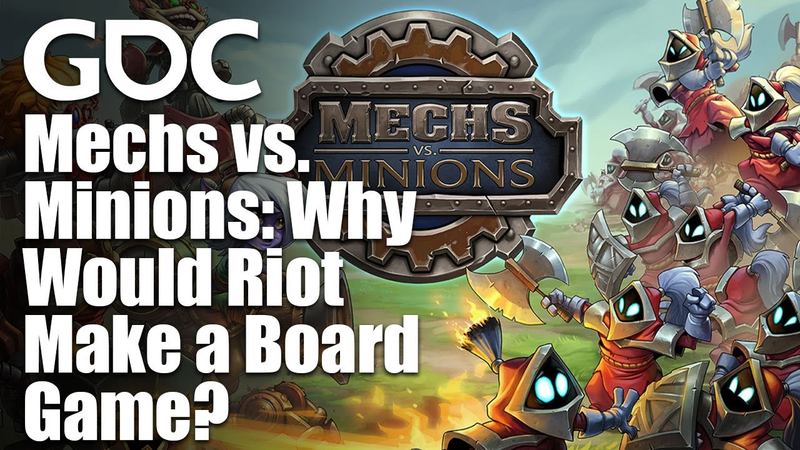
Mechs vs. Minions: Why Would Riot Make a Board Game?
Riot Games ventured into the tabletop market with Mechs vs. Minions to explore creative expression beyond digital platforms, utilizing the intellectual property of League of Legends to foster a unique, cooperative experience.
- Riot Games developed 'Mechs vs. Minions' not as a strategic market acquisition or user retention play, but as a passion project intended to explore their IP in a new medium and create a high-quality experience for their players.
- The project was driven by a small, internal team rather than a large studio mandate, allowing the developers to prioritize product quality over traditional profit margins by reallocating typical marketing budgets into high-end components and game tray design.
- The game design evolved from a competitive programming prototype called 'Weapons of Zombie Destruction' into a cooperative experience, as the team found that cooperative mechanics better suited the team-oriented nature of League of Legends players.