
Game Developers Conference
Game Developers Conference (GDC, now the GDC Festival of Gaming) is the professional event for the games industry. It publishes recorded talks and interviews, annual industry survey reports such as the State of the Game Industry, and news articles.
Documents
Dynamic Storytelling in The Novelist
The Novelist explores the potential of system-driven narrative design, moving away from traditional branching paths to create a unique, non-prescribed storytelling experience.
- The Novelist replaces traditional branching narrative paths with a system-driven model that forces players to balance the competing needs of three family members.
- The game utilizes a hidden relationship scoring system to track long-term consequences, which are communicated to the player through human-readable feedback like diary entries and environmental changes.
- Systemic narrative design is significantly more labor-intensive than traditional scripting because it requires developers to account for a vast array of potential outcomes while maintaining narrative clarity.
Board Game Design Day: Board Game Design and the Psychology of Loss Aversion
Loss aversion serves as a foundational psychological principle in game design, predicated on the observation that the emotional pain of losing an asset is felt approximately twice as intensely as the joy of acquiring an equivalent gain.
- Loss aversion dictates that the emotional impact of losing an asset is approximately twice as intense as the joy derived from gaining an equivalent one, making it a primary driver of player engagement.
- Mechanics that threaten the removal of progress or force resource sacrifice compel players to act irrationally to avoid deficits, creating high-stakes environments that increase emotional investment.
- Designers utilize the endowment effect and endowed progress—providing players with a head start toward a goal—to foster artificial attachments that make the potential loss of progress feel like a significant personal setback.
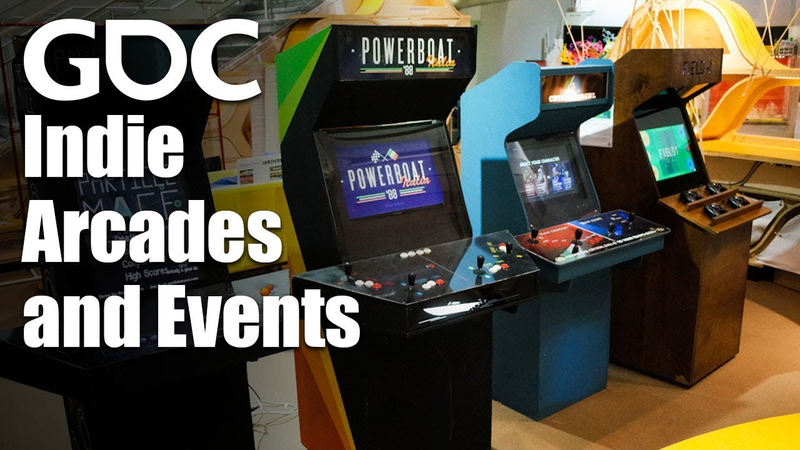
Pop-Up Arcade: Postmortems on Indie Arcades and Events
This session from GDC Europe 2013 explores the rise of pop-up indie game arcades and curated events as a means to foster community and reach audiences beyond the traditional gaming demographic.
- Physical, curated arcade installations transform digital games into performative, social experiences that attract audiences beyond traditional gaming demographics.
- Using unconventional hardware—such as repurposed furniture, baby strollers, or shipping pallets—creates a tangible gateway that invites participation from passersby who might feel alienated by standard gaming conventions.
- The success of pop-up arcades relies on the presence of a 'critical mass' of spectators, which turns local multiplayer gameplay into a shared event comparable to a concert or movie night.
Unconventional Wisdom on Creating a Passionate Community
The primary objective of this presentation is to outline unconventional, effective strategies for cultivating a passionate and creative gaming community.
- Community management should be treated as a series of human-centric relationships rather than a transactional marketing function to drive long-term brand advocacy.
- Establishing a zero-tolerance policy for harassment and publicly defending community members against toxic behavior is essential for maintaining a culture of inclusivity.
- Providing a human face for the brand through initiatives like YouTube Q&As creates a 'Senpai noticed me' effect that significantly increases individual fan engagement.
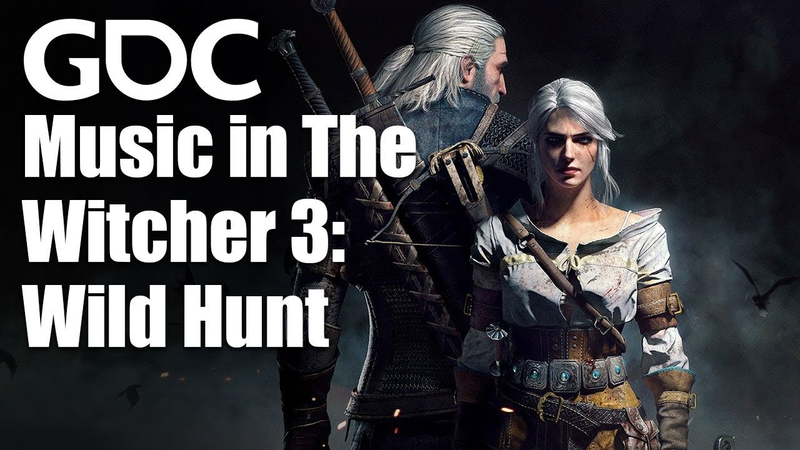
Slavic Adaptation of Music in The Witcher 3: Wild Hunt
The musical identity of The Witcher 3: Wild Hunt centers on a deliberate synthesis of Slavic folklore and contemporary cinematic orchestration.
- The Witcher 3 soundtrack was designed to blend Slavic folk music with contemporary orchestral sounds, utilizing a vast database of regional folk music from countries including Poland, Ukraine, Hungary, and Germany.
- The composers incorporated authentic historical instruments, such as the Turkish-origin saz and a 12th-century replica of a Gdansk-based string instrument, to establish a unique, cohesive musical identity for the franchise.
- To ensure global accessibility, the team localized a key ballad into seven languages—Polish, English, German, Russian, French, Japanese, and Brazilian Portuguese—while maintaining syllable counts and rhythmic sync with the underlying music loop.
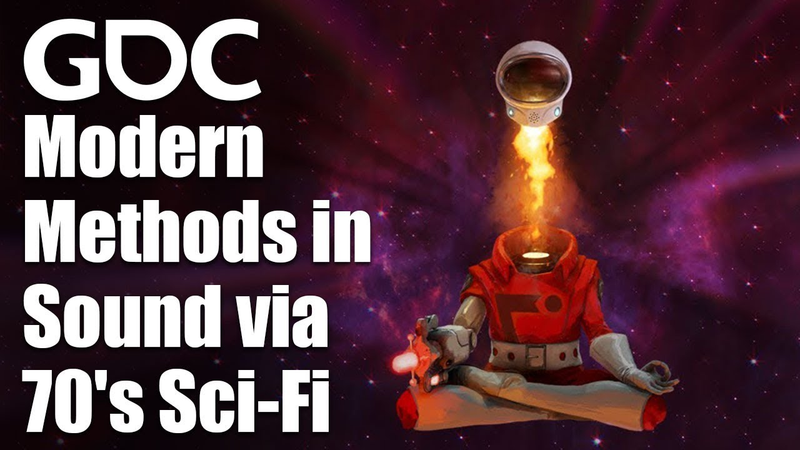
Headlander: Discovering Modern Methods in Sound via 70's Sci-Fi
The aesthetic foundation of Headlander rests on the deliberate recreation of 1970s dystopian science fiction, shifting the focus from conventional hero narratives toward themes of identity and existential doubt.
- The audio production for Headlander prioritized raw, analog textures over digital polish to replicate the atmospheric soundscapes of 1970s dystopian science fiction.
- Creative limitations, such as the prohibition of traditional percussion, forced the team to utilize sequencers, arpeggiators, and noise generators to build rhythm.
- The team employed a 'designing to memory' philosophy, blending vintage hardware sounds with modern layering and high-quality reverb to ensure accessibility for contemporary players.
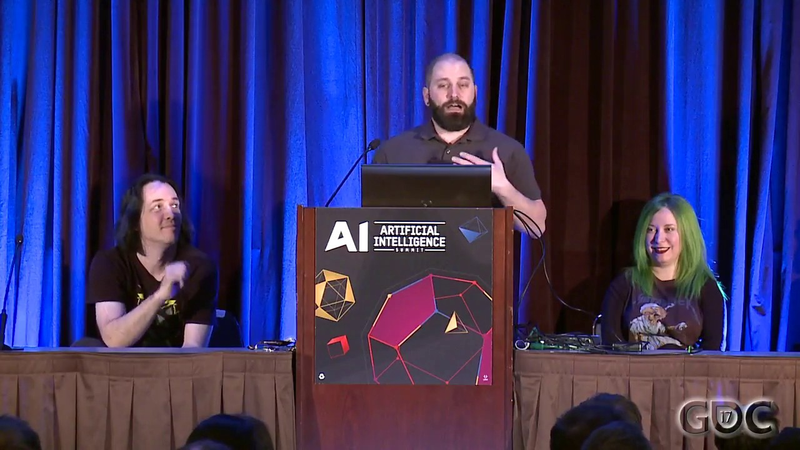
Turing Tantrums 2017: AI Devs Rant
The game development industry currently suffers from a rigid, outdated professional classification system that stifles individual growth and team efficiency.
- The industry must transition from broad professional labels like 'programmer' or 'designer' to a granular, skill-based framework to improve team efficiency and individual growth.
- Artificial intelligence development is currently stagnant due to an over-reliance on legacy architectures like behavior trees and a preference for mundane solutions over innovation.
- Machine learning has failed to provide meaningful improvements to player experiences or secure increased resource allocation despite significant industry hype.

How FIFA Delivers Live Content to Users Fast
Transitioning to a Games-as-a-Service model requires decoupling live content delivery from core server and game updates.
- Decoupling live content delivery from core game updates allows developers to bypass lengthy certification processes and push continuous, high-volume updates to users.
- A centralized, browser-based portal enables a small team of producers to deploy localized content across 11 platforms in under an hour without requiring engineering intervention.
- The system is designed for rapid reaction to real-world sporting events, enabling the delivery of timely, value-driven promotions within minutes of an event occurring.
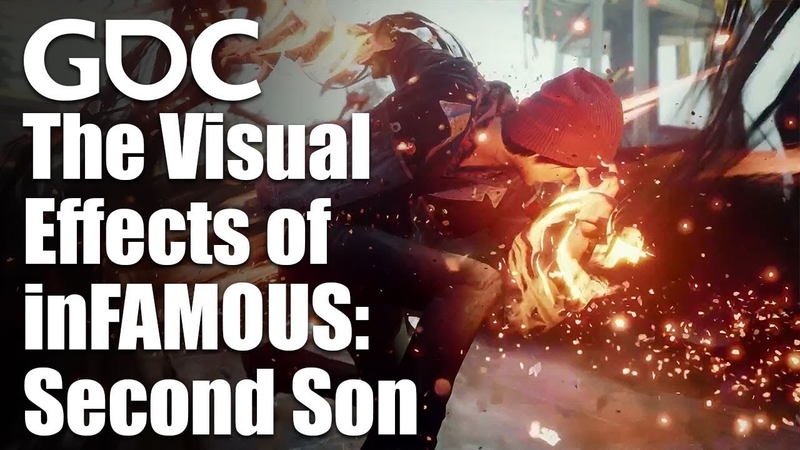
The Visual Effects of inFAMOUS: Second Son
The visual effects strategy for inFAMOUS: Second Son centers on the pursuit of a believable, stylized aesthetic that prioritizes fluid traversal and dynamic power representation over strict photorealism.
- The development team replaced traditional, resource-heavy flipbooks with a custom, GPU-accelerated, expression-based particle system to achieve high-fidelity visual effects.
- Visual cohesion for power-based traversal and combat was maintained through advanced lighting integration, including particle-cast shadows, dynamic light emission, and spherical harmonic probes.
- The team utilized plasma-like waveforms and curl noise, a technique termed 'light writing,' to define the form and timing of character powers.
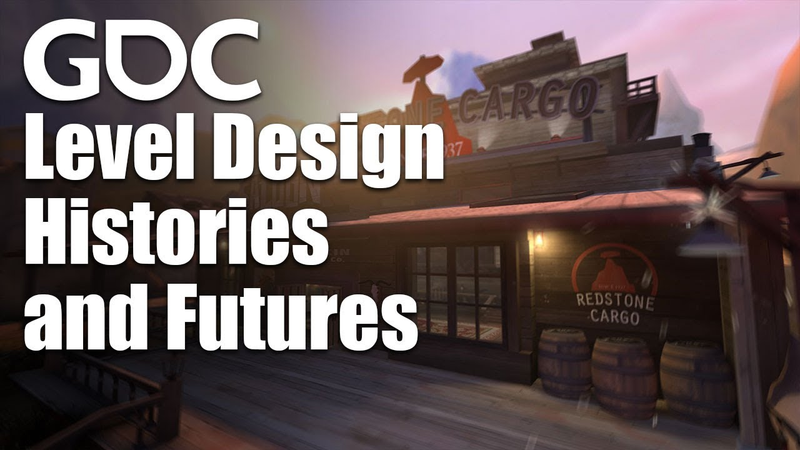
Level Design in a Day: Level Design Histories and Futures
Level design functions as a multifaceted discipline that bridges raw data, industrial manufacturing, architectural theory, and community-driven social practice.
- Level design is an inherently political practice where the creator's worldview and biases dictate the social inclusivity and intent of virtual spaces.
- The evolution of level design is inextricably linked to tool development, as software constraints—from early grid-based editors like DoomEd to modern 3D engines—directly define creative boundaries and designer workflows.
- AAA development has shifted toward a formalist orthodoxy that prioritizes functional grey-box prototyping and scalable geometry to manage the technical demands of modern production.
Storytellers of eSports
Storytelling serves as the foundational pillar of the esports industry, acting as the primary driver for fan retention and long-term community growth.
- Human-centric storytelling, rather than gameplay mechanics or prize pools, is the primary driver for long-term fan retention and community growth in esports.
- Organizations must shift from scripted public relations to authentic, character-driven narratives that highlight the personal journeys and rivalries of individual competitors.
- Content creators must prioritize clear narrative arcs over the inclusion of every prominent figure, often requiring ruthless editorial decisions to maintain engagement.
Three Statistical Tests Every Game Developer Should Know
Statistical analysis provides a rigorous framework for game developers to make data-driven design decisions, moving beyond subjective opinions to validate changes in game performance and player behavior.
- Statistical significance must be distinguished from practical significance by evaluating confidence intervals to ensure the magnitude of an improvement justifies the development cost.
- The Student’s t-test is the standard tool for comparing continuous, normally distributed data, using independent tests for distinct groups and paired tests to control for individual variance.
- The Mann-Whitney test is the preferred nonparametric alternative for skewed data or ordinal scales like player ratings, as it analyzes medians to prevent outliers from distorting results.