
Game Developers Conference
Game Developers Conference (GDC, now the GDC Festival of Gaming) is the professional event for the games industry. It publishes recorded talks and interviews, annual industry survey reports such as the State of the Game Industry, and news articles.
Documents
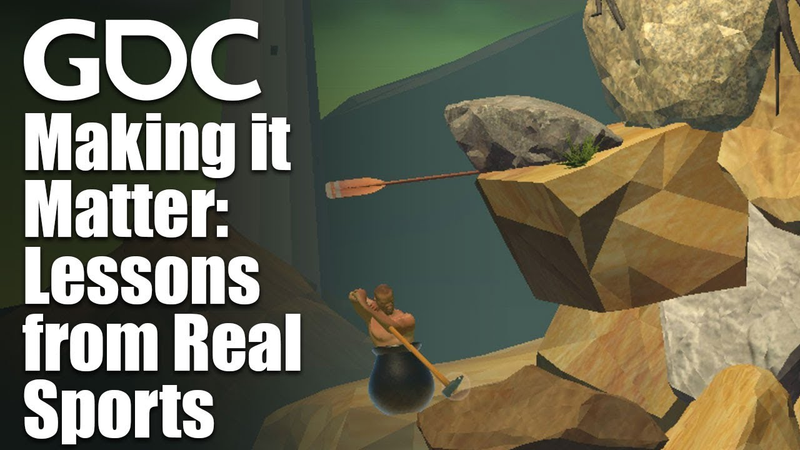
Making it Matter: Lessons from Real Sports
Video games frequently struggle to generate the same level of emotional investment and cultural significance found in traditional athletics.
- Modern game design often diminishes emotional investment by prioritizing player comfort through features like quick-saving and infinite retries, which eliminate the stakes and finality found in traditional sports.
- Developers should implement high-stakes failure states that force players to confront the consequences of their actions to foster a deeper sense of accomplishment.
- To increase the perceived value of achievements, the industry must move away from pay-to-win systems and mindless grinding, which undermine the legitimacy of player performance.
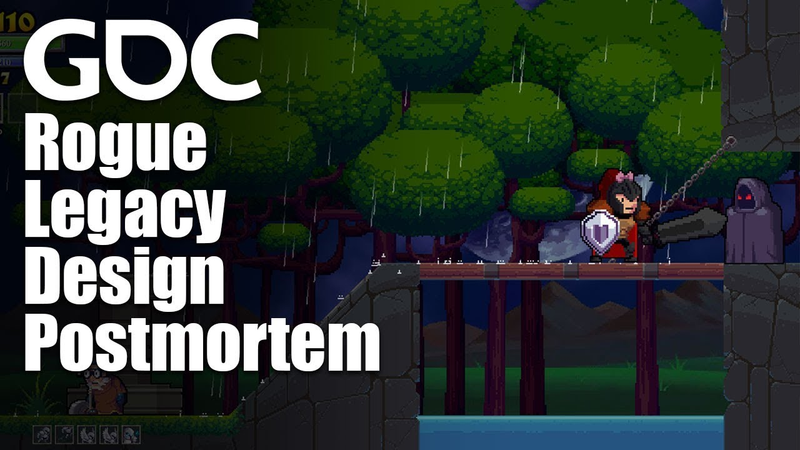
Rogue Legacy Design Postmortem: Budget Development
The development of the indie title Rogue Legacy serves as a case study in budget-conscious game design.
- Cellar Door Games developed Rogue Legacy over 18 months with a total production cost of less than $15,000, recouping all development expenses within one hour of launch.
- The team achieved rapid development by prioritizing 'good, not perfect' solutions, focusing on gameplay mechanics over high-fidelity assets and reusing systems from previous projects.
- To increase accessibility, the developers removed traditional roguelike 'floor clearing' and 'obscurity' mechanics, replacing them with a persistent lineage system that allows players to spend gold on character upgrades after every death.
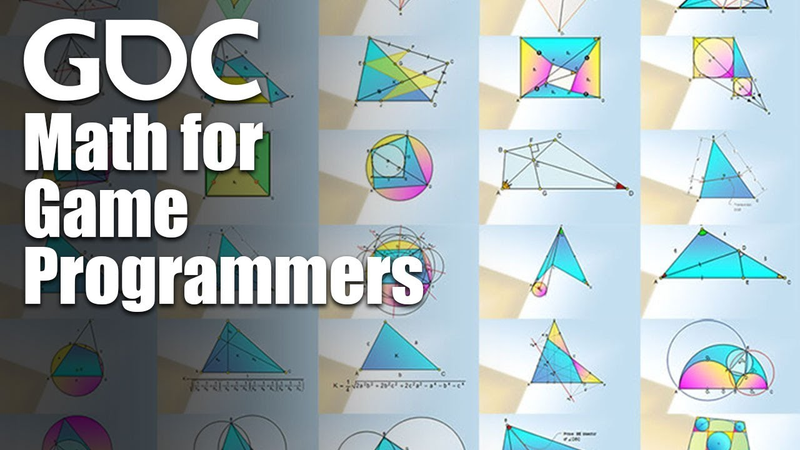
Math for Game Programmers: Mixing Geodetic, Hand-crafted and Procedural Geometry
This presentation explores the application of implicit geometry and radial basis functions (RBFs) for procedural content generation and simulation in video games.
- Implicit geometry using radial basis functions (RBFs) allows for continuous, morphing surfaces that interpolate scattered data points more effectively than traditional mesh-based methods.
- Unbounded kernel functions are superior to bounded kernels like Gaussians for complex surface interpolation because they provide the infinite support necessary to eliminate gaps between control points.
- Potential flow fields governed by Laplace’s equation can generate high-quality offset surfaces by solving a linear system based on source elements placed on handcrafted mesh polygons.
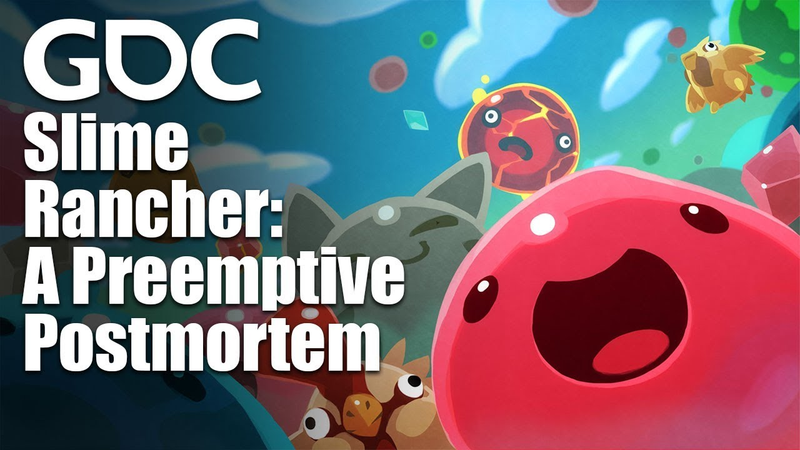
Slime Rancher: A Preemptive Postmortem
The success of Slime Rancher stems from a development philosophy that prioritizes a highly polished, satisfying core gameplay loop over speculative features or complex systems.
- Treat Early Access as a live service product rather than a development phase, focusing on major, feature-based content updates that generate hype rather than minor patch notes.
- Design games to be 'YouTube-friendly' by prioritizing emergent, unpredictable character behaviors and satisfying core gameplay loops that are visually engaging for spectators.
- Leverage organic growth on YouTube by distributing keys to smaller creators first, allowing the game to naturally climb the 'food chain' to larger influencers like Markiplier and Jacksepticeye without direct outreach.

Precision of Emotion: A New Kind of "Fun" Approach in Educational Games
The Sophia model redefines the concept of fun in educational gaming by framing it as a sophisticated psychological transformation where fear is converted into happiness through the acquisition of insight and mastery.
- The Sophia model defines educational 'fun' as the psychological transformation of fear into happiness through the achievement of mastery and insight.
- Effective game design should prioritize the player's emotional arc over simple performance-based tasks to foster deeper engagement and more durable learning outcomes.
- Designers should utilize the 'pain of absence' framework, which treats gaps in a player’s mastery or social efficacy as opportunities to build interconnected emotional loops.
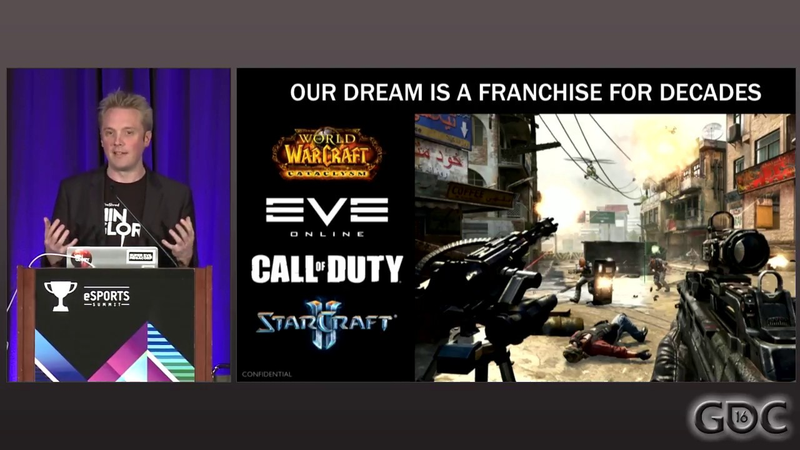
The Vainglory Story - 5 Lessons From Building a Touch Screen eSport
The mobile gaming industry is undergoing a fundamental shift as developers increasingly prioritize deep, core-gaming experiences over casual, short-form content.
- Competitive integrity is non-negotiable for mobile eSports; business models must be strictly orthogonal to player power to avoid the 'pay-to-win' stigma prevalent in the mobile industry.
- Successful mobile eSports require high-quality, low-latency networking optimizations to mitigate the inherent instability of Wi-Fi and LTE connections, as players will not use fixed-line networks.
- Contrary to industry assumptions that mobile sessions must be under three minutes, Vainglory successfully established a 20-minute average session length by prioritizing deep, competitive gameplay.
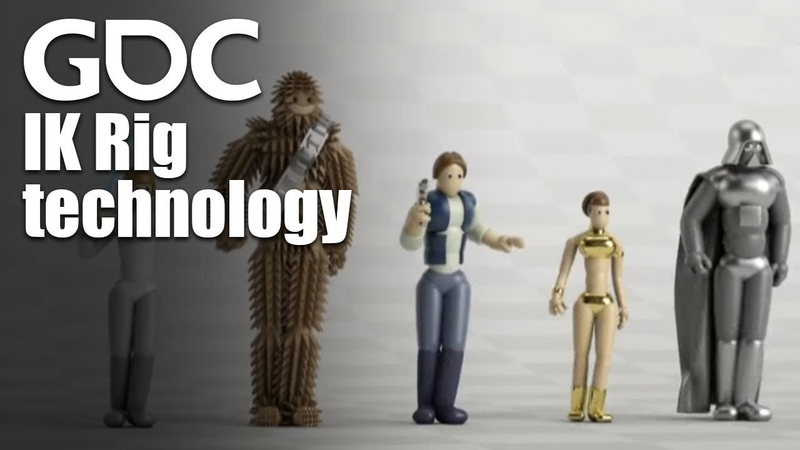
IK Rig: Procedural Pose Animation
The IK Rig represents a fundamental shift in animation pipelines by decoupling motion data from specific character skeletons.
- The IK Rig decouples animation data from specific bone hierarchies, enabling real-time retargeting of movement across diverse character scales, proportions, and species.
- This procedural system reduces production overhead by applying systemic behavioral rules—such as crouching or carrying weight—without requiring per-character keyframing or redundant motion capture.
- The rig utilizes real-time spatial anticipation, dynamic footstep tracing, and physical collision detection to mitigate common animation artifacts like foot sliding and environmental clipping.
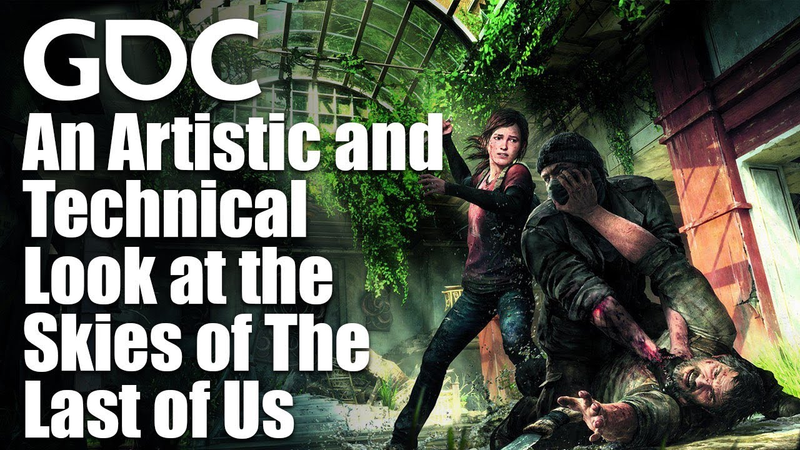
Moving the Heavens: An Artistic and Technical Look at the Skies of The Last of Us
The artistic and technical development of skyboxes in The Last of Us centers on the thesis that the sky is a critical, yet frequently overlooked, narrative tool capable of defining the emotional tone, lighting, and color palette of an entire game environment.
- The Last of Us utilized high-resolution matte paintings projected onto a dome to maintain artistic control over the game's skyboxes.
- To simulate cloud movement without the performance overhead of volumetric systems, the team implemented a UV distortion technique known as flow using vector-based motion maps.
- The development team achieved perspective-correct cloud movement by calculating the dot product of wind direction against the sky dome’s normals.
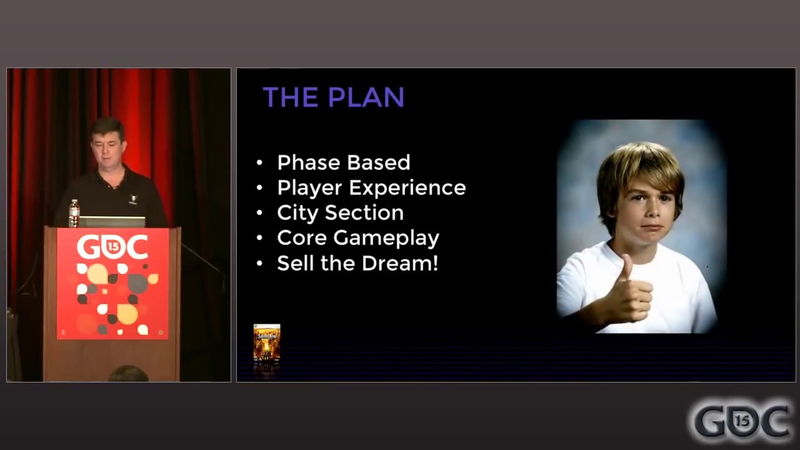
The Vertical Slice Challenge
The vertical slice serves as a vital pre-production milestone in game development, functioning as a litmus test for core gameplay loops, technical readiness, and team alignment.
- The vertical slice must function as a rigorous gate for validating core gameplay loops and technical readiness rather than serving as a marketing tool or aspirational visual demo.
- Treating vertical slices as visual targets rather than functional milestones frequently leads to unsustainable crunch and hidden optimization requirements during later production phases.
- Studios should prioritize establishing performance budgets and assessing the viability of core mechanics during a disciplined pre-production phase to identify systemic risks early.
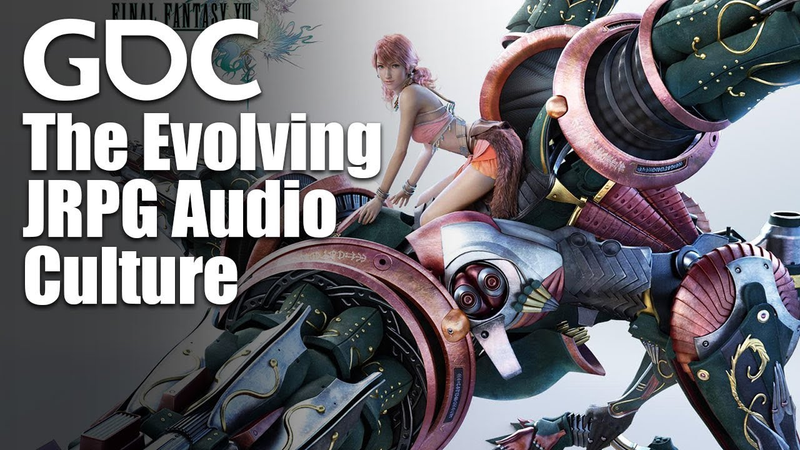
The Evolving JRPG Audio Culture
Japanese role-playing games maintain a distinct identity by balancing historical consistency with technological innovation.
- JRPG audio design prioritizes emotional, character-driven storytelling and melodic consistency, contrasting with Western titles that focus on environmental freedom and player agency.
- The genre has evolved from simple background loops to sophisticated, database-driven workflows that utilize multi-layered transition systems for seamless, high-fidelity audio.
- Modern JRPG development integrates sound effects directly with the musical score to ensure a harmonized, cinematic atmosphere throughout the interactive narrative.
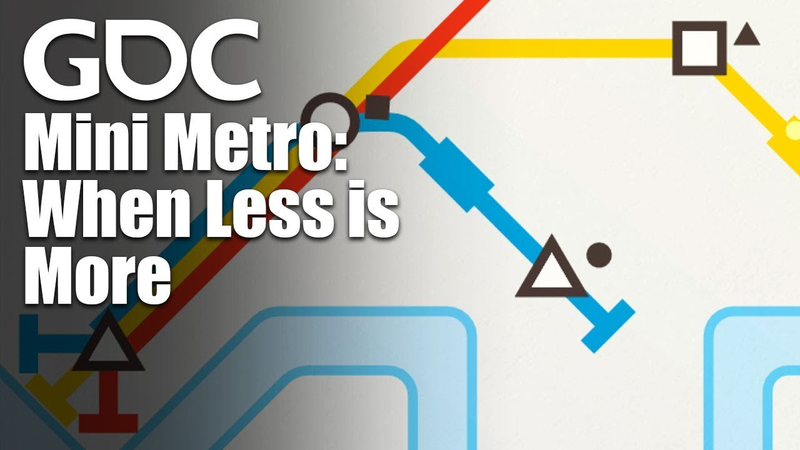
Mini Metro: When Less is More
The development of the user interface for the strategy game Mini Metro serves as a case study in how minimalist design choices can foster player discovery and engagement.
- Mini Metro achieved commercial success with 800,000 units sold and over three million dollars in gross revenue, maintaining a 96% positive rating on Steam.
- The design team prioritized minimalist UI by omitting complex HUDs, leaderboards, and meta-progression systems to focus entirely on the core gameplay loop of network optimization.
- Development spanned two years and involved extensive visual iteration, resulting in the creation of over 4,000 images and 112 preview videos.

My To-Do List: Organizing a Producer's Work
Game production functions as a multifaceted discipline centered on the strategic management of project backlogs, which serve as the primary mechanism for scheduling, prioritization, and conflict resolution.
- Producers must prioritize long-term project health, team morale, and sustainable working habits over short-term metrics that offer only a false sense of control.
- Effective production requires distinguishing between complicated problems that follow predictable patterns and complex problems that necessitate flexible, team-aligned solutions.
- Producers should adopt a servant leadership model that empowers specialists to solve problems, fostering team self-organization rather than relying on micromanagement.