
Game Developers Conference
Game Developers Conference (GDC, now the GDC Festival of Gaming) is the professional event for the games industry. It publishes recorded talks and interviews, annual industry survey reports such as the State of the Game Industry, and news articles.
Documents
Ten Principles for Good Level Design
Effective level design functions as a holistic delivery system that integrates narrative, mechanics, and mission structure to create immersive, replayable experiences.
- Designers should prioritize emotional resonance over simple player empowerment by working backward from a desired emotional impact to ensure every spatial choice and mechanic serves a specific purpose.
- Levels should function as a holistic delivery system that integrates narrative, mechanics, and mission structure to foster emergent gameplay and player agency.
- To maintain engagement and avoid predictable pacing, developers should use subversion by revisiting familiar locations with altered contexts to disrupt player expectations.
Modeling AI Perception and Awareness in Splinter Cell: Blacklist
The design of artificial intelligence in Splinter Cell: Blacklist centers on the philosophy that player experience and perceived fairness must take precedence over strict, uncompromising simulation.
- To ensure AI feels intelligent, developers should prioritize 'plausibility' over complex simulation, focusing on what the player perceives rather than what the AI technically knows.
- The Tactical Environment System (TESS) uses position nodes linked by choke points to prevent NPCs from staring at players through walls, ensuring they only react to threats within a logical pathing or line-of-sight connection.
- Detection models should utilize raycasting against multiple body bones to determine visibility, with the number of required visible bones scaling based on the player's stance and cover state.
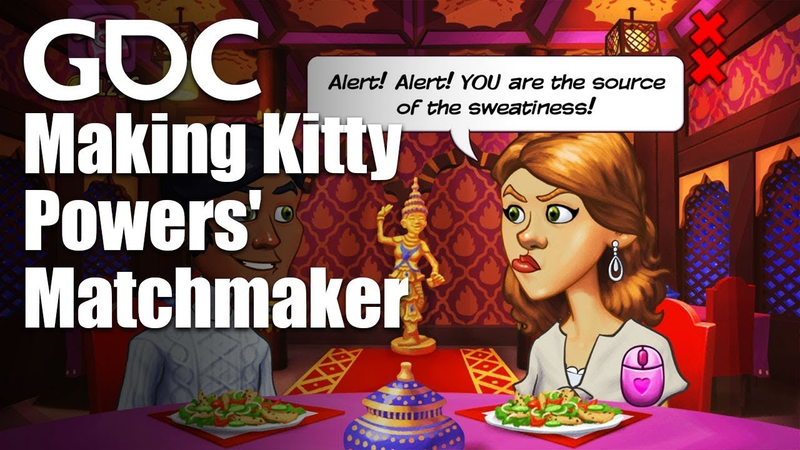
Making Kitty Powers' Matchmaker - Adventures of a Videogame Drag Queen
The development of the mobile dating simulator Kitty Powers' Matchmaker serves as a case study for independent game design, focusing on the integration of humor, inclusivity, and procedural generation.
- Kitty Powers' Matchmaker utilized a complex procedural generation system to create characters defined by five personality categories, including specific traits like guilty pleasures and bad habits to ensure depth.
- The game's script was designed as a modular, novel-length text database, enabling thousands of unique dialogue combinations and sarcastic interactions between the host and players.
- Development of the project spanned approximately two years and relied on a remote, collaborative workflow that managed vast text assets through shared spreadsheets.
Making Release Day Just Another Monday
The transition to a high-frequency update model for RuneScape centers on replacing rigid, siloed waterfall development with a decentralized structure of autonomous, cross-disciplinary scrum teams.
- Jagex transitioned the RuneScape development process from a traditional waterfall model with functional silos to six autonomous, cross-discipline scrum teams to maintain a high-frequency update schedule.
- The studio implemented a strict, centralized release process that ensures game updates are deployed every Monday, allowing the team to avoid the common pitfalls of delayed releases.
- To maintain coherence across autonomous teams, Jagex utilizes 'councils' of interested individuals who focus on specific game aspects like lore, combat, and balance, alongside shared resources like a centralized analytics team.
The Bane of All Development Postmortems: Communication is Hard So Give Up Now
Communication remains the most persistent and critical failure point in game development, frequently cited as the primary cause of project instability in industry postmortems.
- Project instability in game development is primarily driven by communication failures, necessitating a shift from infrequent status updates to proactive, continuous feedback loops.
- Leadership must foster a culture of psychological safety where team members are empowered to admit knowledge gaps, allowing for the early identification of risks before projects devolve into death marches.
- Structural information flow should be managed by establishing clear feature ownership and defining internal customer relationships between departments to prevent the formation of silos.
The Art of Reanimating Plants vs. Zombies 2
This presentation outlines the artistic development process for Plants vs. Zombies 2, focusing on the challenges of creating a sequel to a highly acclaimed, genre-defining title.
- Successful sequels must prioritize protecting the core identity and mechanics of the original title rather than attempting to replace them.
- The development team transitioned from hand-drawn art to a vector-based aesthetic using Flash to improve animation efficiency and visual readability on smaller mobile screens.
- The narrative shift to a time-travel theme allowed for the introduction of new environments and mechanics while maintaining the franchise's established visual language.
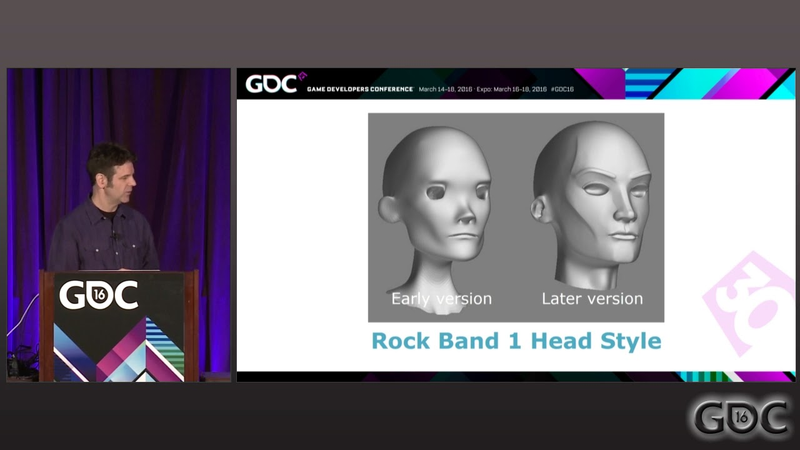
Maximizing Artistic Critique: Improving Communication for Everyone Involved in Critical Feedback
Effective artistic critique in game development functions as a collaborative, two-way dialogue designed to elevate product quality, team cohesion, and operational efficiency.
- Artistic critique should function as a collaborative, two-way dialogue focused on elevating product quality and team cohesion rather than serving as a subjective evaluation.
- Feedback must shift from personal opinion to an analytical process that identifies specific problems and describes the underlying user experience.
- Critique sessions are most effective when they focus on articulating the intent behind a reaction rather than prescribing specific creative solutions.
Rayman Legends: The Design Process Within the UbiArt Framework
The development of Rayman Legends centers on the implementation of the UbiArt Framework, an engine architecture designed to democratize the creative process by empowering level designers and artists to prototype independently.
- The UbiArt Framework enables rapid prototyping by allowing designers to combine 'white box' assets, movement tweens, and Lua scripting to prove gameplay concepts in as little as half a day.
- The development philosophy prioritizes frequent failure—up to 40 times a day—to quickly discard ineffective ideas and identify viable mechanics without becoming overly attached to early concepts.
- The engine utilizes a template-and-instance system that enforces core gameplay behaviors while allowing designers to tweak specific parameters, preventing the need for constant programmer intervention.
Lead the Way! A Practical Guide to Team Leadership
The transition from individual contributor to team lead in the game industry represents a fundamental shift in professional identity, requiring a move away from technical execution toward the cultivation of team morale and strategic direction.
- New team leads must treat management tasks like mentoring and conflict resolution as core responsibilities, dedicating 20% to 50% of their daily schedule to these duties.
- Effective leadership requires shifting from authoritative control to a supportive, mission-driven approach that utilizes active listening and Socratic questioning to foster team buy-in.
- One-on-one meetings should be prioritized for career development and long-term growth rather than being used for simple status updates.
Huddle up! Making the [SPOILER] of INSIDE
The Huddle, the central entity in the game INSIDE, represents a six-year evolution in procedural character design, moving away from traditional animation toward a complex, physics-driven architecture.
- The Huddle in INSIDE is a physics-driven entity composed of 26 independent bodies bound to a single skinned mesh, replacing traditional pre-baked animation.
- Movement is generated through a spine-based macro-motion system using spring-like edges, which allows for fluid transitions and structural integrity without common procedural artifacts.
- The creature achieves autonomous-looking movement by mapping secondary limbs and heads to the physics core using velocity and raycasting data to minimize computational overhead.
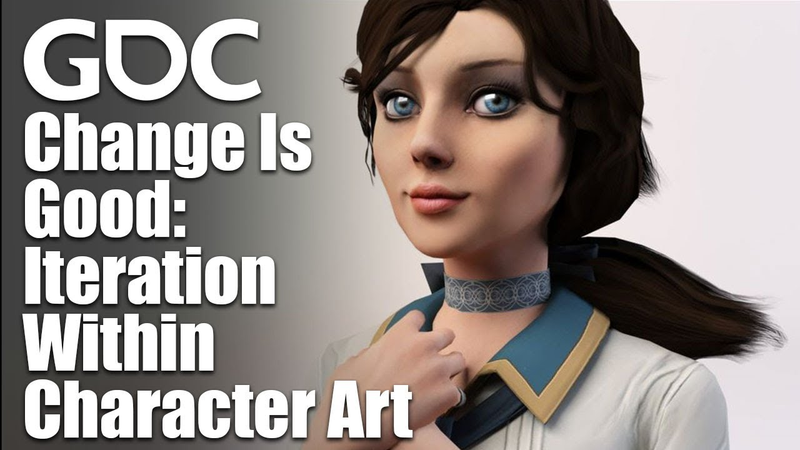
Change Is Good: The Importance of Iteration Within a Character Art Pipeline
The development of BioShock Infinite serves as a primary case study for the necessity of iterative design in character art pipelines.
- Transitioning from bespoke, labor-intensive asset creation to a standardized, modular system—utilizing shared topology, rigs, and UV layouts—is essential for reducing technical overhead and enabling rapid iteration.
- Implementing an override system using proxy boxes allows for efficient asset swapping and tiered customization, which effectively mitigates memory limitations while streamlining combat design.
- The development of BioShock Infinite demonstrates that character art must evolve alongside narrative shifts, as seen in the transformation of Elizabeth from a generic companion to a complex protagonist requiring custom shaders and unique rigging.

Adaptive Virtual Texture Rendering in Far Cry 4
Adaptive Virtual Texture rendering serves as a foundational technology for Far Cry 4, enabling the display of high-fidelity terrain and thousands of procedural decals without exceeding strict memory constraints.
- Ubisoft's Adaptive Virtual Texture (AVT) rendering technique allows for the rendering of thousands of terrain decals in under 1 millisecond, achieving a high resolution of 10 pixels per centimeter.
- The AVT system dynamically adjusts texture resolution based on camera distance by dividing the world into 64x64 meter sectors, allocating larger virtual image sizes for sectors closer to the camera and smaller sizes for those further away.
- To minimize memory footprint and bandwidth, the system uses a 32-bit page ID buffer during the G-buffer rendering pass, with bits allocated specifically for page ID, mipmap level, and virtual image size.