
Game Developers Conference
Game Developers Conference (GDC, now the GDC Festival of Gaming) is the professional event for the games industry. It publishes recorded talks and interviews, annual industry survey reports such as the State of the Game Industry, and news articles.
Documents
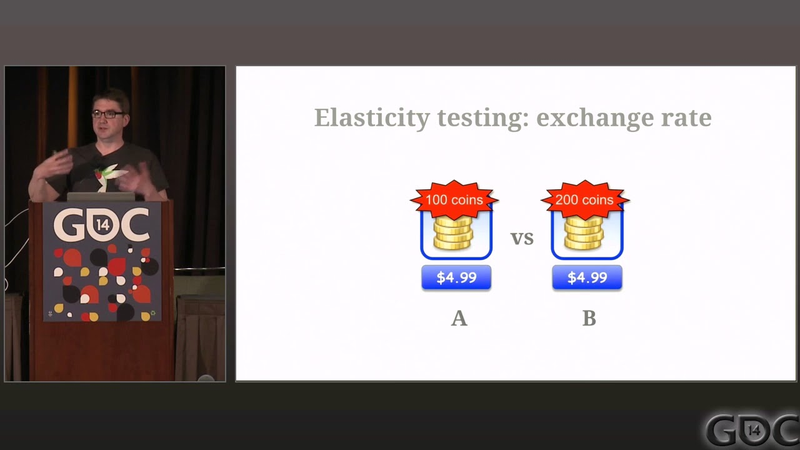
A/B Testing for Game Design Iteration: A Bayesian Approach
Bayesian A/B testing provides a superior framework for mobile game development, offering a dynamic and actionable alternative to traditional frequentist methods.
- Bayesian A/B testing allows for real-time optimization by providing a direct probability (0 to 1) that one variant is better than another, unlike frequentist methods which only provide a binary rejection of a null hypothesis.
- Frequentist testing is prone to the 'family-wise error' problem, where the risk of false positives increases significantly as more variants are added to a test (e.g., the false positive rate for two treatments is approximately 9.75%).
- Bayesian analysis incorporates 'priors'—existing business knowledge or historical data—to inform the test, allowing developers to start with a baseline (such as a known 30% retention rate) rather than assuming zero knowledge.

Applying Machine Learning Like a Responsible Adult
This presentation provides a foundational guide for game developers on integrating machine learning (ML) into game artificial intelligence, addressing common industry skepticism regarding performance, transparency, and reliability.
- Machine learning in game development should shift from basic neural networks toward specialized statistical techniques to ensure real-time performance and reliability.
- Feature engineering—the transformation of raw game data into structured input vectors—is the most critical process for ensuring model accuracy and system adaptability.
- Decision trees offer a 'white box' advantage by providing transparency and ease of interpretation, making them a preferred alternative to opaque, complex models.

Sand Rendering in Journey
The technical implementation of sand rendering in the 2013 title Journey prioritizes the subjective human experience of an environment over strict photorealism.
- The development of Journey prioritized a 'feel-real' aesthetic over photorealism to evoke emotional responses, using field research at Pismo Dunes rather than photographic references.
- To manage PlayStation 3 performance, the team utilized sharpened mipmaps for distance graininess and a custom view-dependent specular shader to simulate sand sparkle.
- The rendering pipeline employed a multi-layered height map system, combining high-resolution tiling maps over low-resolution base geometry to achieve a sense of scale.
Art Direction Bootcamp: Building a Visual Threshold
Art direction serves as a critical tool for player orientation, utilizing visual tropes and stereotypes to establish an immediate threshold of understanding.
- Art direction should utilize cultural shorthand and visual tropes to establish an immediate threshold of understanding, allowing players to intuitively grasp mechanics without extensive exposition.
- Designers should employ a 'snow globe' approach to world-building, focusing on key landmarks and consistent visual rules to create cohesive, manageable environments.
- Teams should replace dense, static style guides with concise one-sheets to ensure alignment and prevent the misuse of clichés.

Level Design in a Day: A Series of First Steps - Overcoming the Digital Blank Page
Overcoming the creative paralysis associated with the digital blank page requires a disciplined, structured approach to level design that prioritizes functional flow over immediate visual detail.
- Overcome creative paralysis by prioritizing functional flow and spatial layout over visual detail during the initial design phase.
- Define project scope early by establishing clear constraints, including campaign duration, player count, and technical limitations.
- Utilize bubble diagrams to map out areas of intent before drafting a formal top-down layout to anchor the space around a dominant feature.

AAA Academics: Superstar Designers in Academia
The transition of veteran AAA game designers into academia represents a strategic effort to formalize game design education by bridging the gap between high-level industry production and theoretical instruction.
- Veteran AAA designers are transitioning into academia to formalize game design education by mirroring the iterative, system-based methodologies used in professional studio production.
- The primary objective of these academic programs is to accelerate student development, effectively shortening the timeline for graduates to reach leadership roles within the industry.
- To ensure curricula remain grounded in current industry practices, institutions must allow faculty to maintain active external studio ties rather than shifting to purely theoretical instruction.

Math for Game Programmers: Fast and Funky 1D Nonlinear Transformations
This presentation explores the application of 1D nonlinear transformations, often referred to as easing functions or normalized utility functions, to enhance the "juice" and organic feel of game mechanics.
- Apply nonlinear transformations to the 0 to 1 input range of any parametric equation to enhance the organic feel of animations, AI, and UI without altering the underlying function.
- Replace computationally expensive native math library calls like POW or square roots with simple polynomial operations to achieve high-performance results.
- Approximate power functions using weighted blends of lower-order polynomials to maintain 99% accuracy while significantly reducing CPU overhead.

Tokyo Jungle and Japan's Gaming Potential
The Japanese gaming industry thrives when developers prioritize original, high-concept ideas over the imitation of Western market trends.
- The development team behind Tokyo Jungle secured a first-party PlayStation 3 project despite having no prior professional game development experience.
- By ignoring industry 'common sense' regarding development constraints, the team successfully implemented over 50 unique playable characters, each with distinct movement, combat, and scaling parameters.
- The studio leveraged their background in web design to handle all marketing and promotional materials—including trailers, posters, and physical media kits—to ensure the product's core vision was communicated directly to consumers.
Super Powering the Saints: Animation Direction of Saints Row IV's Super Jumping
The development of the super jumping system for Saints Row IV presented a unique animation challenge: integrating supernatural movement into a franchise defined by a "comfortable and confident" blue-collar aesthetic rather than traditional superhero tropes.
- To maintain the specific 'Saints Row' identity, the animation team avoided traditional superhero tropes—which rely on character-specific posing—in favor of grounded, evolving motions that accommodate any player-customized character.
- The team abandoned initial attempts to capture superhero jump reference footage because the results were either unrealistic or failed to convey a sense of momentum, leading them to instead use Olympic long-jumping as the primary reference for realistic, evolving body mechanics.
- To prevent the animation from feeling repetitive during hours of gameplay, the team implemented a system that blends multiple jump states based on velocity and height, ensuring the character's movement evolves naturally from takeoff to apex and landing.

Getting Players to Care: Using Narrative to Drive Retention
Narrative-driven design serves as a primary engine for player retention in mobile simulation games, particularly when plot progression is deeply integrated into the core gameplay loop.
- Integrating narrative progression into core gameplay loops, specifically through mandatory story gates and character arcs, achieves an 87 percent tutorial completion rate.
- Consistent weekly narrative updates are critical for retention, sustaining a 71 percent one-day retention rate and a 33 percent monthly retention rate.
- Narrative content functions as a monetization driver, with 63 percent of users engaging with premium quest chains.
Dynamic Stories for Dynamic Games: Six Ways to Give Each Player a Unique Narrative
This 2016 GDC presentation advocates for the integration of dynamic storytelling techniques in single-player video games to increase player agency, replayability, and engagement.
- To increase player agency and replayability, developers should move away from static, linear narratives toward systems that allow players to influence their unique gameplay journey.
- The 'explorable story space' technique allows players to piece together narratives at their own pace through optional content, as seen in titles like Gone Home.
- Developers can use 'drama management' systems, which function like a tabletop dungeon master, to steer emergent gameplay back toward a cohesive narrative arc.
Absolutely No Pressure: Continuing a Successful Game Series with Civilization VI
The development of Civilization VI represents a deliberate evolution of the franchise, driven by a rigorous critique of the limitations inherent in its predecessor.
- Firaxis addressed the 'rote' decision-making in Civilization V by introducing 'unstacked' cities in Civilization VI, which forces players to place specialized districts on specific map tiles to gain bonuses.
- To resolve the rigid, linear progression of Civilization V's social policies, the team implemented a 'Civics Tree' that functions like a technology tree, allowing players to unlock policy bundles through cultural progress.
- The development team utilized community feedback from forums and beta testers to identify balance issues, such as the combat system in Civilization V where weak units could disproportionately damage stronger ones.