
Game Developers Conference
Game Developers Conference (GDC, now the GDC Festival of Gaming) is the professional event for the games industry. It publishes recorded talks and interviews, annual industry survey reports such as the State of the Game Industry, and news articles.
Documents
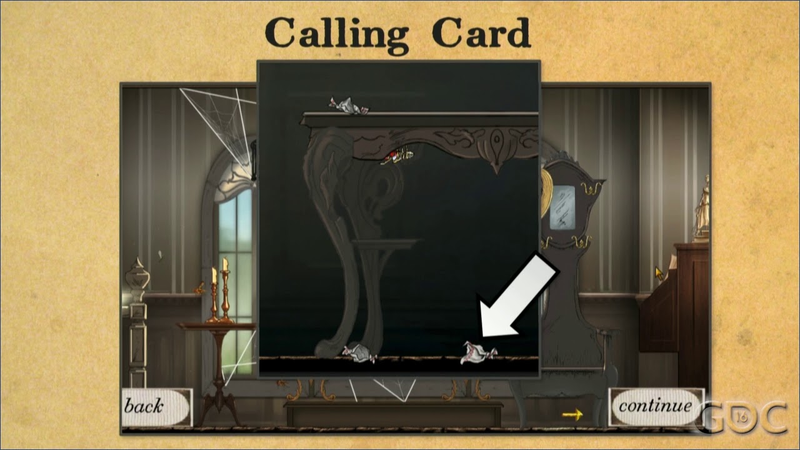
Advanced Environmental Storytelling in Spider: Rite of the Shrouded Moon
Spider: Rite of the Shrouded Moon demonstrates how environmental storytelling can successfully replace traditional dialogue and text to convey complex, non-linear narratives.
- Environmental storytelling in 'Spider: Rite of the Shrouded Moon' relies on non-linear narrative delivery where the author does not control the order in which players encounter story fragments, requiring players to actively piece together mysteries without text or dialogue.
- To maintain narrative cohesion, designers should use 'calling cards'—recurring, interactive props like candy wrappers or toys—to establish a character's presence across different levels without requiring unique assets for every interaction.
- Portraits serve as critical anchor points in environmental storytelling, allowing designers to link specific names, faces, and character traits to props found throughout the game world.
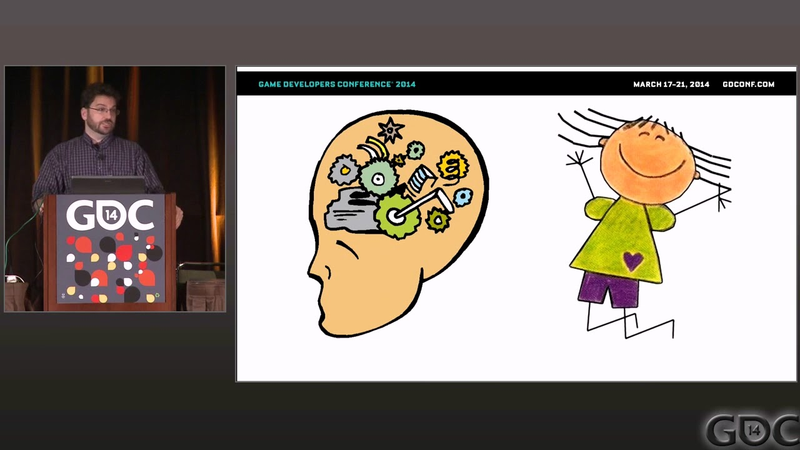
Creating Strong Video Game Characters
Compelling video game narratives depend on the fundamental principle that a character is defined by what they want and the actions they take to achieve those desires.
- Character identity is defined by the intersection of a character's core desires and the specific actions they take to achieve those goals.
- Unity of purpose—the alignment between player intentions and character motivations—is the most critical factor for maintaining player immersion.
- Ludonarrative dissonance occurs when the unity between player and character breaks, leading to player frustration and disengagement regardless of character design quality.
The Lives of Others: How NPCs Can Increase Player Empathy
Modern game development is shifting toward a paradigm where non-playable characters function as integral, living components of a virtual ecosystem rather than mere background assets.
- Game development is shifting toward treating NPCs as autonomous agents with individual goals, social networks, and backstories rather than static background assets.
- Humanizing enemies by embedding unique behavioral traits and personal possessions forces players to confront the emotional consequences of violence.
- Moving away from rigid, one-to-one dialogue structures toward flexible, systemic interaction models is essential for creating deeper narrative engagement.
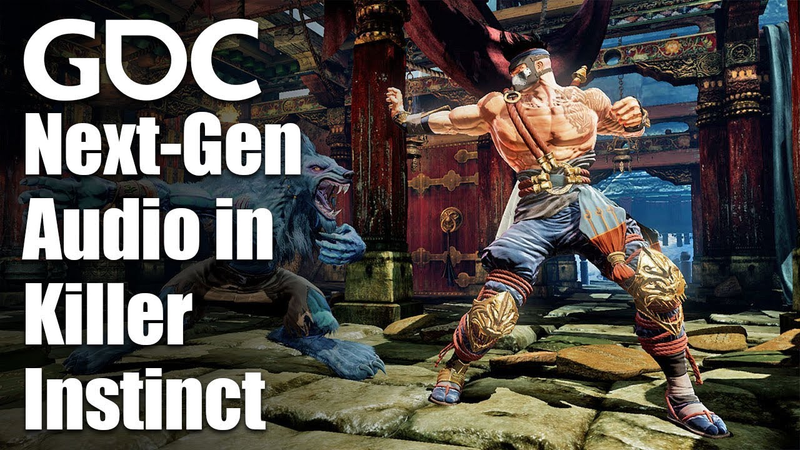
Next-Gen Audio in Killer Instinct
The 2013 reboot of Killer Instinct serves as a case study in balancing nostalgic brand identity with modern technical innovation.
- The Killer Instinct soundtrack utilizes a dynamic music system that adjusts in real-time based on gameplay, transitioning between verse and chorus states depending on whether a player successfully lands a combo of 15 hits or higher within an eight-bar window.
- To maintain audio-visual cohesion, the development team created 400 unique sound assets—50 per level—that function as a rising scale, allowing the game to trigger specific musical hits that correspond to the player's combo progress.
- The audio team implemented a spatialized sound system where stereo sound effects are split into two mono channels that pan dynamically based on character position, using variable silence durations to create real-time slapback echo delays.
Exploding the Box: Thinking Differently in the A + B Era
The development of Sunset Overdrive serves as a case study in overcoming the limitations of traditional, formulaic game design.
- Success in modern game development relies on replacing rigid design documentation with a culture of rapid, grey-box prototyping and iterative refinement.
- The development of Sunset Overdrive shifted from a standard cover-based shooter to a high-velocity, traversal-focused experience by prioritizing player agency over conventional genre constraints.
- Cross-departmental alignment on abstract creative goals, such as tone and satire, was achieved through shared touchstones like curated movie nights and music-driven brainstorming sessions.
Manning the Oars or Raising the Sail?
The management of EVE Online demonstrates a highly effective model for scaling community operations through the integration of player-driven labor and democratic governance.
- EVE Online maintains a lean internal team of seven developers by leveraging a vetted volunteer workforce of approximately 100 people to handle forum moderation, bug reporting, and onboarding.
- The Council of Stellar Management, a democratically elected body of players, functions as a formal feedback loop and early warning system to align development roadmaps with user interests.
- The studio scales game utility by providing API access and direct developer support to third-party tool creators, offloading resource-intensive community needs to dedicated users.
Lessons Learned Creating UI for The Division
The user interface for The Division represents a significant shift in development methodology, moving away from traditional canvas-based systems toward a node-based, immediate-mode architecture within the Snowdrop engine.
- The Snowdrop engine UI system uses a node-based visual scripting architecture instead of a traditional canvas, allowing for 5,500 nodes to be utilized across game systems by the time of the Survival DLC release.
- Prioritizing rapid iteration is a core pillar of the engine, supported by keeping compile times around one minute and ensuring editor startup times remain within a few seconds.
- Moving loop execution from the node-based script system into the underlying C++ code can yield massive performance gains, such as reducing a specific graph's execution time from 20 milliseconds to 0.6 milliseconds.

Crowdsourcing the Localization of Gone Home
The Fullbright Company utilized crowdsourced localization to bring the narrative-heavy indie game Gone Home to international markets without incurring the high costs associated with professional translation services.
- The Fullbright Company successfully localized Gone Home into over a dozen languages by utilizing a crowdsourced model to bypass the high costs of professional translation services.
- To overcome the challenge of narrative embedded in 3D assets, developers implemented a text-only system using dynamic overlays for in-game objects and standard subtitle files for audio.
- The localization workflow was designed for accessibility, allowing community volunteers to contribute using only simple XML and plain text files without requiring specialized software.
RPG Development: Inspiration and Perspiration
Successful role-playing game development hinges on the ability to ground expansive fantasy worlds in relatable, realistic details that foster deep player immersion.
- To improve player retention, developers must avoid overwhelming users with too many simultaneous decisions, such as combining complex puzzles, environmental hazards, and combat in a single sequence.
- Incorporating realistic, relatable elements into NPC behavior—such as giving villagers unique AI-driven stories and opinions—helps players emotionally connect with the game world.
- Designing gameplay loops in a circular, intuitive form rather than linear, repetitive tasks reduces player fatigue and creates a more engaging, less boring experience.


State of the Game Industry 2018
The 2018 State of the Game Industry report provides a comprehensive snapshot of the global game development landscape leading into GDC 2018.
- PC remains the dominant development platform at 60%, while interest in mobile development has declined to 36%.
- The Nintendo Switch has become a major industry force, with 36% of developers expressing interest in the platform, surpassing interest in the Xbox One.
- Confidence in the long-term sustainability of VR/AR has declined for the first time in three years, with 29% of developers expressing skepticism and 42% predicting mobile-based immersive reality will be the dominant technology within five years.
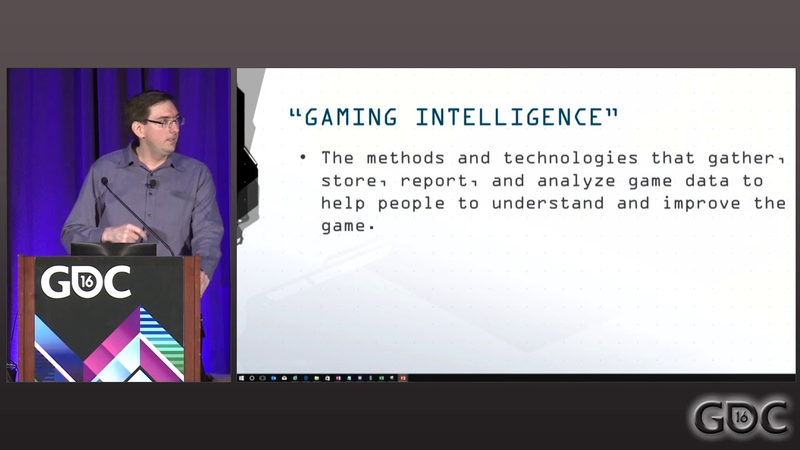
Making "Big Data" Work for Halo: A Case Study
The modernization of telemetry systems for the Halo franchise represents a critical shift from legacy batch-processing methods to a high-performance, real-time architecture capable of handling over 800,000 events per second.
- The Halo telemetry system was modernized to handle over 800,000 events per second by shifting from legacy batch processing to a high-performance, real-time architecture.
- Developers implemented a dual-stream approach using the Common Event Logging Library to separate critical data from non-essential events, keeping CPU overhead within a 1-millisecond-per-frame budget.
- System efficiency is maintained through optimized C++ macros and the Bond serialization protocol, resulting in a lean average event size of 120 bytes.
Level Design Workshop: Designing Celeste
The design philosophy behind Celeste centers on a fractal narrative approach, where individual levels function as self-contained stories that dictate pacing and mechanical structure.
- Level design in Celeste is structured as a hierarchy of stories, where individual screens represent quick, simple challenges that aggregate into larger, thematic area arcs.
- The development process relies on iterative 'brute force' refinement, evidenced by the developer discarding 20 levels from a single area because they failed to align with the intended mood.
- Levels are designed to be permissive, allowing for multiple solutions and emergent gameplay, which accommodates both casual players and speedrunners who may discover unintended shortcuts.