
Game Developers Conference
Game Developers Conference (GDC, now the GDC Festival of Gaming) is the professional event for the games industry. It publishes recorded talks and interviews, annual industry survey reports such as the State of the Game Industry, and news articles.
Documents
Defense Against the Dark Arts: Budgets and Budget Reporting
Effective budget management in modern game development necessitates a shift from reactive, crisis-driven asset cutting toward proactive, data-driven oversight integrated throughout the entire production lifecycle.
- Shift from reactive, crisis-driven asset cutting to proactive, data-driven oversight integrated throughout the entire production lifecycle.
- Evaluate assets continuously across three shifting axes: memory cost, visual impact, and gameplay significance.
- Implement both preventative estimation tools and forensic auditing systems to bridge the gap between digital content creation and actual runtime performance.

Rules for Development (of People)
Building high-performing game development teams requires a shift from reactive growth to intentional, structured investment in human capital.
- Game development teams should adopt the 70-20-10 growth model, allocating 70 percent of development to hands-on experience, 20 percent to coaching and peer feedback, and 10 percent to formal training.
- Studios achieve higher performance by focusing on individual strengths rather than attempting to remediate weaknesses.
- Leadership development is best supported through confidential, peer-to-peer coaching labs that allow team leads to discuss failures and refine soft skills in a safe environment.
Making Things Up: The Power and Peril of PCG
Procedural content generation serves as a foundational pillar in modern game development, offering a scalable solution to content creation while presenting significant challenges in design oversight.
- Successful procedural content generation (PCG) relies on balancing algorithmic efficiency with human-authored quality control rather than treating systems as autonomous replacements for designers.
- Developers should select from four core algorithmic classes—constructive methods, grammars, constraint-based systems, and optimization-based systems—to manage the trade-offs between implementation speed and gameplay predictability.
- Integrating evolutionary search and machine learning allows for the automation of complex development tasks, including real-time balancing, playability testing, and iterative feedback loops.
Returners and Retention - How to Win Back Lapsed Players
Reacquiring lapsed players serves as a vital, cost-effective strategy for ensuring the long-term sustainability of aging game titles.
- Long-term lapsed players remain a viable audience, as evidenced by RuneScape data showing that the largest group of returning members consists of players who have been absent for over a year, with some returning after absences of over 10 years.
- Passive communication strategies—where updates are shared on social media platforms like Facebook and YouTube without aggressive direct pushing—are more effective for re-engaging lapsed players than high-frequency, conversational platforms like Twitter.
- Content updates that resolve long-standing narrative cliffhangers or address specific player-identified pain points are highly effective at motivating returns, though developers must ensure these changes do not alienate existing players by being overly disruptive.
Tales From a Crowdsourced Game Design
Jagex employs a sophisticated crowdsourced design model for the long-running title RuneScape, structured around three distinct tiers of player integration: feedback, collaborative decision-making, and full content creation.
- Jagex utilizes a structured polling system for RuneScape that requires a 75% majority vote from the player base to approve new content.
- The crowdsourced design model is categorized into three tiers: feedback, collaborative decision-making, and full content creation.
- Radical transparency is maintained through regular dev blogs, live streams, and the public release of detailed design documents to align developer intent with user expectations.
Rules of the Game: Another Five Techniques from Particularly Crafty Designers
Game design functions as a subjective, iterative discipline where innovation frequently emerges from challenging conventional industry wisdom rather than adhering to rigid mandates.
- Apply 'designing by fractal' by using a consistent set of core pillars or algorithms across all project scales, from individual mechanics to overarching narrative arcs, to ensure structural integrity and team alignment.
- Prioritize the non-paying majority in free-to-play games as the foundational ecosystem that drives virality, matchmaking health, and community engagement, which ultimately sustains the environment for paying users.
- Avoid aggressive early paywalls in free-to-play models, focusing instead on long-term retention and a compelling initial experience before introducing financial transactions.
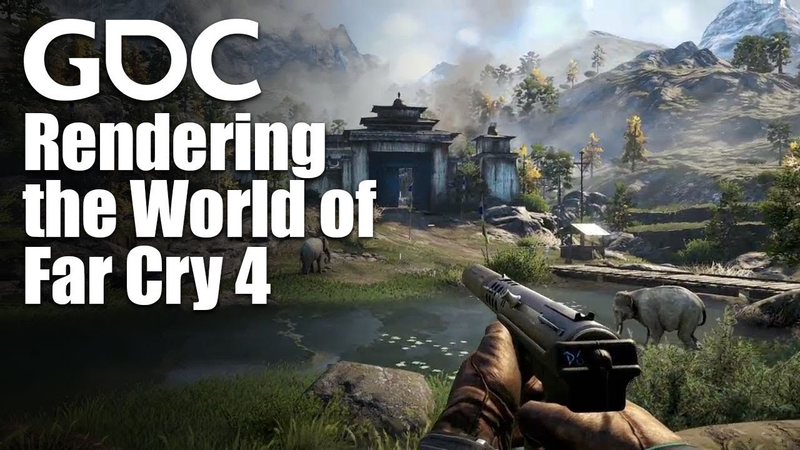
Rendering the World of Far Cry 4
The development of Far Cry 4 centered on the implementation of a physically based rendering pipeline designed to achieve high-fidelity material realism while maintaining performance across five distinct hardware platforms.
- The development team implemented a physically based rendering (PBR) pipeline using the Disney BRDF model, incorporating metallic and anisotropic parameters to achieve high-fidelity material realism across five hardware platforms.
- A custom anti-aliasing solution combining SMAA with temporal super-sampling achieved high-fidelity image quality at a performance cost of only two milliseconds.
- The transition to a GPU-based virtualized radiance transfer system eliminated CPU-GPU synchronization bottlenecks, while offline G-buffer baking and real-time GPU filtering reduced memory overhead by approximately two megabytes.
GDC Live Stream
The 20th Independent Games Festival and the 18th Game Developers Choice Awards serve as a comprehensive celebration of the global gaming industry’s evolution, emphasizing a shift toward diverse storytelling, technical innovation, and inclusive design.
- The 20th Independent Games Festival and 18th Game Developers Choice Awards recognized nearly 600 applicants, reflecting an independent sector that now matches major publishers in production standards.
- The Legend of Zelda: Breath of the Wild won Game of the Year, while Night in the Woods received the Seamus McNally Grand Prize, highlighting an industry trend toward deep, narrative-driven storytelling.
- Technical and artistic excellence was formally recognized in titles including Horizon Zero Dawn, Cuphead, and What Remains of Edith Finch, emphasizing the importance of sound, visual design, and mechanics.

Production: Working at the Heart of the Team
Game production serves as the critical nexus for team health, requiring leaders to function as transformational figures who prioritize collective unity over individual contributions.
- Game producers act as the central nexus for team health, prioritizing collective unity and shared values over individual contributions to transform isolated developers into a cohesive unit.
- Effective production requires a dual focus on operational oversight, such as high-level project tracking, and emotional intelligence to diagnose and resolve team friction.
- Producers must implement consistent weekly rhythms and structured routines to provide stability and maintain alignment with long-term goals amidst the inherent chaos of creative development.
Helping It All Emerge: Managing Crowd AI in Watch Dogs 2
The creation of a living, reactive urban environment in Watch Dogs 2 centers on the implementation of an Anecdote Factory, a system designed to generate unscripted, emergent narrative moments.
- Ubisoft managed civilian behavior in Watch Dogs 2 using a logic-based system containing approximately 700 rules that, through combinatorial complexity, generated billions of potential behavioral outcomes.
- The AI decision-making process utilizes a multi-factor evaluation where agents weigh personal relationships, emotional states, and environmental context to determine whether to ignore, observe, flee, or fight during an incident.
- To maintain performance and prevent chaotic feedback loops, the team implemented 'limiters' on loud, high-impact behaviors to ensure that emergent interactions between NPCs remained within manageable, finite limits.
Exploring SimCity: A Conscious Process of Discovery
The development of SimCity centers on the philosophy that sandbox games thrive when built upon simple, modular systems that encourage emergent gameplay.
- Sandbox game development should follow a breadth-first approach, layering core mechanics, feedback, and player tools incrementally to justify development effort through actual gameplay experience rather than theoretical design.
- Avoid the 'complexity rabbit hole' by keeping individual simulation components simple; early prototypes for SimCity (2013) showed that over-engineering systems like power plants created unmanageable UI and performance requirements.
- Performance in sandbox simulations requires avoiding global loops; instead, use bucketed systems and round-robin scheduling to propagate navigation and agent information across frames.

Animation Bootcamp: Animation Prototyping for Games
Game development teams frequently struggle to translate creative visions into functional products because they prioritize high-fidelity craft over iterative structural testing.
- Prioritize iterative structural testing over high-fidelity craft to avoid the pitfalls of lengthy, high-stakes planning and ensure core gameplay mechanics are functional.
- Focus early development on the interplay between starting points, goals, opposition, and player tools rather than aesthetic details.
- Animators should use modular tools like auto-riggers and retargeting systems to rapidly iterate on gameplay feel without waiting for final art assets.