
Game Developers Conference
Game Developers Conference (GDC, now the GDC Festival of Gaming) is the professional event for the games industry. It publishes recorded talks and interviews, annual industry survey reports such as the State of the Game Industry, and news articles.
Documents
Temporal Reprojection Anti-Aliasing in INSIDE
Temporal Reprojection Anti-Aliasing (TAA) serves as a critical post-processing solution for the game INSIDE, addressing the visual instability caused by the title’s side-scrolling camera movement and complex geometric detail.
- The TAA implementation for INSIDE on Xbox One achieves a performance cost of approximately 1.7 milliseconds at 1080p resolution.
- The system utilizes a 16-sample Halton 2-3 sequence to jitter the view frustum, allowing for the recovery of sub-pixel information.
- To prevent ghosting and smearing, the engine employs neighborhood clipping, which clamps history samples to the 3x3 pixel color space of the current frame.
Sucker Punch's Performance Capture for inFAMOUS: Second Son
The development of inFAMOUS: Second Son marked a significant technical shift for Sucker Punch, moving away from traditional joint-only rigs toward a sophisticated, data-driven facial capture pipeline.
- Sucker Punch transitioned to a data-driven facial capture pipeline for inFAMOUS: Second Son, replacing traditional joint-only rigs with an example-based system rooted in the Facial Action Coding System.
- The studio utilized wireless head-mounted cameras and a consistent 168-marker set to capture actor performances in real-time, ensuring precise translation of physiological details like jaw depth and lip movement.
- The animation engine employs a pose-space deformation system that integrates skin clusters with vertex-level offsets, using radial basis functions to normalize blending and retargeting across character models.
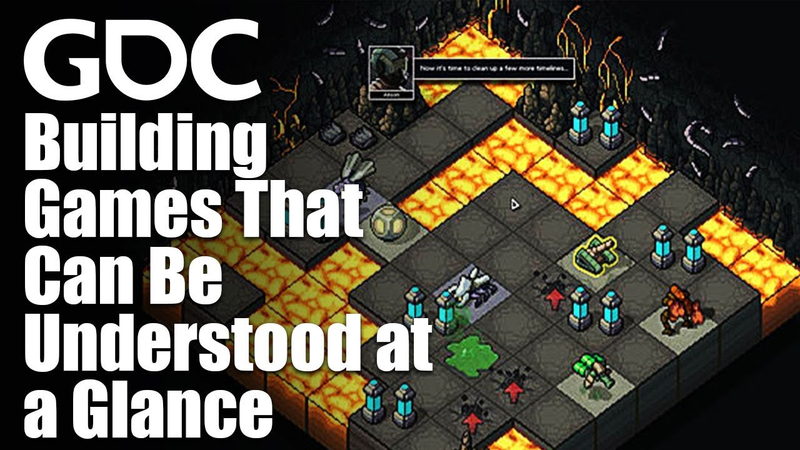
Building Games That Can Be Understood at a Glance
Designing games that are immediately comprehensible to an outside observer—a concept termed subway legibility—serves as a powerful tool for indie developers to improve tutorials, organic discovery, and marketing.
- Apply the 'three reads' principle to UI design: the first read establishes the genre or hook, the second communicates core mechanics, and the third provides secondary contextual information.
- Prioritize visual hierarchy by scaling and positioning UI elements based on their importance to ensure the game state is immediately understandable to both players and observers.
- Utilize 'subway legibility' to lower the cognitive load on new players, which simplifies tutorial design and allows marketing materials to convey value without needing extra context.
Fizzy Brushstrokes: The Art of Knights and Bikes
The development of Knights and Bikes centers on the intentional use of a constrained, hand-drawn aesthetic to capture the unfiltered imagination of childhood.
- To maintain a consistent, hand-crafted aesthetic in 'Knights and Bikes' using Unity, the team utilized thousands of hand-painted 2D assets as PNGs rather than developing a custom engine.
- The game's animation style employs a 'line boil' technique, where every asset is drawn three times to create a stop-motion effect that conveys the infectious, shifting energy of childhood.
- The art direction was heavily influenced by the work of Cornish painter Alfred Wallace, whose use of simple materials and lack of formal training provided a blueprint for creating 3D environments out of 2D assets.
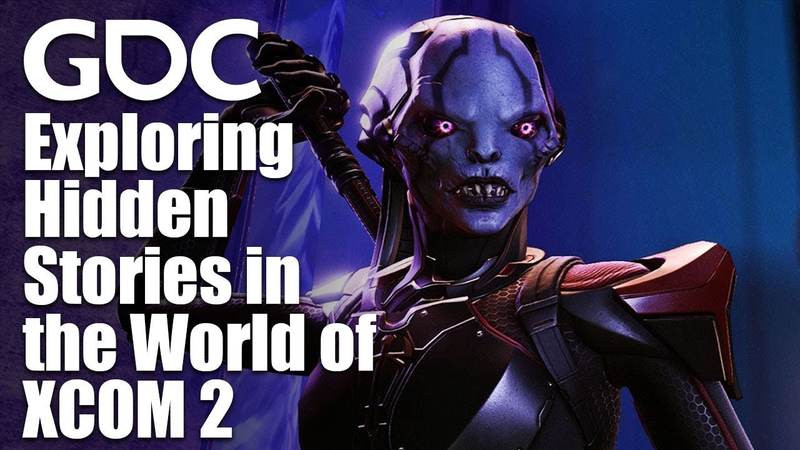
Exploring Hidden Stories in the World of XCOM 2
Environmental storytelling serves as a critical tool for enhancing player immersion in tactical strategy games, particularly within the procedural constraints of XCOM 2.
- To manage the complexity of 508 level components across 174 core levels in XCOM 2, the team utilized a modular 'plot and parcel' system that allowed levels to be rotated 360 degrees and adapted for different biomes and weather conditions.
- Environmental storytelling can be achieved by assigning specific characters and backstories to generic props, such as using flower pots to create a 'Flowerpot Man' narrative that landmarks rooftops across slum levels.
- When working with limited resources, designers should prioritize creating 'micro-stories' using existing assets rather than relying on unique, high-cost set pieces that require significant development time.
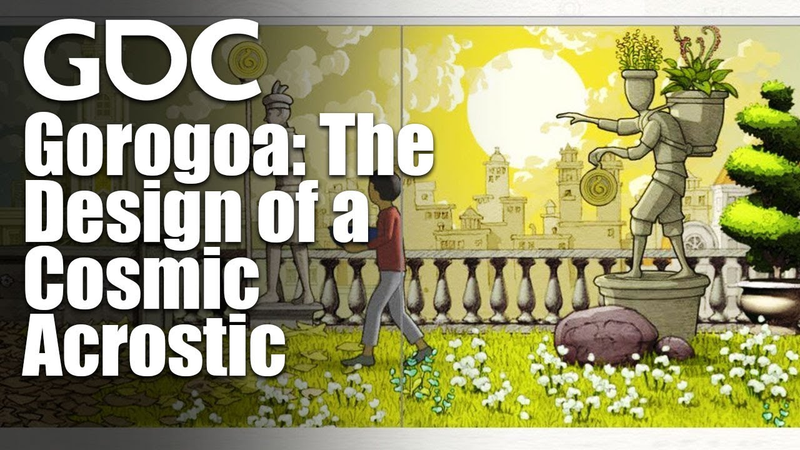
Gorogoa: The Design of a Cosmic Acrostic
Gorogoa functions as a meditation on the intersection of visual art and interactive logic, centered on the concept of a cosmic acrostic.
- Gorogoa utilizes a 2x2 grid system to manage cognitive load and maintain focus, intentionally avoiding the complexity of excessive zoom layers.
- The game prohibits direct interaction within individual tiles, forcing players to progress solely by connecting and manipulating multiple panels.
- The development process spanned five years, necessitated by the high interdependence of visual, narrative, and logical elements where minor adjustments triggered extensive ripple effects.
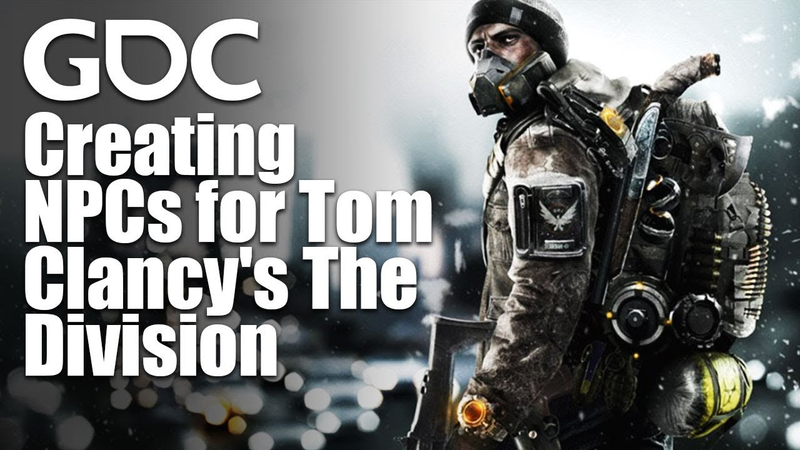
Blending Autonomy and Control: Creating NPCs for Tom Clancy's The Division
The development of artificial intelligence for Tom Clancy’s The Division centers on the integration of server-side behavior trees within the proprietary Snowdrop engine to create a dynamic, tactical combat experience.
- The Division features 36 unique combat AI variations categorized into 11 distinct archetypes, designed to create 'combat puzzles' where enemies synergize their skills to force specific player tactics.
- NPC behavior is built on a modular, priority-based system that evaluates critical events (like grenades or status effects) before executing scripted level-design orders or dynamic objectives.
- The AI detection system utilizes five alert levels—ranging from idle to combat investigation—governed by audio and visual stimuli defined by specific archetype vision cones.
Super Producers: Build Your Leadership and Make Great Games
Effective game production leadership centers on the producer’s role as a facilitator whose primary objective is to empower teams and ensure the delivery of high-quality products.
- Producers must transition from administrative scheduling to strategic leadership by empowering specialists rather than usurping their authority.
- Operational excellence requires transforming meetings into actionable outcomes and addressing conflicts directly to maintain a consistent shipping mentality.
- Project success depends on maintaining a clear, transparent balance between the three core constraints of time, resources, and quality.
The Portal Locomotion of Budget Cuts
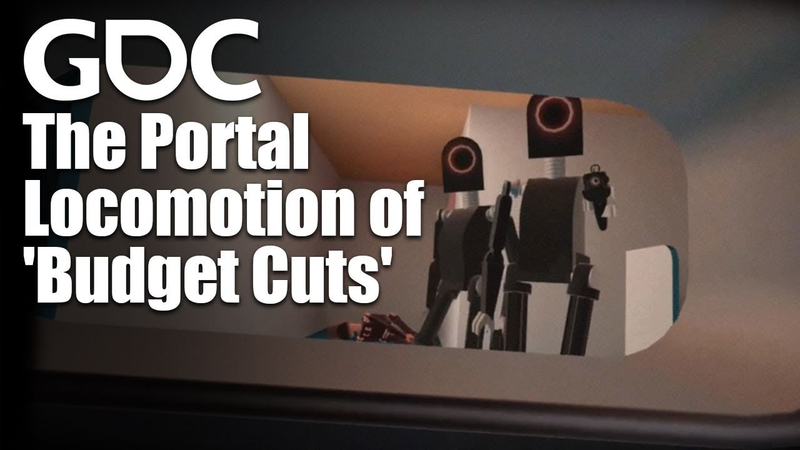
The development of the portal-based locomotion system for the virtual reality stealth game Budget Cuts focused on solving the inherent challenges of VR movement, specifically motion sickness, navigation predictability, and gameplay pacing.
- The Budget Cuts locomotion system uses a physical translocator beacon to naturally constrain movement speed and distance, avoiding the disorientation associated with traditional point-and-click teleportation.
- To mitigate motion sickness, the game employs a portal window that previews the destination and uses spherical linear interpolation (slerp) to provide a smooth, consistent transition regardless of player head orientation.
- The team optimized performance by replacing resource-heavy render-target techniques with Z-buffer manipulation, which renders only the necessary geometry within the portal to reduce GPU load.
Moving the Needle: User Research at the End of the Production Cycle
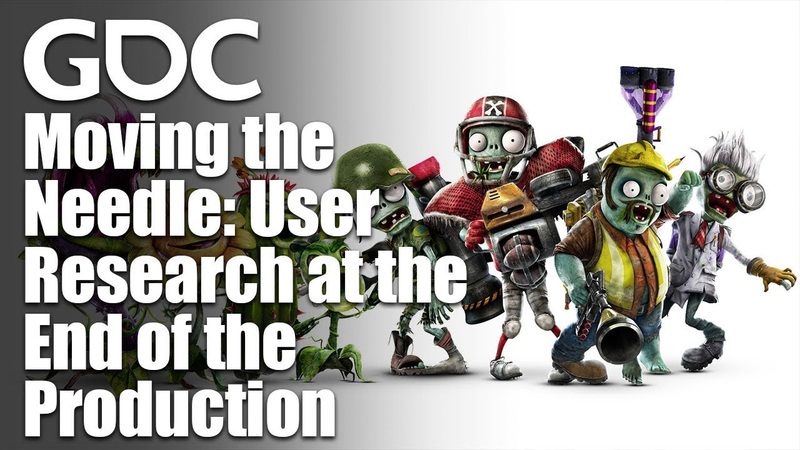
User research remains a critical component of game development even during the final stages of production, when core mechanics are finalized and the project is committed to its primary design.
- Late-stage user research shifts focus from radical design changes to fine-tuning balance, progression, and polish to elevate a game's quality before launch.
- Development teams should transition from qualitative think-aloud sessions to quantitative metrics and telemetry during the final production phase to identify specific performance weak spots.
- During the final six months of Plants vs. Zombies Garden Warfare production, researchers used mixed-method studies with 24 to 48 participants per session to optimize map design and character balance.
Killer Portfolio or Portfolio Killer 2018: Advice from Industry Artists
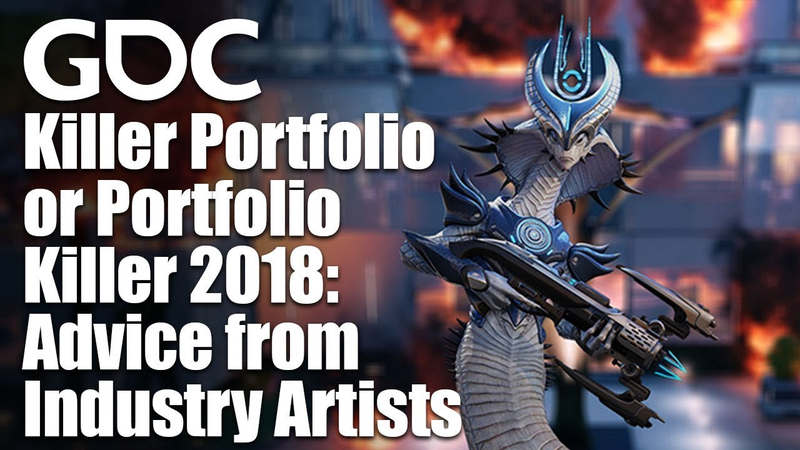
The primary objective for aspiring game artists is to curate a portfolio that prioritizes exceptional quality over volume.
- Prioritize exceptional quality over volume by showcasing original work that highlights a specific specialization rather than mimicking industry trends.
- Demonstrate technical proficiency directly within game engines to prove an ability to function within a production pipeline, prioritizing mastery of core concepts like physically based rendering and real-time shaders over specific software packages.
- Tailor portfolios to specific roles, as recruiters prioritize candidates who demonstrate a distinct artistic voice and the ability to solve complex technical problems.
It IS Rocket Science! The Physics of Rocket League Detailed
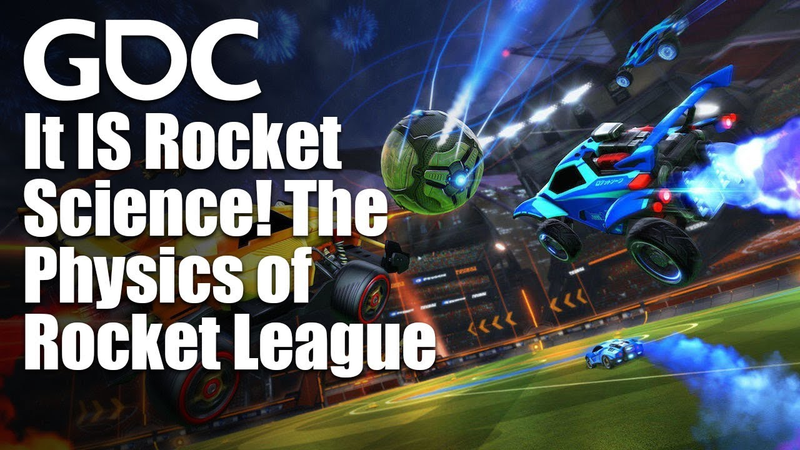
The development of Rocket League centers on achieving a highly deterministic and responsive physics environment, prioritizing competitive integrity over hyper-realistic simulation.
- Rocket League achieves competitive integrity by utilizing the open-source Bullet physics engine running at a fixed 120Hz tick rate to ensure a deterministic simulation environment.
- The game prioritizes responsiveness over hyper-realism by using simplified, designer-controlled acceleration curves and custom lateral friction systems rather than modeling complex real-world mechanics.
- To eliminate lag-related penalties, the architecture uses client-side prediction that simulates the entire physics scene, relying on a reconciliation process that reruns physics frames to maintain server authority.