
Game Developers Conference
Game Developers Conference (GDC, now the GDC Festival of Gaming) is the professional event for the games industry. It publishes recorded talks and interviews, annual industry survey reports such as the State of the Game Industry, and news articles.
Documents

Global Illumination in Tom Clancy's The Division
The Snowdrop engine utilizes a sophisticated, probe-based global illumination system to facilitate dynamic lighting within the expansive, open-world environment of Tom Clancy's The Division.
- Ubisoft Massive utilized a Precomputed Radiance Transfer (PRT) system within the Snowdrop engine to achieve dynamic global illumination, allowing for a full day/night cycle without the need for static light maps or UV unwrapping.
- The system organizes light probes into 2D grid sectors of 64x64 meters, typically containing 300 to 400 probes, with a maximum capacity of 1,000 probes per sector.
- To manage memory and performance, the engine stores sky visibility per probe and uses irradiance bricks to define light influence, resulting in a total lighting data footprint of approximately 1 gigabyte.
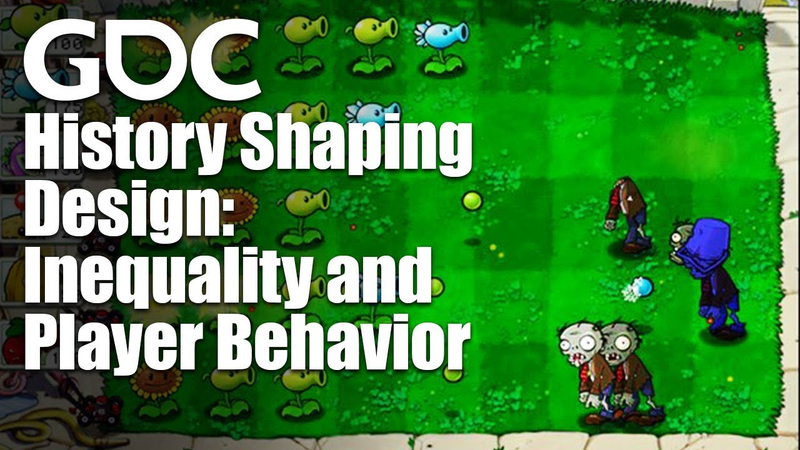
History Shaping Design: Inequality and Player Behavior
Game design functions as a powerful laboratory for behavioral economics, where psychological heuristics like loss aversion and hindsight bias dictate how players perceive value, risk, and agency.
- Designers leverage loss aversion, where players feel the pain of loss twice as intensely as equivalent gains, to drive engagement through inventory hoarding and reward structures.
- Systemic inequality in virtual environments causes players in dominant positions to develop an empathy gap, which reduces cooperative behavior and social cohesion.
- When game systems mirror real-world socioeconomic disparities, they trigger feelings of helplessness and disengagement, often turning intrinsic play into perceived digital labor.
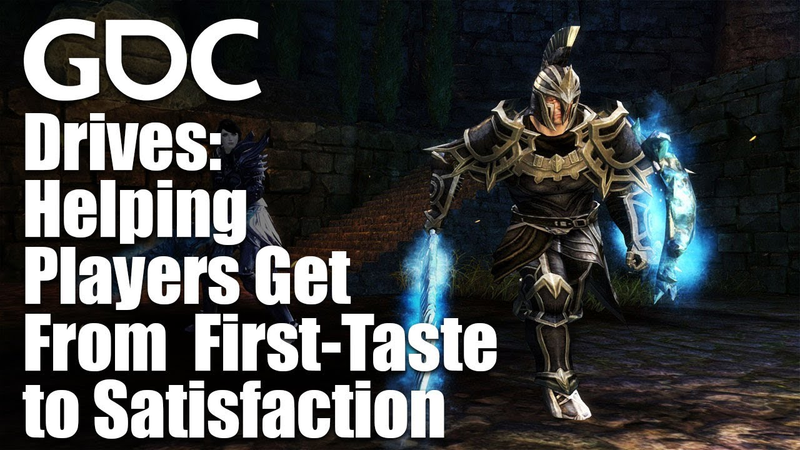
Drives: Helping More Players Get from First-Taste to Satisfaction
The primary challenge in modern game design lies in bridging the gap between a player’s initial interest and their long-term satisfaction.
- Developers should integrate Self-Determination Theory with innate human drives like curiosity, mastery, and autonomy to create structured reward systems that prevent early-stage player boredom.
- The 'tend-and-befriend' biological response, mediated by oxytocin, indicates that many players prioritize social connection and nurturing over traditional combat-based mechanics.
- Social and care-oriented game systems represent a significant, underserved market opportunity for developers to expand their audience reach beyond traditional demographics.

Crackpot AI Devs: Unproven Game AI Techniques that Might Possibly Work
Game development is currently undergoing a paradigm shift toward unconventional, data-driven artificial intelligence techniques that prioritize emergent behavior and procedural narrative control.
- Developers are shifting from scripted logic to data-driven AI that uses recorded human gameplay snippets and crossover points to emulate authentic player behavior.
- Cross-genre data harvesting allows player actions from one game title to serve as foundational training input for AI systems in entirely different gaming experiences.
- AI managers are being designed to function as automated game masters, dynamically adjusting difficulty and encounter pacing to maintain a curated emotional arc for the player.

Extrasolar Postmortem: Game Design at 0.0003 FPS
Extrasolar is an unconventional, web-based narrative experience that simulates the exploration of an alien planet through a series of delayed, non-real-time interactions.
- Lazy 8 Studios developed Extrasolar, a web-based narrative experience, over a three-and-a-half-year cycle with a budget of approximately $600,000.
- The game intentionally rejects real-time performance metrics, rendering images in the cloud at a rate of one frame per hour to prioritize narrative immersion.
- Designers successfully utilized non-game experts, such as biologists, to ground the alien planet simulation in scientific realism, which contributed to high player retention rates.
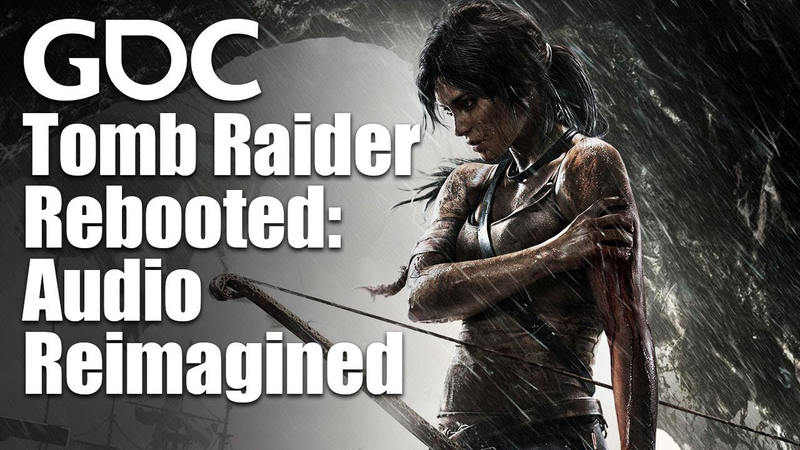
Tomb Raider Rebooted: Audio Reimagined
The 2013 Tomb Raider reboot represents a fundamental shift in game audio design, moving away from generic, weapon-centric soundscapes toward a character-driven model rooted in Lara Croft’s emotional evolution.
- The 2013 Tomb Raider reboot shifted audio design from generic weapon-centric soundscapes to a character-driven model that mirrors Lara Croft’s psychological transition from vulnerable survivor to confident hero.
- Development teams abandoned standard asset libraries in favor of bespoke, context-specific recordings to ensure every sonic element served as a narrative pillar.
- The audio system utilized a modular, reactive architecture, including complex weapon layering—such as using rubber tubing for bow sounds—and real-time ambient ducking to maintain sonic clarity.
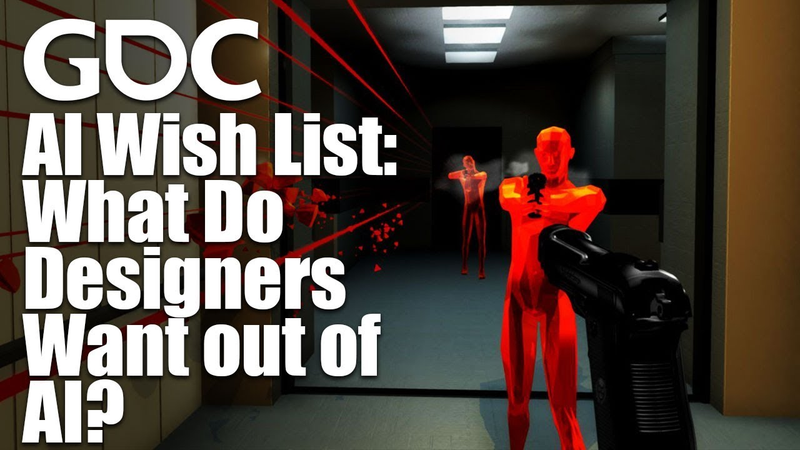
AI Wish List: What Do Designers Want out of AI?
Modern game design must pivot away from prioritizing high-fidelity visual assets and rigid, combat-focused scripting toward the creation of autonomous, emotionally resonant artificial intelligence.
- Game design must shift focus from high-fidelity visual assets and rigid scripting toward the development of autonomous, emotionally resonant AI characters.
- Developers should implement simulation-driven variables like fear, greed, and empathy to give NPCs an inner life that remembers player actions and adapts to individual playstyles.
- The industry should move away from pre-scripted dialogue in favor of AI-driven systems that manage emotional pacing and character reactions in real time.
Your Indie Game on Console: A Practical Guide to Porting
Bringing an indie game to console platforms is a complex, multi-month undertaking that demands rigorous technical planning and administrative foresight.
- Porting an indie game to console is a complex process typically requiring three to six months, with projects involving intricate online networking often needing extended timelines.
- Success depends on early integration of platform-specific requirements, including dev kit acquisition, age ratings, and backend configuration for achievements, well before the final submission phase.
- Developers must replace simplified local storage with robust, platform-compliant save systems to meet console-specific technical standards.
For Honor: From a Great Launch to a Challenging Live Period
The transition from traditional game development to a games-as-a-service model requires a fundamental shift in mindset, moving from the delivery of a static product to the ongoing management of an evolving ecosystem.
- Transitioning to a games-as-a-service model requires shifting from static product delivery to managing an evolving ecosystem, necessitating a move from intuition-based design to rigorous, data-driven balancing.
- Maintaining competitive integrity in live services depends on tracking granular metrics, such as win rates and move-usage patterns, across diverse player skill levels.
- Infrastructure stability is critical to long-term viability, as evidenced by the necessity of transitioning from peer-to-peer networking to dedicated servers to resolve post-launch performance vulnerabilities.
Inside the Indie Mind: Zach Barth (Zachtronics)
Zachtronics operates on a philosophy of open-ended, engineering-focused puzzle design that prioritizes mechanical innovation over traditional market research or progression systems.
- Zachtronics prioritizes mechanical depth and player-driven optimization over traditional market research or progression systems to create skill-based, engineering-focused puzzles.
- The studio maintains a high production cadence by reusing code and design frameworks across titles, treating each release as an iterative validation of quality.
- Development is sustained by treating projects as side endeavors, which removes the pressure to conform to market trends and allows for authentic, self-directed design.

FRAMED: A Recipe for Critical Success
The primary objective of this analysis is to outline a strategic framework for positioning premium indie titles for success in the mobile market.
- Strategic participation in the global festival and awards circuit can secure long-term commercial viability for premium indie titles, even when initial launch performance is underwhelming.
- The game FRAMED achieved 400,000 paid unit sales despite an initial launch that failed to meet expectations relative to its $500,000 development budget.
- Developers should structure production around ten-week milestones that align with major industry events to ensure a constant, high-quality, submission-ready build.
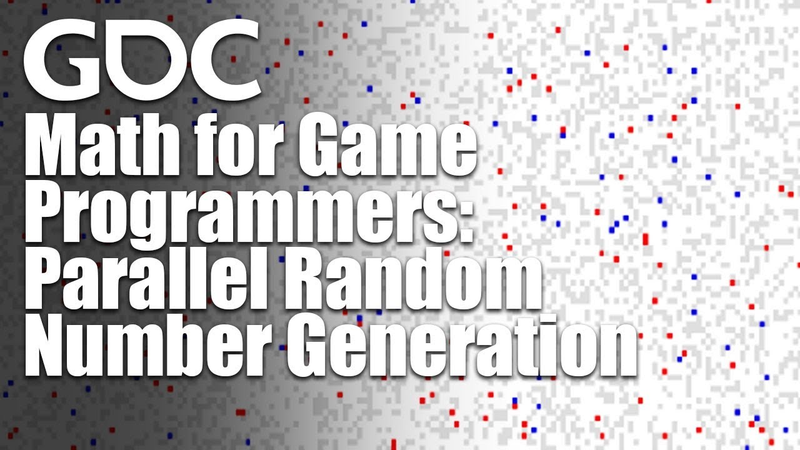
Math for Game Programmers: Parallel Random Number Generation
Parallel random number generation is a critical challenge in game development, particularly for multi-threaded CPU applications and GPU-based simulations.
- Traditional serial random number generators like Linear Congruential Generators (LCG) are unsuitable for parallel environments due to poor statistical quality, short periods, and an inability to maintain consistency across varying thread counts.
- Cryptographic hash functions, specifically the Tiny Encryption Algorithm (TEA), provide a superior alternative by treating random number generation as a stateless mapping problem rather than a sequential state-based process.
- Using TEA-based generation allows developers to map inputs like thread IDs or vertex data directly to random outputs, eliminating the need for shared state or inter-thread communication.