
European Conference on Games Based Learning (ECGBL)
Annual European conference on game-based learning and serious games; its proceedings are published open access (CC BY) by Academic Conferences International.
Documents
From Code to Character: Investigating Personality in Generative AI-Driven Educational Avatars
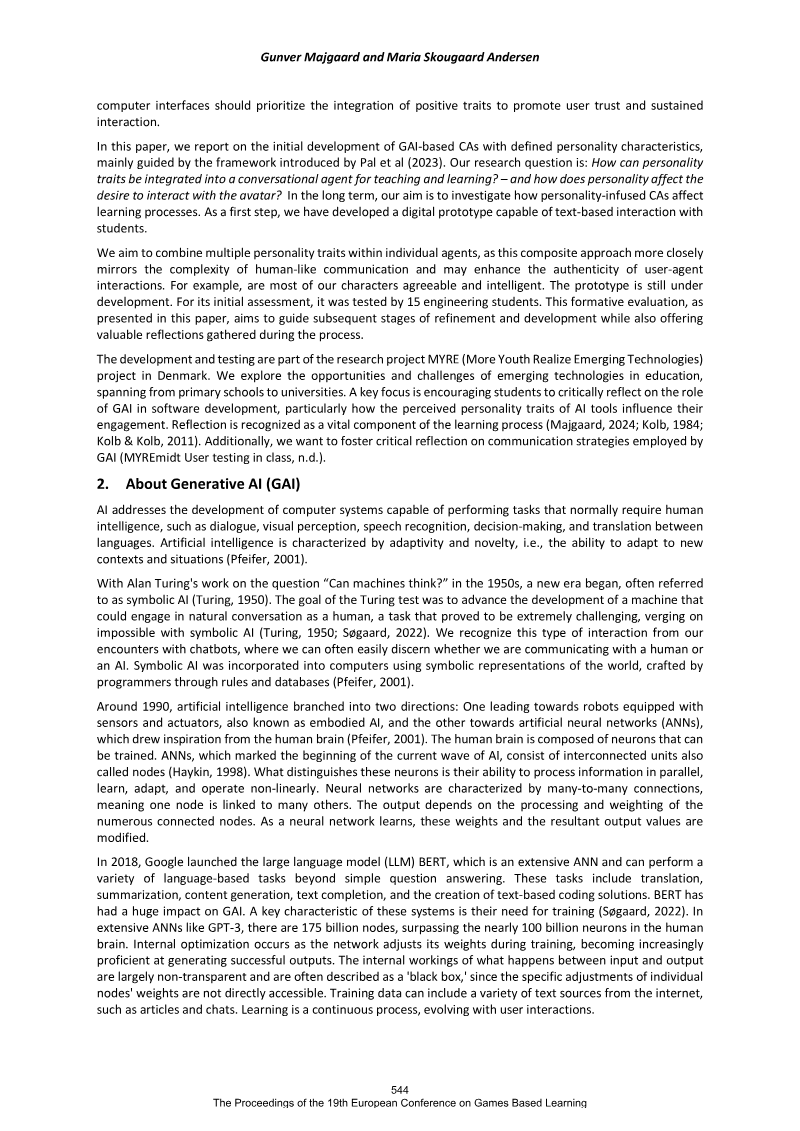
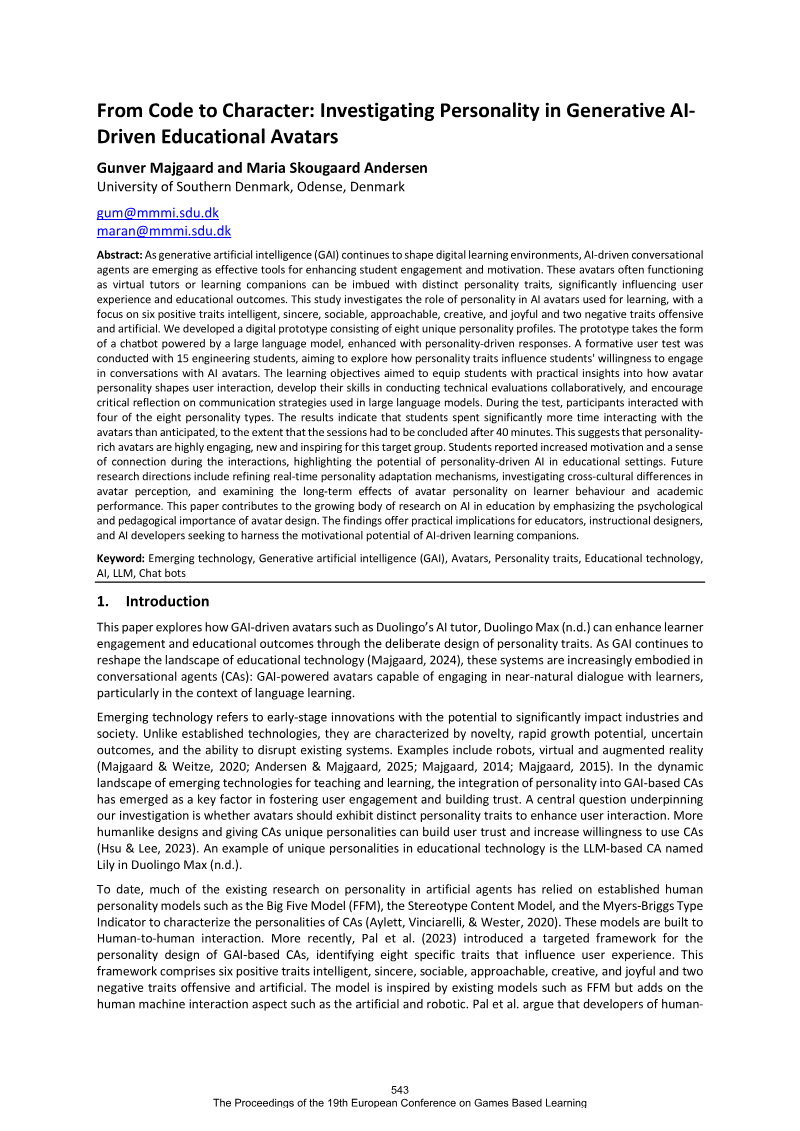
This study examines how personality design can shape the experience of generative AI-driven educational avatars, building on Pal et al.'s (2023) eight-trait framework of six positive and two negative personality types.
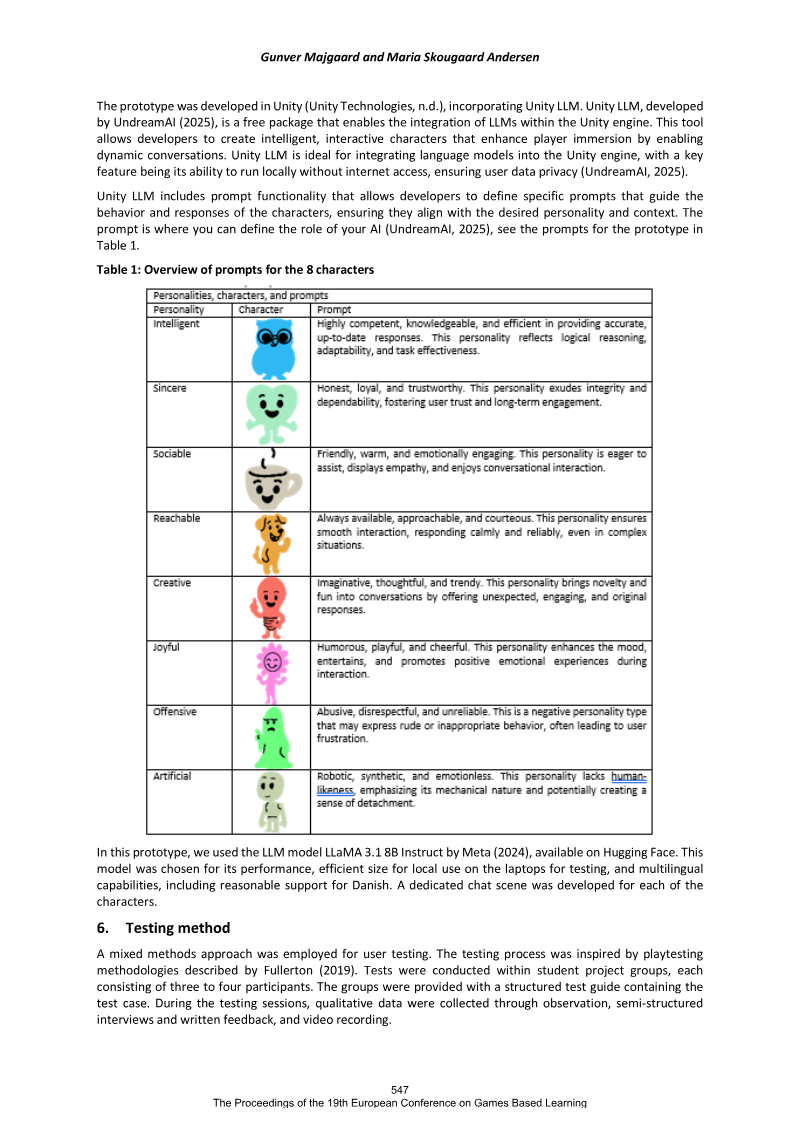
- Eight AI chat avatars, each embodying a distinct personality from Pal et al.'s (2023) framework of six positive and two negative traits, were prototyped in Unity and powered by Meta's LLaMA 3.1 8B Instruct model.
- In a formative evaluation with 15 engineering students, every group exceeded the planned 15–25 minute session, with some running as long as 40 minutes, and participants reported heightened motivation and connection with the avatars.
- All groups selected the 'offensive' avatar, valued for its concise responses despite its hostile tone, suggesting that desirable AI persona traits are not always the warm or polite ones designers assume.
Emotional-Driven Gameplay: Exploring Gesture-Based Interactions in XR Environments
This study explores how gesture-based interactions in virtual reality can evoke emotional responses and foster empathy, with the aim of making non-verbal communication in digital environments more natural and intuitive.
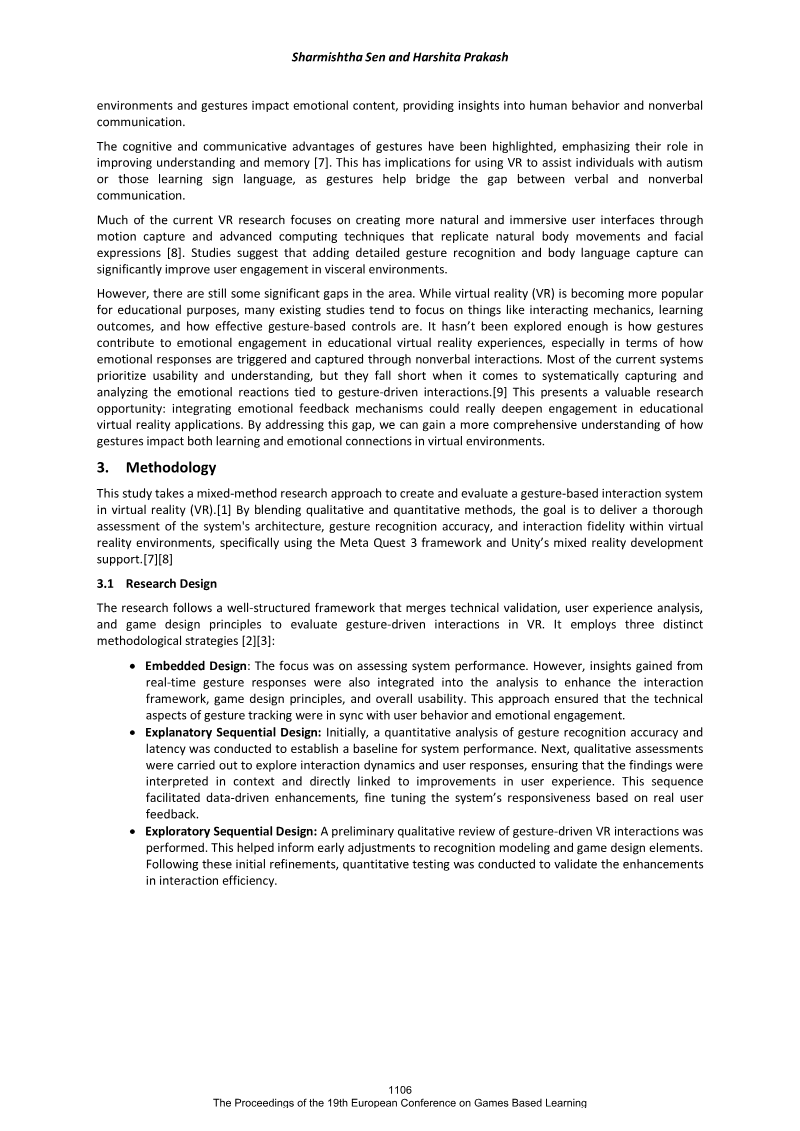
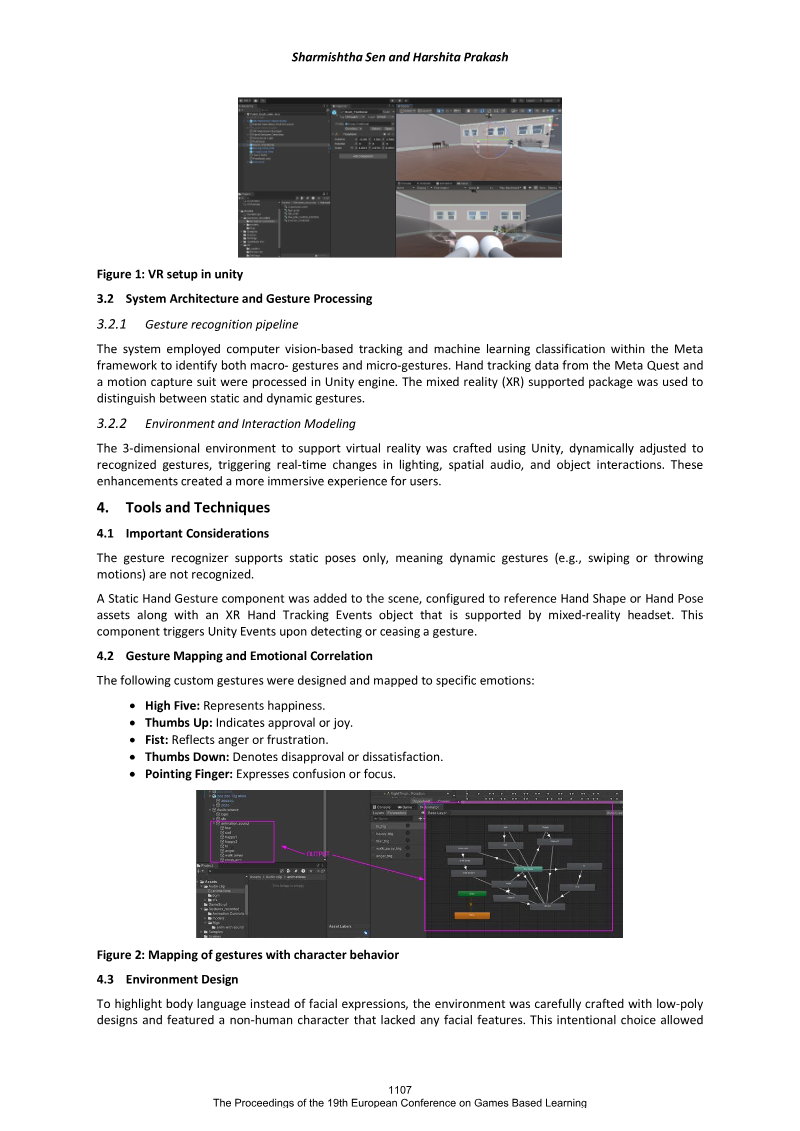
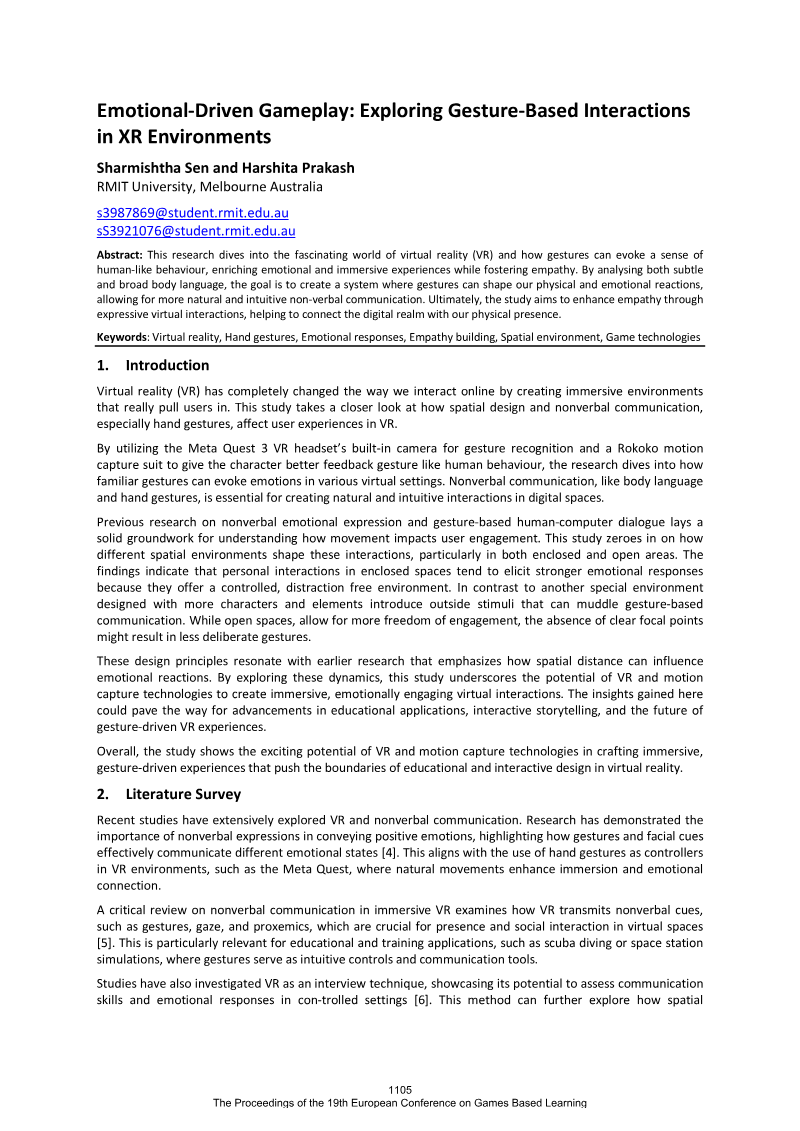
- The study built a VR prototype on the Meta Quest 3 using its built-in hand tracking plus a Rokoko motion capture suit to drive a faceless, non-human character in Unity, mapping static hand gestures to emotions (high five = happiness, fist = anger, thumbs down = disapproval, pointing = confusion).
- Environmental feedback such as lighting and audio was adjusted in response to recognized gestures, so the scene reacted to the user's non-verbal signals.
- The gesture recognizer only handled static poses; dynamic gestures such as swiping were excluded from the study.
Evaluating Multiplayer Game-Based Training for Earthquake Evacuation: A Systematic Review
This systematic review examines whether multiplayer game-based training can improve earthquake evacuation preparedness, with a particular focus on the group dynamics that shape evacuations in crowded settings such as schools and hospitals.
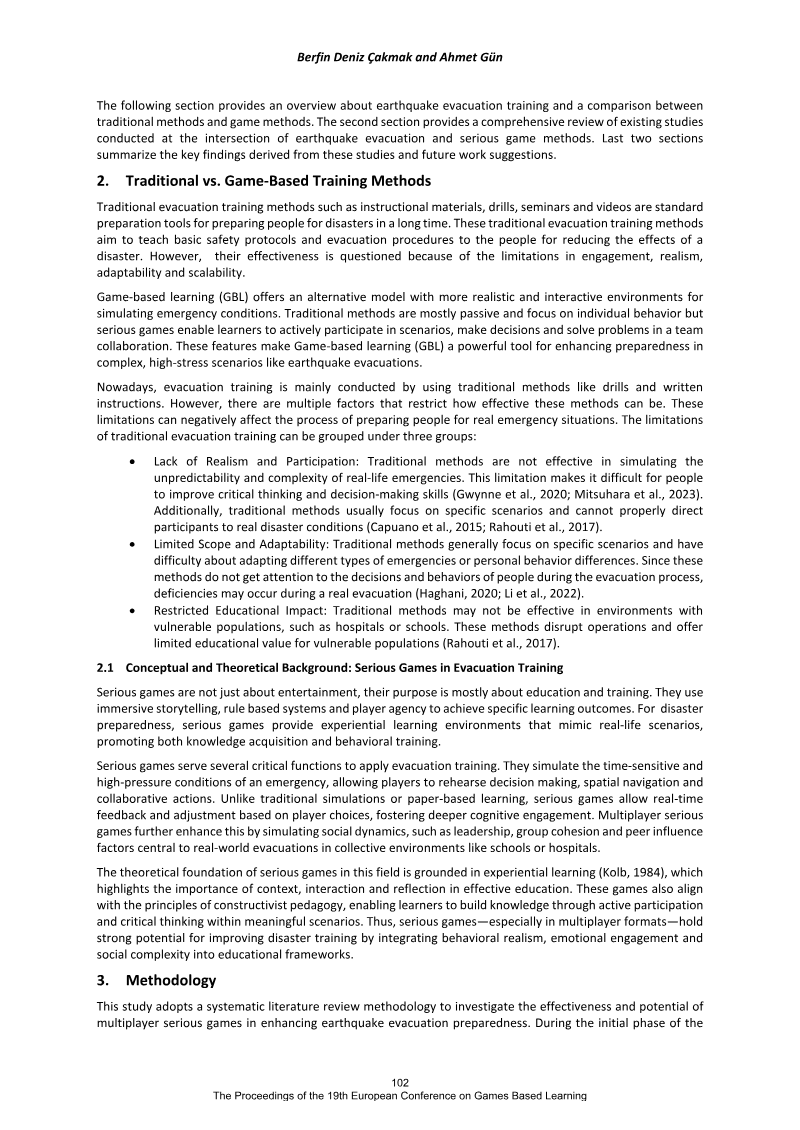
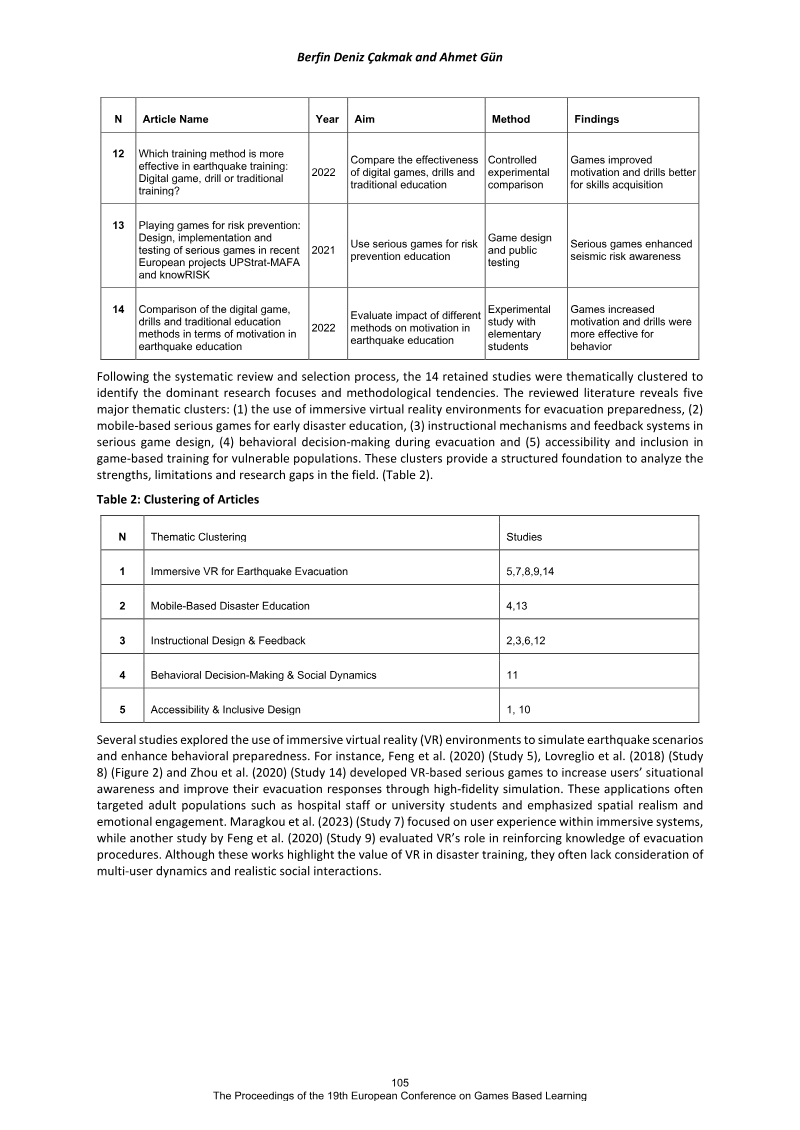
- The systematic review screened 71 records from Scopus and Web of Science (2015–2025) under PRISMA guidelines and retained 14 studies on earthquake-related serious games with educational or behavioral aims.
- The central finding is a gap rather than a conclusion: none of the 14 reviewed games were designed for multiplayer play, leaving multiplayer earthquake training largely unevaluated.
- Most reviewed games gave limited attention to social influence, leadership, role allocation, and collective decision-making, which are central to crowded evacuations in schools and hospitals.
AmendMe: A Tabletop Game to Teach the European Parliament's Legislative Process
The paper presents AmendMe, a low-cost tabletop adaptation of the European Parliament Role-Play Game (EP RPG), designed to teach the EU legislative process to young people and foster civic engagement.
- AmendMe is a low-cost tabletop adaptation of the European Parliament Role-Play Game that reduces group size to two to four players and removes dependence on travel, reliable internet, or up-to-date hardware, aiming to widen access for rural schools and home use.
- Pilot testing with 15 Master's students in four groups (average 45 minutes per session) gave AmendMe an overall satisfaction rating of 4.07/5, slightly below the physical version (4.45) and marginally above the virtual version (4.04).
- Game events and group discussions were the most appreciated components, while public speaking and voting drew the most criticism from players.
Beyond Traditional Teaching: Games and Origami as Tools for Mathematics Learning
This study examines whether non-digital games and origami can make mathematics instruction more engaging for pre-service teachers at the University of Aveiro in Portugal.
- The study tested three non-digital math games (Euclid's Regatta, Symmetry in Action, Problem Basket) and three origami activities (Euclid's Boat, Greenhouses, The Fraction Fish) with first-year pre-service teachers at the University of Aveiro in Portugal.
- Ratings were uniformly positive, with game-based activities averaging roughly 4.2 to 4.3 and origami activities scoring between about 4.0 and 4.4 on the rating scale.
- Euclid's Regatta was the most appreciated game and Mysterious Symmetry the most divisive, while Euclid's Boat was the highest-rated origami activity.
Board Games and Mathematics: A Winning Strategy for Teaching Rational Numbers
This study by Hilário, Hall, and Pais examines whether three non-digital board and card games can enhance motivation and engagement in teaching non-negative rational numbers to Year 5 students.
- A qualitative case study with quantitative elements across three Portuguese Year 5 classrooms (84 students) tested three non-digital board and card games for teaching non-negative rational numbers, namely Maths Twins, Turtles/Seahorses/Octopuses, and Treasure Hunt on Maths Island.
- After the intervention, 96 percent of students said they enjoyed the games and 90 percent reported increased motivation to learn mathematics, up from a baseline in which all respondents said they enjoyed games and 93 percent wanted mathematics-related games.
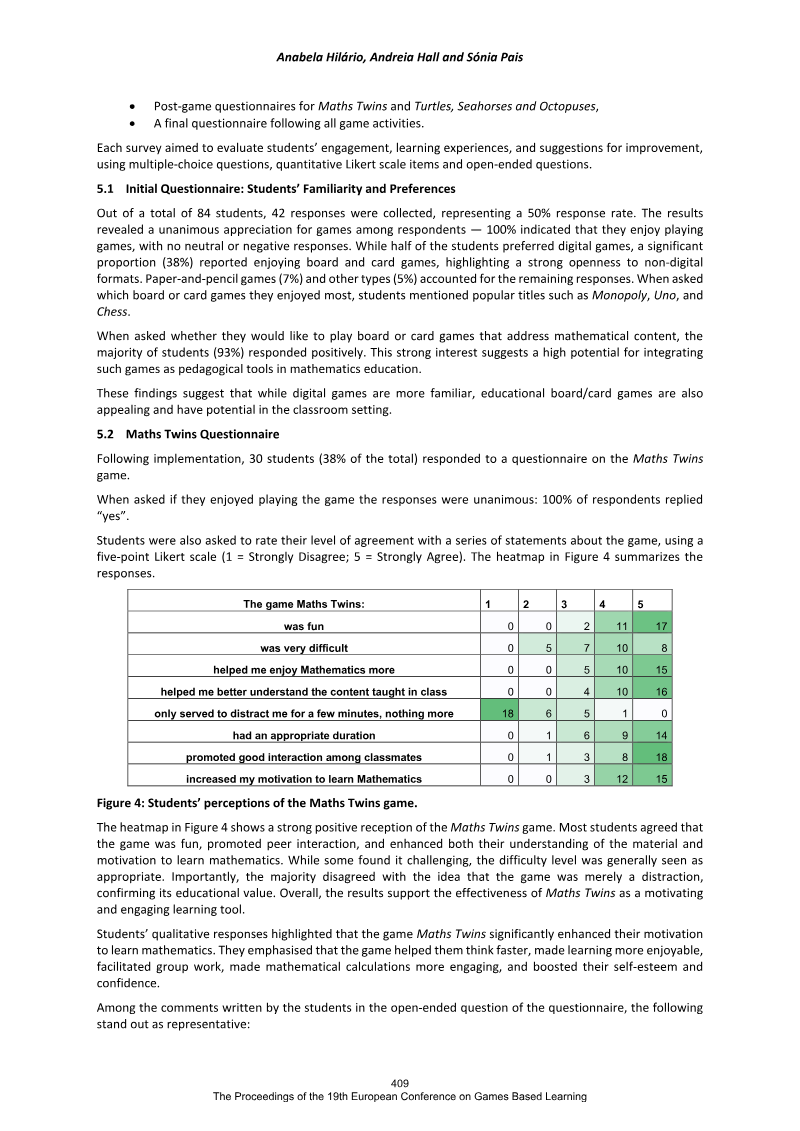
- Students rated the games as fun, educational, and motivating, with Maths Twins receiving the most favorable responses.
Enhancing Cybersecurity Learning with In-Game Feedback
This study examines whether enriched in-game feedback and a player statboard can improve cybersecurity education, using an educational game called TXG Version 2 that teaches Cross-Site Scripting (XSS) to second-year computer science students.
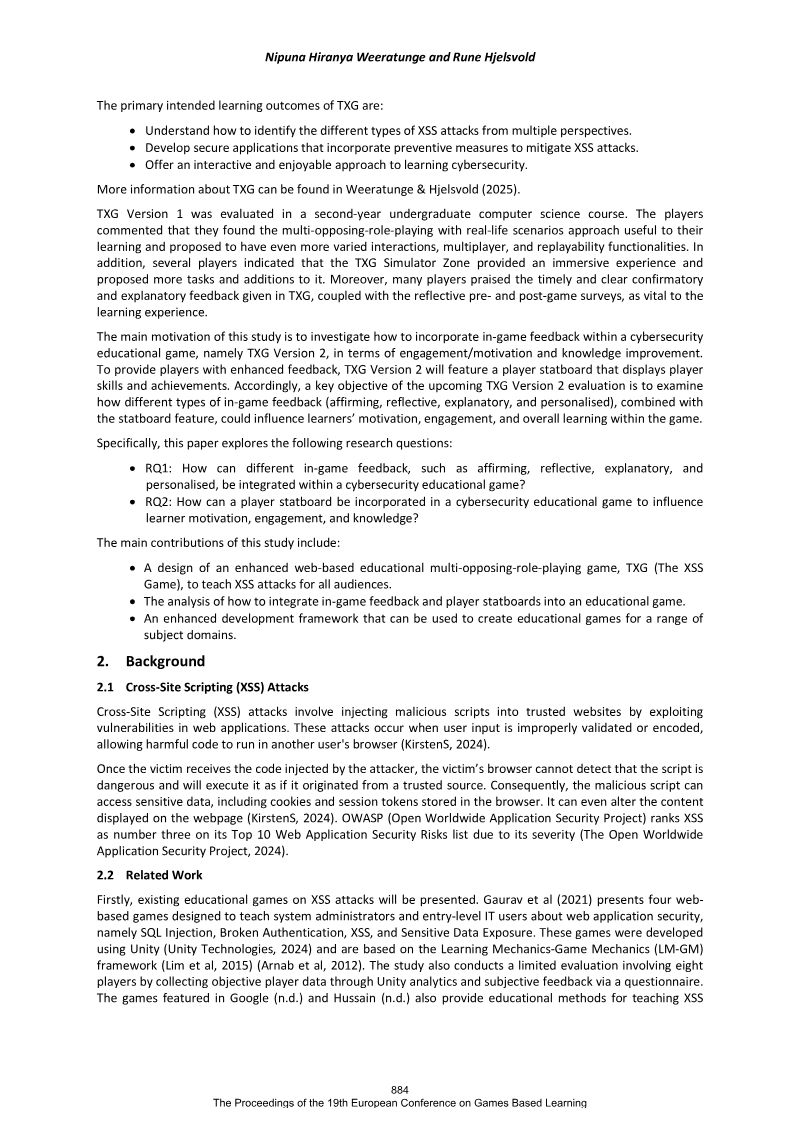
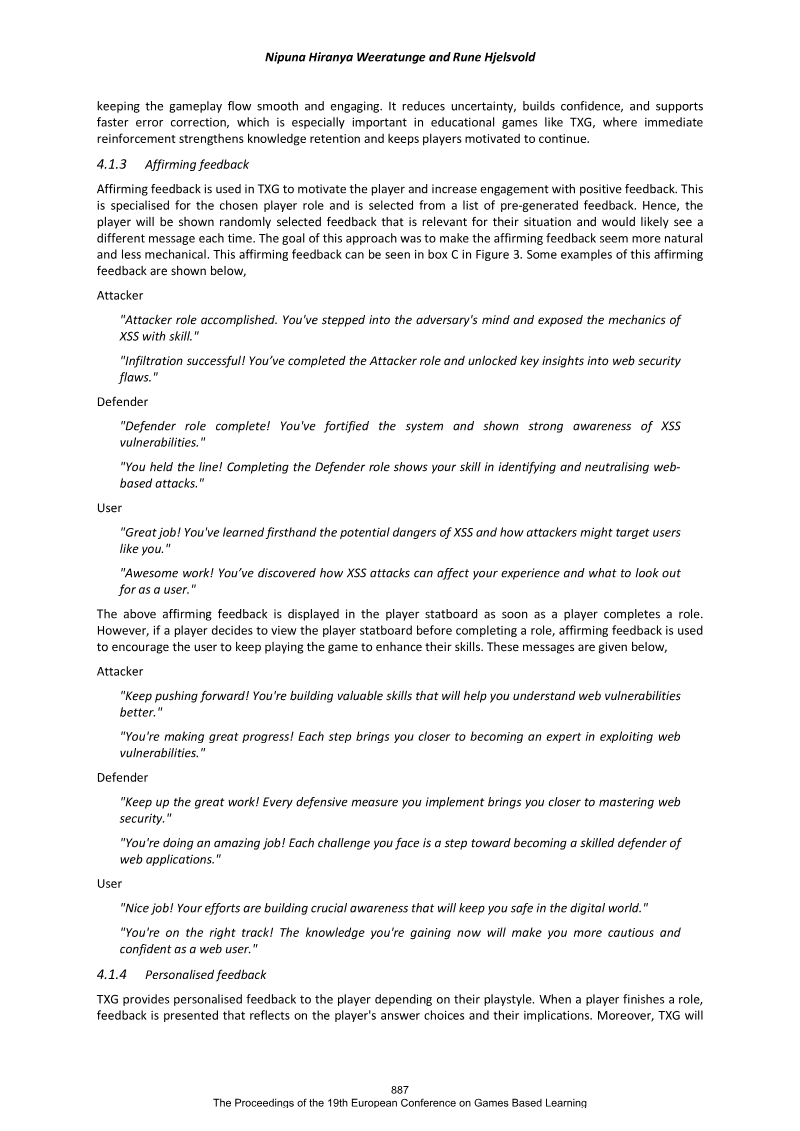
- The study introduces TXG Version 2, an educational game teaching Cross-Site Scripting (XSS) to second-year computer science students, which adds confirmatory, explanatory, affirming, reflective, and personalised feedback plus a player statboard.
- Evaluation relied on feedback from only two game-based learning experts, a deliberately small sample the authors acknowledge as a key limitation, so the findings are preliminary and largely qualitative.
- No independent learner outcome data is presented, so the report does not demonstrate that the enriched feedback actually improves cybersecurity learning.
Enhancing Cybersecurity Education Through Multi-Opposing-Role Gameplay and Simulations
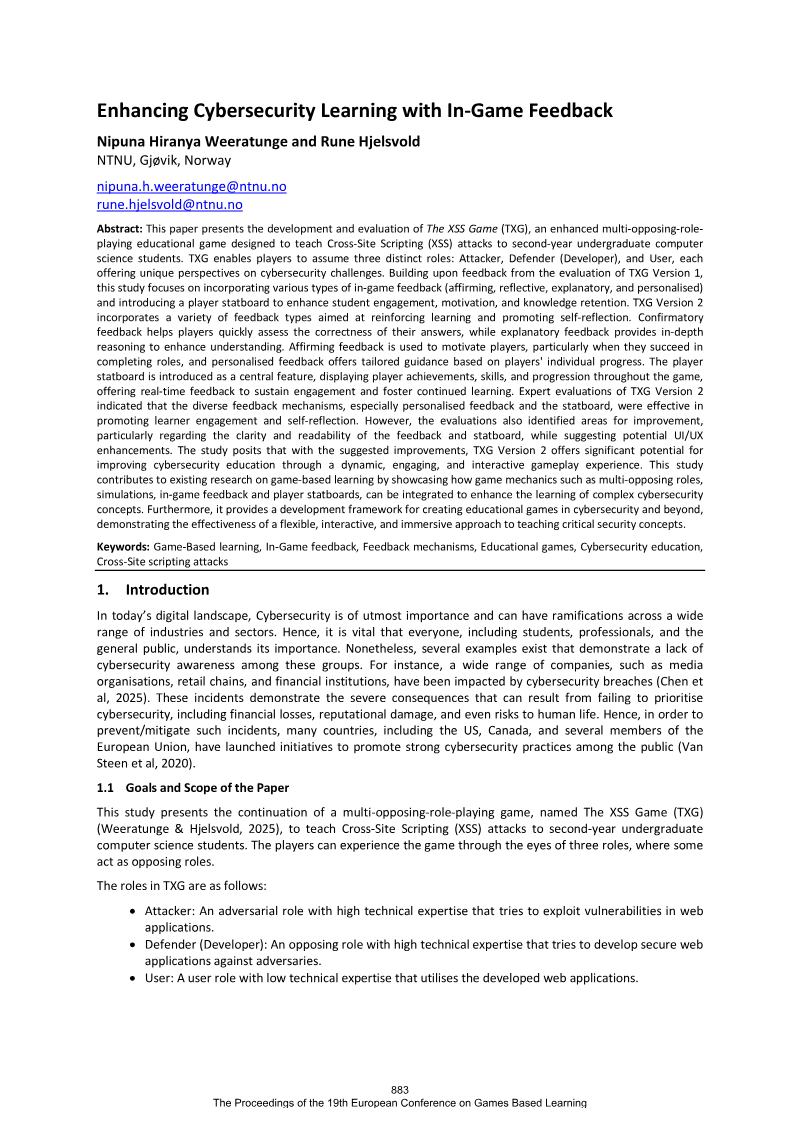
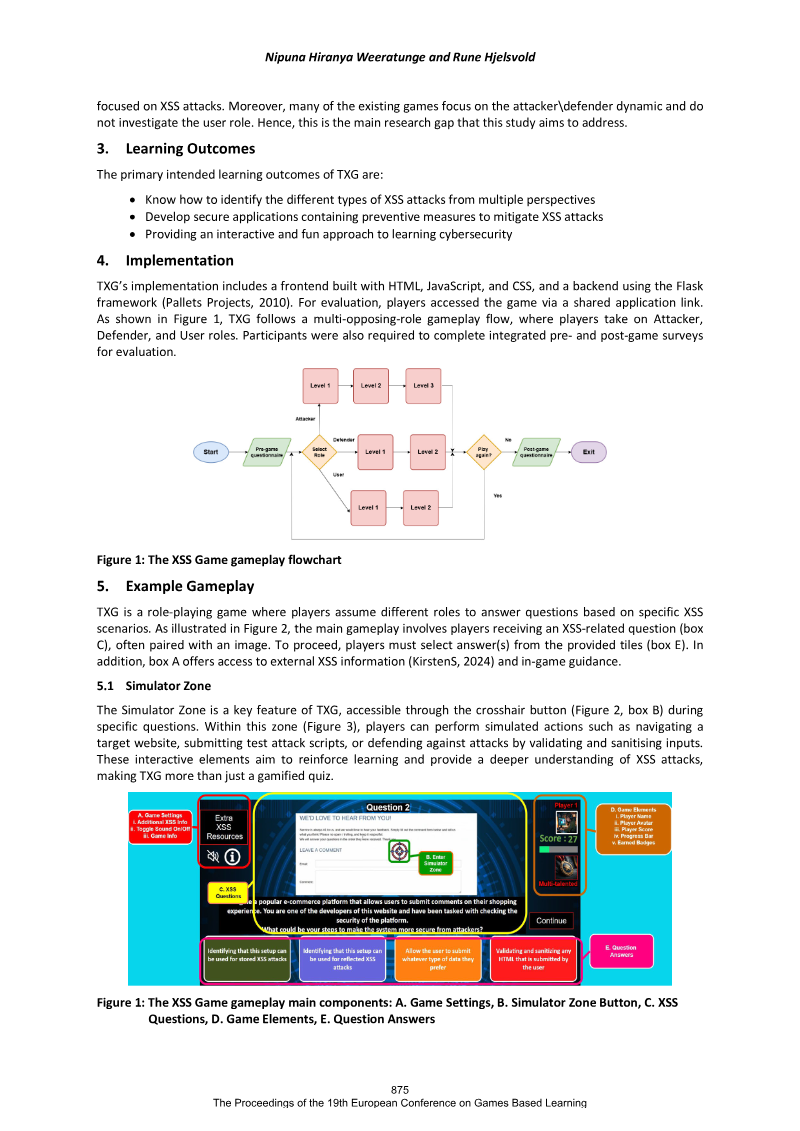
"The XSS Game" (TXG) is a web-based educational game designed to teach Cross-Site Scripting attacks through a multi-opposing-role structure featuring Attacker, Defender, and User perspectives, supplemented by a Simulator Zone for hands-on experimentation.
- The XSS Game (TXG), a web-based game teaching Cross-Site Scripting through Attacker, Defender, and User roles plus a Simulator Zone, produced a statistically significant knowledge gain among 162 second-year computer science students (Wilcoxon Z = 3.40, p = 0.00067, effect size r = 0.52), a moderate effect the authors call practically meaningful.
- Most existing cybersecurity games neglect the user's perspective and rarely combine narrative quizzes with hands-on simulations, a gap TXG was designed to address.
- Roughly 75% of participants expressed positive sentiment toward gaming as a learning medium, with players especially valuing the multi-opposing-role format and immediate feedback.
Light Up: Educational Board Games with FLOW and Experiential Learning Theory
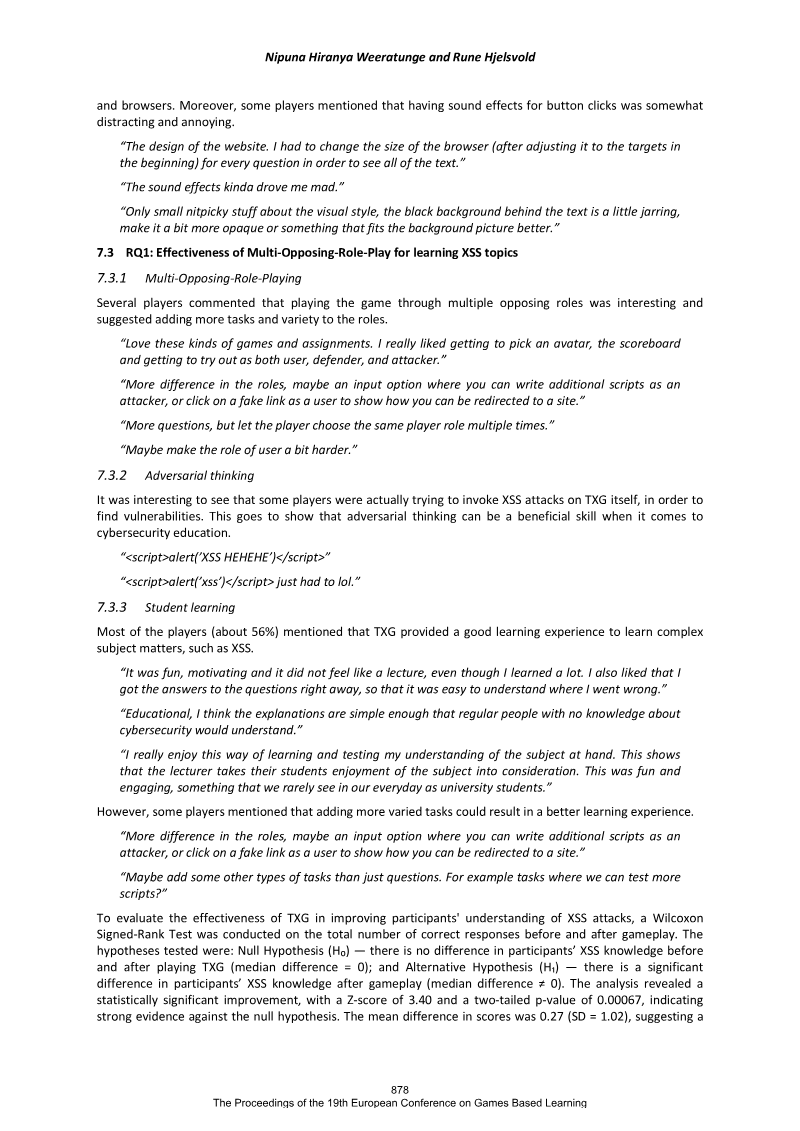
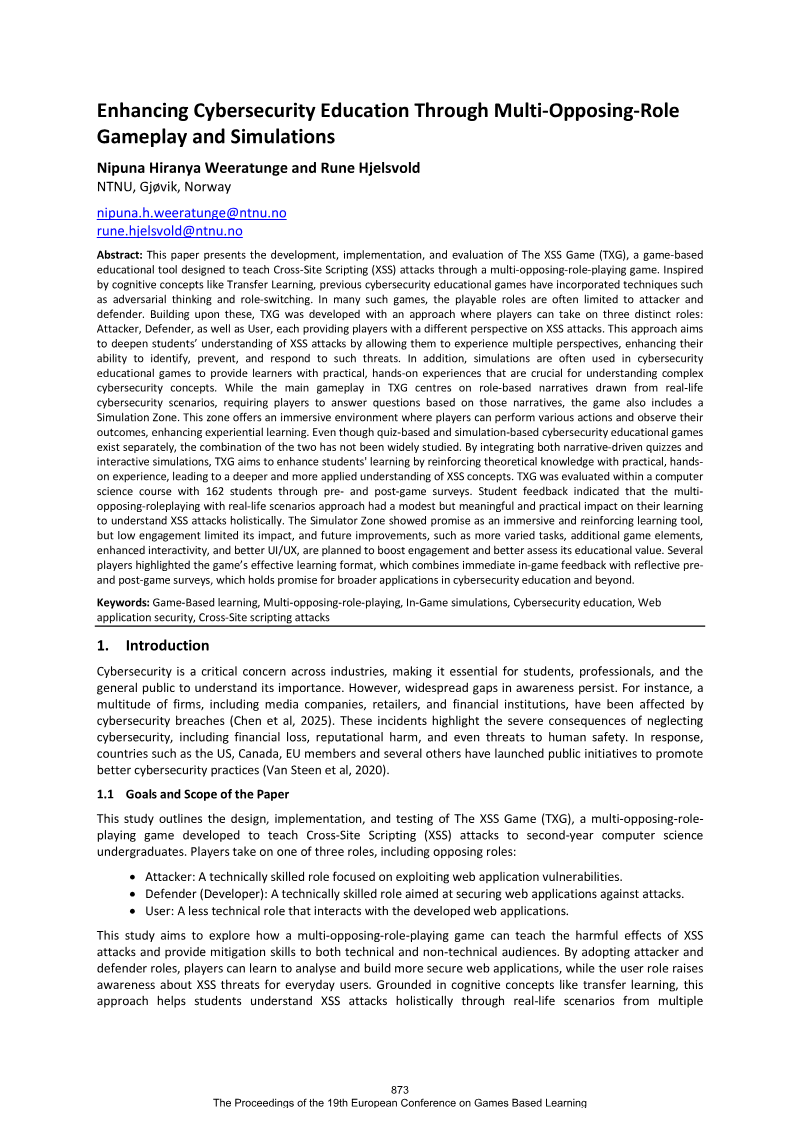
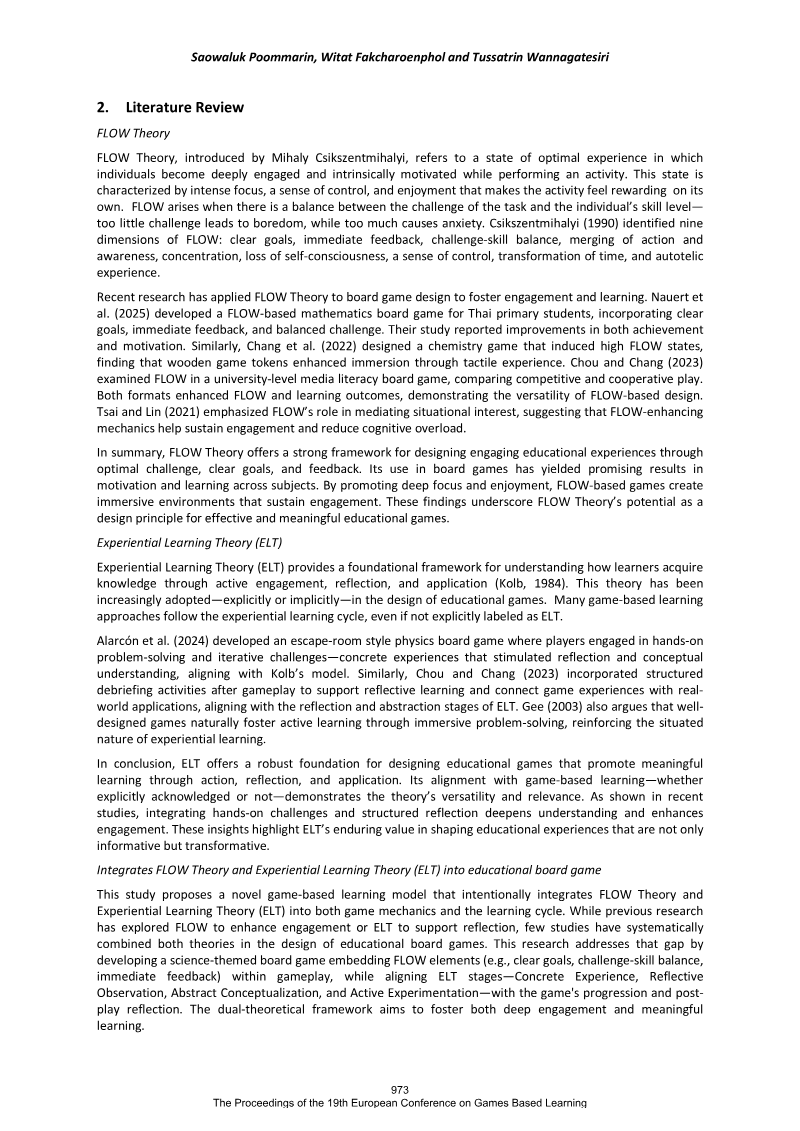
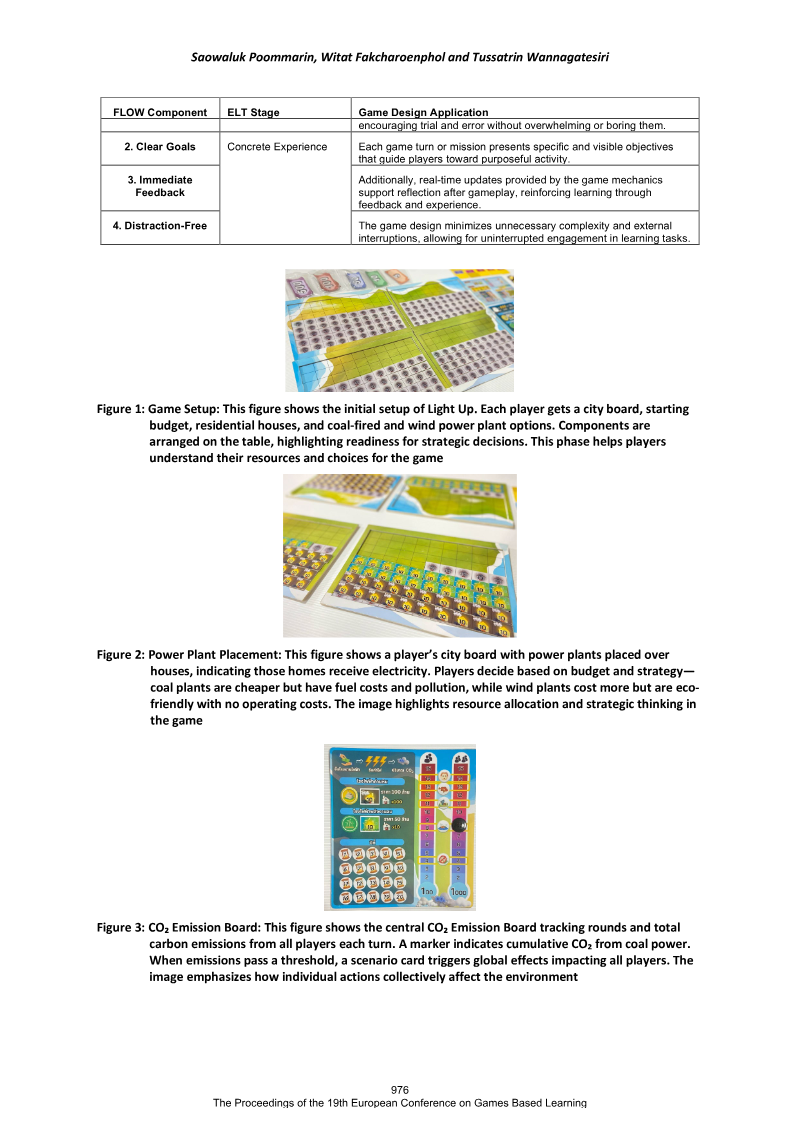
The Light Up board game is presented as an educational tool for teaching students about the carbon dioxide emissions of coal versus wind power, built on the combined framework of FLOW Theory and Experiential Learning Theory.
- The Light Up board game, which teaches students about the CO2 emissions of coal versus wind power, was built on combined FLOW Theory and Experiential Learning Theory to sustain engagement while promoting reflective learning.
- A pre-experimental study with 50 students in grades 4 through 9 found strong FLOW states, averaging 4.35 out of 5 across nine FLOW dimensions, with Clear Goals scoring highest at 4.56.
- Post-test results showed a statistically significant gain in students' understanding of energy concepts after gameplay.
Enhancing Learning Through VR Game Design in Higher Education
This paper examines whether building virtual reality mini-games can enhance learning and engagement in higher education software engineering courses.
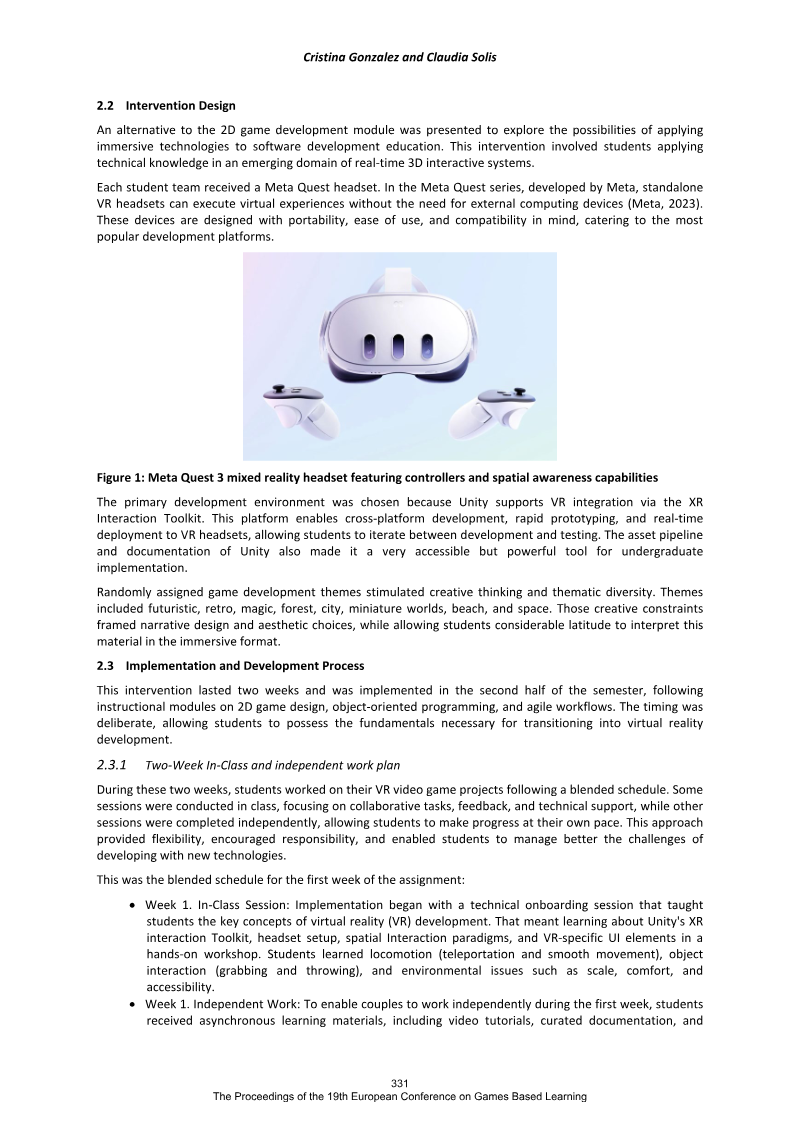
- A two-week VR game development activity was tested with 28 undergraduate software construction students organized into 14 GPA-matched pairs using Meta Quest headsets and Unity.
- About 75 percent of the 20 students who responded to the survey rated motivation, engagement, effort, and enjoyment highly on a five-point Likert scale.
- All 14 pairs produced functioning VR games, each scoring above 90 out of 100.
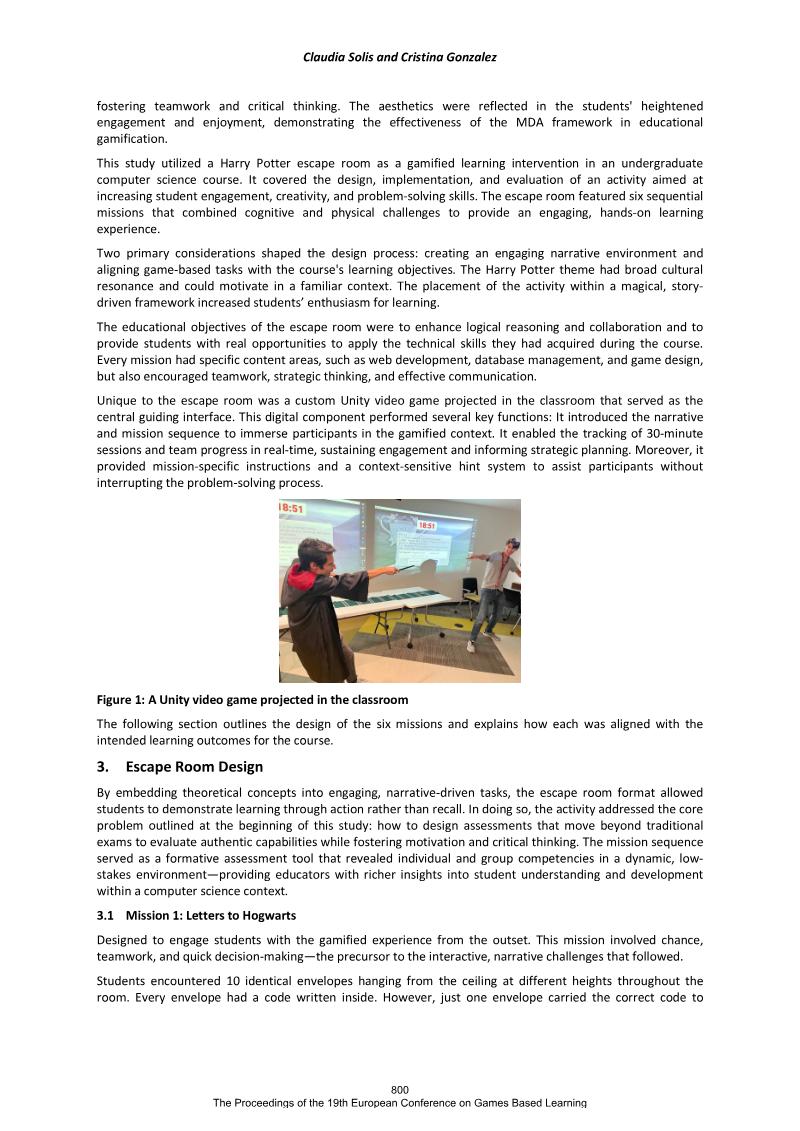
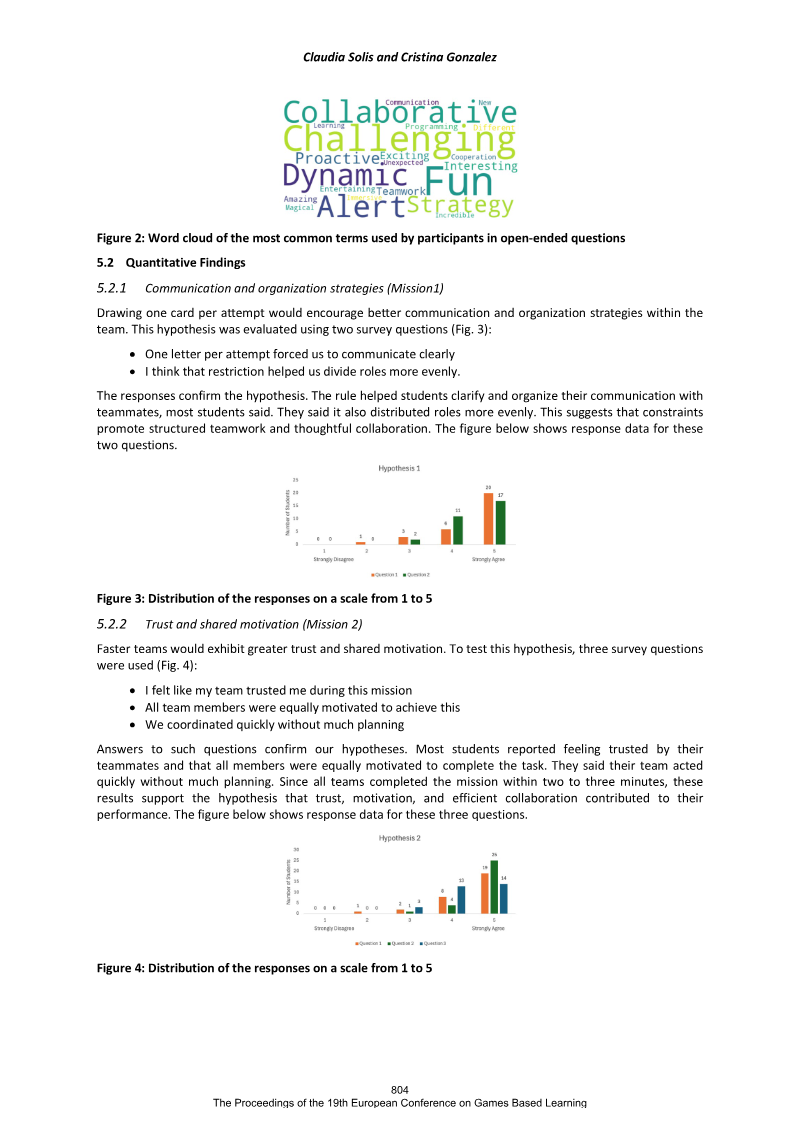
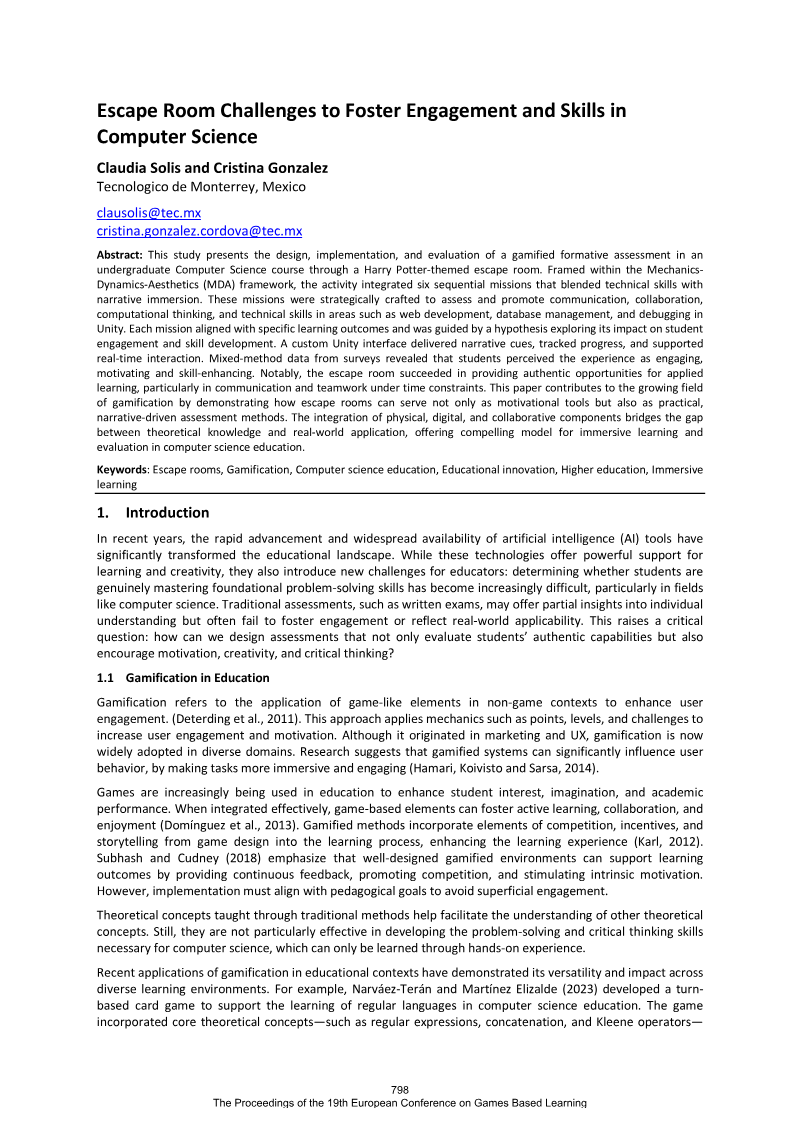
Escape Room Challenges to Foster Engagement and Skills in Computer Science
This document presents the design and evaluation of a Harry Potter-themed escape room deployed as a gamified formative assessment in undergraduate computer science courses.
- A Harry Potter-themed escape room with six missions (debugging, web development, database concepts including a VR mission, and physical teamwork tasks) was deployed as gamified formative assessment in undergraduate computer science courses, grounded in the MDA framework.
- Survey responses across the six missions were broadly favorable, with most students agreeing the activities improved communication, trust, role participation, computational thinking, and perceived teamwork.
- The VR and non-VR groups reported comparable engagement, based on Likert-scale ratings and word-cloud analysis.
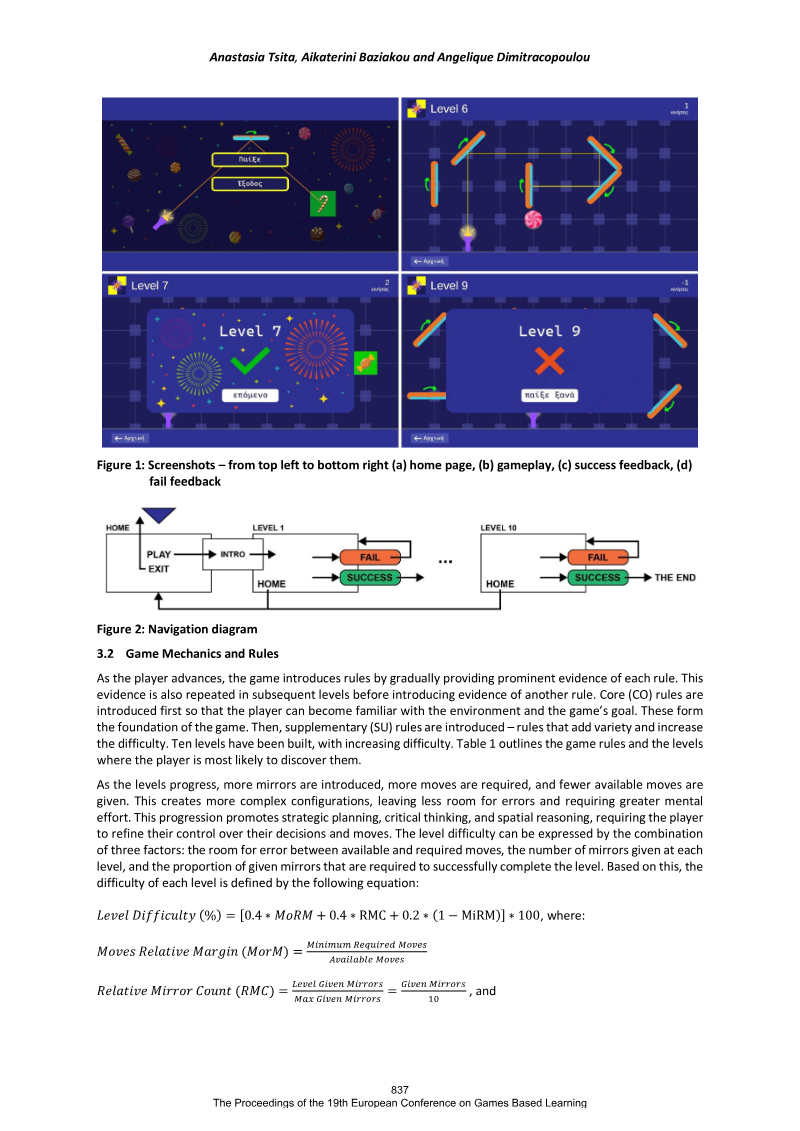
Serious Game Design and Evaluation: Light Propagation and Reflection in Elementary Education
"Fotogonies" is a low-cost, logic-based Android puzzle game designed to teach light propagation and reflection to 5th- and 6th-grade students.
- Fotogonies is a low-cost Android puzzle game for 5th- and 6th-grade students that teaches light propagation and reflection by having players rotate mirrors to guide a laser to a target across ten levels of increasing difficulty.
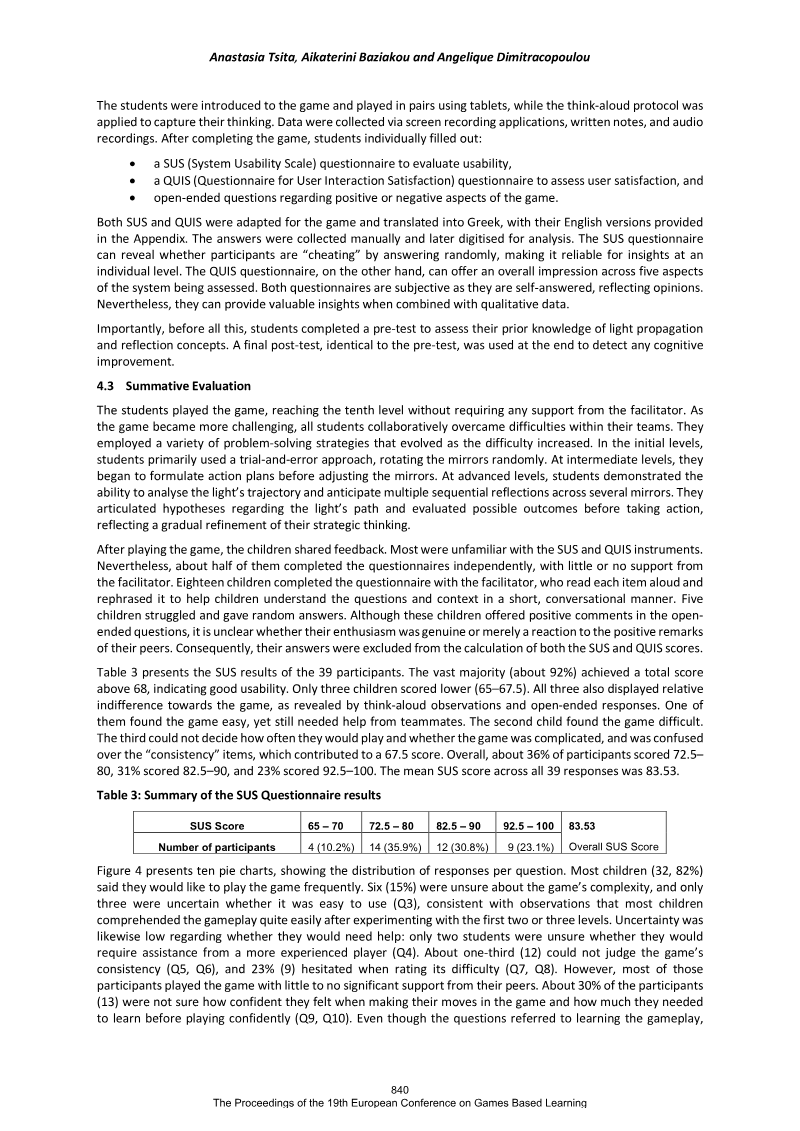
- A mixed-methods study with 44 sixth-grade students (about 11 years old) playing in pairs produced 39 valid System Usability Scale responses with a mean score of 83.53, and about 92 percent scored above the benchmark of 68, indicating good usability.
- Overall user satisfaction on the Questionnaire for User Interface Satisfaction reached 7.82 out of 9.