ACM CHI PLAY
ACM SIGCHI's annual symposium on computer-human interaction in play, the main venue for player experience and games user research. Since 2021 its full papers appear in the CHI PLAY issue of Proceedings of the ACM on Human-Computer Interaction.
Documents
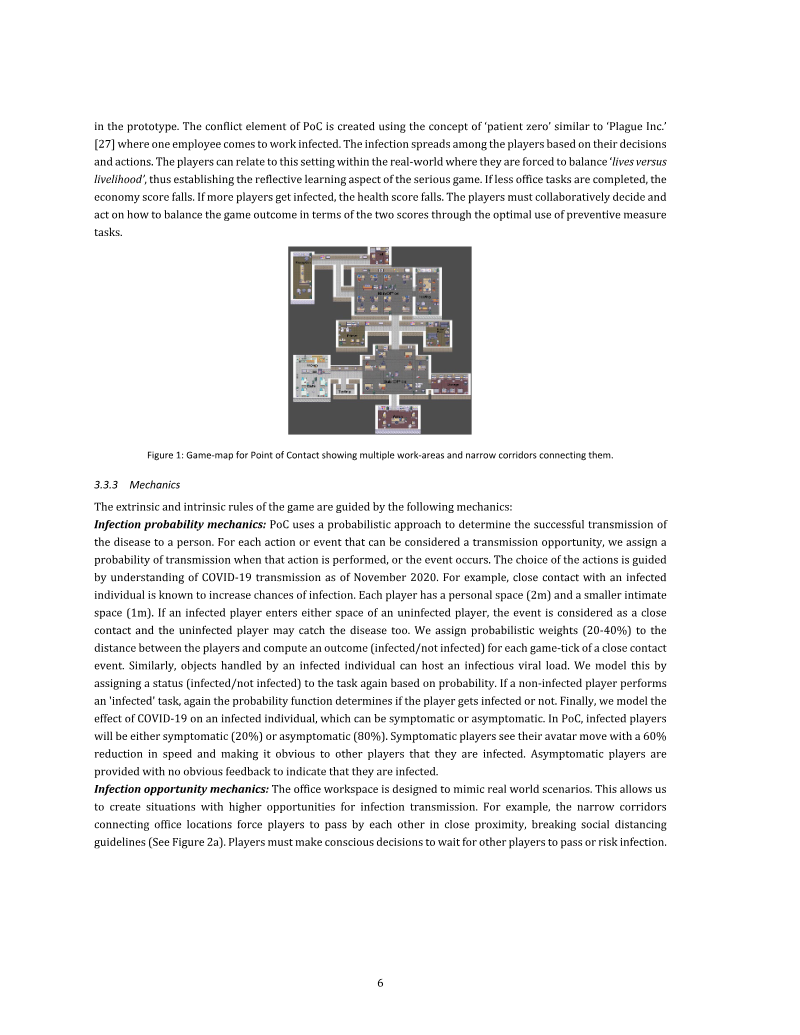
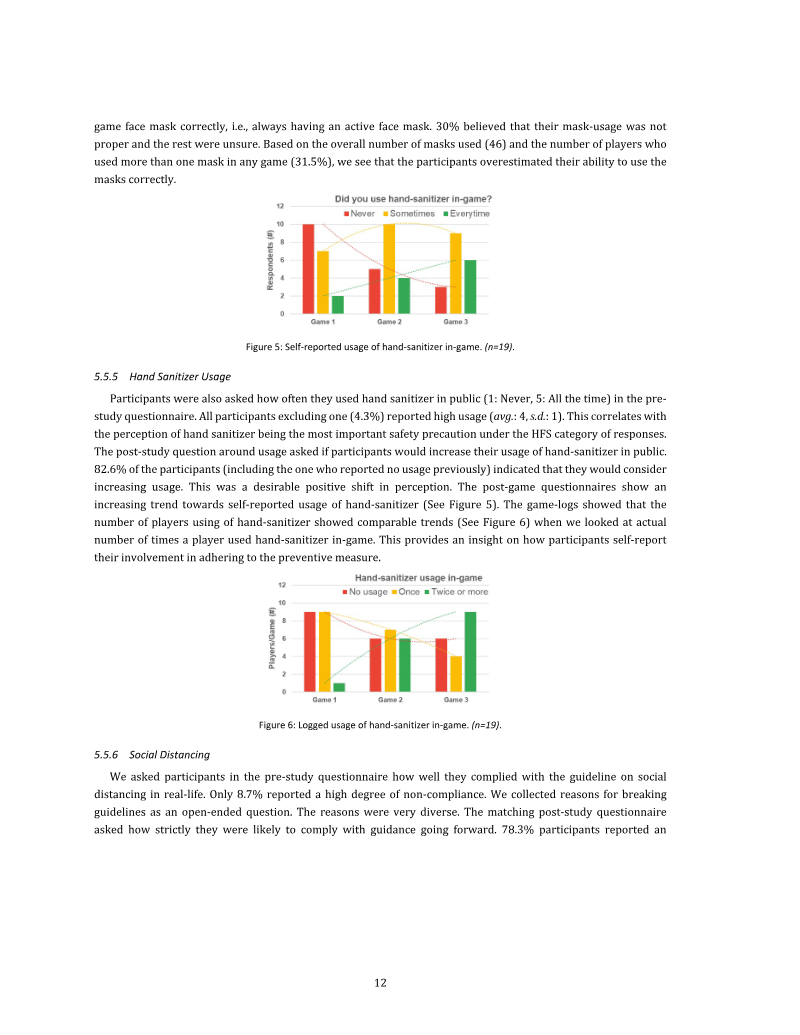
Point of Contact: Investigating Change in Perception Through a Serious Game for COVID-19 Preventive Measures
Point of Contact investigates the efficacy of a multiplayer serious game in shifting player perceptions regarding COVID-19 preventive measures.
- The multiplayer serious game 'Point of Contact' (PoC) successfully increased awareness of COVID-19 preventive measures, with 87% of participants indicating an intention to be more careful in following safety guidance after gameplay.
- There is a significant discrepancy between self-reported behavior and actual in-game performance; for example, participants significantly overestimated their ability to use masks correctly, with only 31.5% of mask-usage instances performed correctly.
- Social distancing remains the most challenging preventive measure to maintain, as evidenced by a statistically significant difference between self-reported compliance and actual logged violations during game sessions.
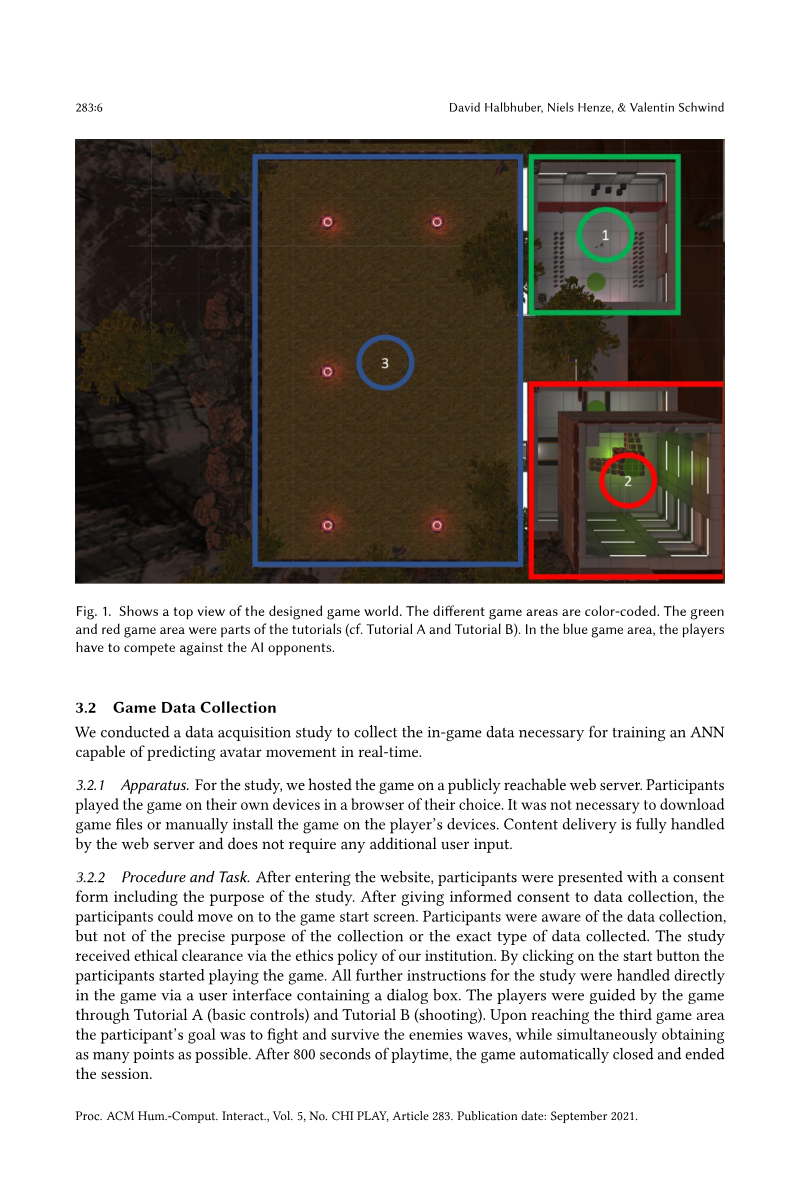
Increasing Player Performance and Gaming Experience in High Latency Setups
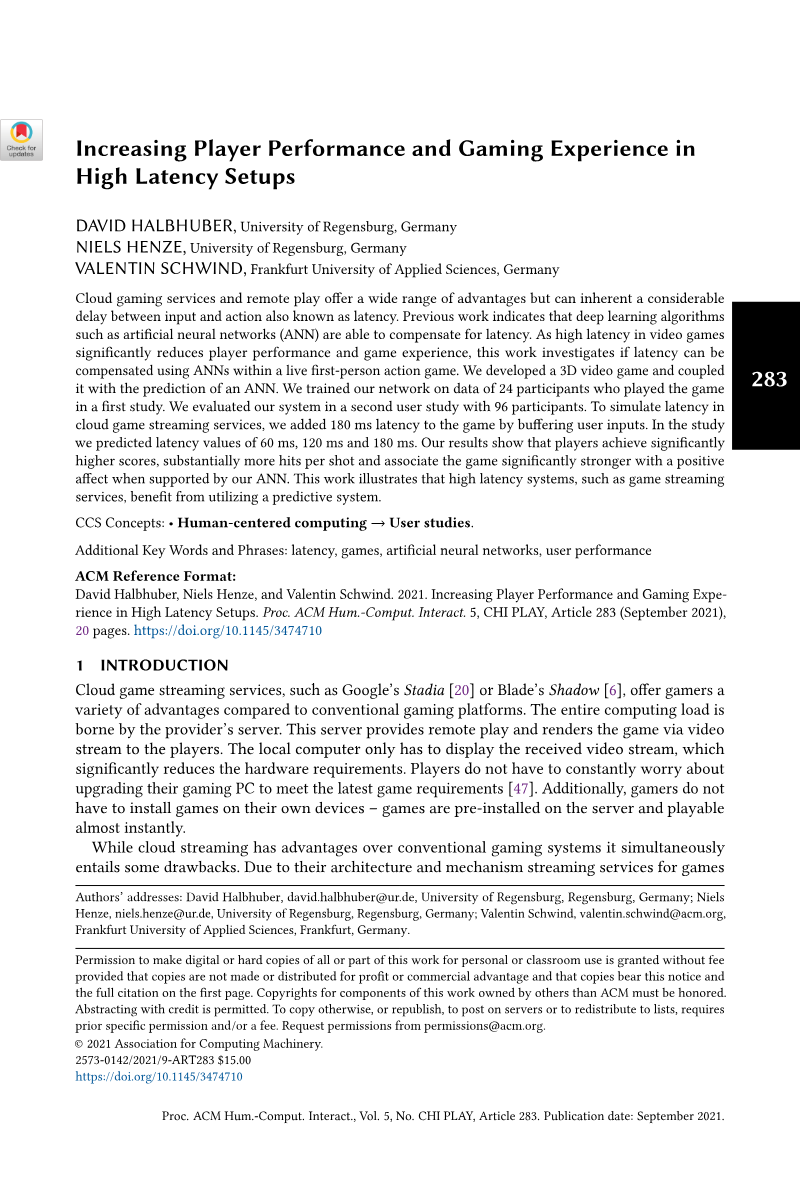
Artificial neural networks offer a robust solution for mitigating the performance degradation inherent in cloud gaming environments characterized by high network latency.
- Lightweight, multi-step dense neural networks can effectively compensate for input and display offsets of up to 180 milliseconds in cloud gaming environments.
- A 120-millisecond prediction model is the optimal balance between computational accuracy and positive player experience.
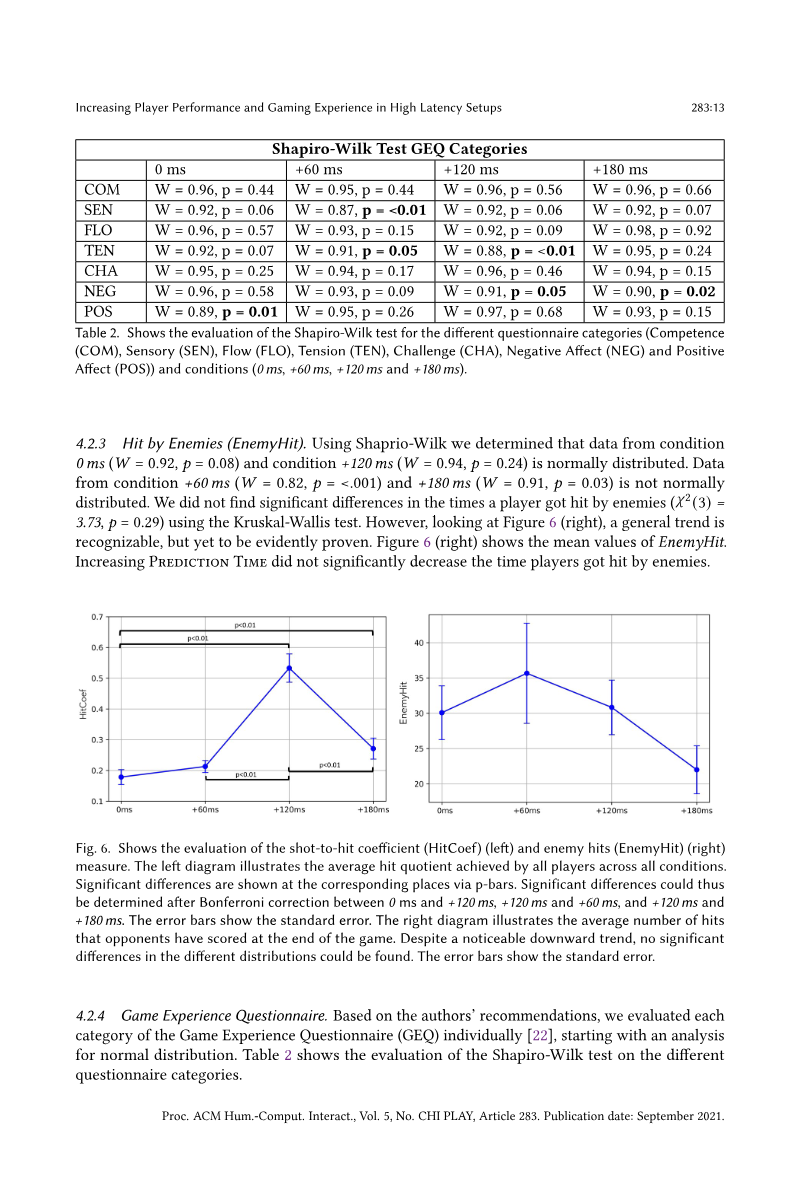
- Empirical testing with 96 participants confirms that predictive modeling significantly improves player performance, specifically regarding hit rates and scoring metrics in first-person games.
The Potential of Game Streaming as Exposure Therapy for Social Anxiety
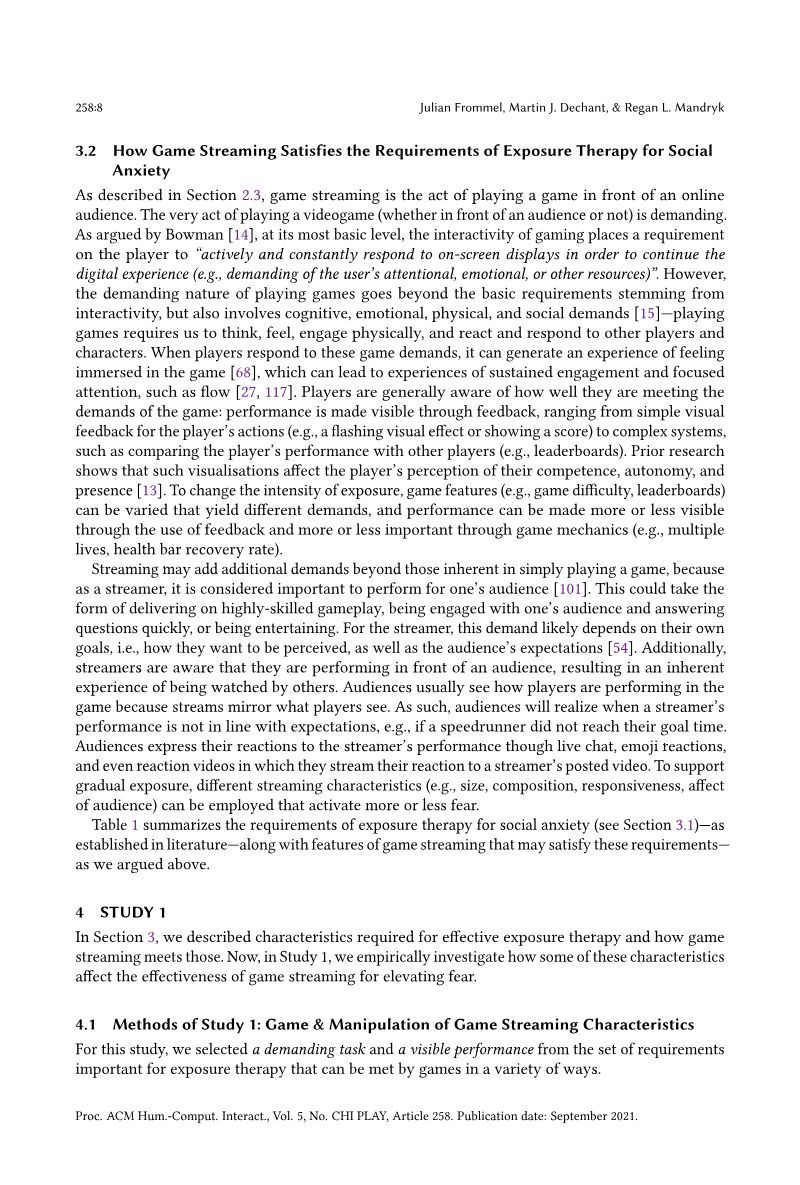
Game streaming serves as a viable, scalable, and highly personalizable medium for digital exposure therapy, specifically designed to address the symptoms of social anxiety disorder.
- Livestreaming functions as a scalable, personalizable tool for digital exposure therapy by simulating social anxiety triggers like audience judgment and performance visibility.
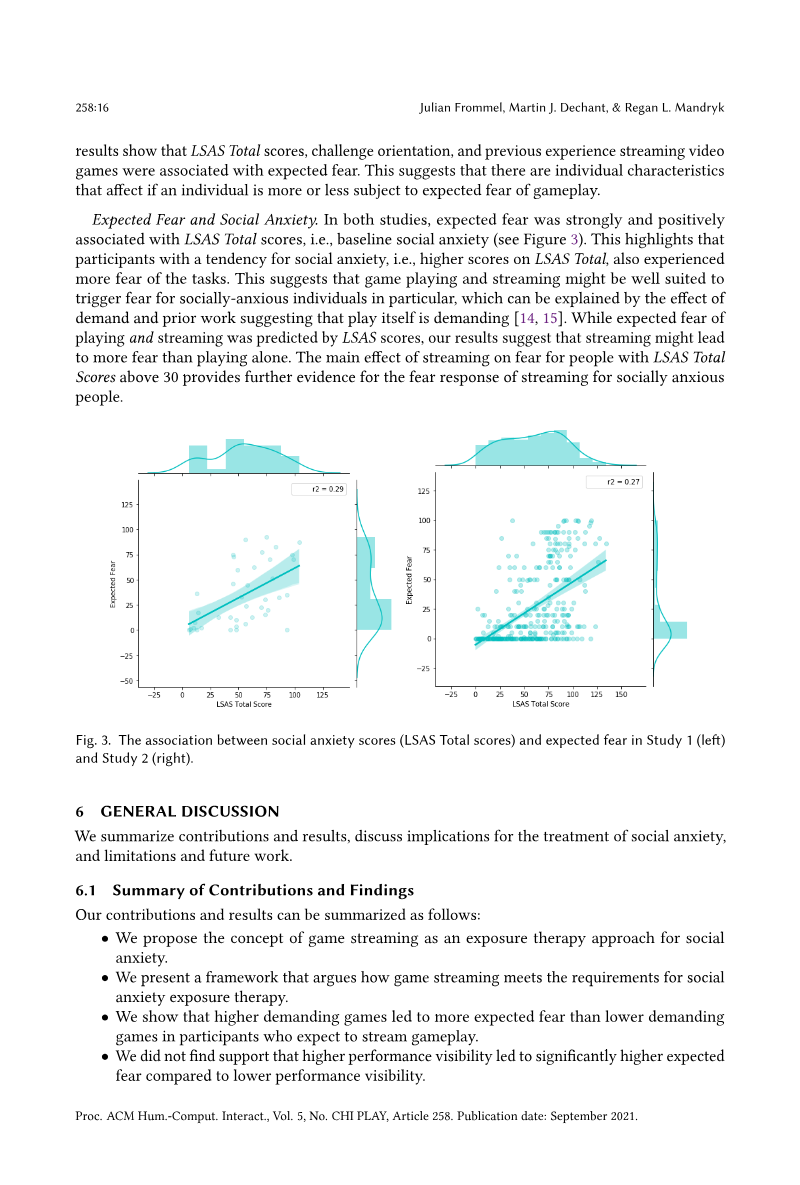
- The act of streaming induces a measurable fear response in individuals with social anxiety that is significantly higher than the anxiety experienced during solitary gaming.
- Game demand, specifically difficulty levels and the potential for failure, is the primary mechanism for modulating anxiety levels during streaming sessions.
Statistical Significance Testing at CHI PLAY: Challenges and Opportunities for More Transparency
Research within the CHI PLAY community faces a critical crisis of reproducibility and statistical integrity.
- A systematic review of 119 CHI PLAY papers reveals that 28.6% of studies contain internal inconsistencies in reported statistical values.
- Only 5.9% of examined game research studies provide any justification for their chosen sample sizes.
- The field suffers from a pervasive misuse of Null Hypothesis Significance Testing (NHST) and a failure to distinguish between exploratory and confirmatory research, which increases the risk of false-positive findings.
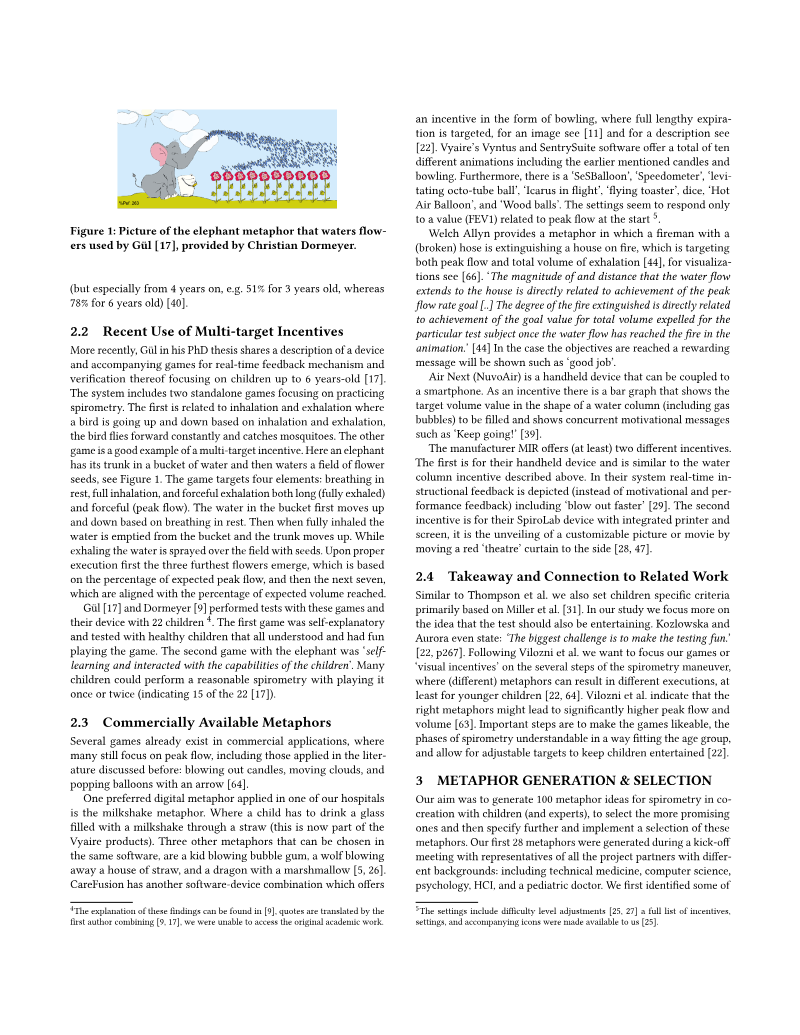
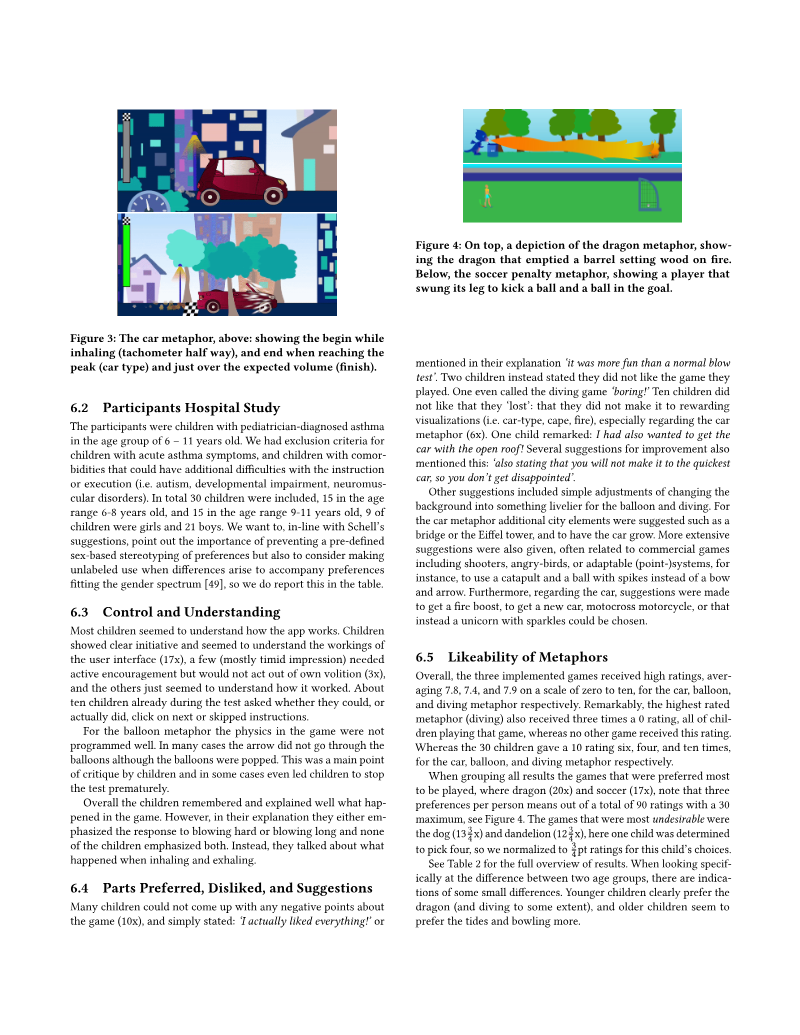
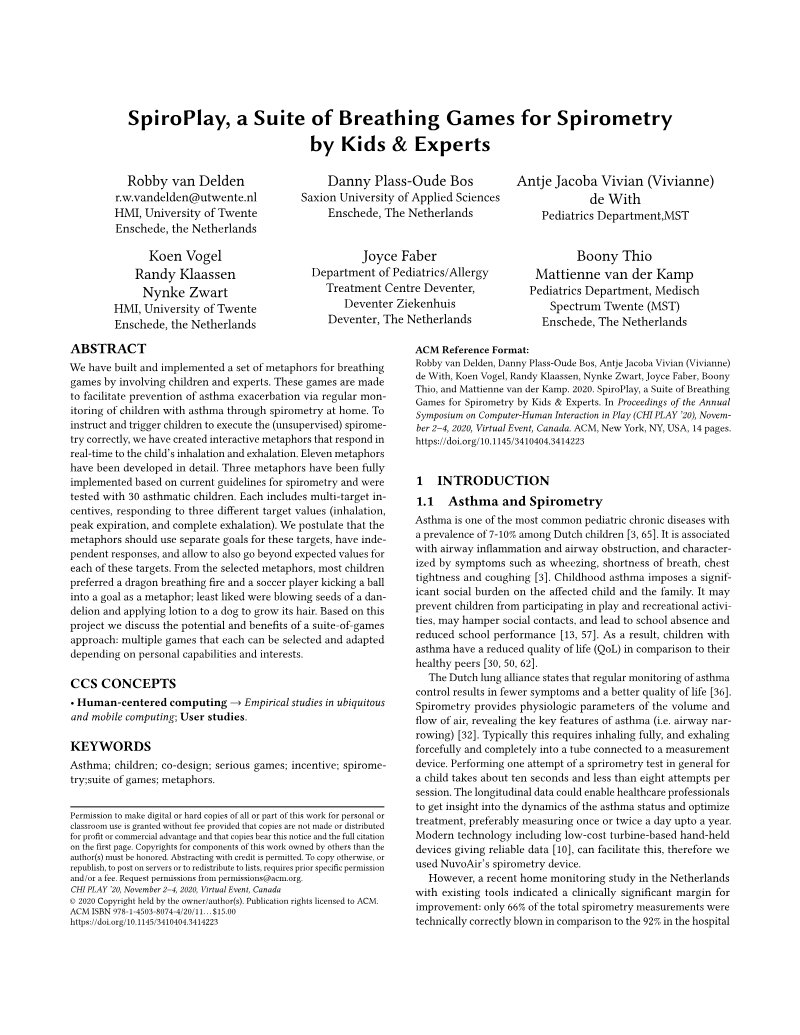
SpiroPlay: A Suite of Breathing Games for Spirometry
SpiroPlay addresses the critical challenge of ensuring accurate, unsupervised home spirometry for pediatric asthma patients by integrating gamified incentives into the testing process.
- Gamifying spirometry through interactive, metaphor-based breathing games significantly improves patient compliance and data quality for pediatric asthma patients performing unsupervised home testing.
- A study of 30 children aged 6 to 11 demonstrated that a suite-based approach offering multiple game metaphors is essential for maintaining long-term engagement compared to single-game solutions.
- Effective clinical spirometry tools must provide independent, real-time feedback loops for three distinct phases: inhalation, peak exhalation, and full exhalation.
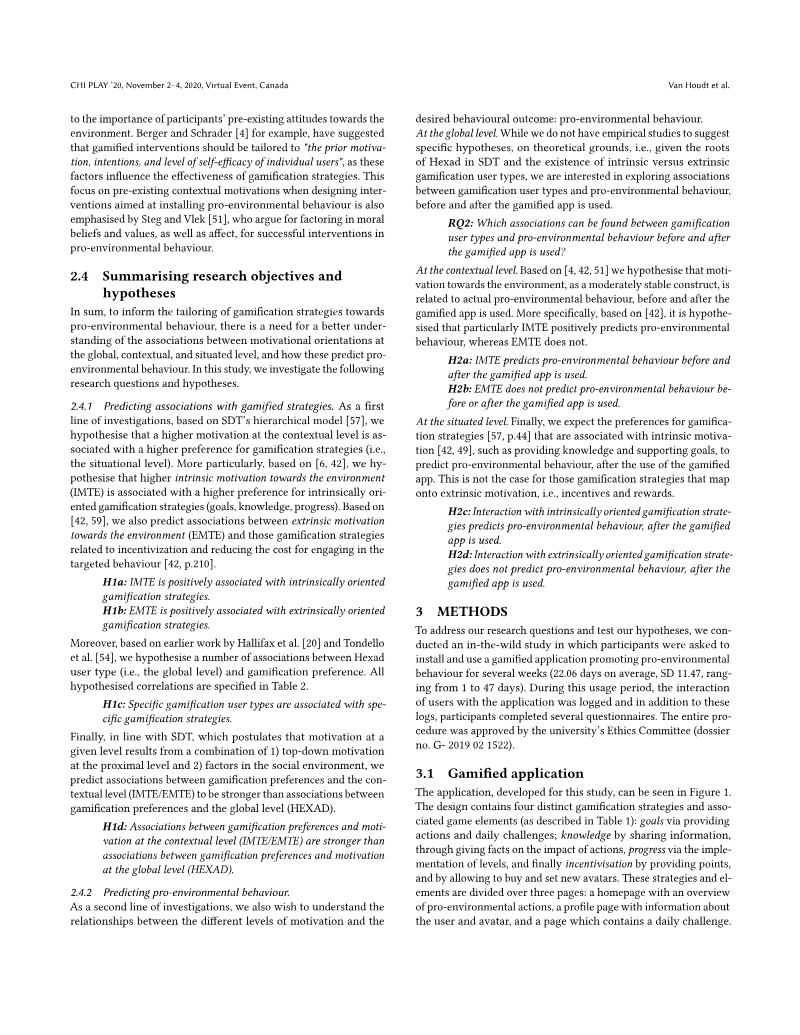
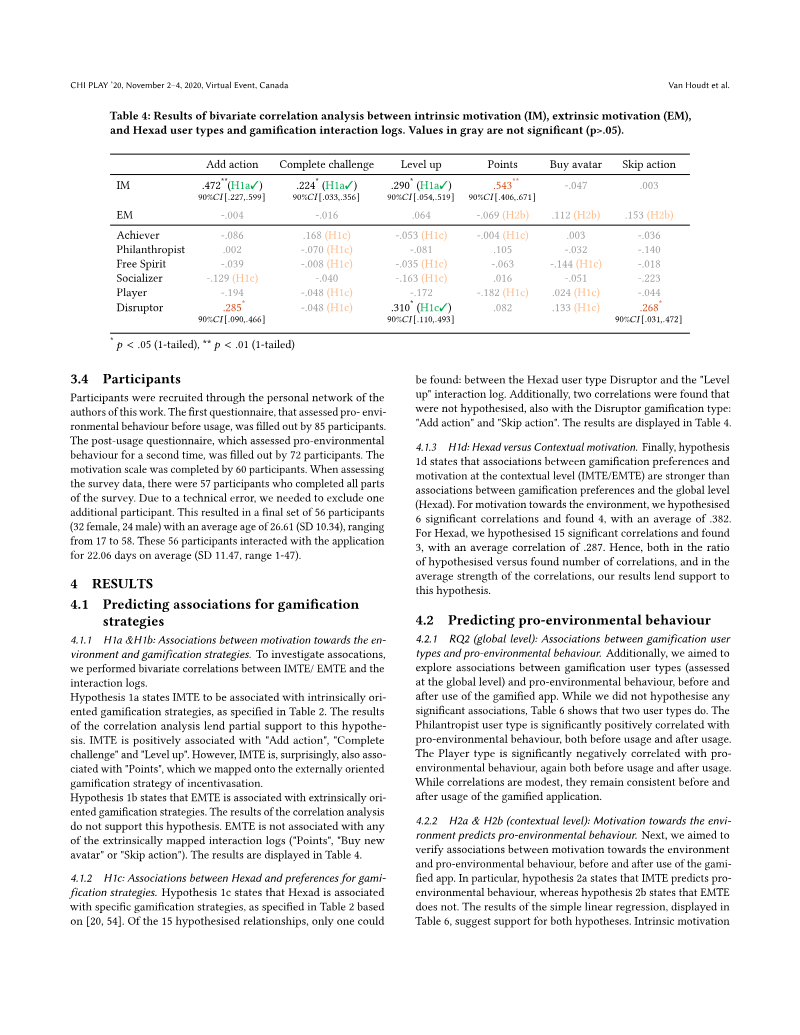
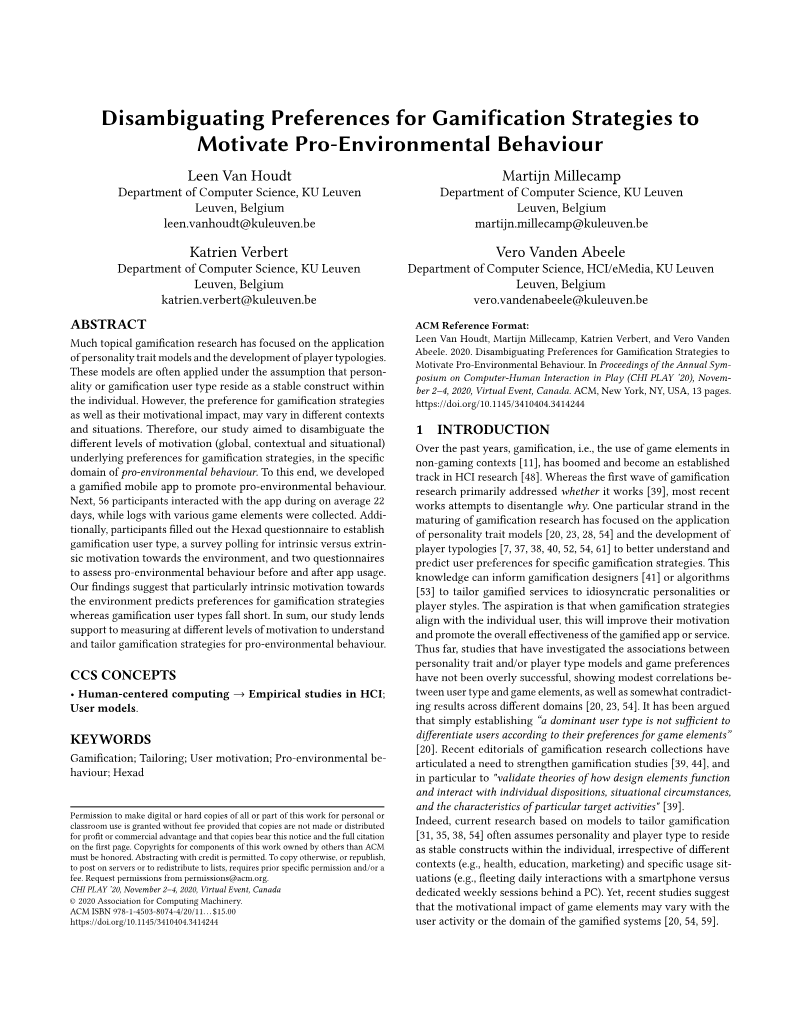
Disambiguating Preferences for Gamification Strategies to Motivate Pro-Environmental Behaviour
Gamification strategies designed to encourage pro-environmental behavior are most effective when aligned with a user’s contextual intrinsic motivation rather than static personality typologies.
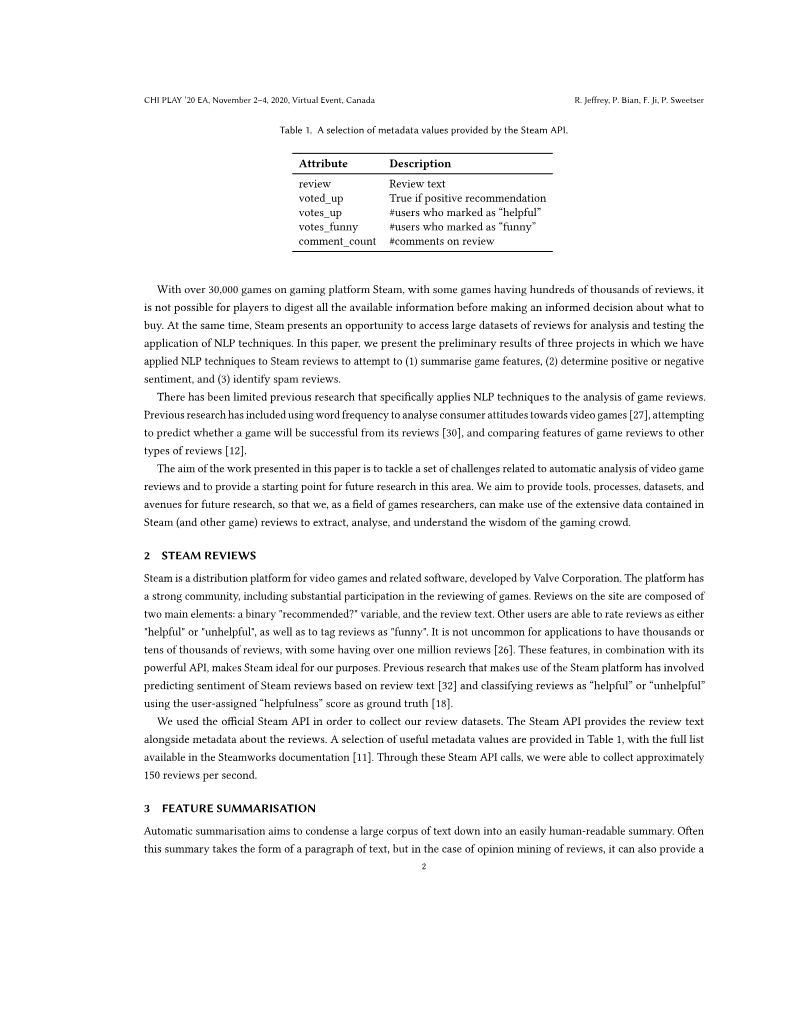
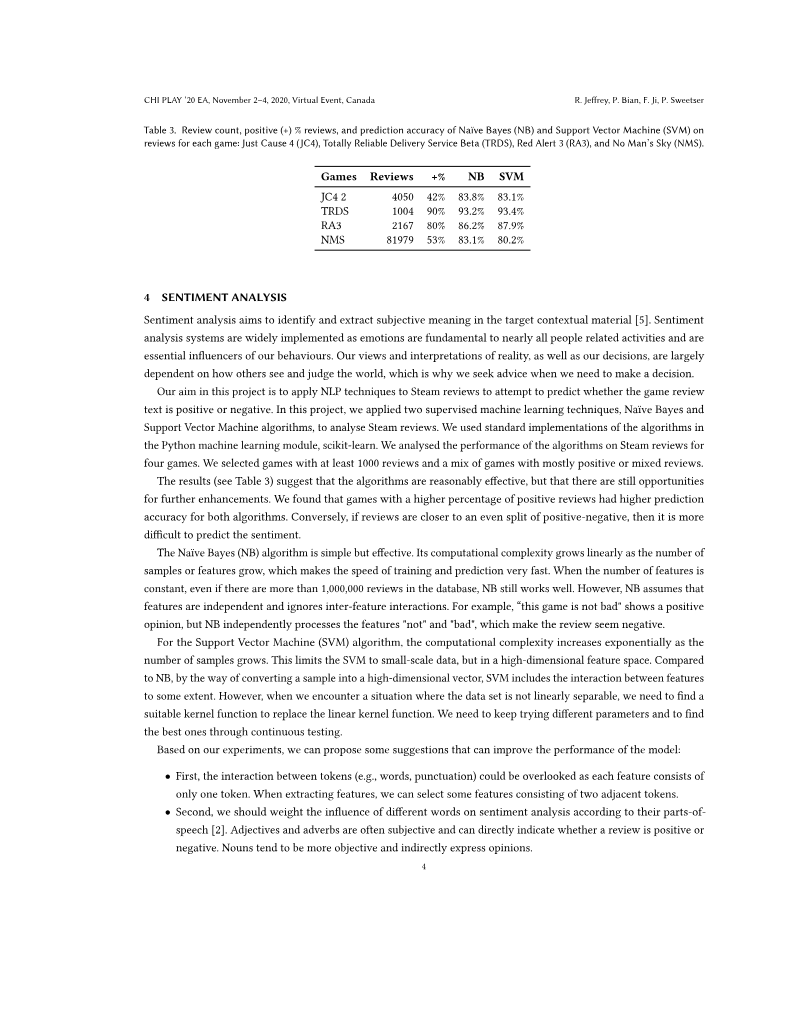
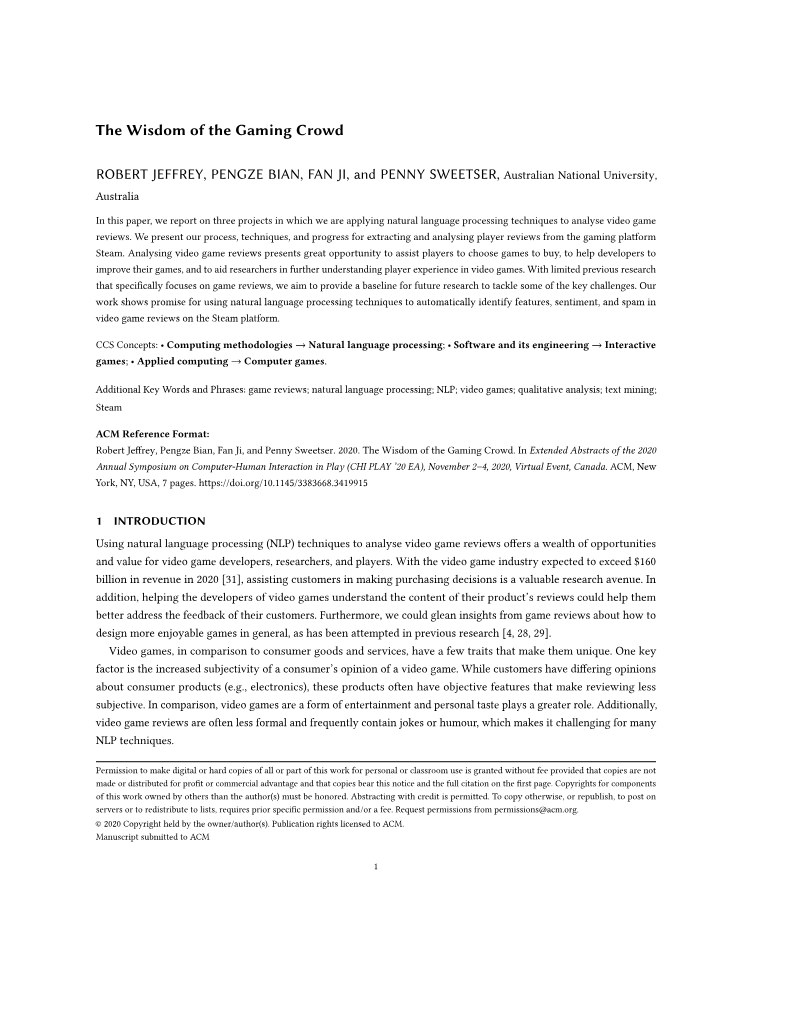
The Wisdom of the Gaming Crowd
The primary objective of this research is to establish a baseline for the application of natural language processing (NLP) techniques to video game reviews, specifically those hosted on the Steam platform.
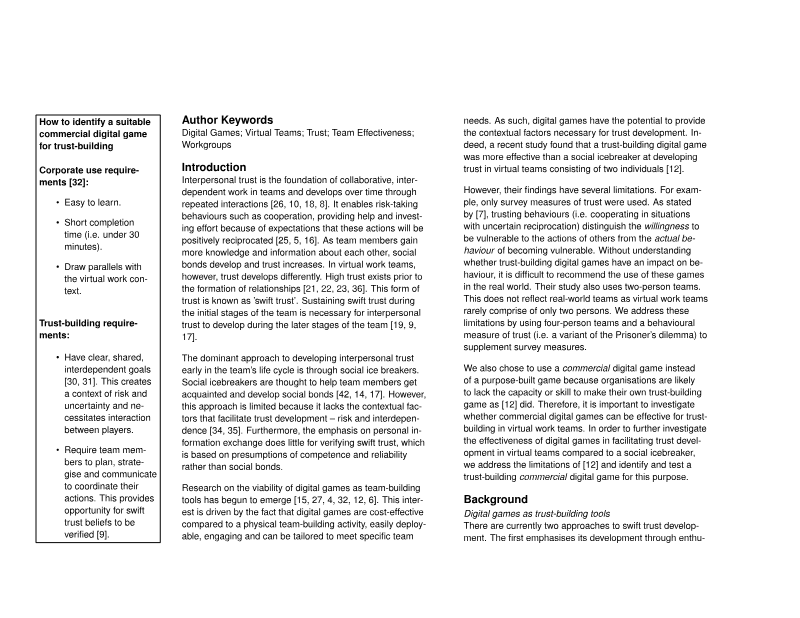
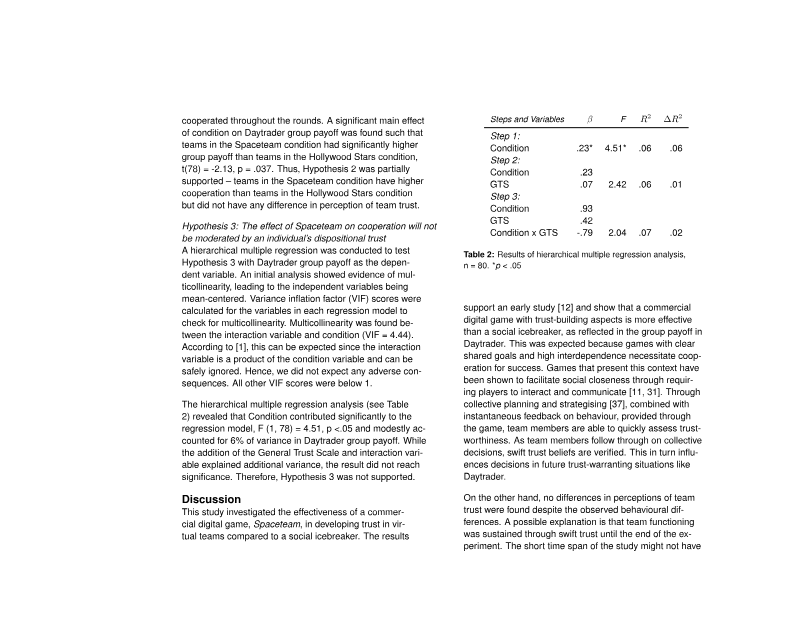
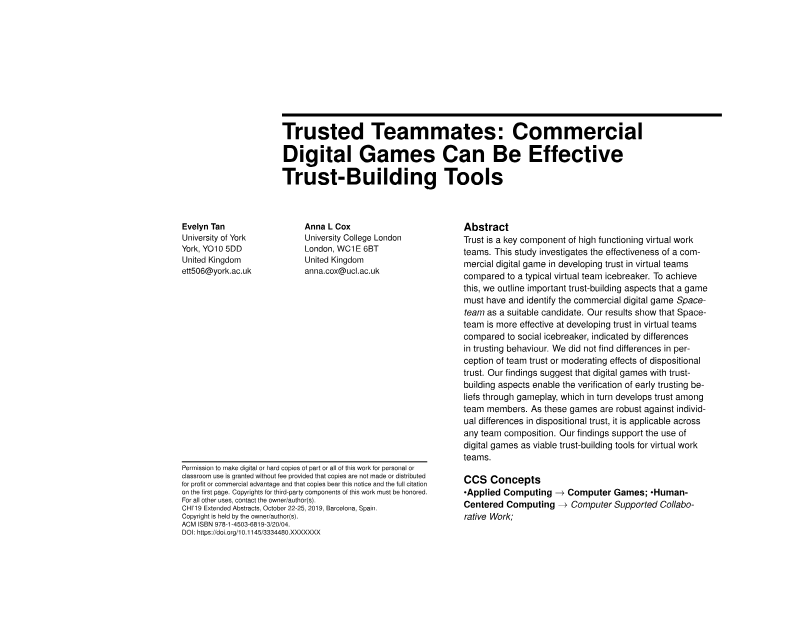
Trusted Teammates: Commercial Digital Games Can Be Effective Trust-Building Tools
This study evaluates the effectiveness of commercial digital games as tools for building trust within virtual work teams, contrasting them with traditional social icebreakers.
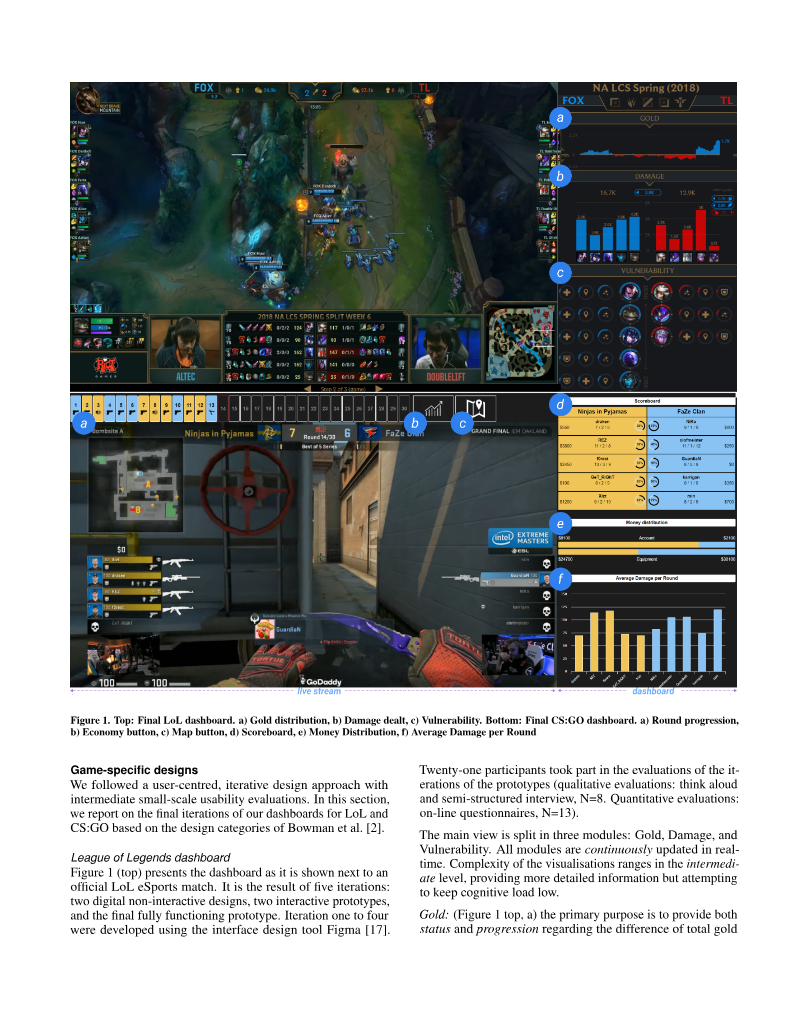
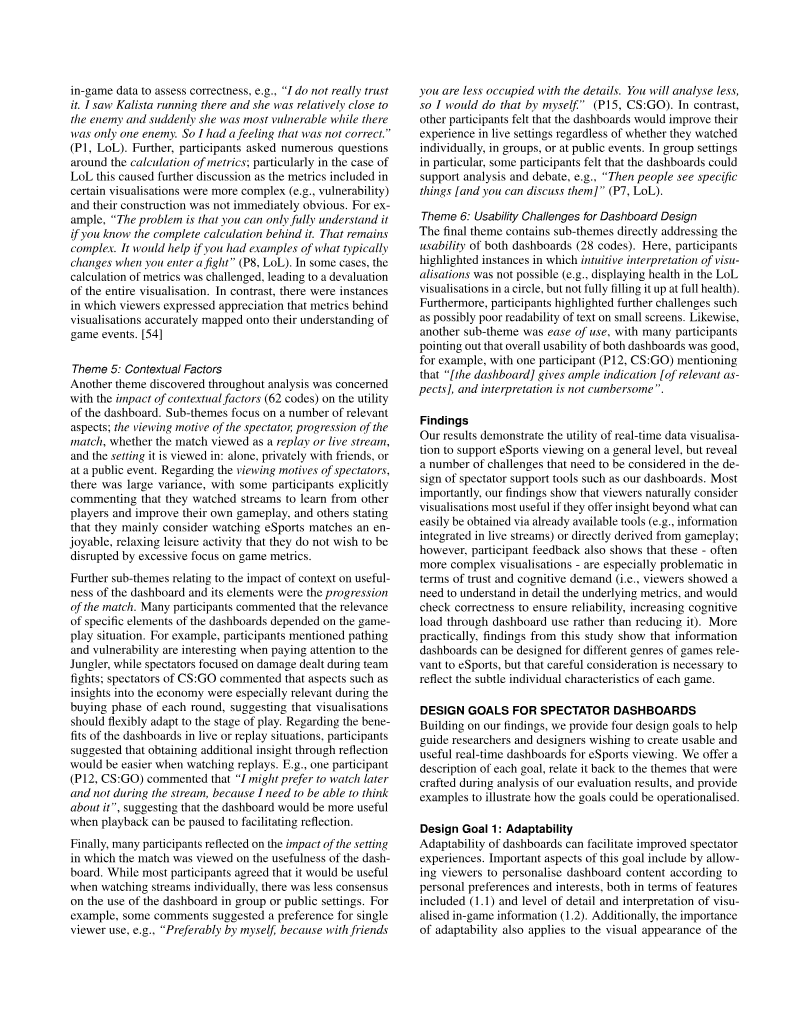
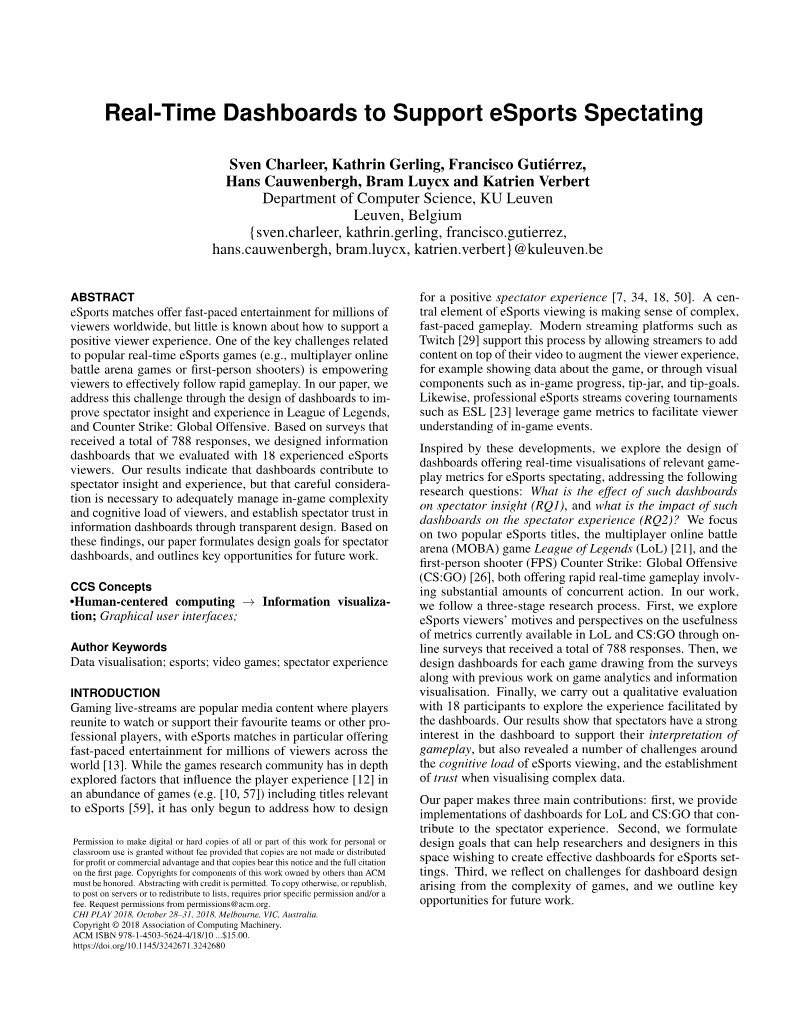
Real-Time Dashboards to Support eSports Spectating
Real-time data dashboards serve as essential tools for enhancing spectator engagement in competitive gaming, specifically within the tactical environments of League of Legends and Counter-Strike: Global Offensive.
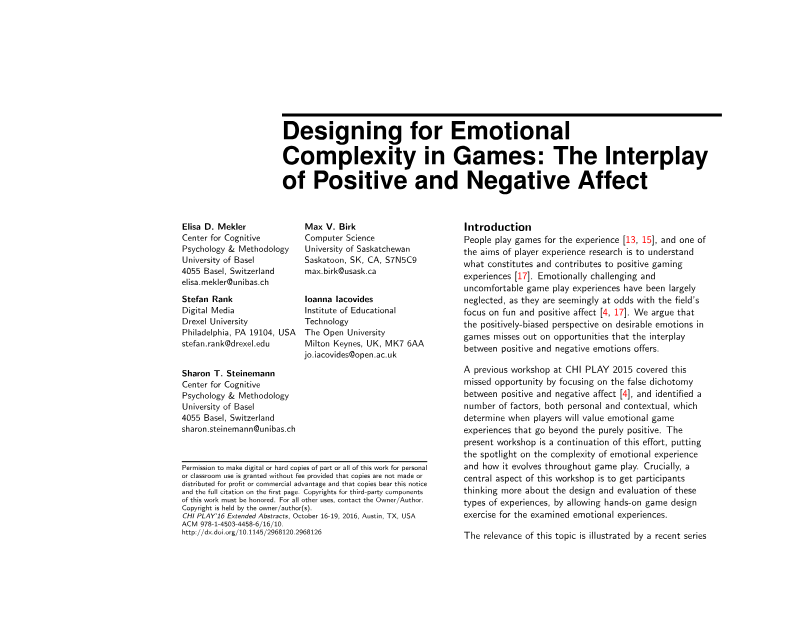
Designing for Emotional Complexity in Games: The Interplay of Positive and Negative Affect
This document explores the design and evaluation of emotional complexity in digital games, specifically challenging the industry’s traditional, narrow focus on purely positive affect and "fun."
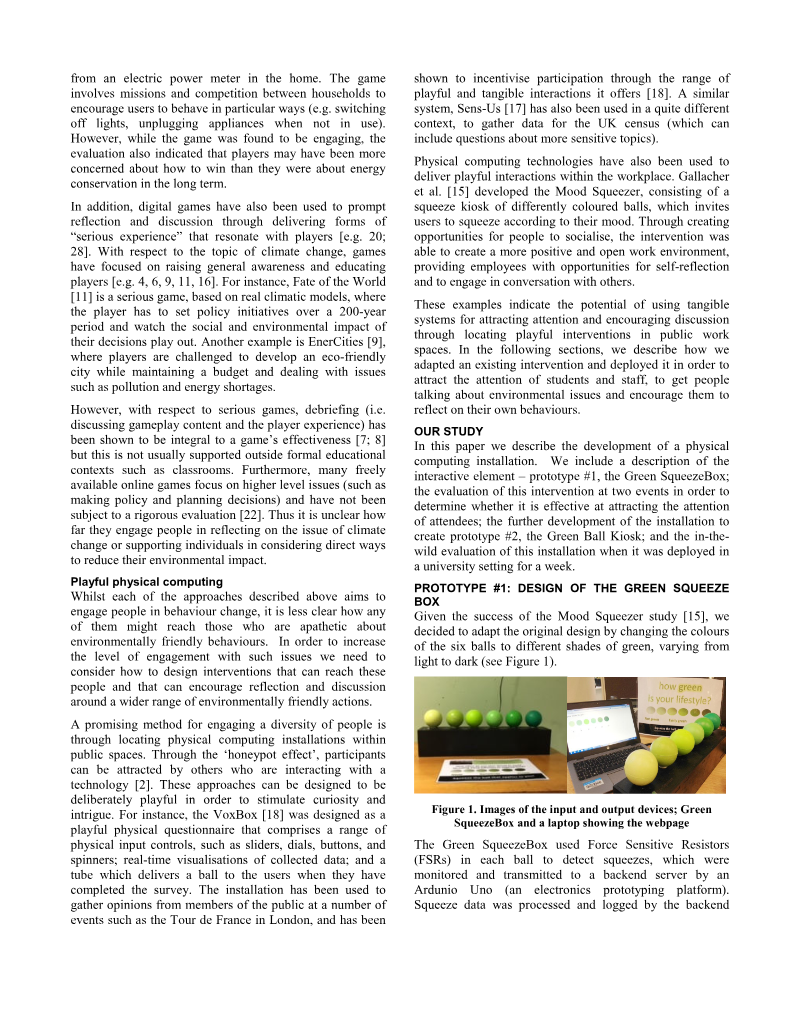
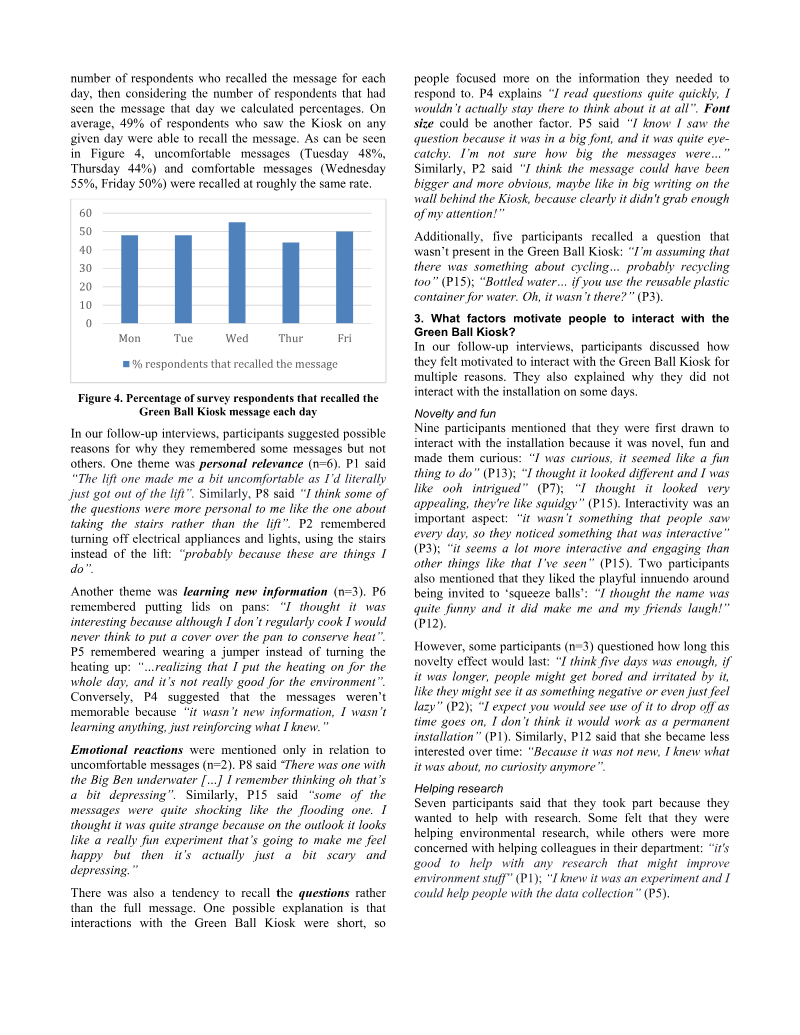
Squeezy Green Balls: Promoting Environmental Awareness through Playful Interactions
Playful, physical computing installations serve as effective tools for overcoming public apathy toward climate change by transforming abstract environmental messaging into tangible, interactive experiences.
Paper Gaming: Creating IoT Interactions with Conductive Inks and Web-connectivity through EKKO
The research explores the integration of Internet of Things (IoT) capabilities into traditional paper-based media, specifically focusing on board games.
Do you work at ACM CHI PLAY? Get a free report of how these documents are read and cited here.