ACM CHI PLAY
ACM SIGCHI's annual symposium on computer-human interaction in play, the main venue for player experience and games user research. Since 2021 its full papers appear in the CHI PLAY issue of Proceedings of the ACM on Human-Computer Interaction.
Documents
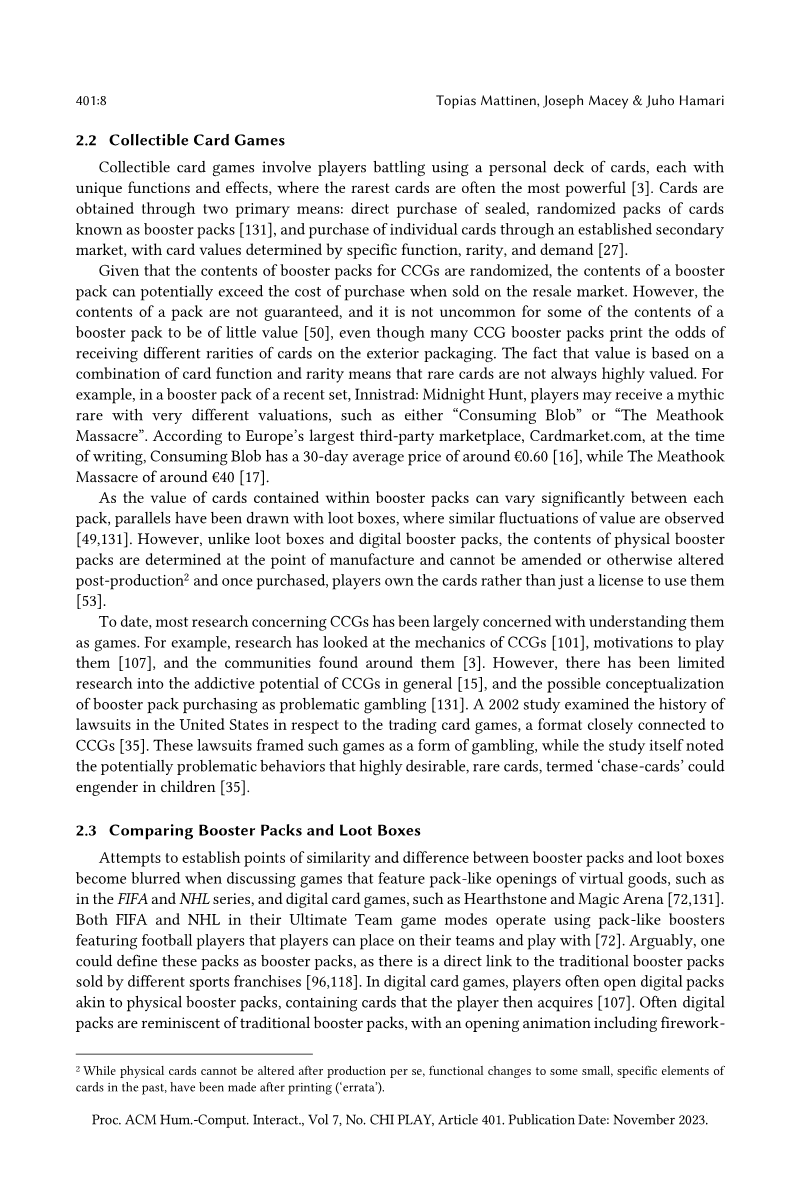
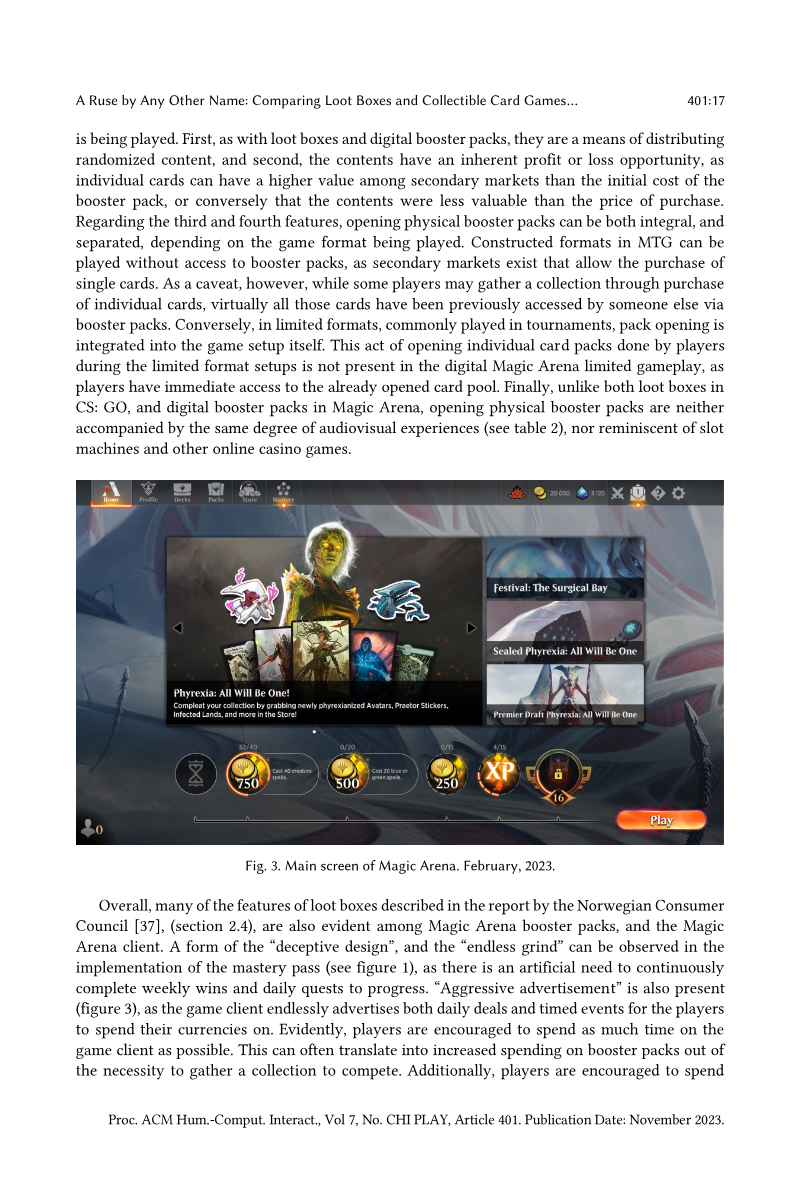
A Ruse by Any Other Name: Comparing Loot Boxes and Collectible Card Games Using Magic Arena
Digital booster packs within Magic Arena represent a distinct monetization category that blurs the lines between traditional collectible card games and predatory loot box mechanics.
- Digital booster packs in Magic Arena function as pay-to-win mechanics by embedding randomized rewards directly into the core gameplay loop, forcing continuous financial investment for competitive viability.
- Unlike physical card packs with tangible secondary markets, digital implementations use algorithmic manipulation and opaque currencies to create high-pressure spending environments.
- Digital booster packs satisfy the majority of loot box criteria, including chance-based distribution and psychologically stimulating audiovisual feedback designed to trigger gambling-like responses.
Small Latency Variations Do Not Affect Player Performance in First-Person Shooters
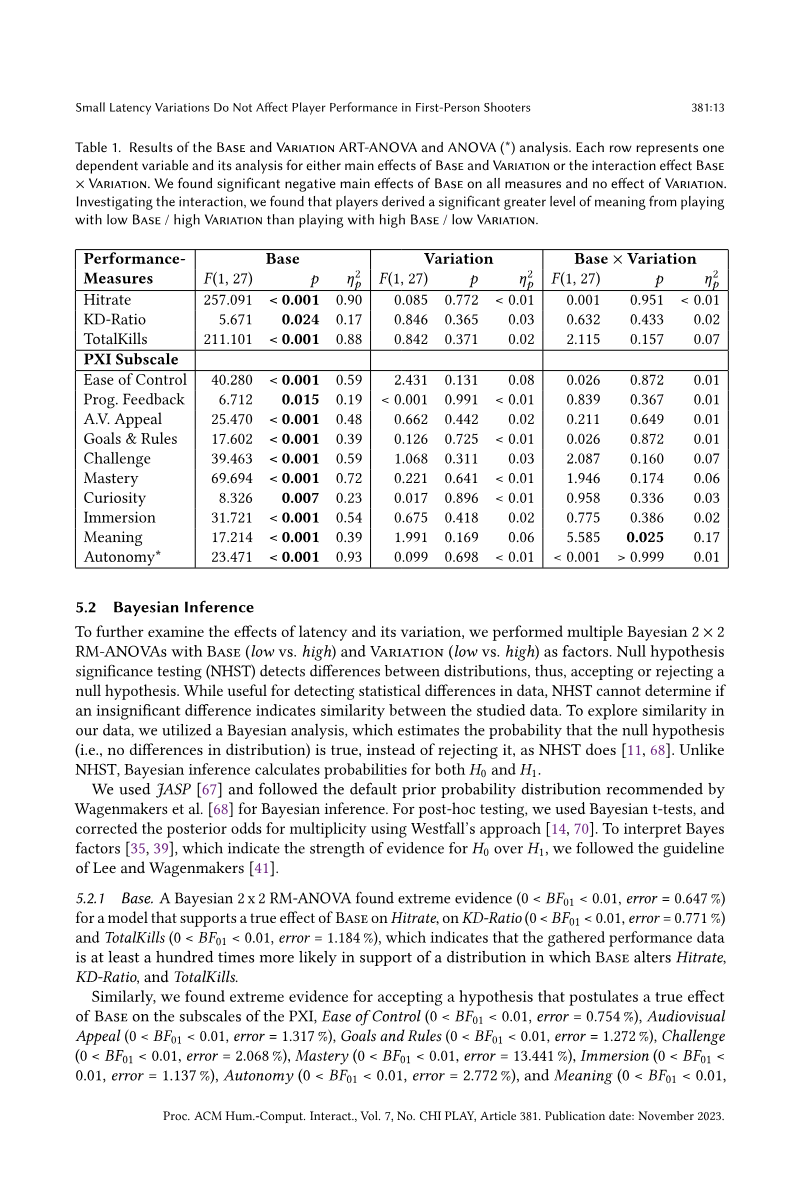
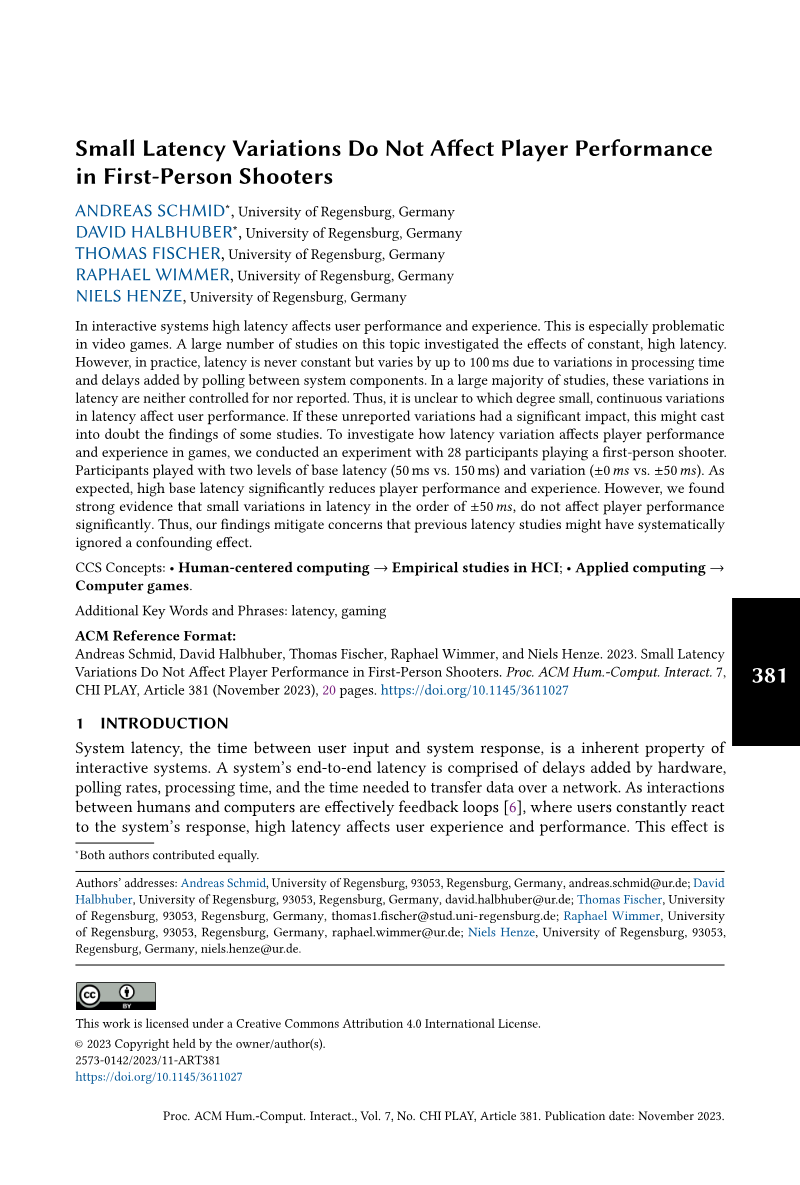
High base latency significantly degrades player performance and subjective experience in first-person shooters, yet minor, continuous fluctuations in latency—commonly referred to as jitter—do not exert a measurable influence on competitive outcomes.
- High base latency significantly degrades player performance and subjective experience in first-person shooters, whereas minor latency fluctuations (jitter) do not.
- Controlled testing with ±50 ms variations in the game Cube 2: Sauerbraten demonstrated that minor jitter has no measurable impact on hit rates or kill-death ratios.
- Statistical analysis of 28 participants confirms that minor latency inconsistencies lack practical relevance and do not meaningfully alter competitive outcomes.
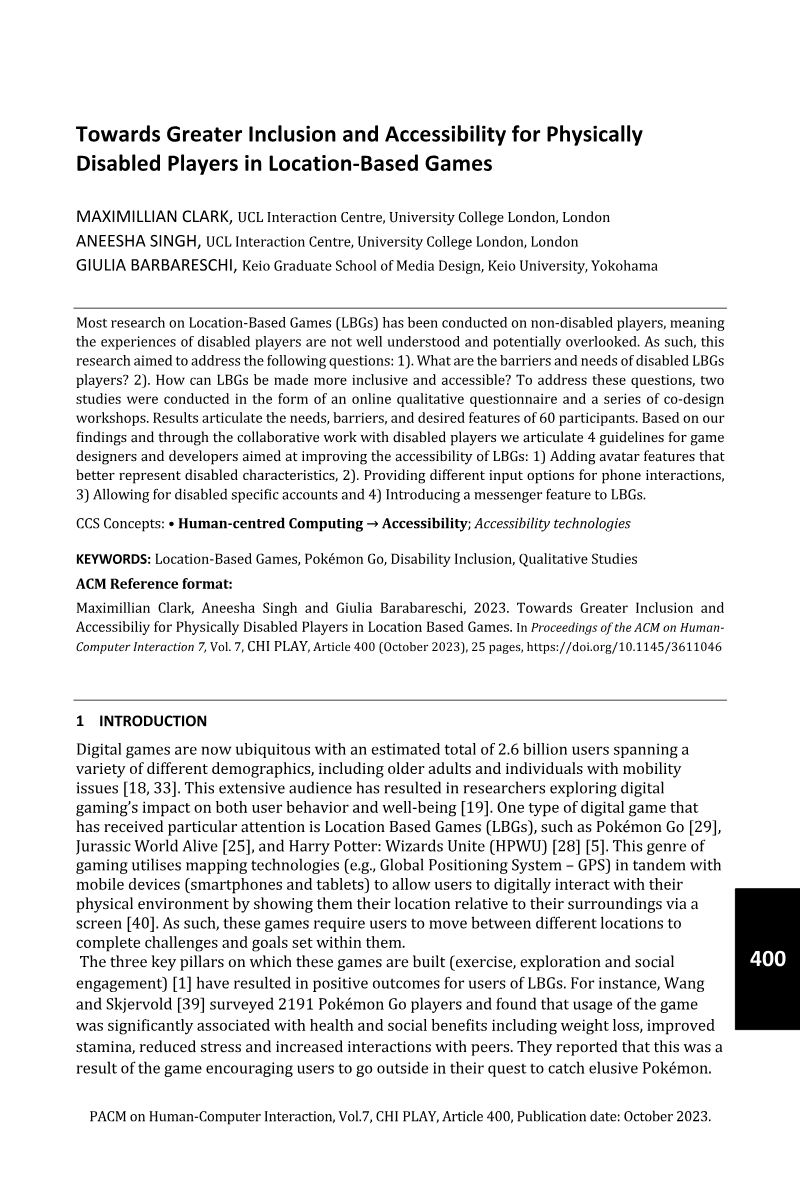
Towards Greater Inclusion and Accessibility for Physically Disabled Players in Location-Based Games
Location-based games frequently marginalize players with mobility-related disabilities by prioritizing design choices centered on non-disabled physical activity.
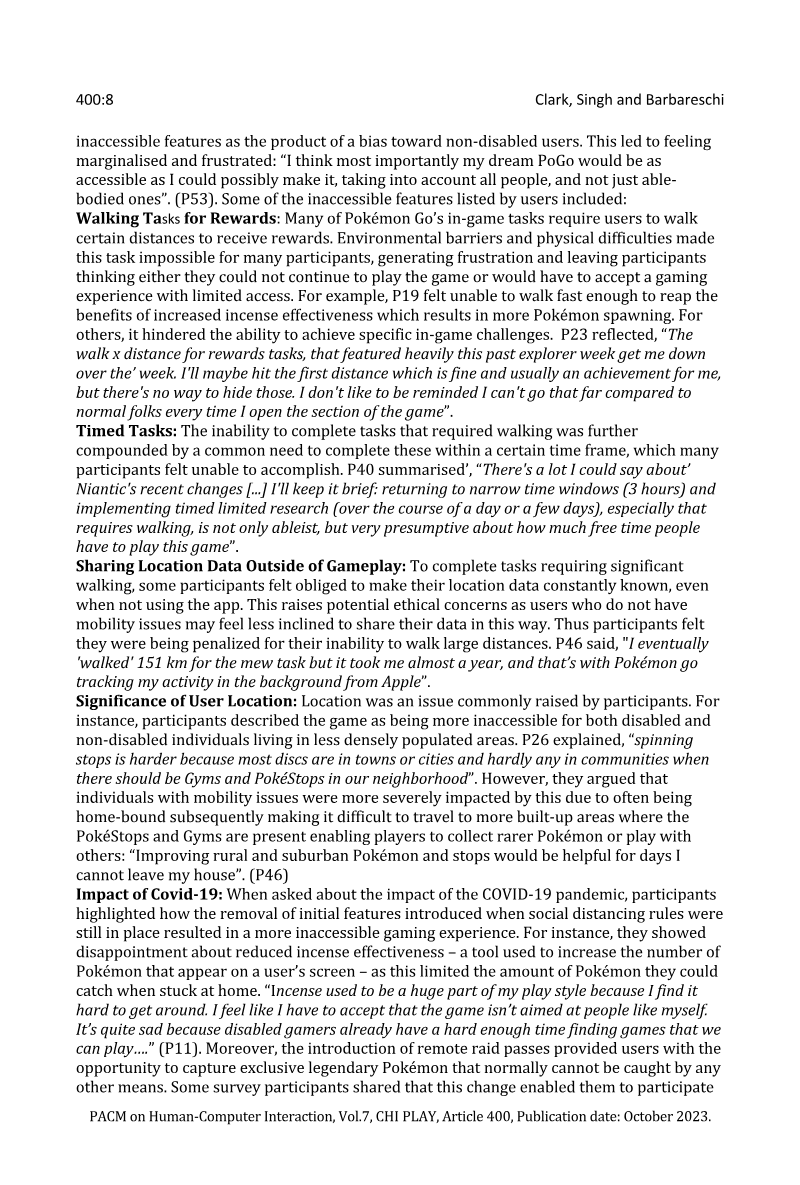
- Location-Based Games (LBGs) frequently present barriers for mobility-impaired players, specifically through timed tasks that require extensive walking and repetitive screen-tapping mechanics that cause physical pain.
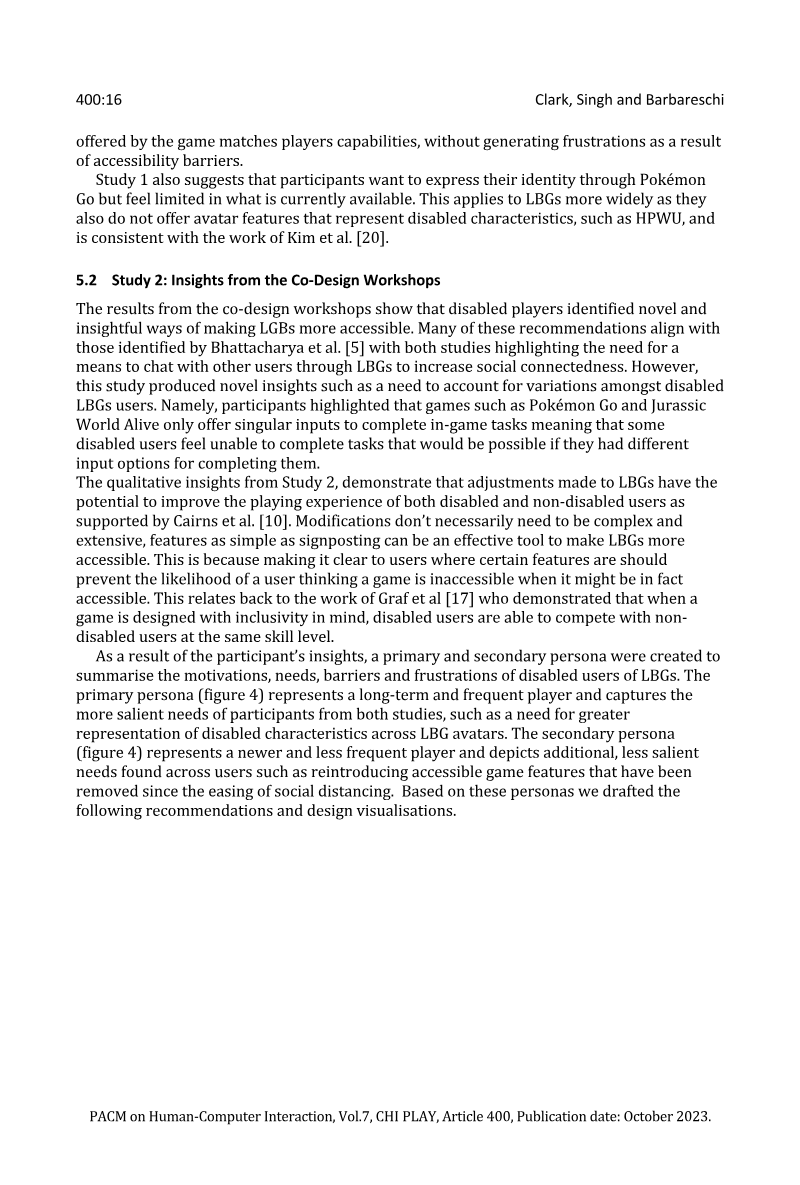
- Research involving 60 participants identified four core design guidelines for improving LBG accessibility: incorporating disability-representative avatar features, providing alternative input options, allowing for disability-specific account settings, and introducing in-game messenger features.
- Players with muscle weakness reported that repetitive tapping requirements for game actions like 'raiding' are inaccessible, suggesting developers implement alternative inputs such as 'hold-to-activate' or motion-based controls like shaking the phone.
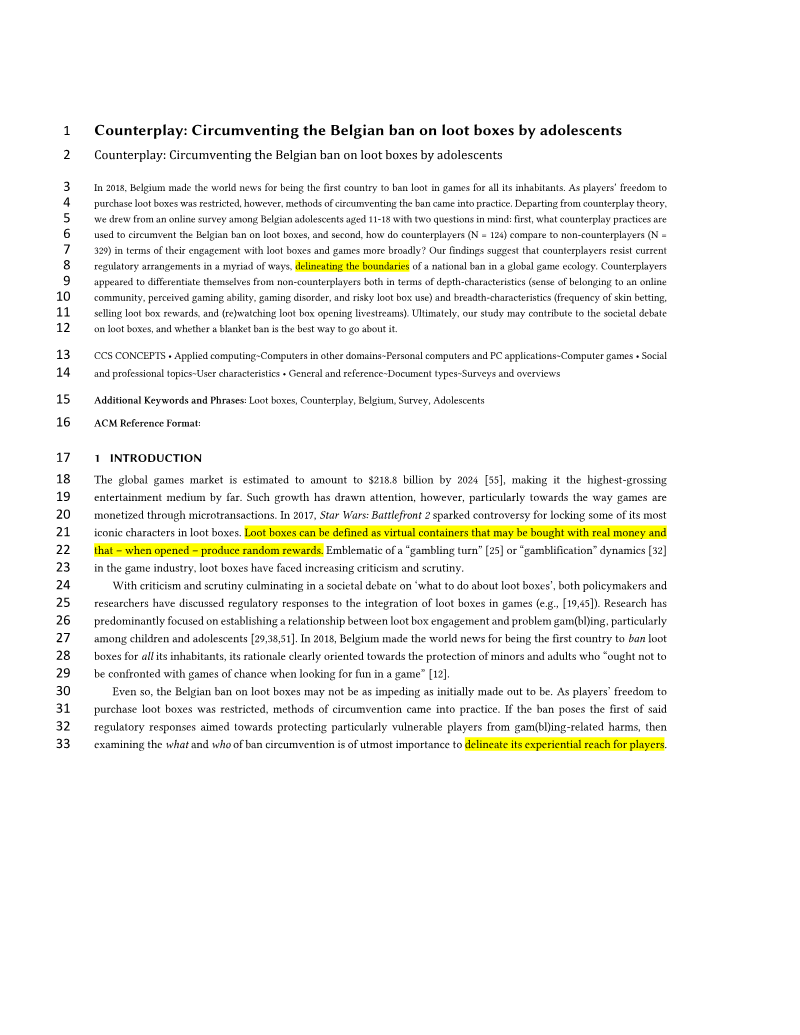
Counterplay: Circumventing the Belgian Ban on Loot Boxes by Adolescents
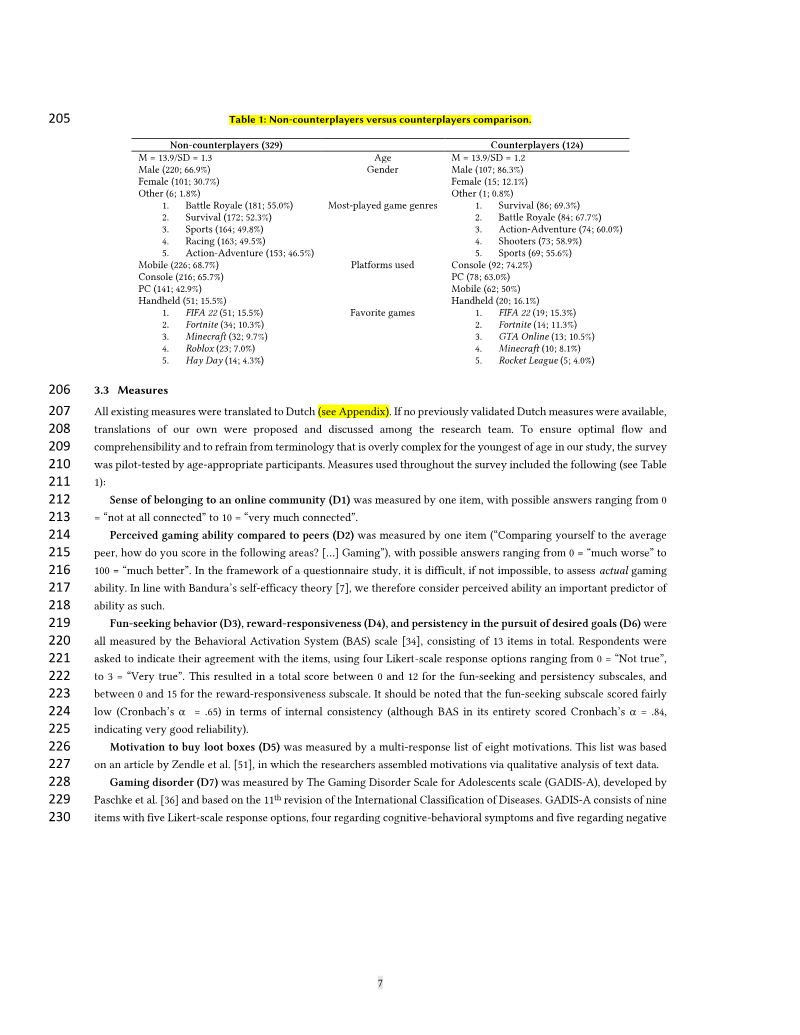
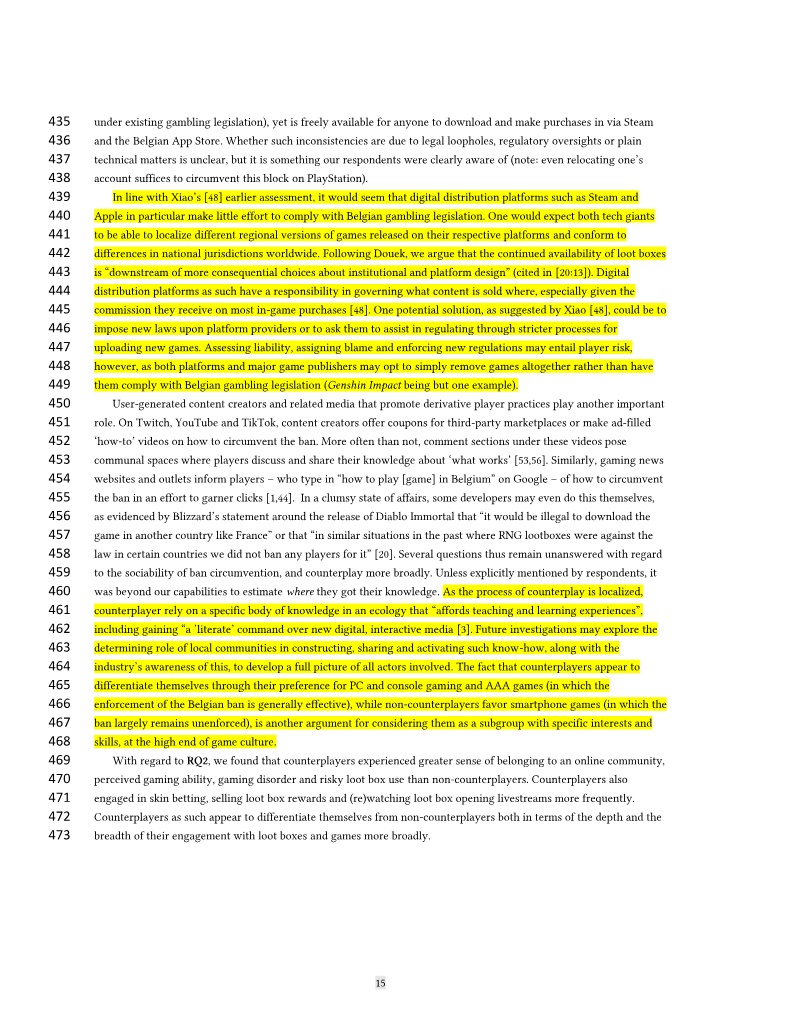
National bans on loot boxes in Belgium are frequently undermined by adolescent players who actively circumvent regional restrictions to access prohibited digital content.
Let's Play Together through Channels: Understanding the Practices and Experience of Danmaku Participation Game Players in China
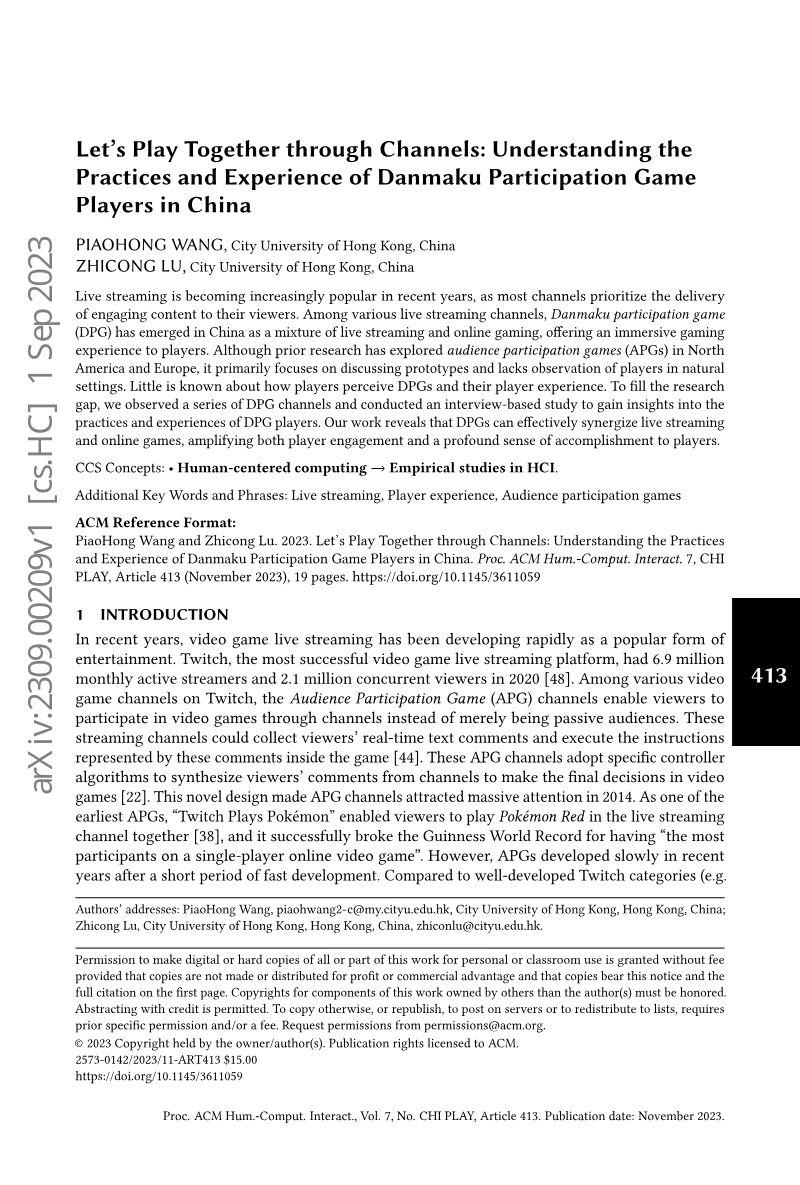
Danmaku Participation Games (DPGs) represent a significant evolution in live-streamed interactive entertainment, specifically within the Chinese digital landscape on the Bilibili platform.
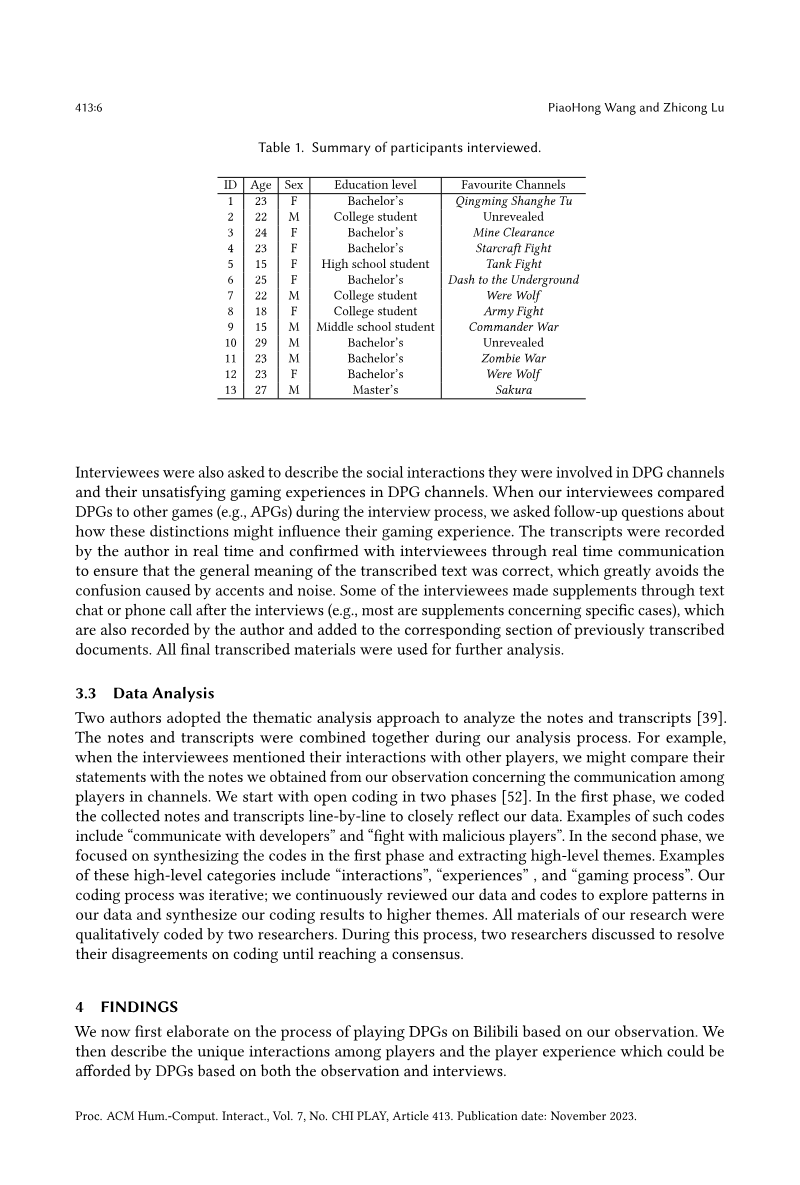
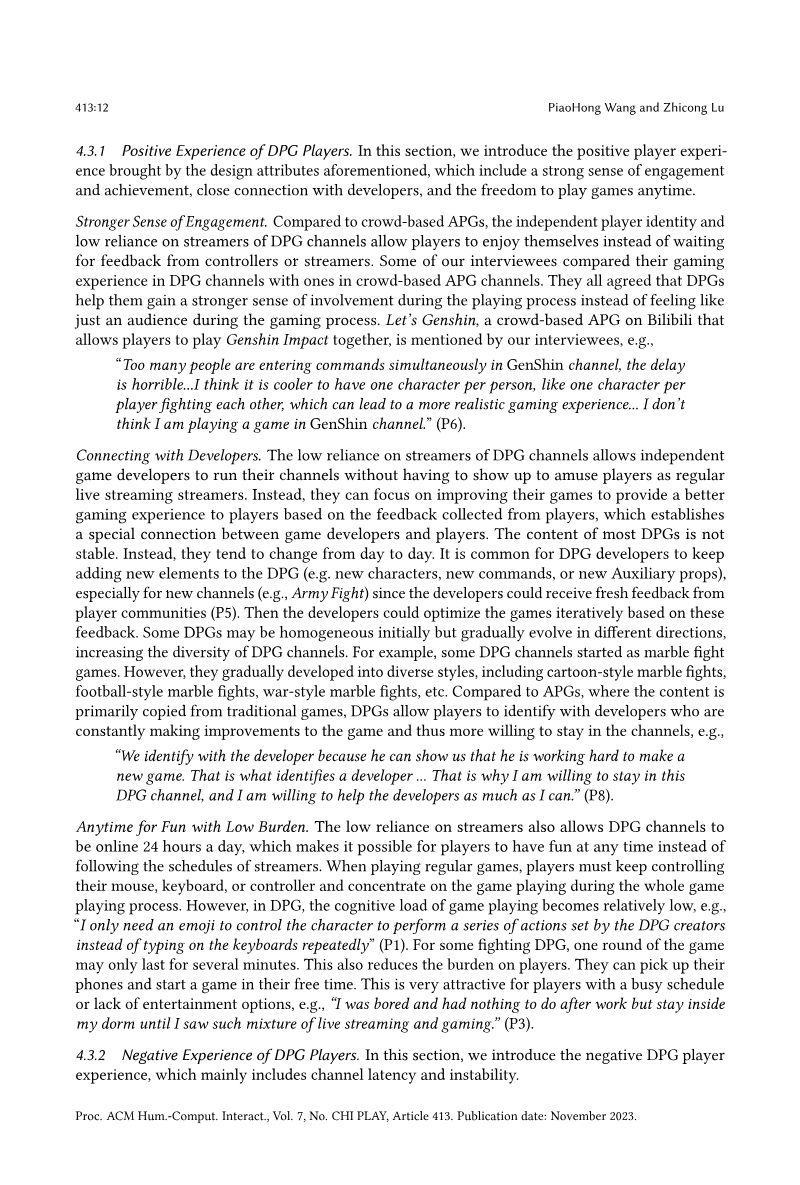
- Danmaku Participation Games (DPGs) on Bilibili allow viewers to control individual characters independently via chat commands, a significant evolution from traditional crowd-based Audience Participation Games (APGs) that rely on collective voting.
- Unlike APGs, which often suffer from fragile connections and limited individual agency, DPGs provide each player with a unique identity and the ability to interact directly with other players, leading to higher engagement.
- The shift to independent control reduces reliance on streamers to host or facilitate gameplay, allowing streamers to focus on game optimization while players spontaneously manage channel order and community moderation.
Investigating Players’ Perceptions of Deceptive Design Practices within a 3D Gameplay Context
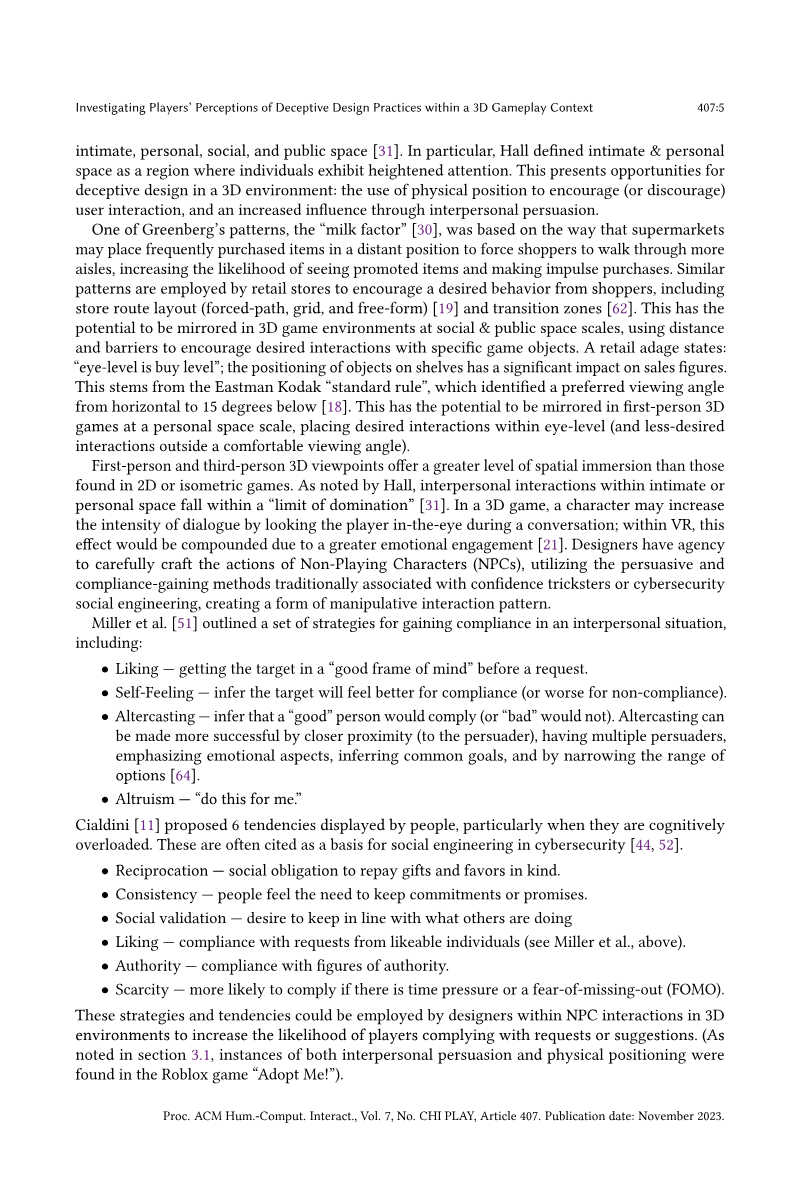
Deceptive design practices in 3D gaming environments represent an evolving challenge that necessitates a departure from traditional 2D-focused frameworks.
Suspecting Sarcasm: How League of Legends Players Dismiss Positive Communication in Toxic Environments
The pervasive culture of toxicity within League of Legends has fundamentally altered player perception, creating a climate where positive social interaction is viewed with deep suspicion.
- A study of 959 League of Legends players reveals that pervasive toxicity has conditioned the community to view positive communication with deep suspicion, often dismissing it as sarcastic or inauthentic.
- The normalization of toxic behavior creates a psychological barrier that prevents prosocial engagement, as players perceive kindness as an anomaly rather than a standard form of interaction.
- Defensive coping mechanisms, such as widespread muting, inadvertently reinforce cycles of isolation by blocking potential positive interactions and leaving toxic norms unchallenged.
Redirection Masking Strategies: Understanding Attentional Diversion Methods for Redirection Techniques
This research addresses the challenge of navigating large-scale virtual environments within confined physical spaces by formalizing redirection masking strategies.
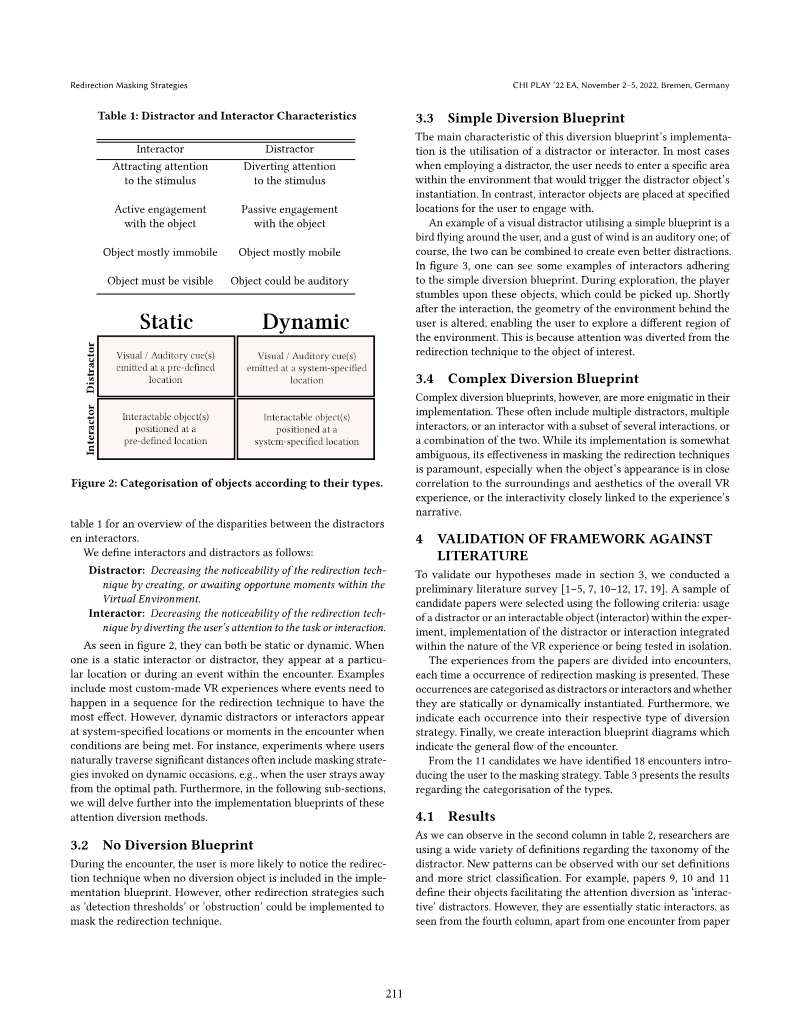
- Redirection techniques in VR, which manipulate user movement or environment geometry to overcome physical space limitations, can be effectively masked using 'attention diversion methods' categorized as either distractors or interactors.
- Distractors are passive objects designed to divert user attention, whereas interactors are active objects that engage the user, making them more effective at retaining attention during complex sequences.
- The study identifies two primary implementation blueprints: a 'Simple' flow triggered by location entry, and a 'Complex' flow involving multi-step interaction sequences to mask redirection.
Don't Break My Flow: Effects of Switching Latency in Shooting Video Games
Fluctuations in network latency, known as switching latency, represent a critical disruption to player performance and psychological engagement in competitive shooting games.
- Consistency of input-output timing is more critical to player performance and engagement than achieving absolute low-latency benchmarks.
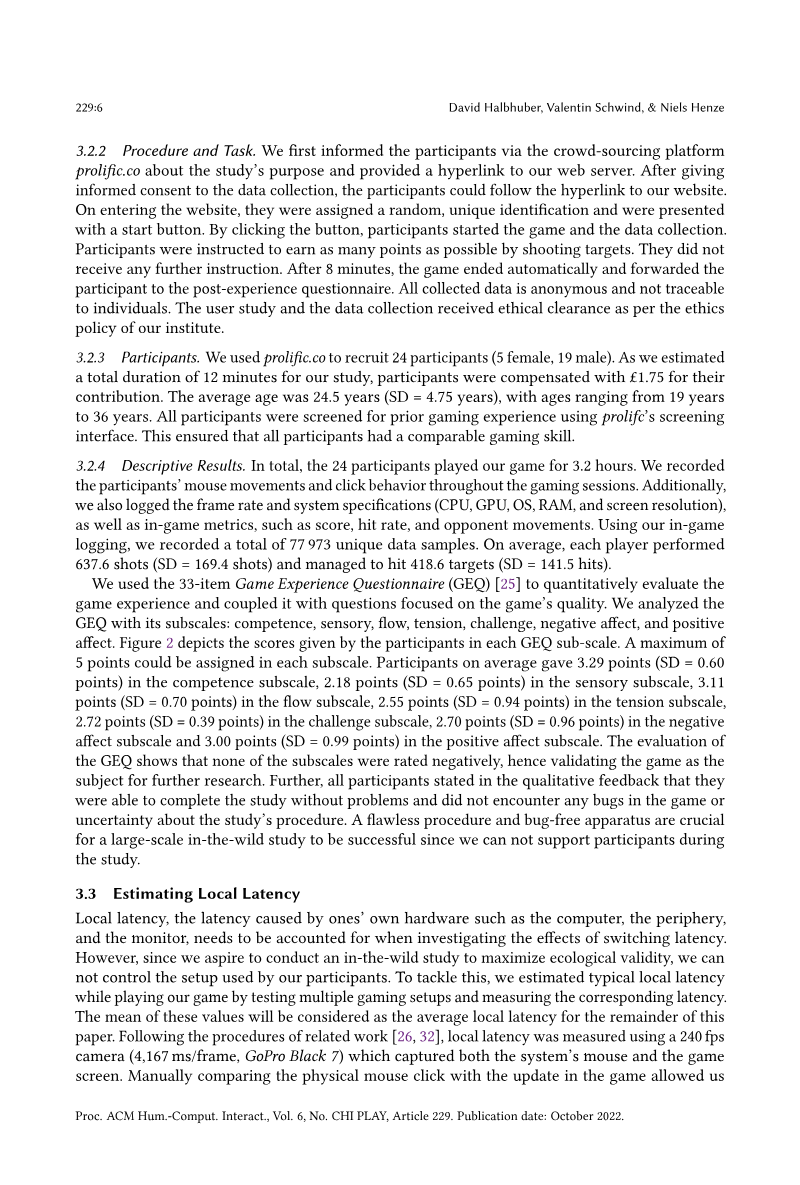
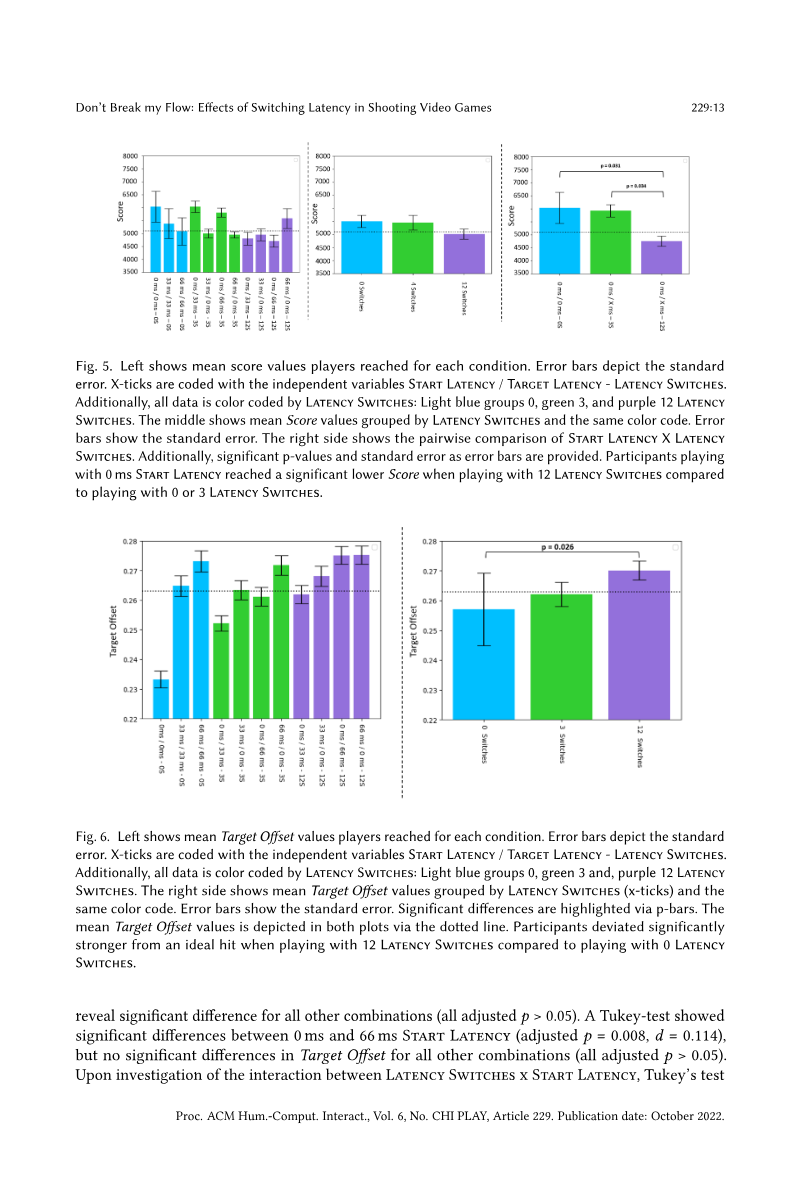
- Frequent fluctuations in network latency, or switching latency, cause a measurable decline in player accuracy, scoring, and the immersive state of flow.
- The study of 264 participants across eleven experimental conditions confirms that high-frequency switching significantly diminishes reported levels of tension and challenge.
I Want To See How Smart This AI Really Is: Player Mental Model Development of an Adversarial AI Player
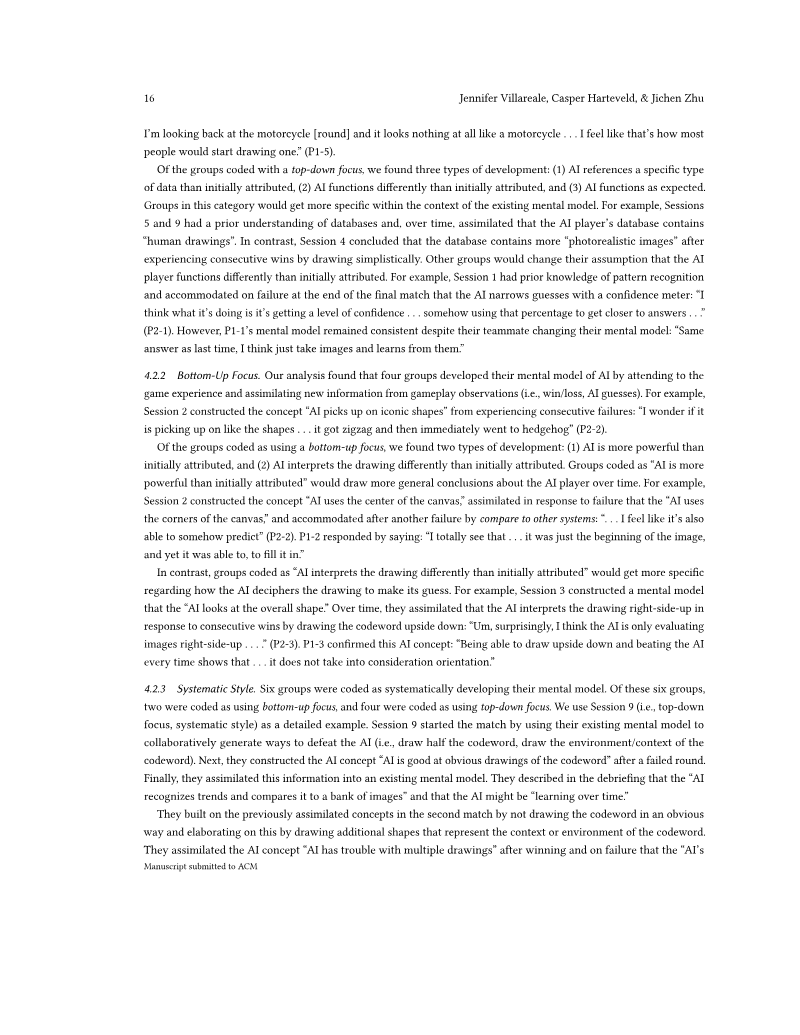
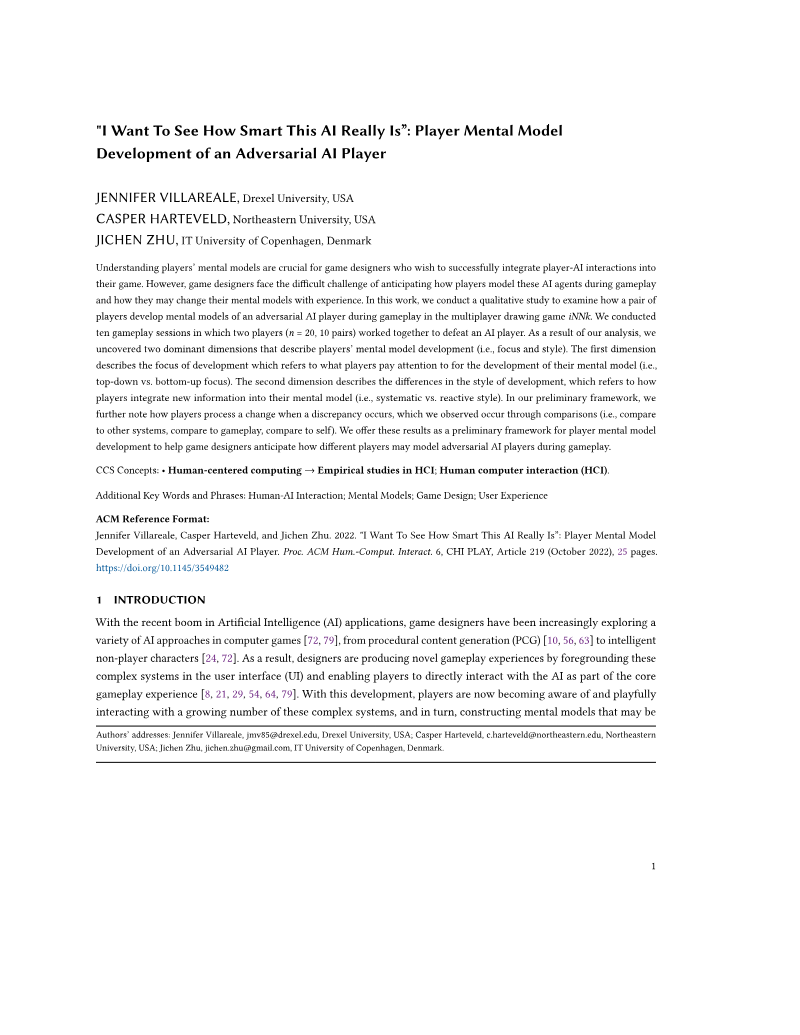
Players develop mental models of adversarial artificial intelligence through iterative engagement, a process that relies on distinct cognitive strategies to interpret and predict machine behavior.
- Players develop mental models of adversarial AI through two primary dimensions: focus (what they pay attention to) and style (how they integrate new information).
- The focus dimension is split into top-down processing, which utilizes prior knowledge and experience, and bottom-up processing, which relies on direct gameplay observations.
- The style dimension is categorized as systematic, where players build on previous observations, or reactive, where players integrate new information independently of past experiences.
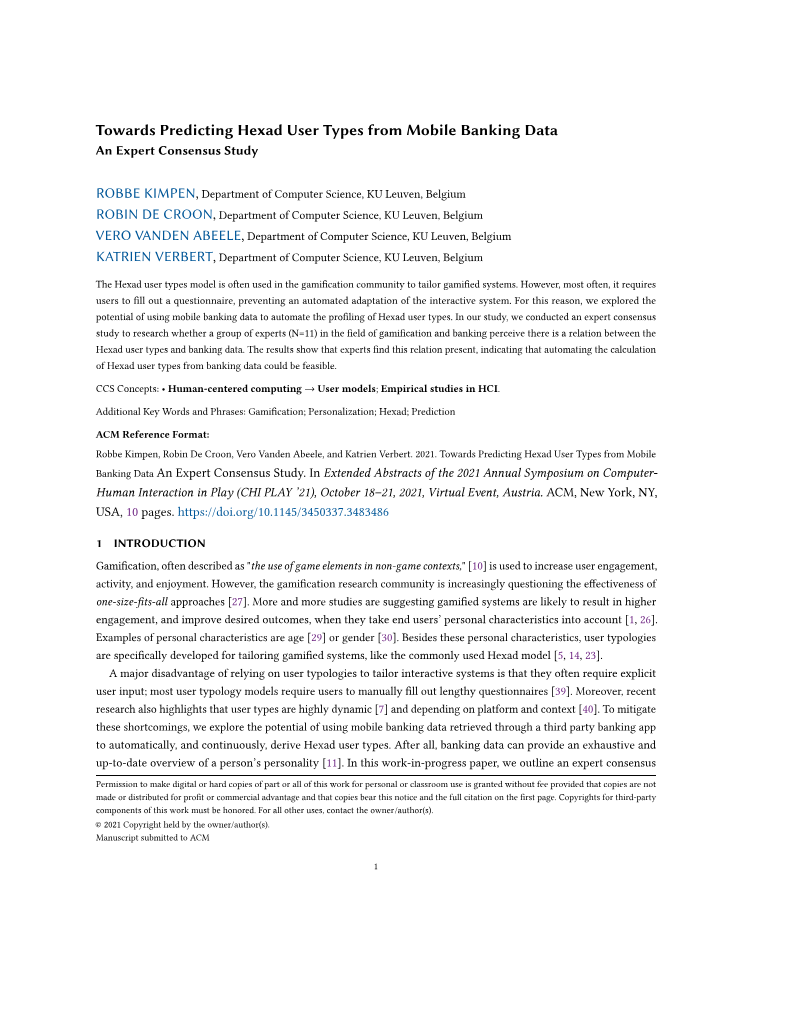
Towards Predicting Hexad User Types from Mobile Banking Data: An Expert Consensus Study
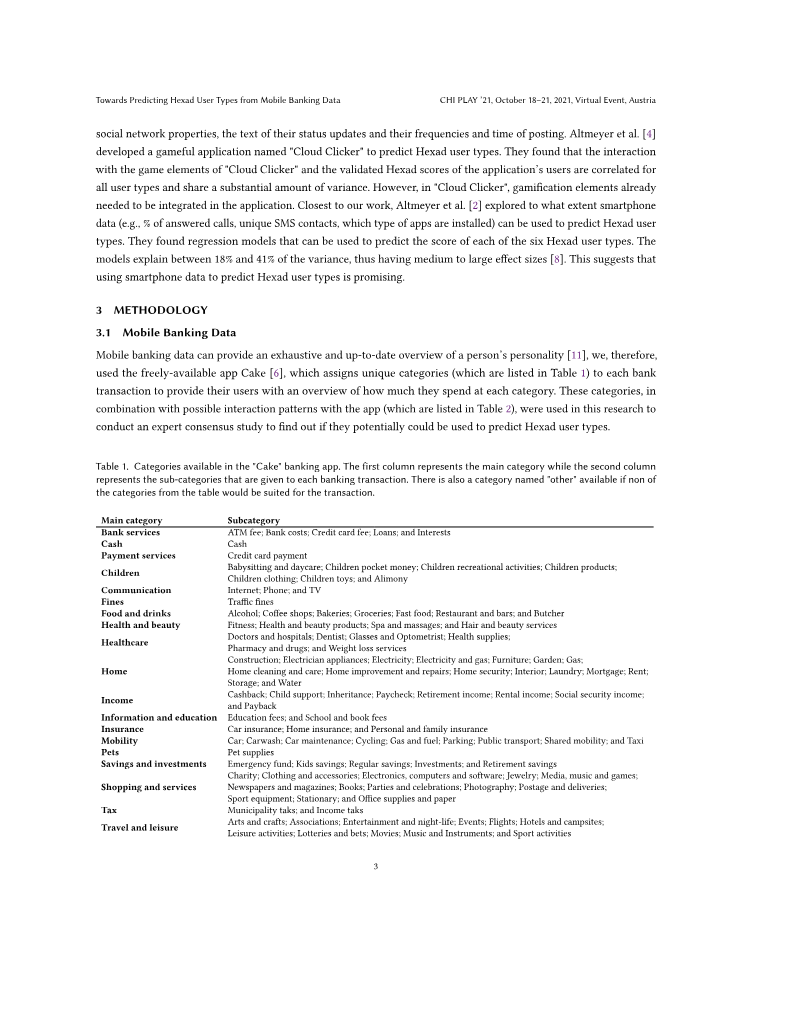
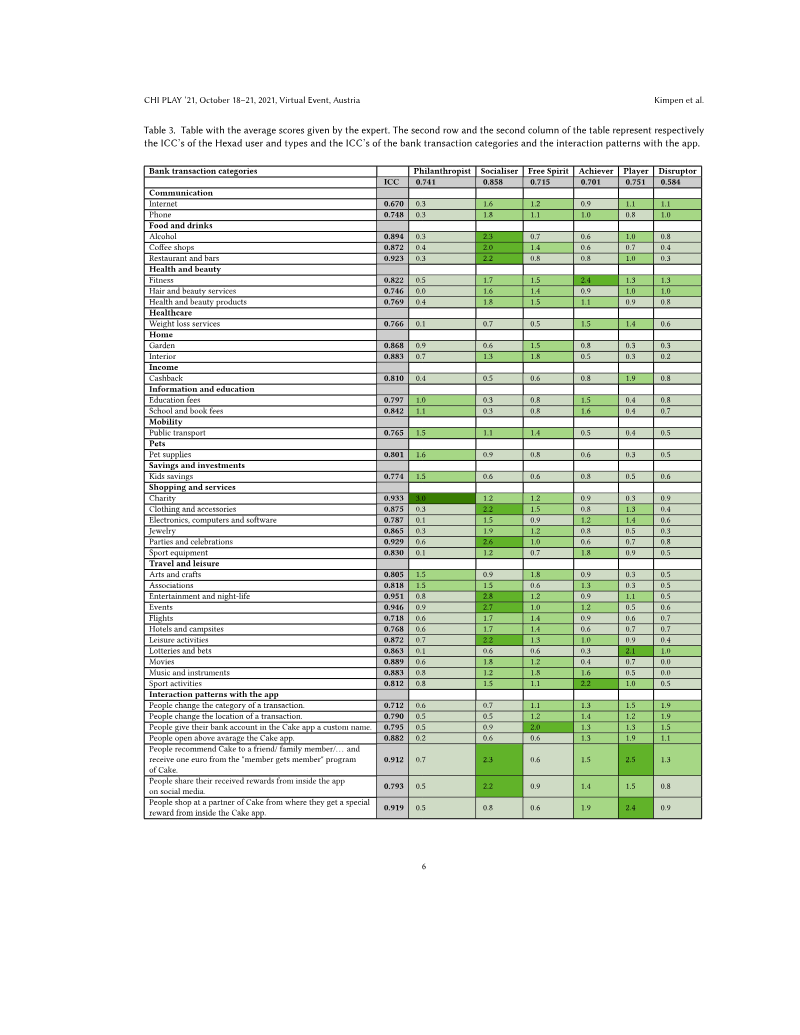
Automating the profiling of Hexad user types through mobile banking data offers a scalable alternative to traditional, survey-based methodologies for personalizing gamified financial systems.
- Mobile banking transaction data and app interaction patterns serve as reliable proxies for identifying five of the six Hexad user types.
- Automated behavioral profiling offers a scalable, unobtrusive alternative to traditional survey-based methods for personalizing gamified financial systems.
- Financial institutions can use predictive modeling to align gamified features, such as loyalty programs and savings challenges, with specific psychological user motivations.
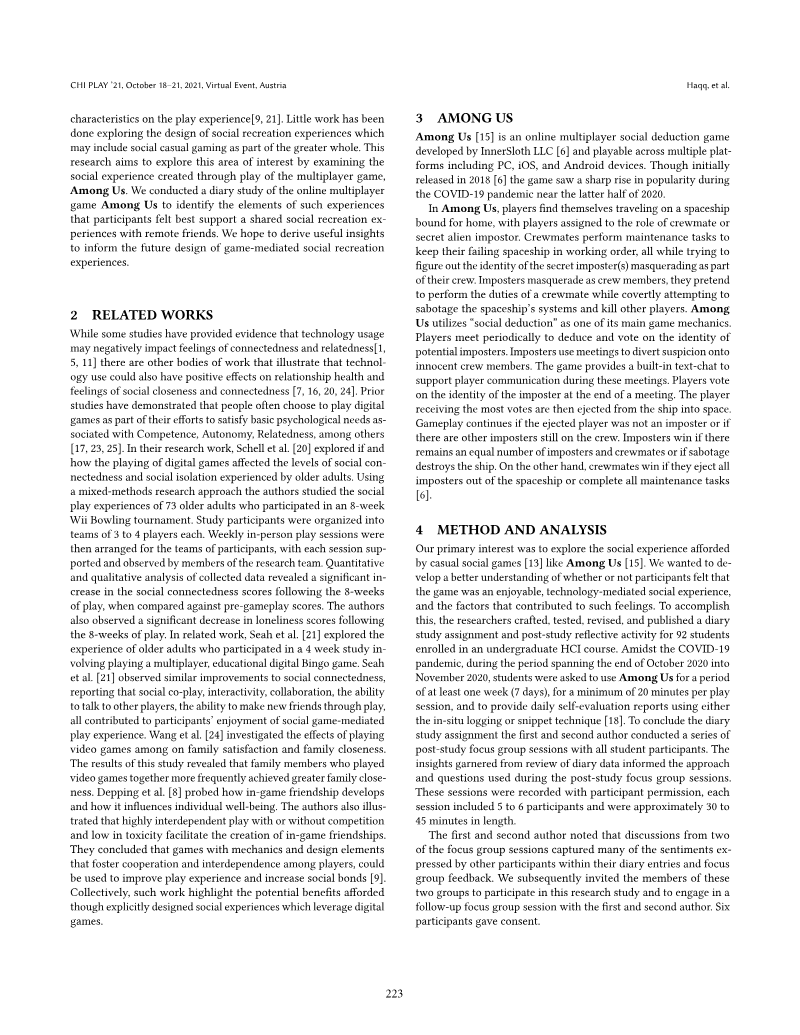
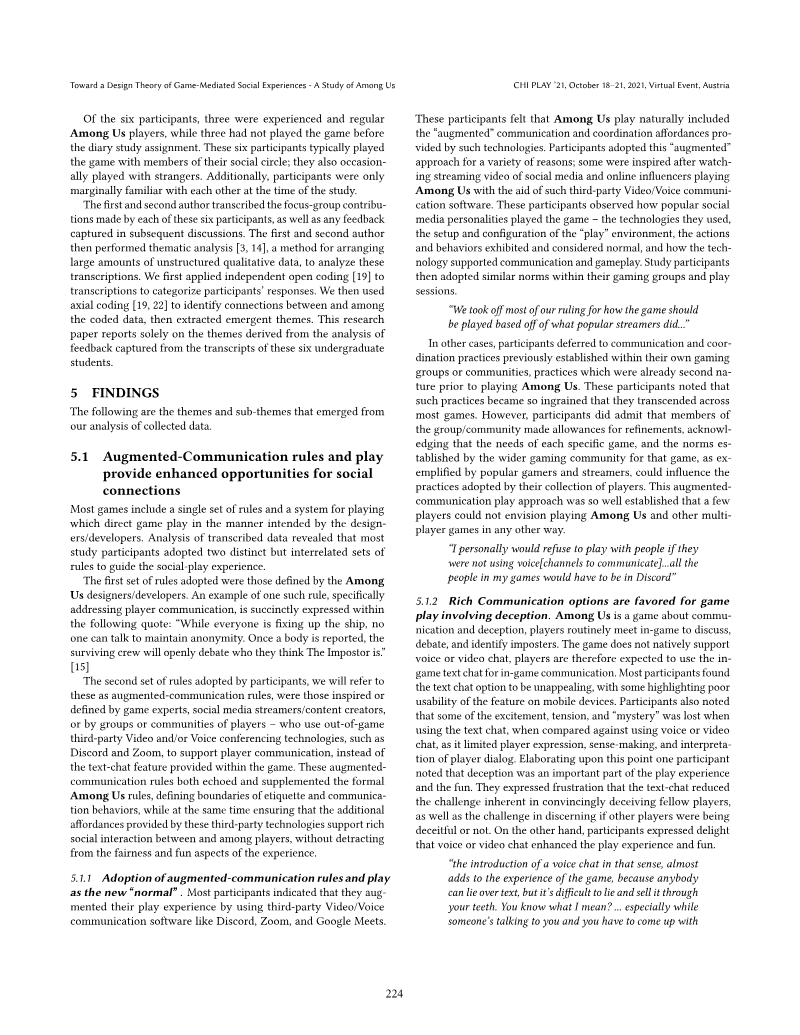
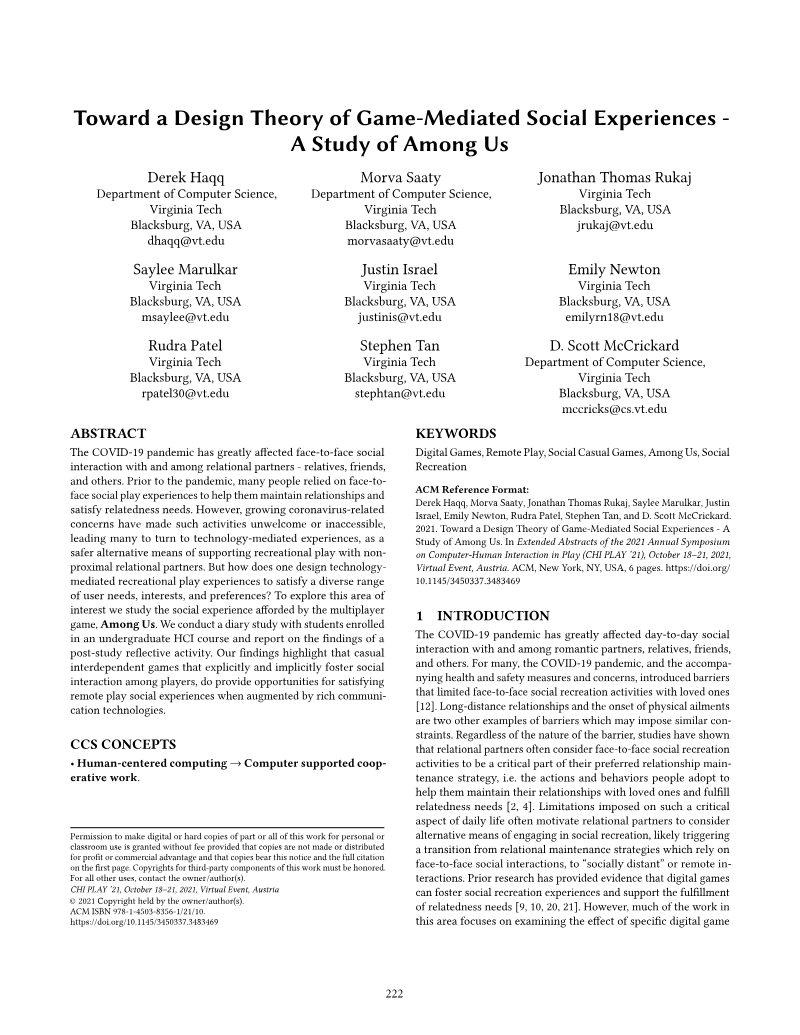
Toward a Design Theory of Game-Mediated Social Experiences: A Study of Among Us
Social deduction games function as vital catalysts for remote human connection by providing a structured environment that facilitates both competitive gameplay and informal social interaction.
- The success of modern social deduction games relies primarily on the integration of third-party communication tools rather than complex native game mechanics.
- Players prioritize social interaction over competitive objectives, often treating in-game tasks as a backdrop for conversation rather than the primary focus of play.
- The 'augmented-communication' model demonstrates that users actively modify game sessions to facilitate deeper interpersonal bonding through external voice and video software.
Do you work at ACM CHI PLAY? Get a free report of how these documents are read and cited here.