ACM CHI PLAY
ACM SIGCHI's annual symposium on computer-human interaction in play, the main venue for player experience and games user research. Since 2021 its full papers appear in the CHI PLAY issue of Proceedings of the ACM on Human-Computer Interaction.
Documents
CHI PLAY Bingo: Companion Proceedings of the 2024 Annual Symposium on Computer-Human Interaction in Play
The CHI PLAY Bingo initiative serves as a practical exploration of human-computer interaction within academic conference settings, specifically focusing on transforming passive attendance into active engagement.
- The 'CHI PLAY BINGO' project explores the intersection of human-computer interaction (HCI) and artificial intelligence, specifically focusing on the use of Large Language Models (LLMs) to gamify conference experiences.
- The research has influenced subsequent academic work, such as the 2026 development of 'Slide.Bingo,' which utilizes AI to transform passive conference attendance into active listening.
- The initiative is part of a broader, long-term trend within the ACM SIGCHI community, which has seen a consistent increase in games- and play-related research submissions over the last decade.
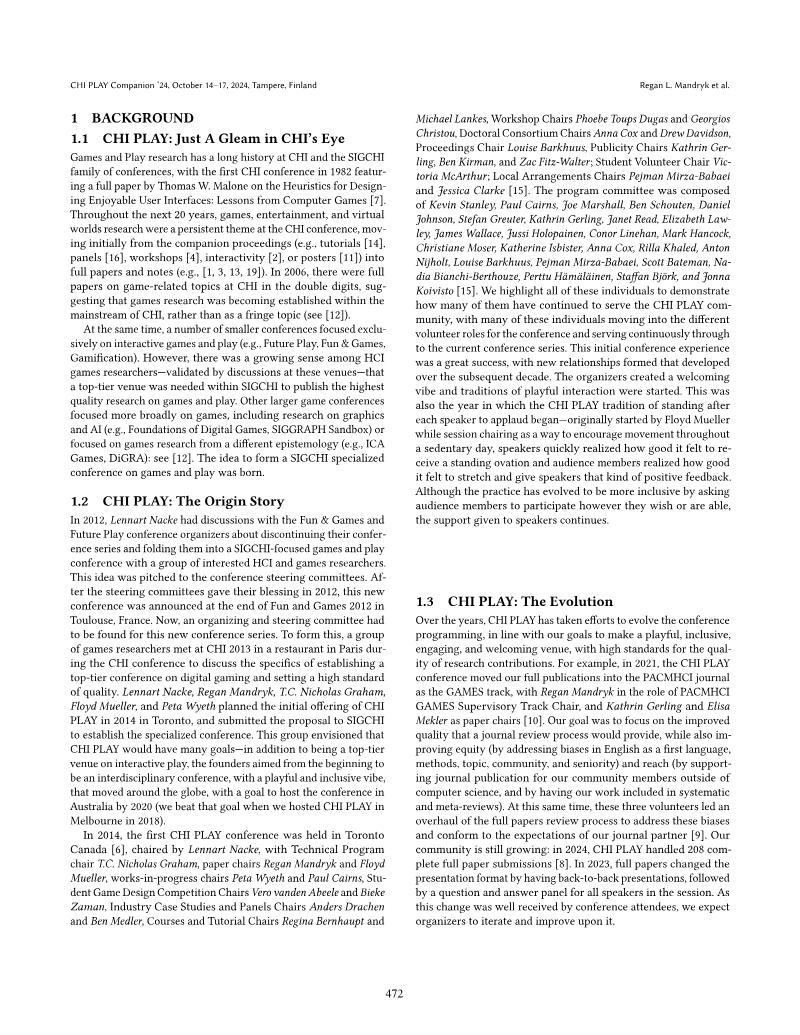
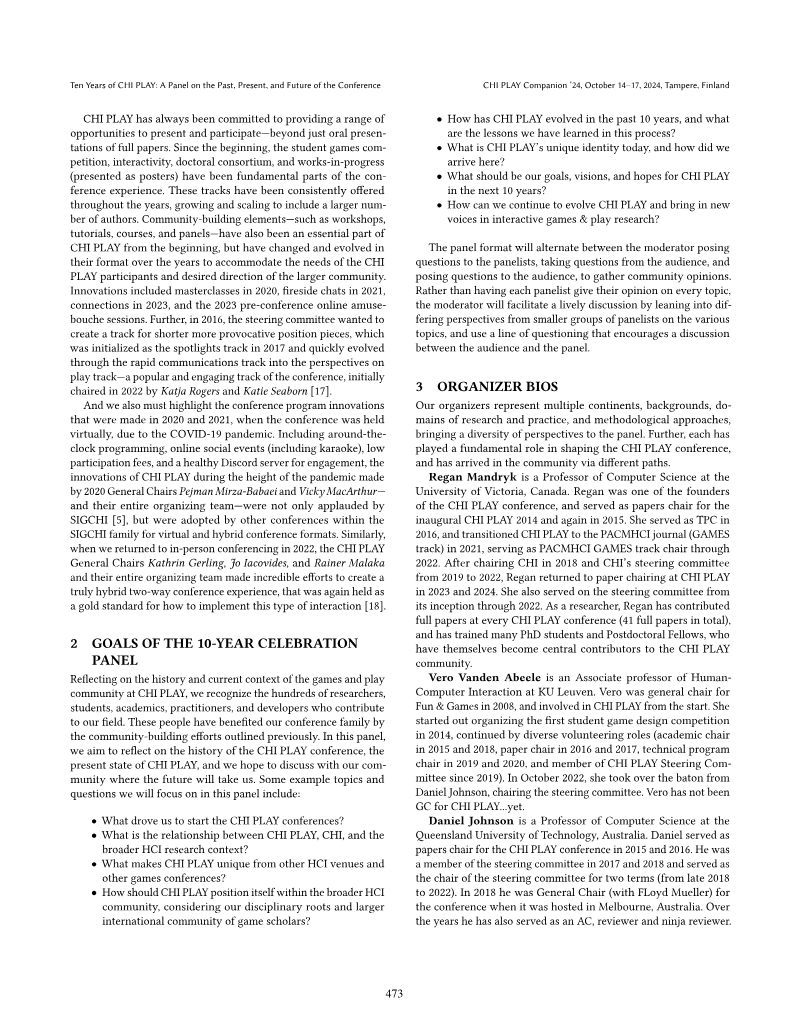
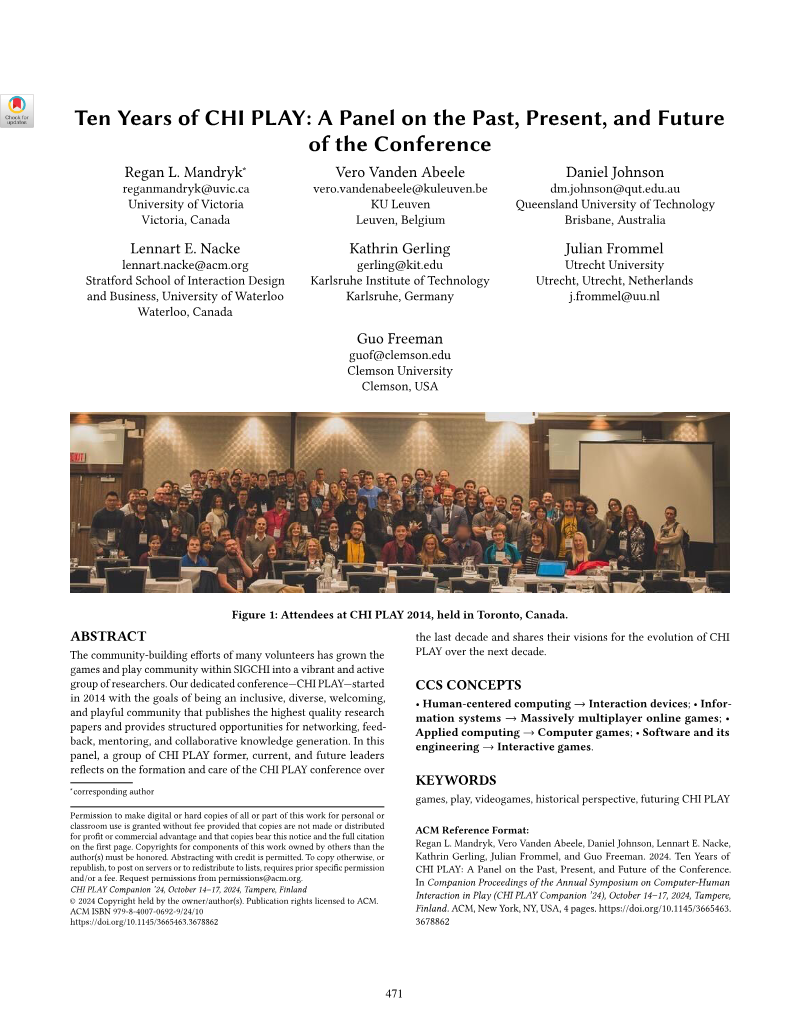
Ten Years of CHI PLAY: A Panel on the Past, Present, and Future of the Conference
The CHI PLAY conference, established in 2014, serves as a premier venue for high-quality research on games and play within the SIGCHI community.
- Established in 2014, CHI PLAY serves as the primary interdisciplinary venue for games and play research within the SIGCHI community.
- In 2021, the conference transitioned its full publications to the PACMHCI journal as the GAMES track to improve research quality and visibility.
- The conference experienced significant growth, reaching 208 full paper submissions by 2024.
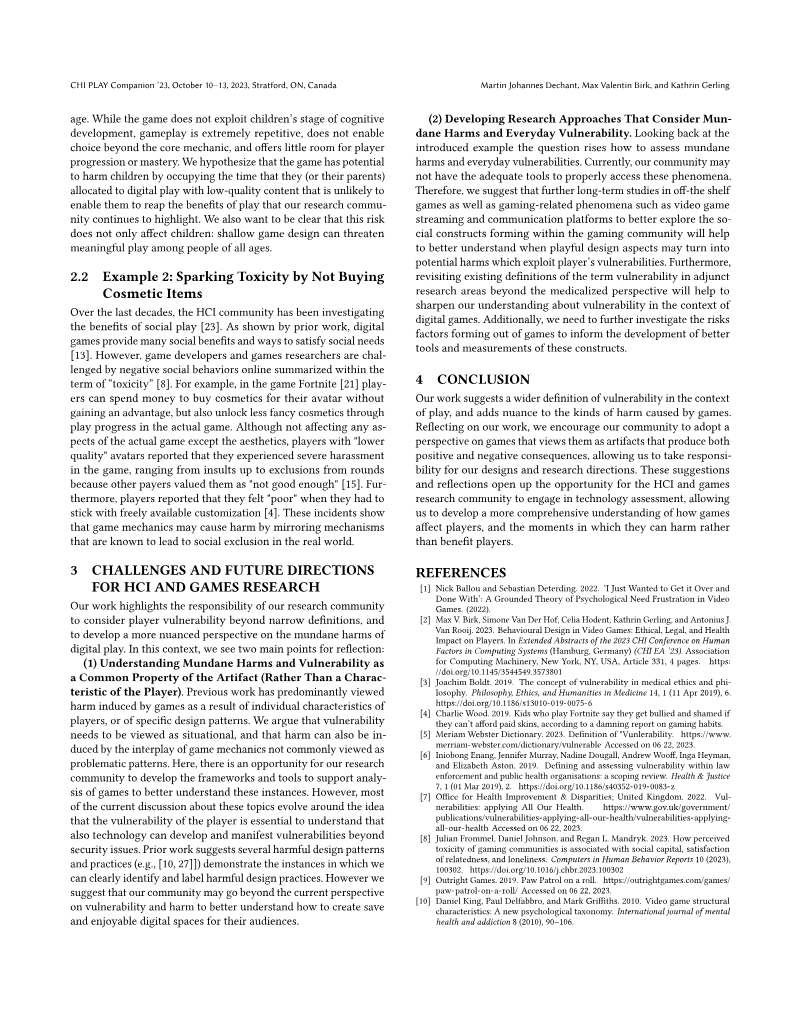

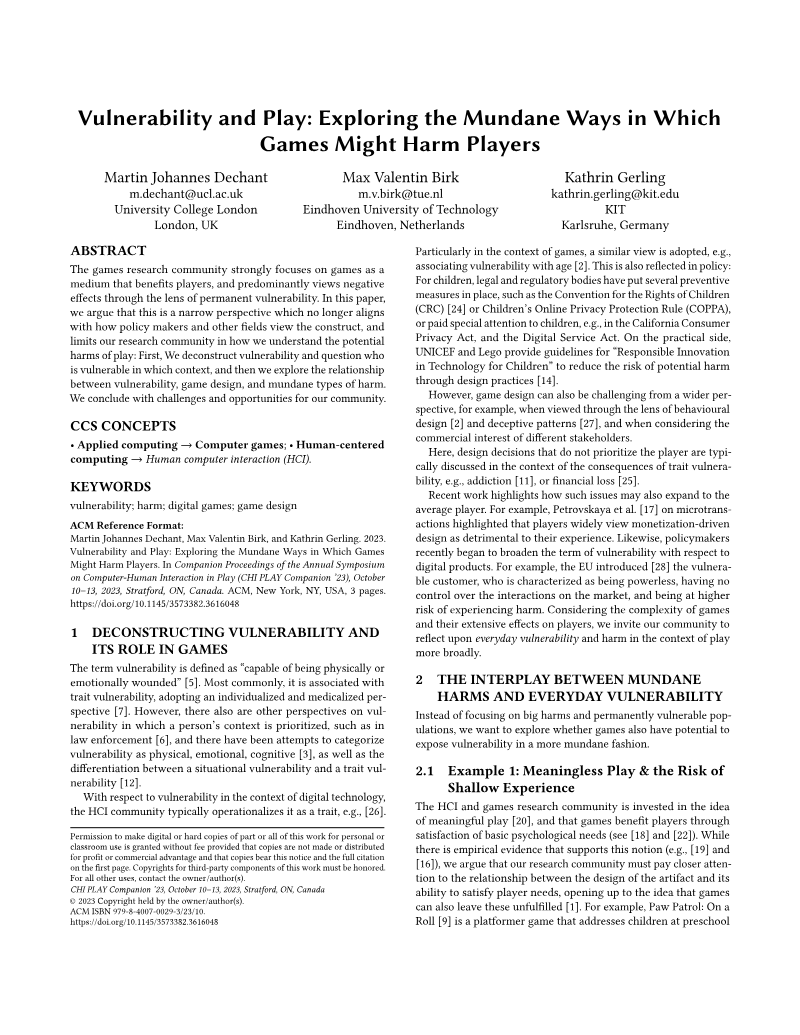
Vulnerability and Play: Exploring the Mundane Ways in Which Games Might Harm Players
The research argues that the games industry and academic community rely on an overly narrow, medicalized definition of player vulnerability, which typically focuses on specific demographics like children or individuals prone to addiction.
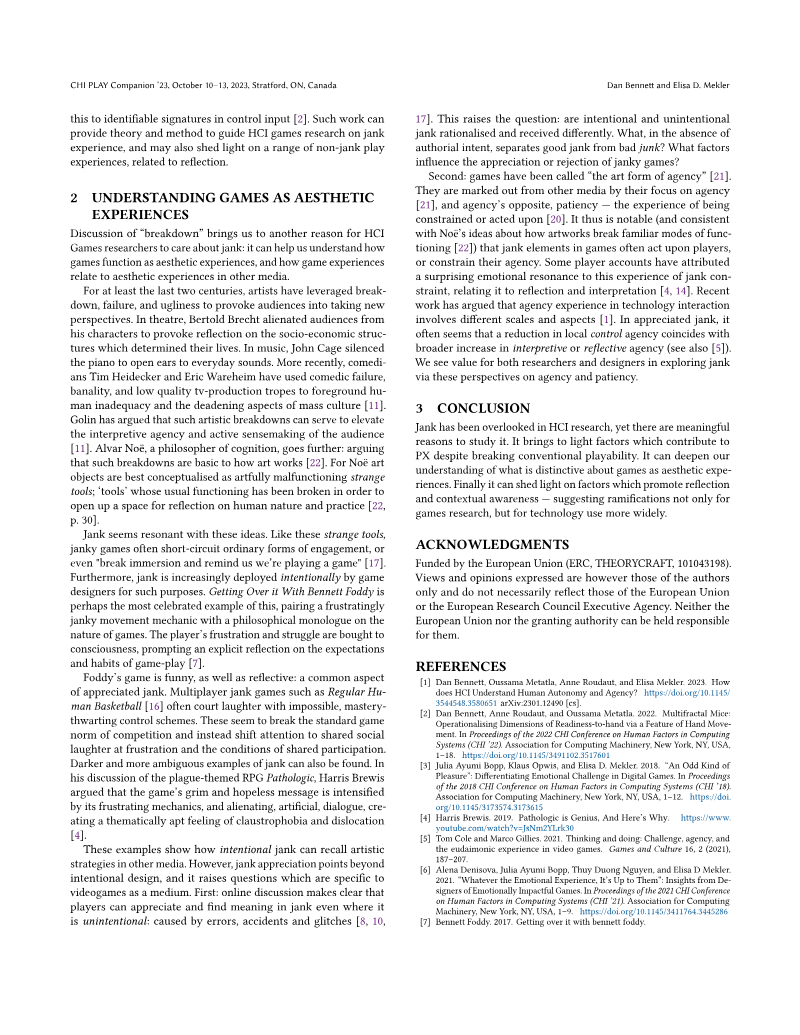

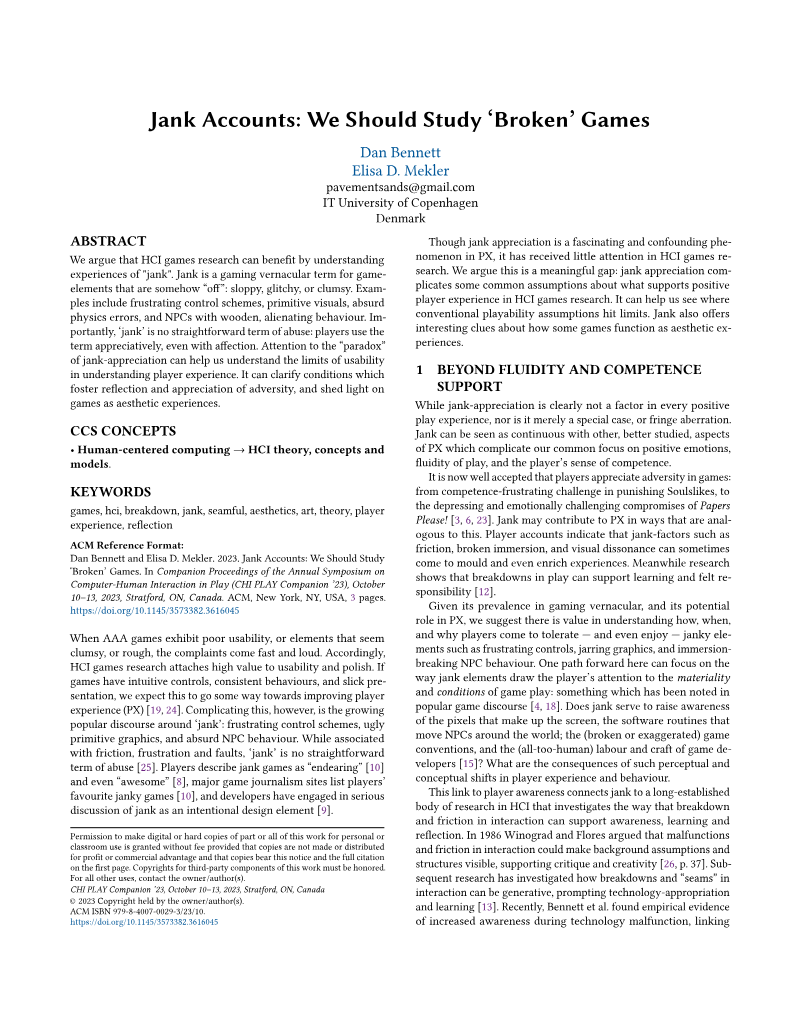
Jank Accounts: We Should Study 'Broken' Games
Human-computer interaction (HCI) research has traditionally prioritized usability, fluidity, and polish as the primary drivers of positive player experience.
- Jank, characterized by glitches and clumsy mechanics, functions as a meaningful aesthetic experience rather than a simple design failure.
- Technological imperfections disrupt immersion, shifting players from passive consumers to active participants engaged in sensemaking and interpretation.
- Intentional jank is increasingly utilized as a design tool to constrain player agency, prompting reflection on the nature of play and the materiality of software.
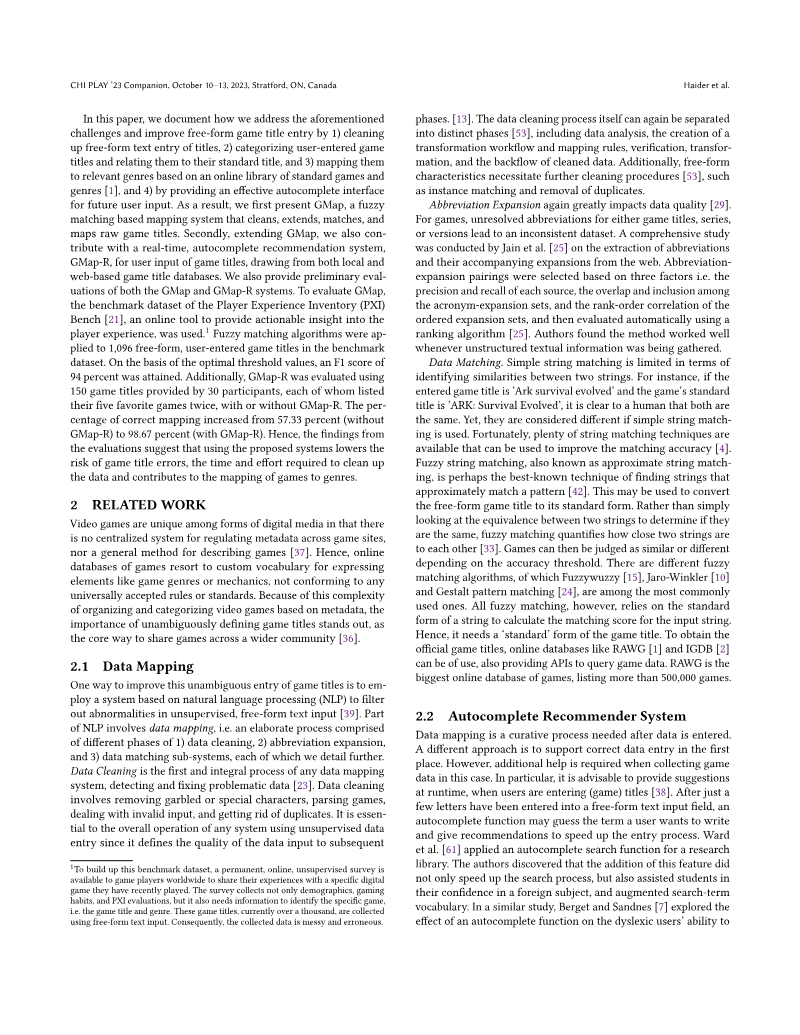
GMap: Supporting Free-Form Text Entry of Game Titles in Games User Research
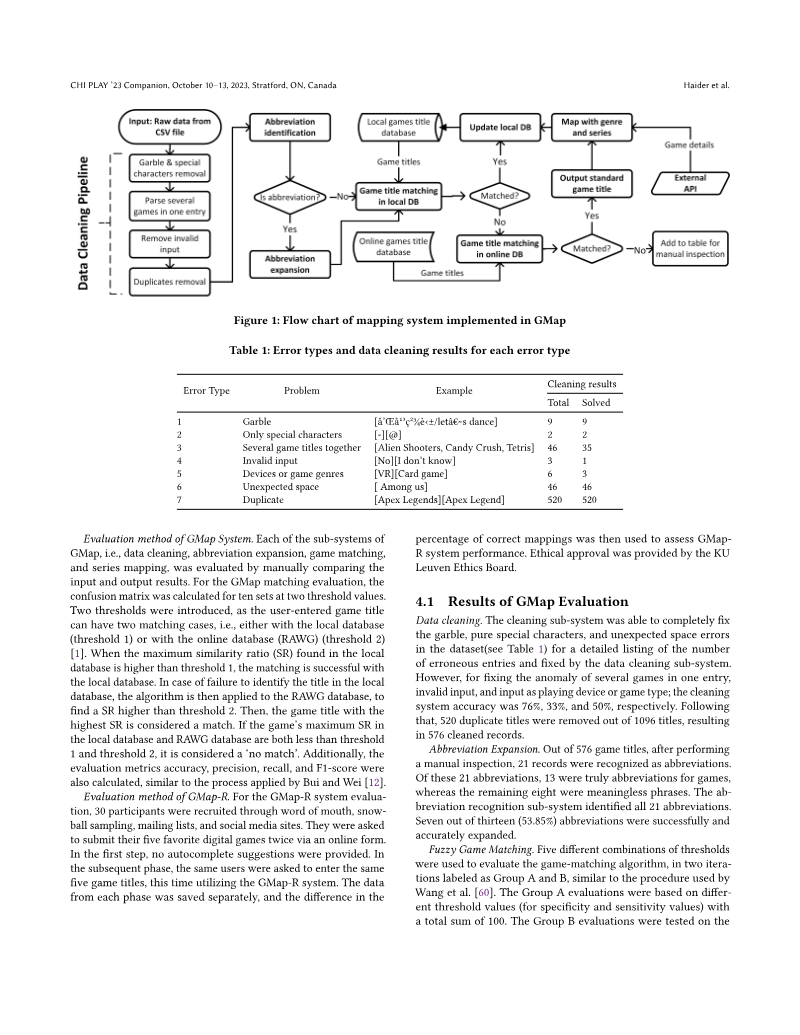
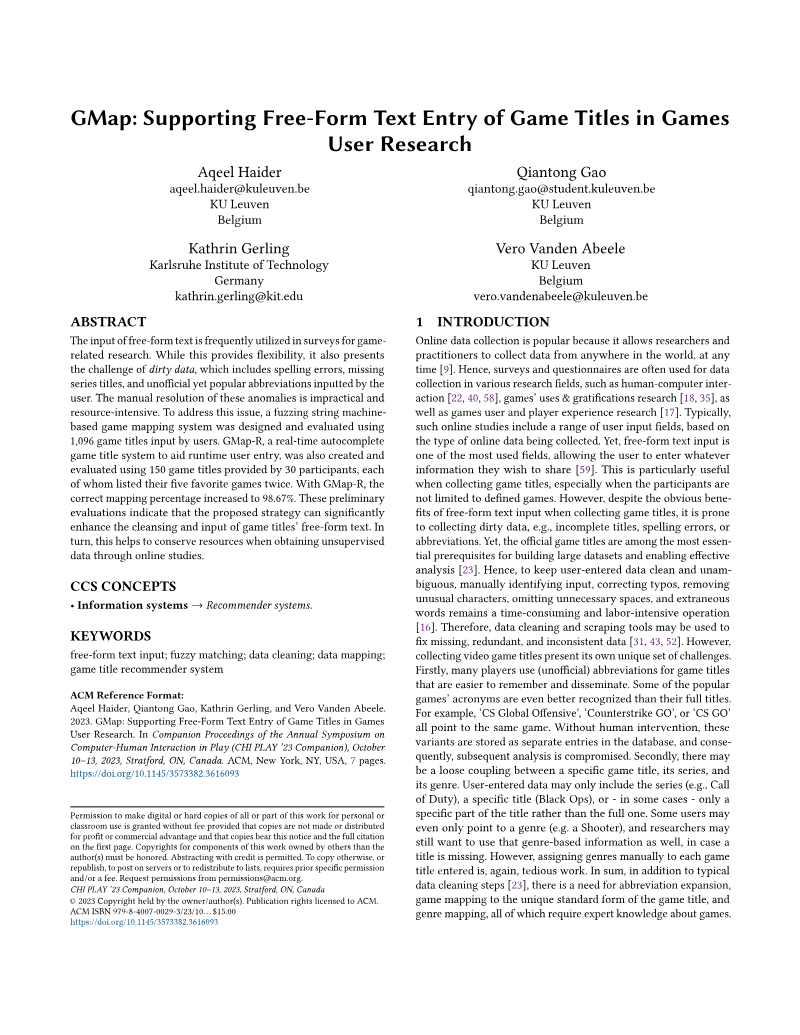
The GMap and GMap-R systems address the persistent challenge of inconsistent, error-prone, and fragmented game title data within user research.
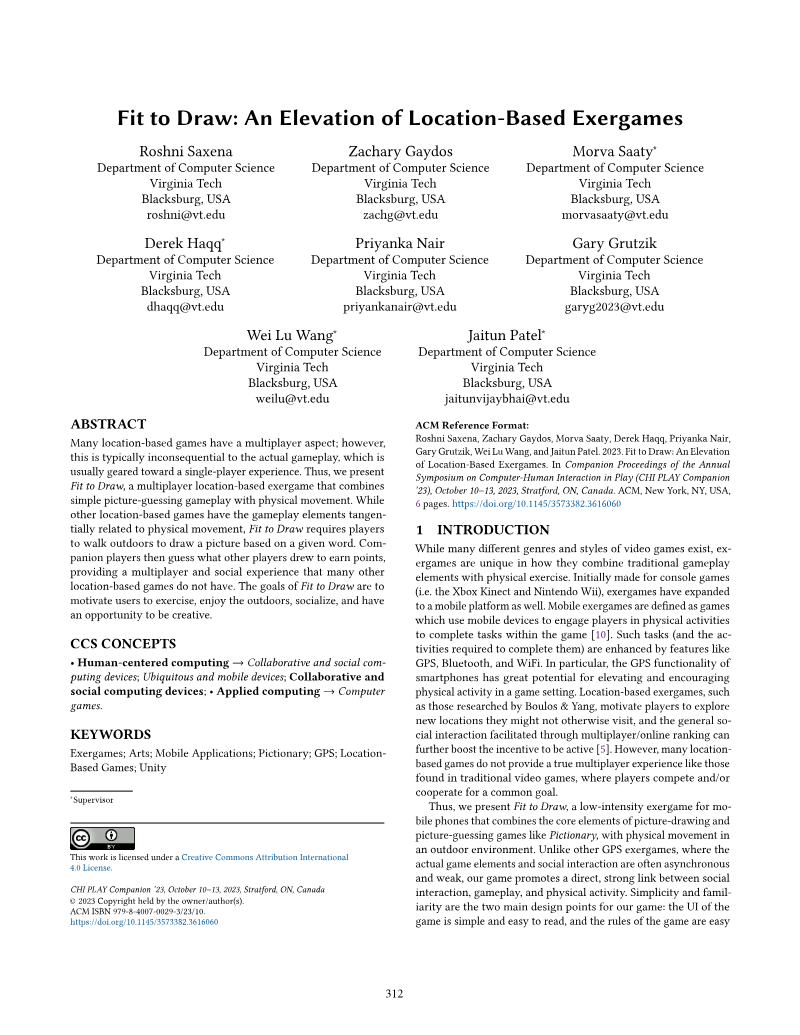
Fit to Draw: An Elevation of Location-Based Exergames
Fit to Draw is a multiplayer, location-based mobile exergame designed to integrate physical movement with creative, social gameplay.
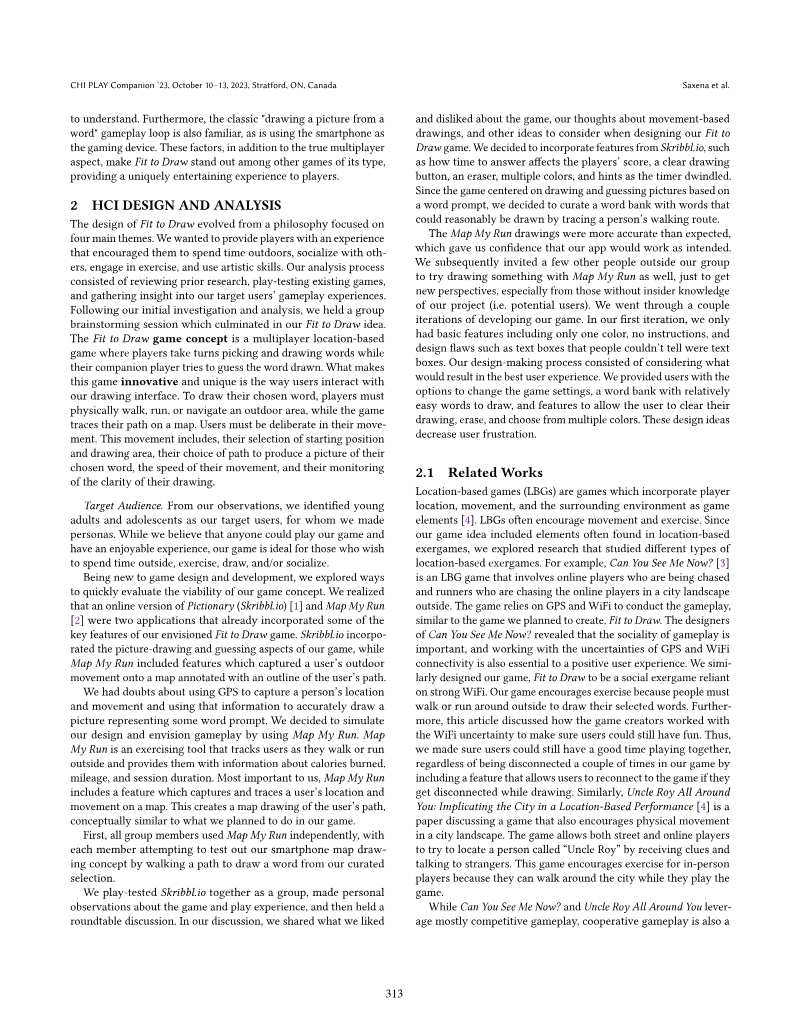
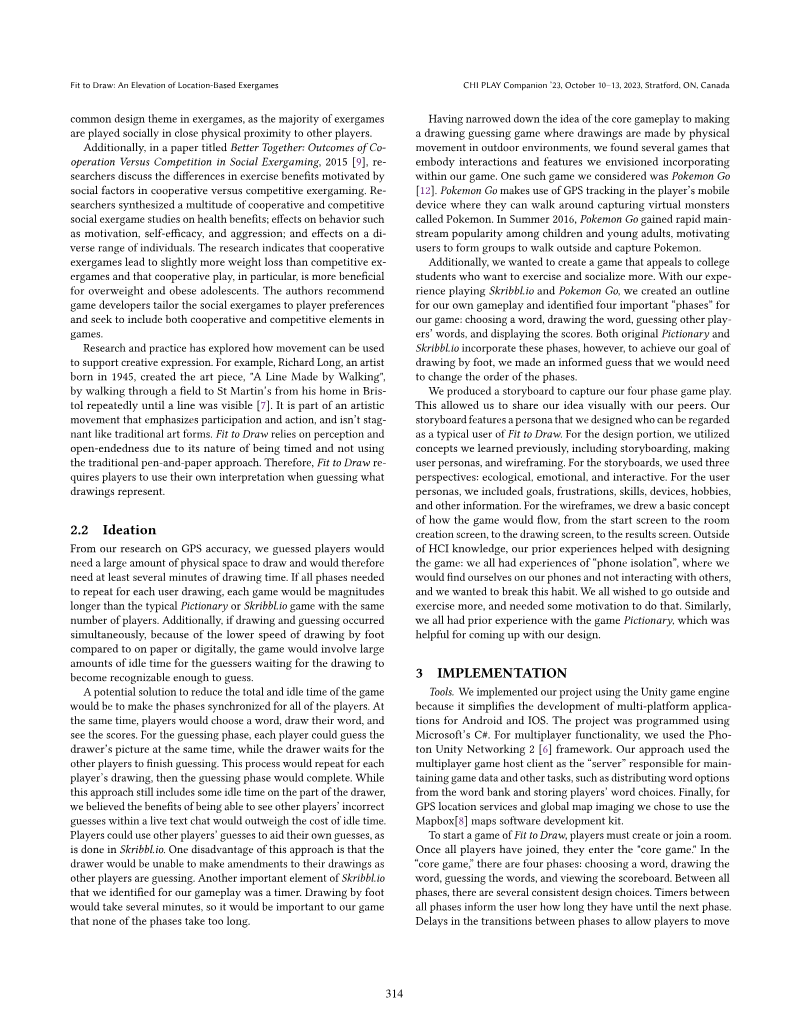
- Fit to Draw is a multiplayer location-based exergame that integrates physical movement with Pictionary-style gameplay, requiring players to trace drawings in an outdoor environment using GPS tracking.
- The game design addresses common limitations in existing location-based games by incorporating a true multiplayer experience where players compete to guess drawings created by others' physical paths.
- Development utilized a curated word bank and features adapted from Skribbl.io, such as time-based scoring, hint systems, and drawing tools like erasers and color selection to reduce user frustration.
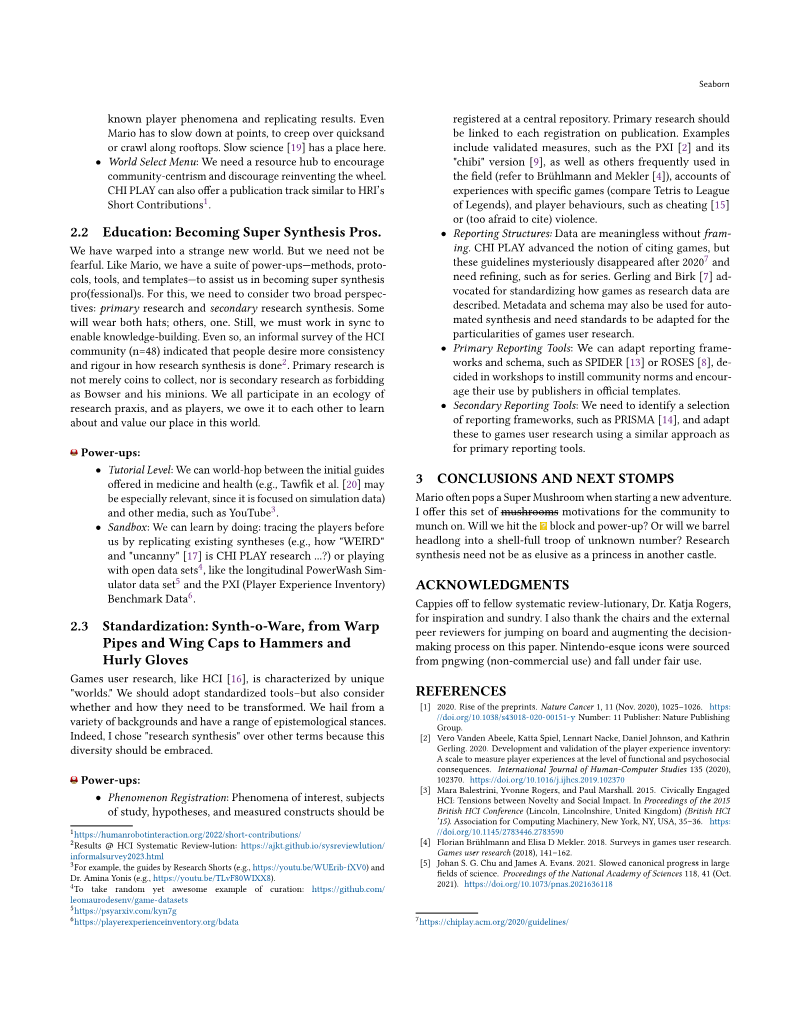

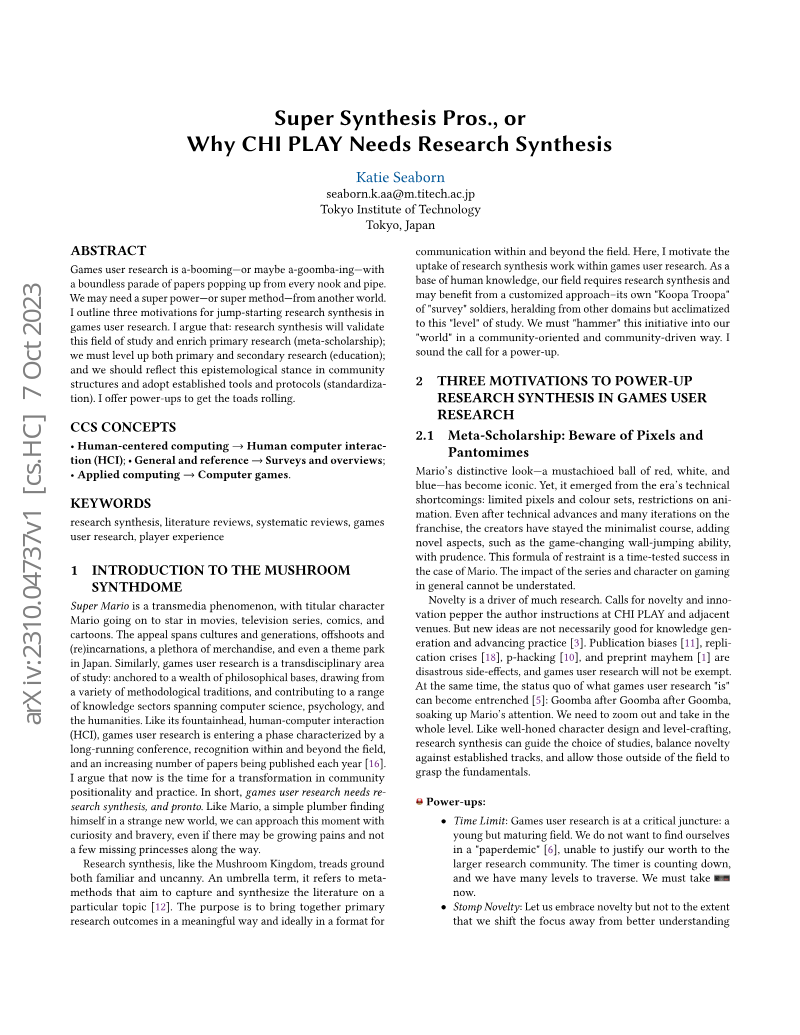
Super Synthesis Pros: Why CHI PLAY Needs Research Synthesis
Games user research is currently at a critical juncture, characterized by a rapid increase in publication volume that threatens to outpace the field's ability to synthesize knowledge effectively.
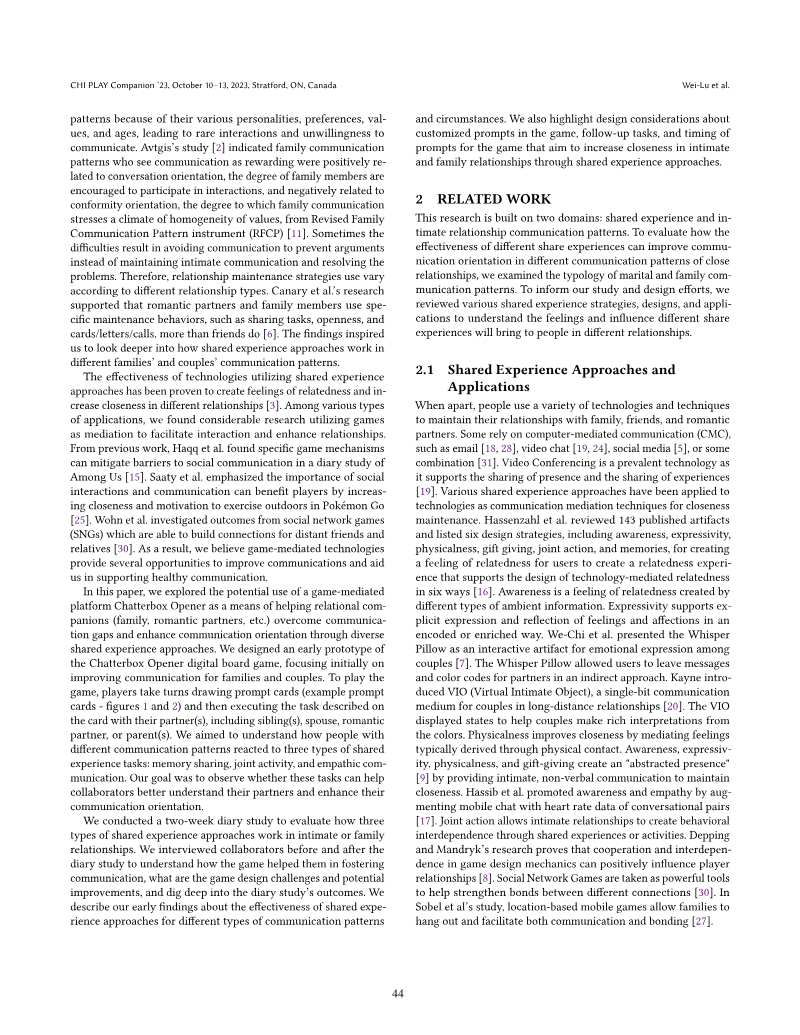
Chatterbox Opener: A Game to Support Healthy Communication and Relationships
Chatterbox Opener functions as a digital board game engineered to strengthen interpersonal bonds within families and romantic partnerships.
- The Chatterbox Opener digital board game uses three shared experience strategies—joint action, memory sharing, and empathic communication—to help couples and family members overcome communication gaps and improve interaction frequency.
- Memory sharing serves as an effective conversation starter for individuals with lower communication orientation, helping them bridge gaps when they otherwise struggle to find topics to discuss.
- Empathic communication tasks can lead to deeper, more meaningful connections, but their effectiveness is highly dependent on both participants sharing a genuine interest in the topic to avoid brief or uncomfortable interactions.

I'm the Leader and I'm Going to Save the World: Characterizing Empowering and Disempowering Game Experiences
Player empowerment and disempowerment in digital games are complex, non-binary phenomena that extend far beyond simple mechanics of control or efficacy.
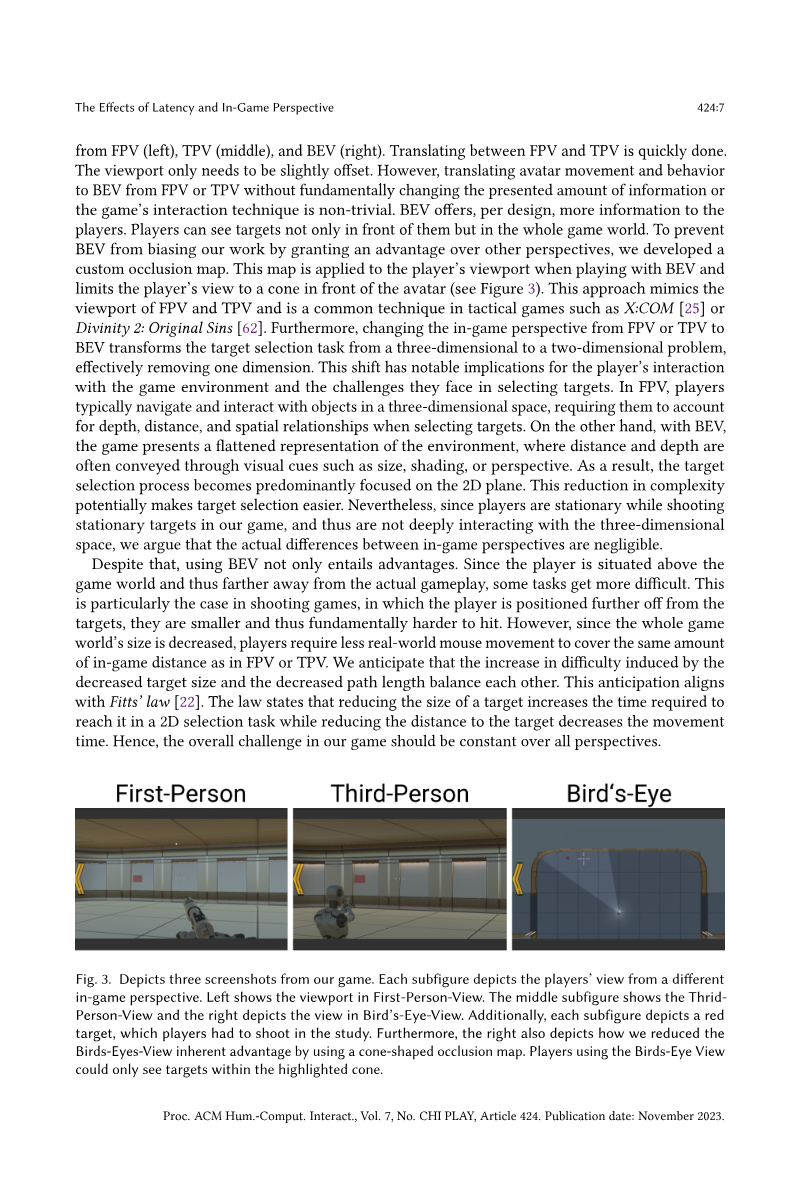
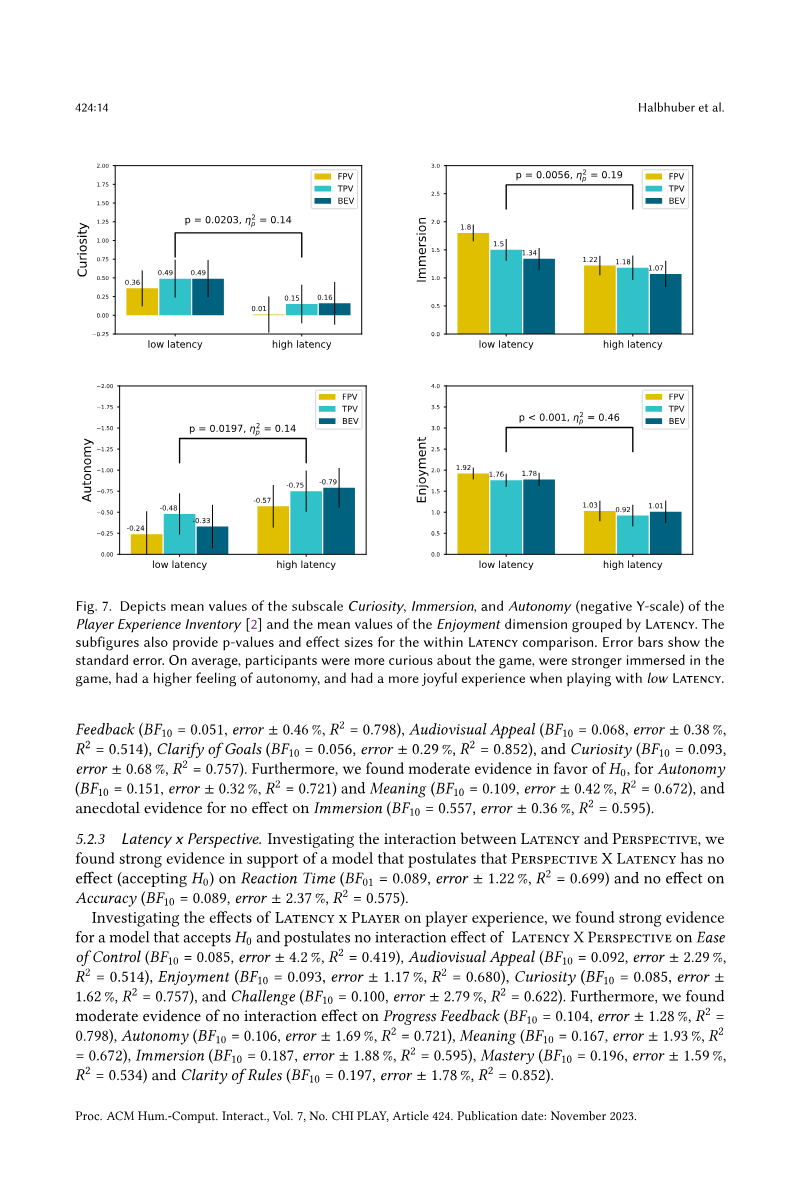
The Effects of Latency and In-Game Perspective on Player Performance and Game Experience
High latency remains a primary obstacle to optimal player performance and user satisfaction within the digital gaming industry.
The Aesthetics of Disharmony: Harnessing Sounds and Images for Dynamic Soundscapes Generation
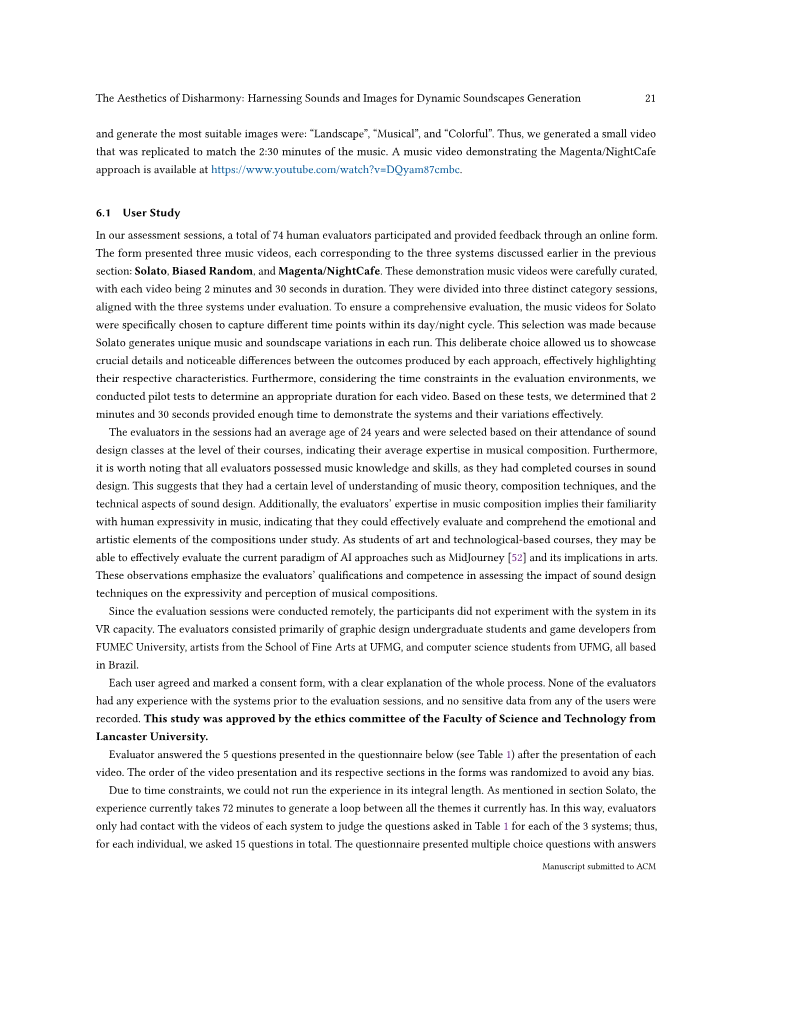
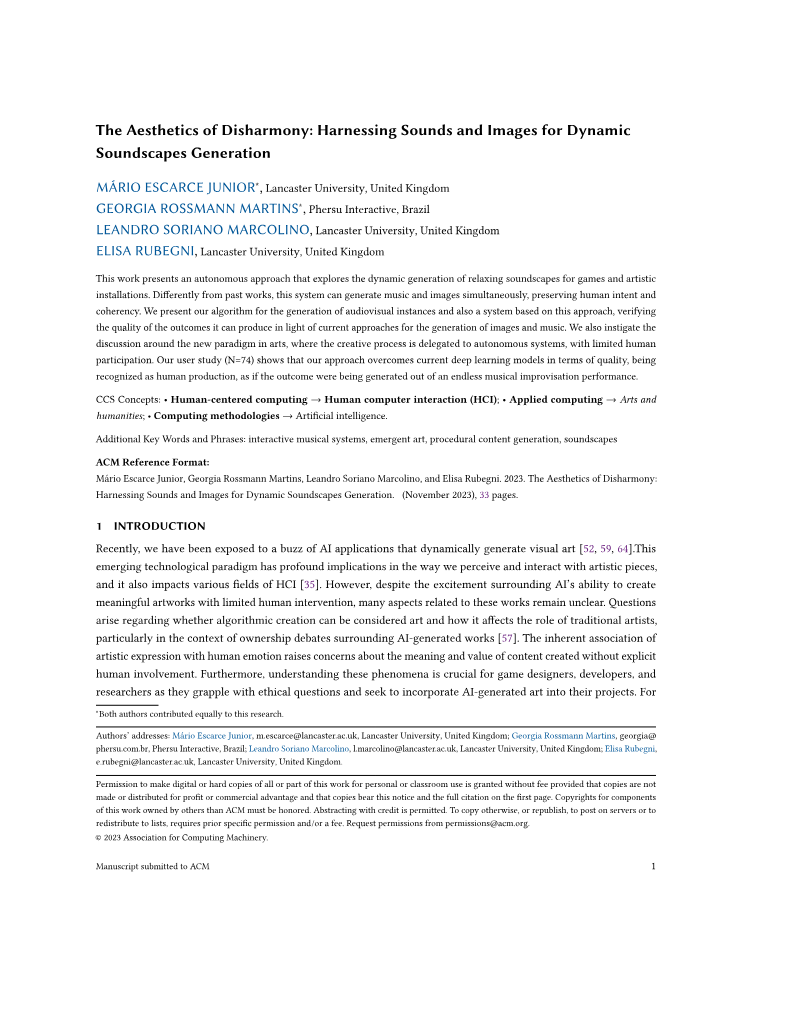
The development of the Solato system marks a significant advancement in procedural content generation, offering a rule-based framework for the simultaneous, autonomous creation of coherent music and visuals.
- The Solato system utilizes a rule-based framework to synchronize 3D asset placement with musical scales via a color-tone clock, enabling the autonomous creation of coherent, non-repetitive soundscapes.
- In empirical testing with 74 sound design experts, Solato outperformed deep learning baselines like Magenta and NightCafe in musical quality, landscape coherence, and audiovisual integration.
- Statistical analysis confirms that Solato is perceived as more human-like than deep learning models, effectively evoking specific emotional states such as calmness and relaxation.
A Quest?!: The Secret Life of Gameworld Punctuation
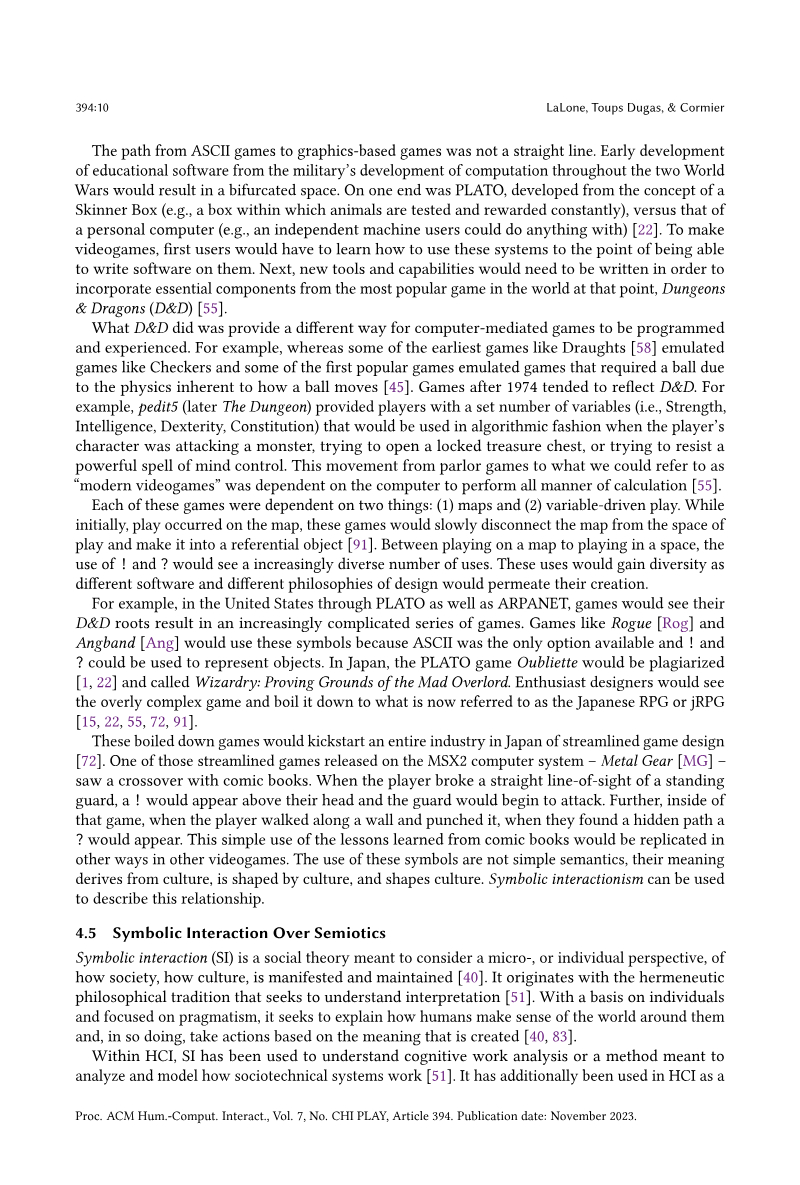
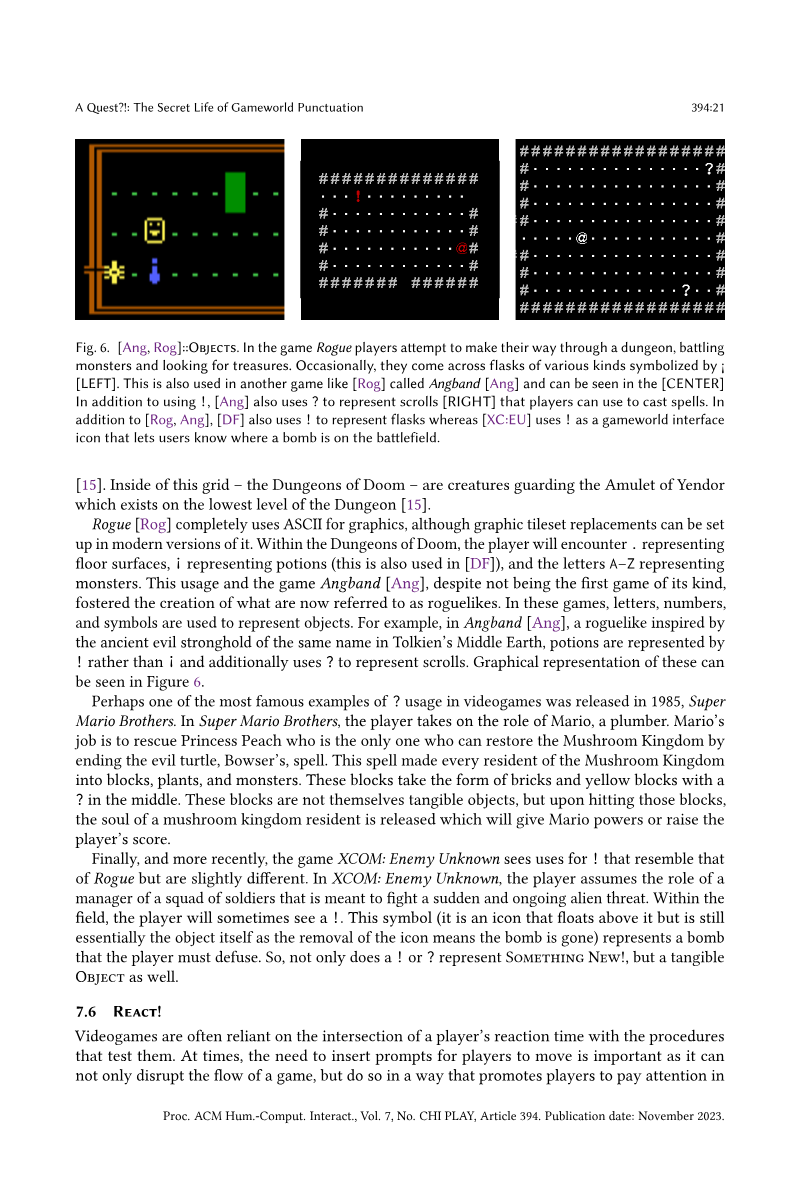
Exclamation points and question marks have transcended their origins as linguistic punctuation to become foundational elements of video game design.
Do you work at ACM CHI PLAY? Get a free report of how these documents are read and cited here.