Europe reports and market data
Documents
Response to the Call for Evidence on the Action Plan against Cyberbullying
Video Games Europe submits a position in response to the European Commission’s call for evidence on an Action Plan against cyberbullying, arguing that the sector already implements a robust “safety-by-design” framework and that cyberbullying is comparatively rare within video-game environments.
- Video games are a minor source of online harm compared to social media, with only 12% of teens and 3% of adults identifying games as a source of recent harm, versus 70% and 63% for social media platforms.
- Bullying incidents in gaming are significantly lower than on social platforms, reported by 5% of teens and 1% of adults in gaming environments compared to 67% and 69% on social media.
- Data from the Insafe helpline in Q1 2025 attributes only 8% of reported online issues to gaming platforms, while 68% are linked to social media and 20% to messaging services.

Week in Mobile Games E65: Gamescom insights and India's shock real-money gaming ban
The mobile gaming industry is currently undergoing a structural transformation driven by regulatory pressures, shifting monetization models, and the globalization of high-budget Asian titles.
- India’s ban on real-money gaming has disrupted a sector that previously accounted for approximately 85.7 percent of the country's 3.7 billion dollar gaming industry.
- Publishers are increasingly adopting direct-to-consumer strategies to bypass traditional app store platform fees and constraints.
- The European Union’s Digital Markets Act has led Google to implement a two-tiered fee structure that developers claim complicates revenue optimization and hinders discoverability.

TWIG #346: EU Wants to Ban Free-to-Play as Supercell Introduces a New Boss
The global gaming industry is currently navigating a period of intense regulatory and structural transformation.
- Proposed EU consumer protection regulations, including mandatory real-world currency displays and transaction warnings, threaten the free-to-play business model with potential revenue losses of up to 25% for major publishers.
- Industry leaders are actively mobilizing legal and lobbying efforts to counter the economic impact of these impending European regulatory changes on the market and its labor force.
- Gamescom 2024 highlighted a significant decline in venture capital for large-scale PC and console projects, signaling a shift toward more cautious spending and fiscal discipline.
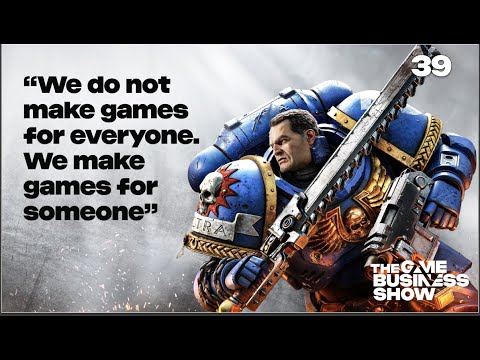
"We didn't believe Space Marine 2 could hit seven million unique players"
Pullup Entertainment, a European-based federation of studios and publishers, has achieved significant financial growth by focusing on the AA and indie game segments rather than the AAA market.
- Pullup Entertainment reported annual revenue of 390 million euros, a 100% year-over-year increase, with an EBIT of 60.3 million euros.
- Warhammer 40,000: Space Marine 2 exceeded 7 million unique players, validating the company's strategy of scaling niche titles through high-quality execution.
- The company manages a pipeline of 50 projects, split between 20 owned or co-owned intellectual properties and 30 licensed or third-party titles.
Becoming a cross-platform company - Mihai Pohontu from Amber
Amber, a global game development agency, has successfully navigated recent industry volatility by prioritizing cross-platform diversification and a flexible workforce model.
- Amber, a game development agency, grew from 200 employees to 850 over the last three to four years by diversifying across platforms and genres to mitigate market volatility.
- The company successfully pivoted away from a mobile-first strategy starting in 2017, with PC and console projects now serving as the primary revenue drivers.
- Amber maintains a 'variable workforce model' by combining its 850 internal staff with a network of 3,500 external freelancers and partner companies to scale capacity based on market demand.
How to bring the player INTO the value chain - James Crabb from Almedia
The rewarded user acquisition (UA) model represents a shift in the mobile gaming value chain by directly integrating the player into the monetization ecosystem.
- Rewarded user acquisition (UA) platforms like Freecash.com allow advertisers to share a portion of their cost-per-install (CPI) revenue directly with players, incentivizing long-term engagement rather than just initial downloads.
- Modern rewarded UA focuses on high-quality, engaged users by tracking deep in-game events, contrasting with older, stigmatized models that used incentives primarily to manipulate app store chart rankings.
- The shift toward direct-to-consumer relationships is being accelerated by the European Markets Act, which encourages the growth of web-based stores that bypass traditional, centralized app store monopolies.

Week in Mobile Games E59 - A dark day for Xbox
Microsoft is currently navigating a period of profound instability characterized by massive workforce reductions affecting approximately 9,100 to 10,100 employees across key studios, including King, Rare, Turn 10, and Blizzard.
- Microsoft has initiated a significant restructuring of its gaming division, resulting in the closure of The Initiative, the cancellation of 'Ever Wild' and 'Warcraft Rumble', and substantial layoffs at studios including Rare, Raven Software, and Turn 10, which saw a 50% staff reduction.
- Microsoft's strategy to integrate Activision Blizzard IP into Game Pass has faced criticism for potentially devaluing premium franchises like Call of Duty without driving a commensurate surge in subscription growth.
- Microsoft's internal mobile gaming strategy remains fragmented, as the company struggles to translate its core console IP to mobile platforms, with King remaining focused on casual titles rather than midcore or high-end adaptations.

Llibre Blanc de la Indústria Catalana del Videojoc 2024
I’m ready to combine the section summaries into a cohesive overview, but I’ll need the remaining sections to capture the full scope, key data points, and conclusions of the 2024 Catalan video-game industry analysis.
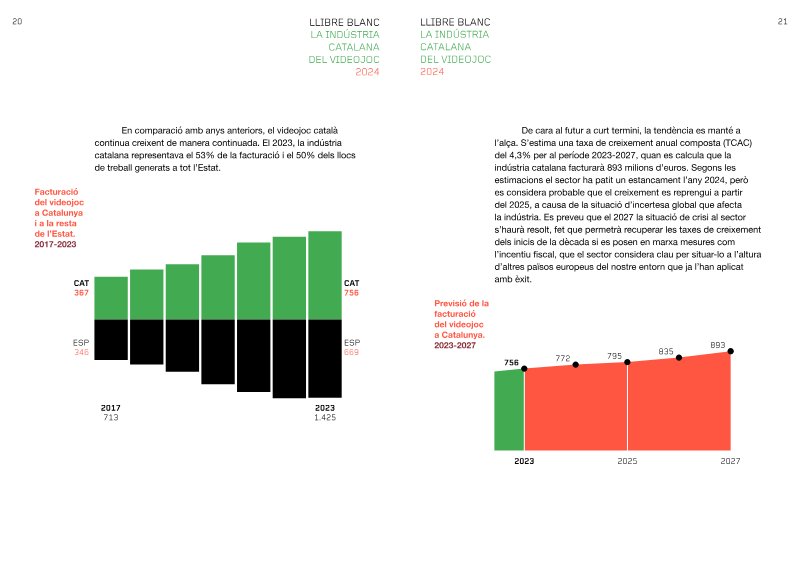
- The Catalan video game industry generated €756 million in 2023, representing 53% of Spain's total revenue and a 6.6% increase from 2022. It employed 5,174 professionals, accounting for 50% of the national total.
- The industry is projected to reach €893 million by 2027, with an estimated compound annual growth rate (CAGR) of 4.3% for 2023-2027, despite an anticipated stagnation in 2024.
- In 2024, there were 262 video game studios in Catalonia, with 161 formally constituted as companies, a 10% increase from the previous year.
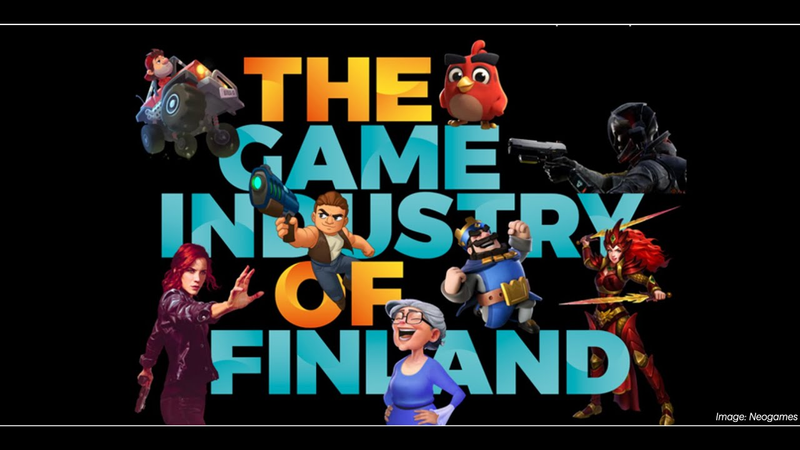
The Finnish Game Industry Is in Trouble — Here’s Why No One’s Talking About It
The Finnish game industry is currently facing a period of significant instability, characterized by a decline in venture capital funding, a stagnation in new studio formation, and the closure of established developers.
- The Finnish game industry is experiencing systemic instability marked by a decline in venture capital, a stagnation in new studio formation, and the closure of established developers.
- High-budget transmedia projects, such as animated series based on mobile IP, are increasingly viewed as costly distractions that fail to generate reliable revenue or drive significant in-game spending.
- Industry analysts argue that resources currently diverted to transmedia expansions should be redirected toward improving live operations, production quality, and management to ensure business sustainability.
White Paper on Public Funding for the Game Industry
Public funding serves as a critical pillar for the European game industry, functioning as a strategic necessity to ensure technological sovereignty, artistic independence, and global competitiveness.
- Public funding is a strategic necessity for the European game industry to maintain technological sovereignty and prevent the acquisition of independent SMEs by global conglomerates.
- Current regulatory frameworks are ineffective because they rely on film industry standards that impose administrative burdens and stifle the agility required for game development.
- The industry requires a modernized state aid framework that recognizes gaming as an autonomous sector, specifically by expanding the definition of research, development, and innovation to include business model and content evolution.
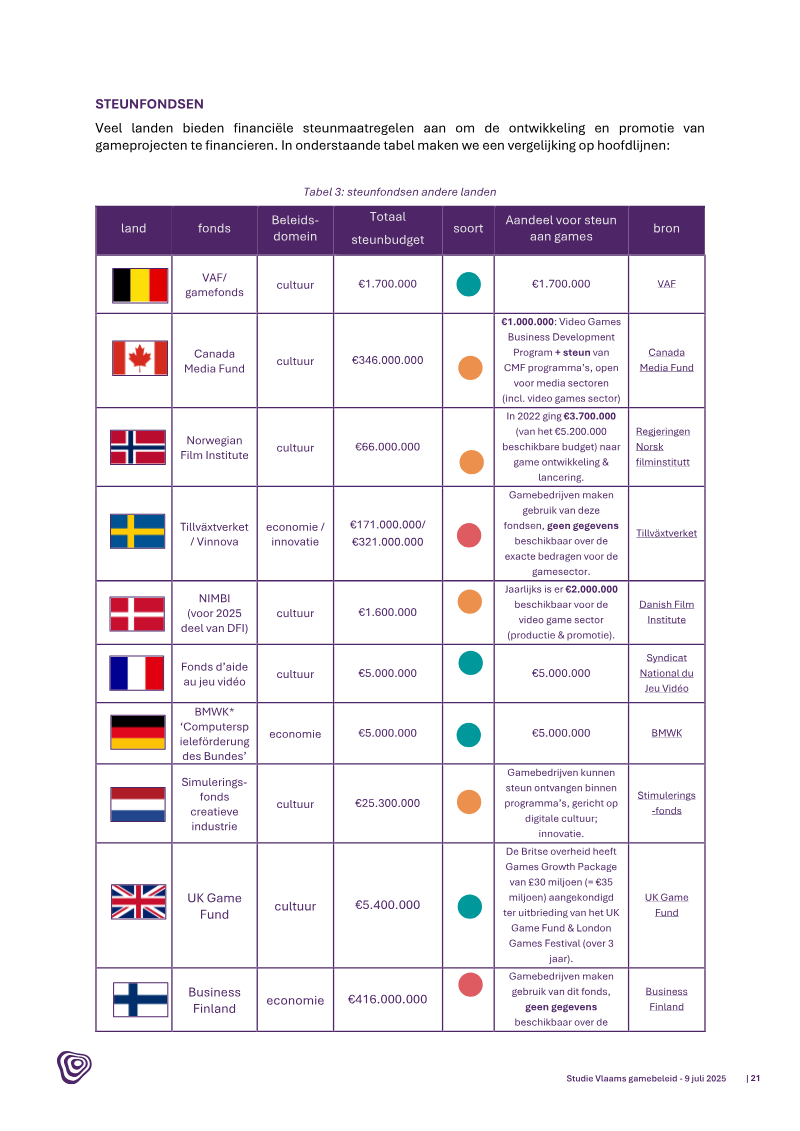
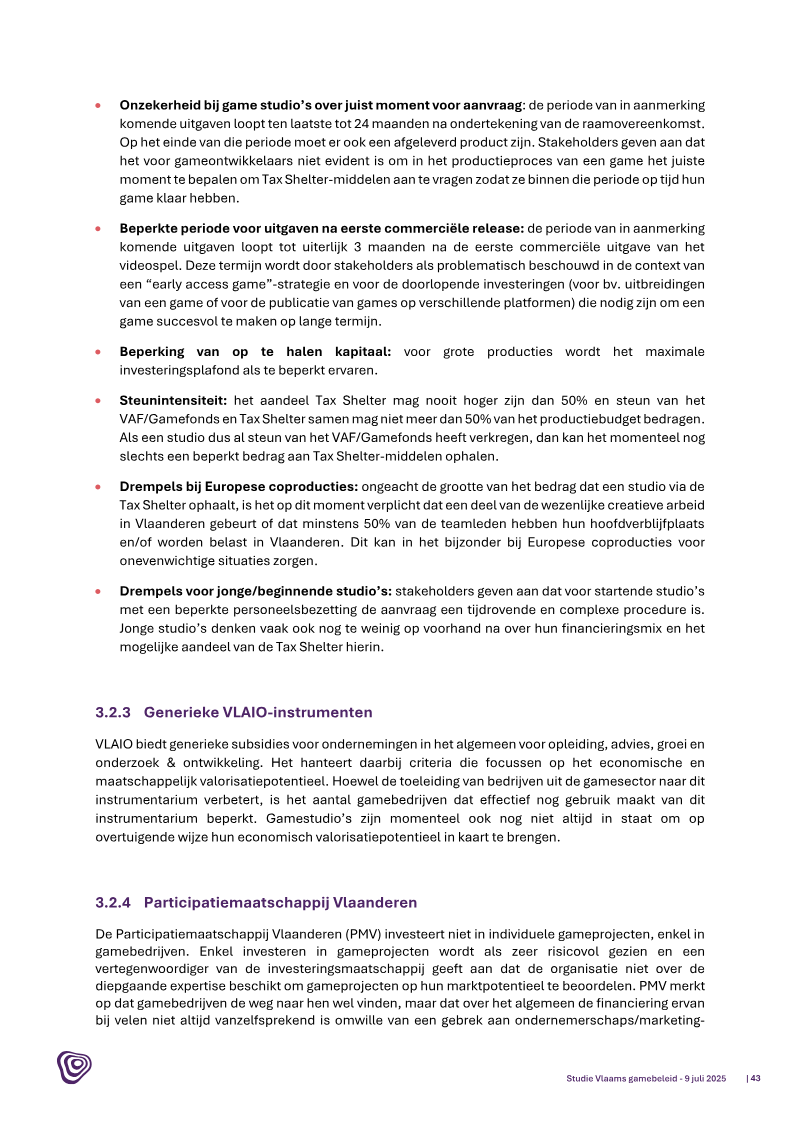
Studie Vlaams Gamebeleid: Eindrapport
The Flemish game industry stands at a critical juncture, requiring a strategic pivot from project-based support toward comprehensive business scaling and economic consolidation.
- The Flemish game industry lacks a 'missing middle' of mid-sized companies, with growth concentrated among a few major players despite an increase in total studio numbers between 2020 and 2024.
- To compete in the $187.7 billion global market, Flemish policy must shift from project-based subsidies toward business scaling and private capital access for the 2026–2030 period.
- Existing support mechanisms like the VAF/Gamefonds and the Tax Shelter are currently insufficient to match the aggressive fiscal incentives offered by international competitors such as Canada and France.

Staying compliant in a changing legal landscape | Margarita Sovertokina from Usercentrics
The primary objective of this discussion is to address the increasing complexity of global data privacy regulations and their impact on the mobile gaming industry.
- Mobile game developers are increasingly required to implement Google-certified Consent Management Platforms (CMPs) to maintain monetization capabilities, shifting data privacy from a legal-only concern to a core operational responsibility for user acquisition managers.
- Usercentrics provides an SDK that enables game developers to automate compliance with evolving global data privacy regulations, allowing them to continue collecting data for personalized ads without manual legal oversight.
- The gaming industry has shifted from viewing compliance as an external legal issue to a critical business requirement, largely driven by strict data-gathering mandates from major platforms like Google AdMob and Apple.