Europe reports and market data
Documents


Recommendations for Implementation of Virtual Reality Applications in Other Industries
Virtual reality and extended reality technologies offer transformative potential for the healthcare sector, provided that development strategies prioritize interdisciplinary collaboration between game designers and medical professionals.
- The goal of a VR application dictates design choices like game engine, target device, mechanics, and user interface, with therapeutic applications requiring careful consideration to avoid increasing muscular tension or using ergonomically poor hardware.
- Input devices for VR applications, especially in professional training or therapy, need careful selection; standard XR controllers are unsuitable for fine motor actions, making haptic gloves a viable but more expensive and technically complex alternative.
- When selecting an XR headset, key features to consider include Field of View (FOV) for immersion, tracking method (Outside-In for precision but higher room requirements, Inside-Out for flexibility and lower cost but less computing power), and eye-tracking for research and training.

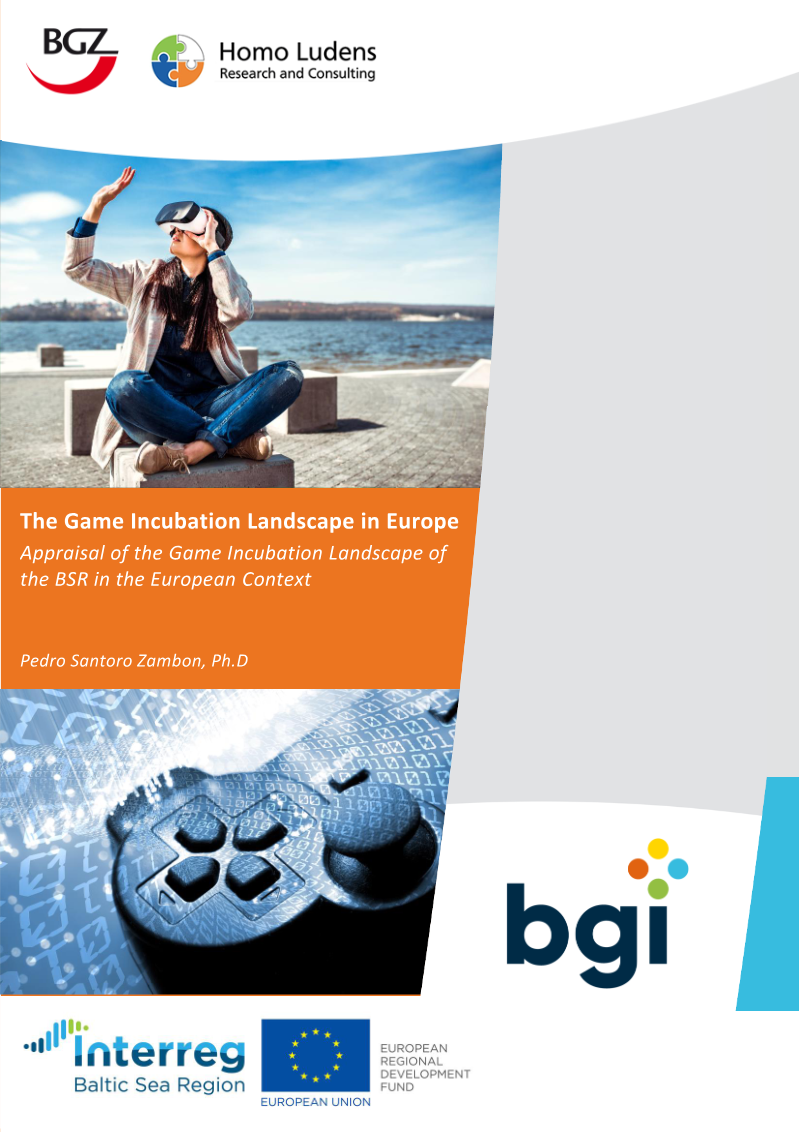
The Game Incubation Landscape in Europe: Appraisal of the BSR in the European Context
The European game incubation landscape functions as a critical pillar of regional economic development, operating primarily through a mix of public subsidies, academic partnerships, and private-sector initiatives.
- The Baltic Sea Region (BSR) has 24 game-focused incubators and accelerators, with half located in Sweden (6) and Finland (6). Nearly 40% (9) of these programs were established in the last three years, indicating a recent trend.
- Most BSR incubation programs prioritize supporting regional ecosystem development and university students/alumni.
- Governments are crucial for fostering an environment where incubator capacity-building initiatives can thrive, by adopting laws and regulations that promote research, development, and entrepreneurship.


Using Educational Games in the Classroom: Guidelines for Successful Learning Outcomes
Digital games serve as powerful pedagogical instruments capable of enhancing student motivation, cognitive development, and technical proficiency when integrated into formal education.
- Educational games function most effectively as supplements to traditional instruction rather than replacements, requiring structured reflection and debriefing to connect game mechanics to curriculum objectives.
- Successful integration relies on a rigorous evaluation process that balances pedagogical alignment with technical feasibility, including accessibility for students with disabilities and compatibility with existing school infrastructure.
- Game-based learning leverages constructivist theories and immersive environments to facilitate trial-and-error experimentation, which is critical for mastering complex problem-solving and technical skills.
European Game Industry in 2018
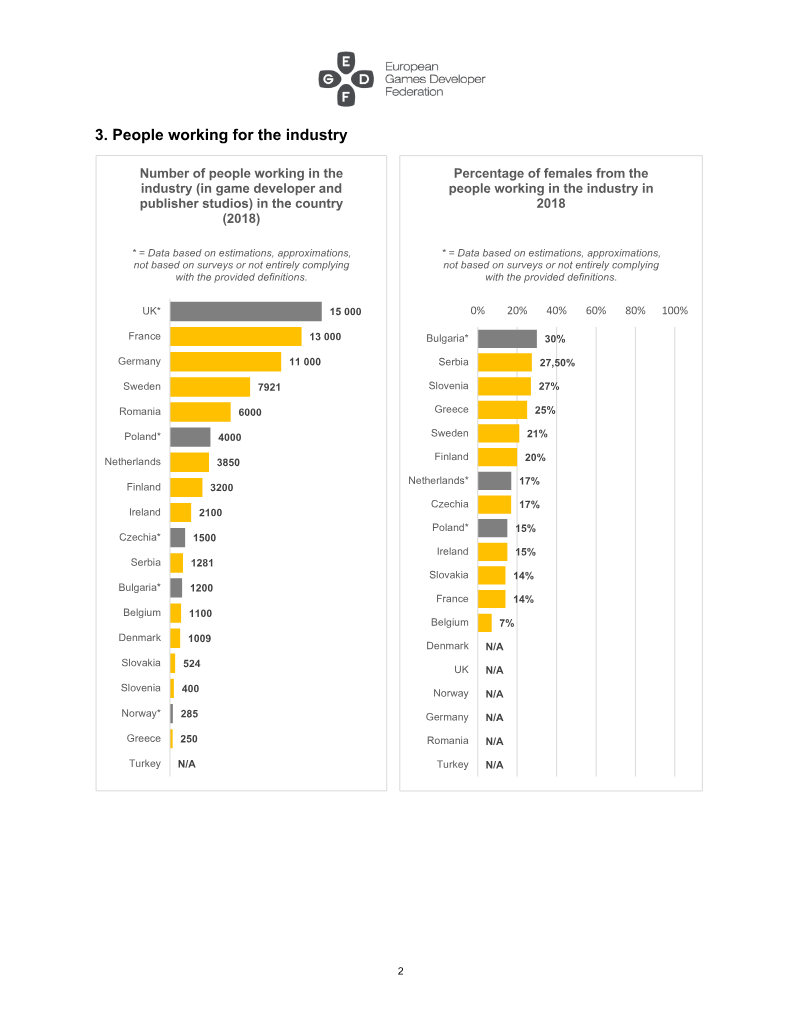
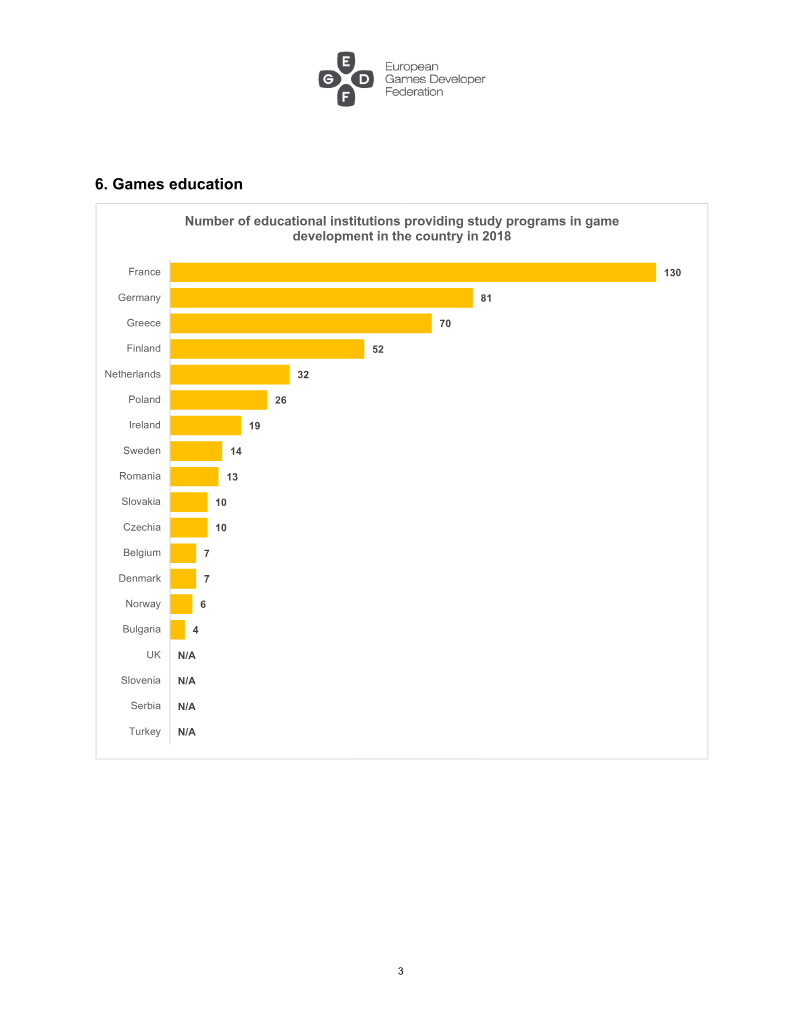
The European Games Industry in 2018 provides a comprehensive overview of the sector’s landscape across 19 European nations.
- The European games industry comprised 4,906 studios and 137 publishers in 2018, collectively employing 77,916 professionals across 19 nations.
- The United Kingdom, France, and Germany serve as the primary hubs for the industry, hosting the highest density of studios and the largest workforces.
- Revenue generation is highly concentrated, with the top 10% of studios accounting for nearly all industry earnings in countries such as Slovenia and Denmark.

Embracer Group Acquires Rare Earth Games
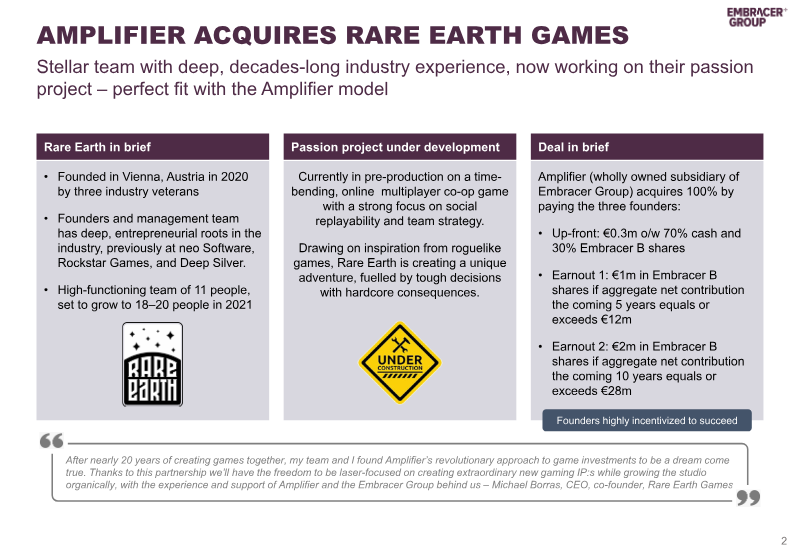
Embracer Group, through its subsidiary Amplifier, has finalized the acquisition of Vienna-based developer Rare Earth Games.
- Embracer Group, through its subsidiary Amplifier, has acquired Vienna-based developer Rare Earth Games to bolster its creative portfolio.
- The deal includes an initial payment of €0.3 million in cash and Embracer B shares, with an additional €3 million in performance-based earnouts tied to net contribution milestones over five and ten years.
- Rare Earth Games is currently developing an online multiplayer co-op game that incorporates roguelike elements and team-based strategy.

Embracer Group Acquires Pow Wow Entertainment
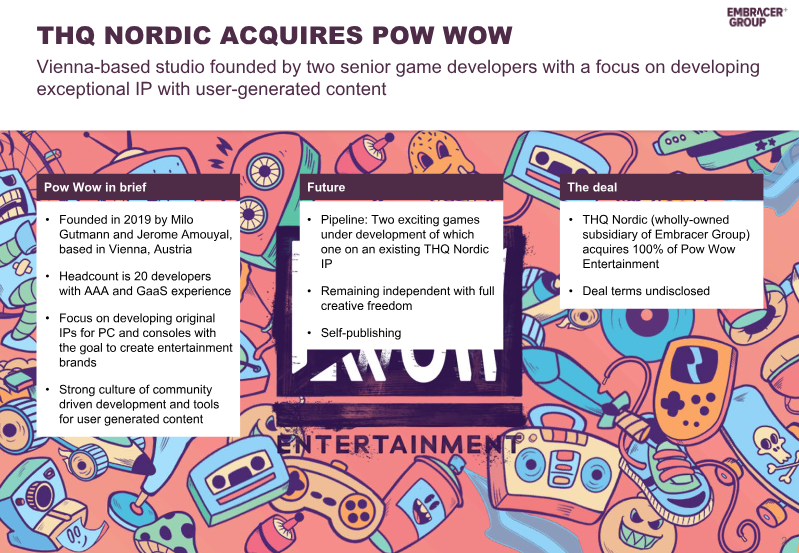
Embracer Group has finalized the acquisition of Vienna-based Pow Wow Entertainment, integrating the studio into its THQ Nordic subsidiary.
- Embracer Group has acquired Vienna-based Pow Wow Entertainment, integrating the 20-person studio into its THQ Nordic subsidiary.
- Pow Wow Entertainment will retain operational independence and creative autonomy while continuing to self-publish its titles.
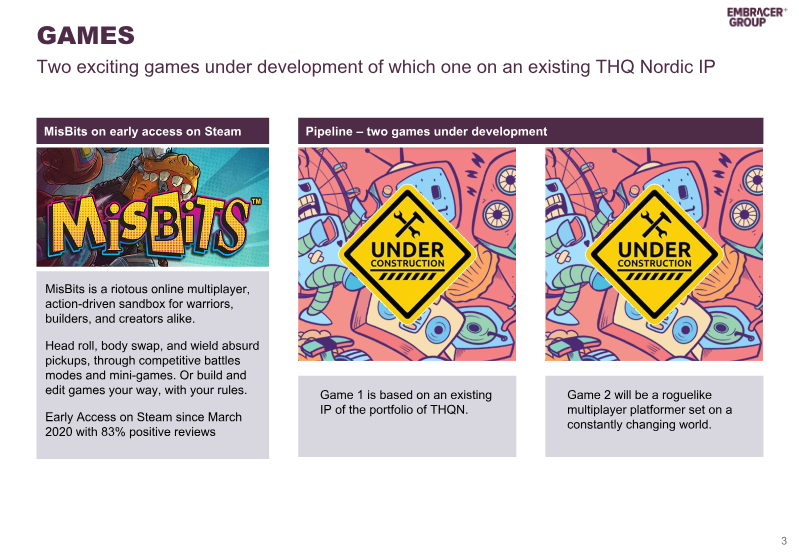
- The studio’s current development pipeline includes an original roguelike multiplayer platformer and a project utilizing an existing THQ Nordic intellectual property.
Knowing Ze Dschermans PG Connects Digital #2
The German video game market represents one of the top five global territories, generating approximately $6 billion in annual revenue.
- The German video game market is a top-five global territory generating approximately $6 billion in annual revenue.
- As of 2020, Germany had 34 million players with an average age of 37.5 years and a nearly even gender split of 52% male and 48% female.
- Historical socio-political headwinds, including strict regulations on violent content and Nazi imagery, have long hindered the industry's growth and institutional support.
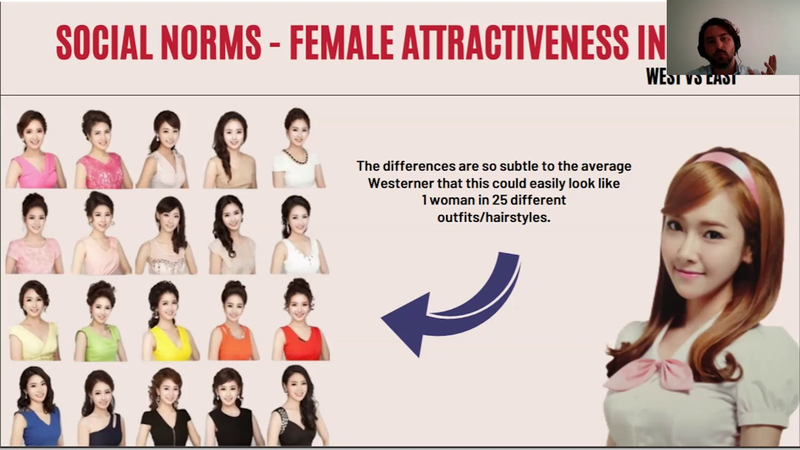
Eastern Games in the West. Reasons why Eastern Games Succeed in Europe & USA PG Connects Digital #2
The mobile gaming industry has experienced a significant shift in global market share, with mobile devices now accounting for approximately 45% of total industry revenue.
- Mobile gaming now accounts for approximately 45% of total industry revenue, with the Asia-Pacific region (China, Japan, South Korea, and Taiwan) generating nearly 50% of that global total.
- Successful expansion into Western markets requires deep culturalization rather than simple translation, as failure to adapt leads to high user acquisition costs and poor retention rates.
- Western players prioritize streamlined user interfaces, immediate gameplay access, and straightforward progression, which contrasts with the complex, tutorial-heavy, and multi-step structures common in Eastern markets.
Herní průmysl ČR 2020
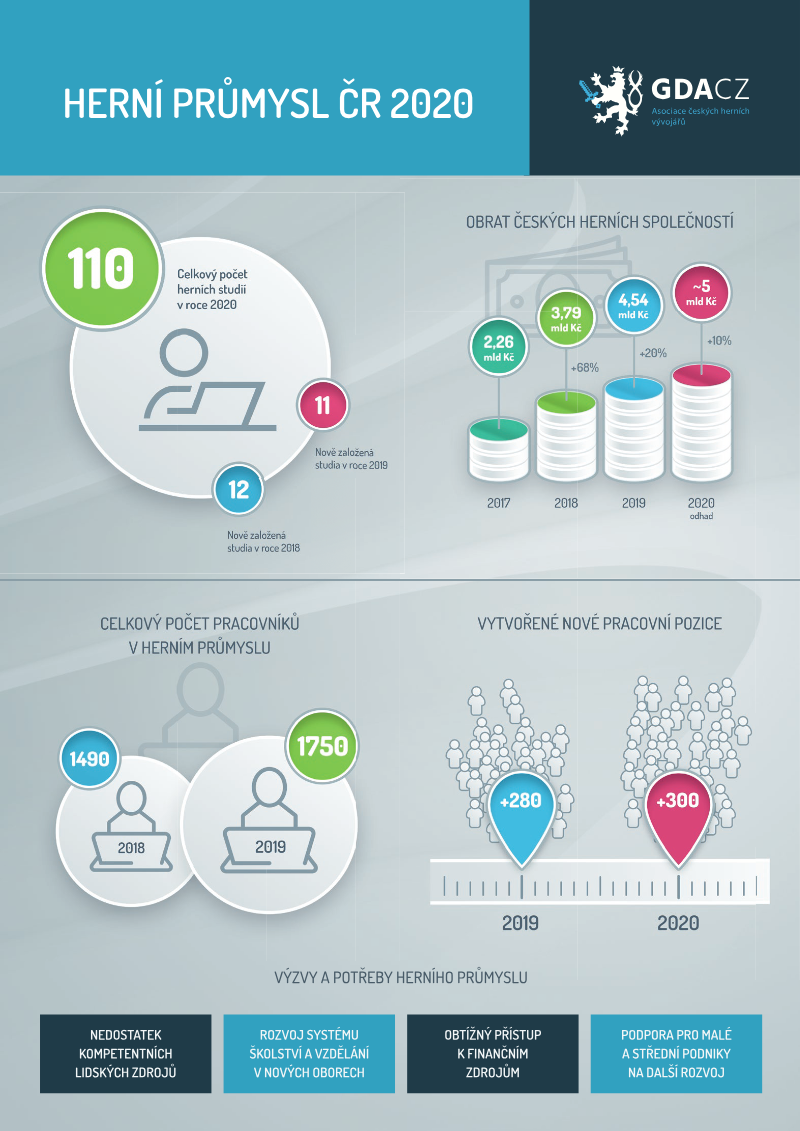
The Czech game development industry experienced significant growth in 2020, reaching a total valuation of 3.79 billion CZK.
- The Czech game industry reached a total valuation of 3.79 billion CZK in 2020, supported by a workforce of 1,750 employees after the creation of 300 new positions.
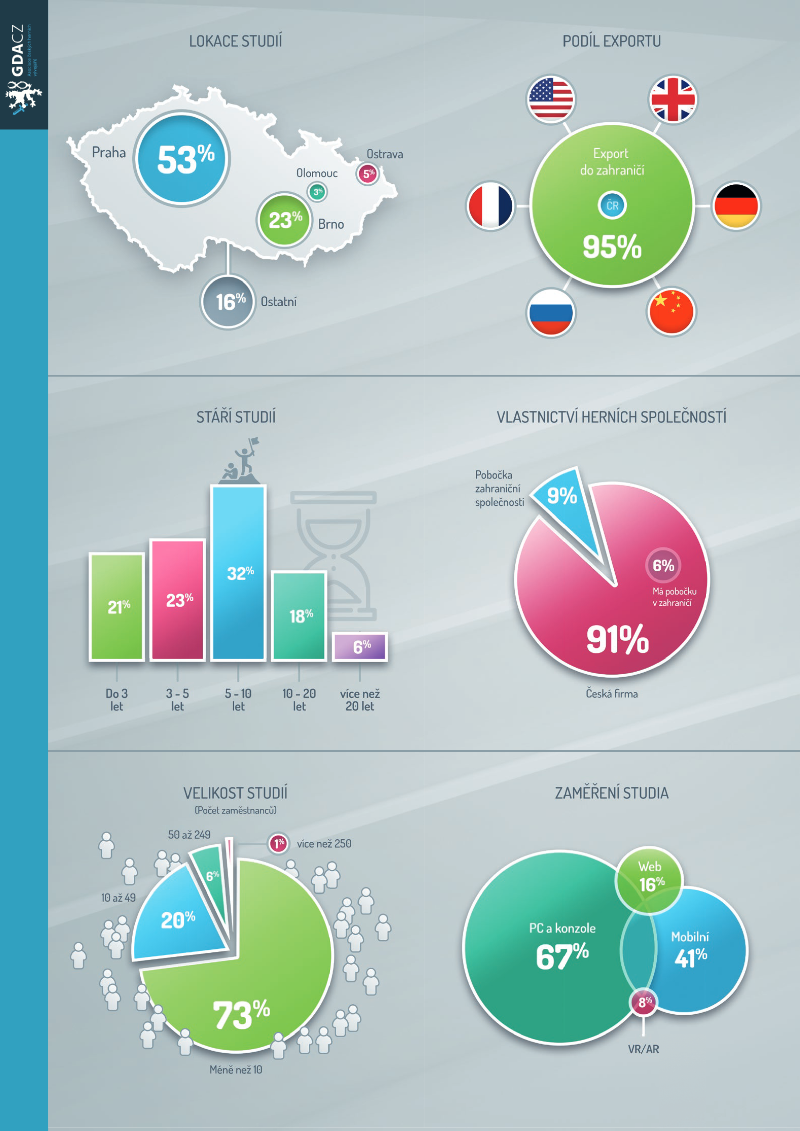
- The sector is highly export-oriented, with 95 percent of production destined for international markets.
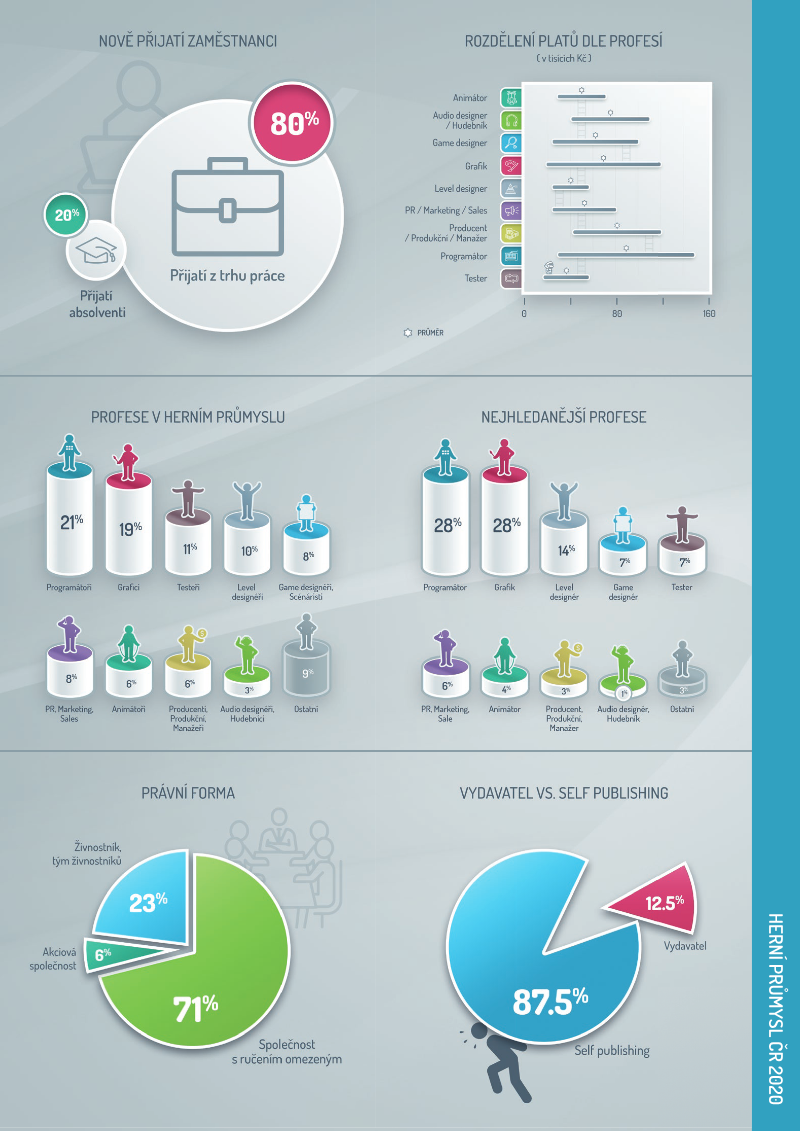
- The industry is dominated by small-to-medium enterprises, as 73 percent of studios employ fewer than 10 people and only 7 percent have more than 50 staff.

Intuitive Practicality with Igor Puskaric | GduX.me
The professional trajectory of game developer Igor Puskaric illustrates the viability of self-taught career paths within regions lacking formal industry infrastructure.
- Self-taught developers can overcome geographic isolation and a lack of formal infrastructure by using digital platforms like Sketchfab to build international reputations and portfolios.
- Prioritizing high-quality, optimized asset production for marketplaces creates a dual-income model that combines passive revenue with a public portfolio that attracts high-value client work.
- Adopting the 'rule of cool'—trusting personal aesthetic judgment—allows artists to build flexible, efficient production pipelines that balance creative drive with market demands.



Initial Research & Analysis Report: Higher-ed Programmes for Careers in Game Design & Development
The GAMEHIGHED project, a three-year Erasmus+ strategic partnership, examines the alignment between higher education and the evolving requirements of the global game industry.
- Higher education institutions face a persistent disconnect between traditional academic structures and the project-based, fast-paced requirements of the professional game industry.
- Successful programs like Bahçeşehir University’s BUG Lab and Charles University’s Gamedev Cuni effectively bridge the theory-practice gap by utilizing sandbox environments, game jams, and direct industry mentorship.
- European game development hubs in Poland and the Czech Republic are experiencing a significant talent gap, with current educational output failing to fill hundreds of annual job openings.
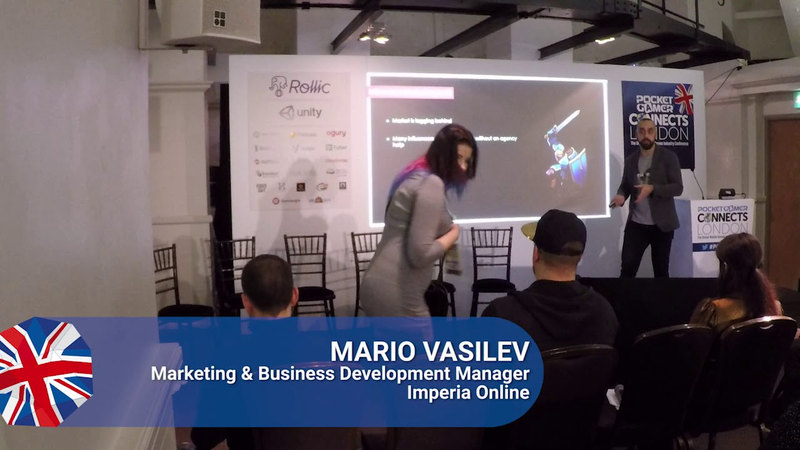
Influencer Marketing in Eastern Europe! A Hidden Gem or a Waste of Money?
Influencer marketing in Eastern Europe presents a distinct, high-potential opportunity for game developers, provided they adapt to the region's unique cultural and economic landscape.
- Influencer-led campaigns in Eastern Europe outperform traditional digital advertising by achieving 15% higher engagement rates than Facebook or Google ads.
- Influencer marketing in the region attracts a younger player demographic, averaging 18 years old compared to the 35-year-old average seen in traditional acquisition channels.
- While the region suffers from lower GDP per capita, it offers a high-value opportunity for long-term user acquisition due to significantly lower costs per install and high player retention.