Report64 pages
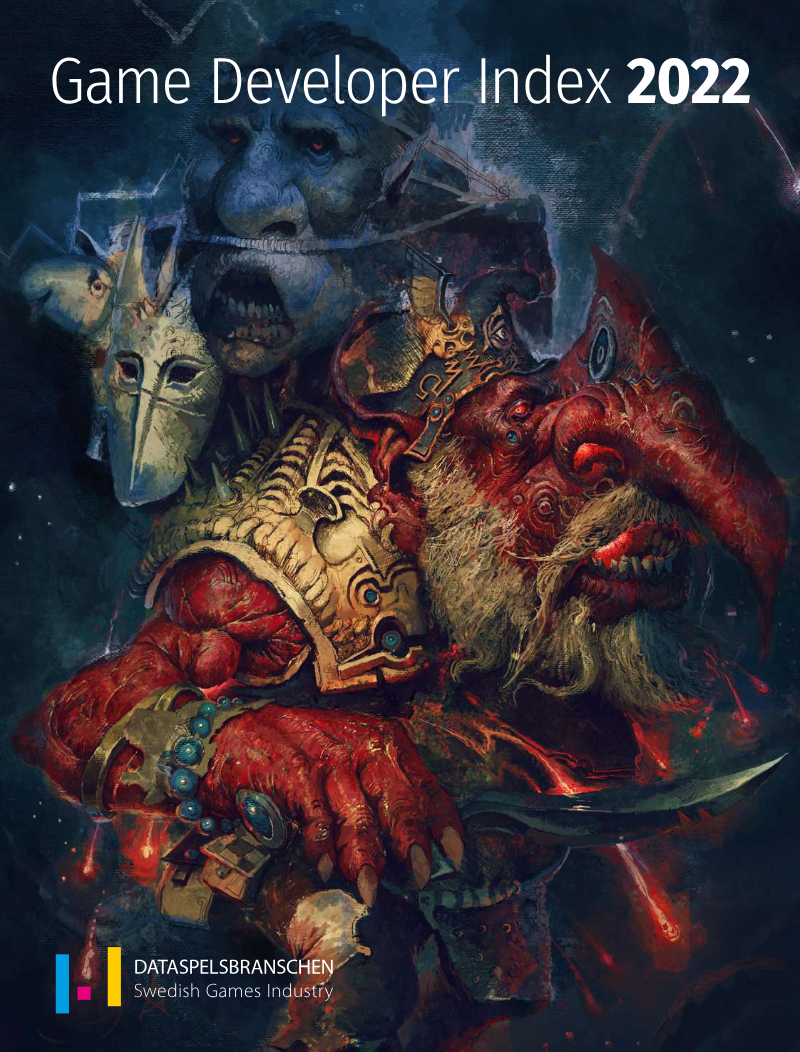
Game Developer Index: Sweden 2022
The Swedish games industry underwent a period of rapid expansion in 2021, characterized by a 22% increase in domestic revenue to €2.7 billion and a 43% surge in global revenue to €5.8 billion. This growth was fueled by a record-breaking year of international acquisitions, with 81 public transactions led by major groups such as Embracer and Stillfront. By late 2022, Swedish-owned entities operated 197 studios across 49 countries, employing approximately 28,000 people worldwide. This international footprint is reflected in consumer reach, as an estimated one in four players globally has engaged with a Swedish-developed title, and Swedish-associated games accounted for 6% of all Twitch watchtime in 2021.
The domestic workforce grew by 17% to nearly 8,000 employees, with women representing 22.1% of the total staff and 26% of new hires. While gender diversity is improving—evidenced by 29 companies achieving at least 50% female representation—the industry continues to struggle with a severe domestic skills shortage. This talent gap has forced Swedish firms to expand their foreign subsidiaries aggressively, with over 11,000 staff members now based abroad. Although regional hubs in Stockholm and Skåne remain dominant, growth is increasingly supported by specialized educational clusters and post-secondary programs designed to cultivate local talent.
Despite its commercial success and cultural influence, the sector faces structural hurdles that could impact future scalability. Critical challenges include complex work permit processes for international recruits and a lack of early-stage financing compared to other global markets. Methodological shifts in industry tracking now prioritize national group turnover to ensure better comparability with other sectors, revealing a robust ecosystem of 785 active companies. While the industry remains a powerhouse of the Swedish economy, its long-term sustainability depends on addressing recruitment barriers and maintaining the momentum of its global acquisition strategy.
- The Swedish games industry experienced significant financial growth in 2021, with domestic revenue rising 22% to €2.7 billion and global revenue surging 43% to €5.8 billion.
- Driven by 81 international acquisitions led by groups like Embracer and Stillfront, Swedish-owned entities now operate 197 studios across 49 countries, employing approximately 28,000 people globally.
- Swedish-developed titles maintain a massive international reach, with an estimated one in four global players engaging with these games and Swedish-associated content accounting for 6% of all Twitch watchtime in 2021.
- The domestic workforce grew by 17% to nearly 8,000 employees, though the industry faces a severe skills shortage that has forced firms to employ over 11,000 staff members through foreign subsidiaries.
- Gender diversity is gradually improving, with women representing 22.1% of the total workforce and 26% of new hires, while 29 companies have achieved at least 50% female representation.
+1
Swedish Games IndustryJan 2022
Report52 pages
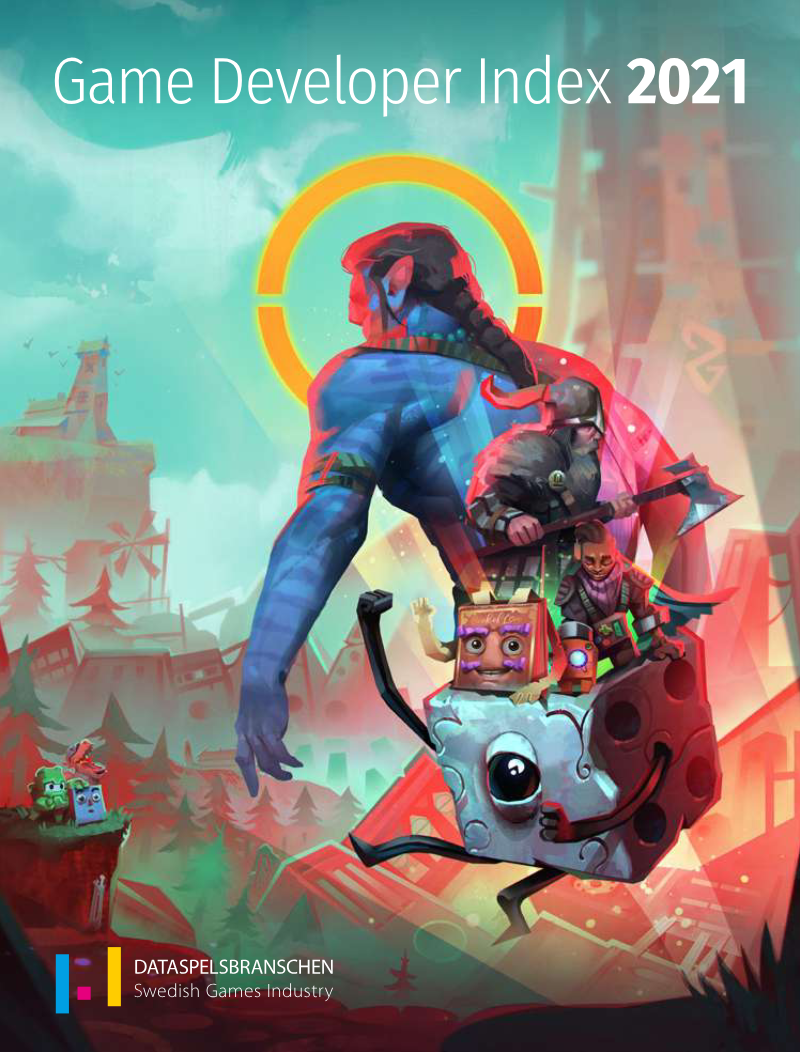
Swedish Games Industry 2021
The Swedish games industry experienced a transformative period of growth in 2020, reaching a record revenue of EUR 3.3 billion. This 43% increase significantly outpaced global market trends, marking the sector's twelfth consecutive year of profitability. The landscape is increasingly defined by corporate consolidation and international expansion, with 667 active companies and 19 listed entities commanding a combined market capitalization of EUR 10.7 billion. Major players such as Embracer Group, King, and Mojang have transitioned Sweden from a target for foreign acquisition into a dominant global investor, with Swedish-owned firms now employing more personnel abroad than domestically across 126 international studios.
Despite this commercial success, the industry faces a critical bottleneck regarding skilled labor. While domestic employment rose to over 6,500 positions, a severe talent shortage and a cumbersome work permit process hinder further expansion. These systemic issues are compounded by a lack of early-stage financing and tax incentives for smaller developers, who must also navigate digital regulations often tailored for larger tech platforms. Furthermore, while Swedish-developed titles like Minecraft and Candy Crush have achieved over six billion downloads, the sector continues to grapple with internal demographic challenges. Women currently represent only 21% of the workforce, and over 100 companies remain entirely male-operated, prompting a surge in diversity initiatives aimed at leveling the playing field.
Geographically, while Stockholm remains the primary hub with over 4,000 employees, regional development clusters and educational programs are expanding throughout Sweden to support the growing ecosystem. The industry is also pivoting toward long-term sustainability, addressing workplace culture and the environmental implications of energy-intensive cloud gaming. As the sector matures, its primary challenges have shifted from achieving market viability to managing rapid globalization, securing specialized talent, and fostering a more inclusive and sustainable professional environment.
- The Swedish games industry reached a record revenue of EUR 3.3 billion in 2020, marking a 43% growth rate and the sector's twelfth consecutive year of profitability.
- Sweden has shifted from an acquisition target to a global investor, with 19 listed entities commanding a combined market capitalization of EUR 10.7 billion and Swedish-owned firms operating 126 international studios.
- A severe talent shortage and restrictive work permit processes are critical bottlenecks, despite domestic employment rising to over 6,500 positions.
- The workforce faces significant demographic imbalances, with women representing only 21% of employees and over 100 companies remaining entirely male-operated.
- Stockholm remains the primary industry hub with over 4,000 employees, though development clusters are expanding regionally to support the growing ecosystem.
+1
DataspelsbranschenOct 2021
Report4 pages
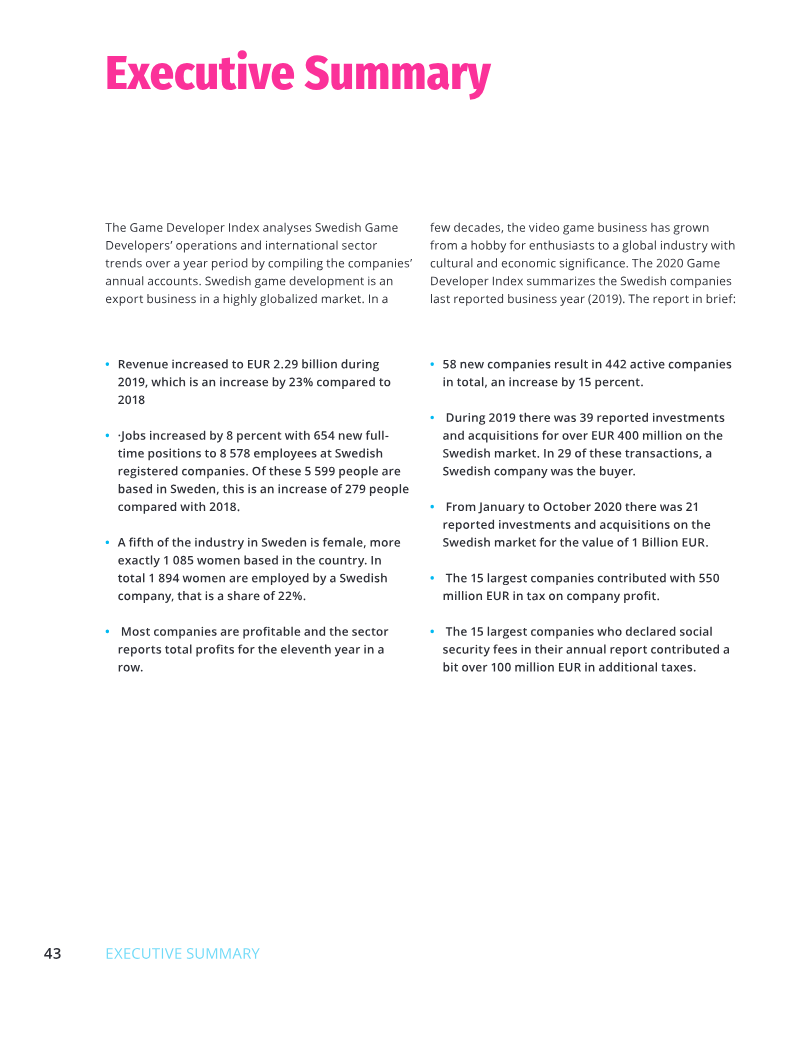
Game Developer Index: Sweden 2020
The Swedish game development industry demonstrates robust economic expansion and sustained profitability, functioning as a highly globalized export sector. By analyzing annual accounts from Swedish-registered companies, the industry reports a significant revenue increase to EUR 2.29 billion in 2019, representing a 23 percent growth over the previous year. This marks the eleventh consecutive year of total sector profitability, supported by a 15 percent increase in the number of active companies, which reached 442 by the end of 2019.
Employment trends reflect this upward trajectory, with the workforce growing by 8 percent to a total of 8,578 full-time positions. Of these, 5,599 employees are based within Sweden. While the industry continues to scale, gender diversity remains a focal point, with women comprising 22 percent of the total workforce. The sector’s economic impact extends to significant tax contributions, as the 15 largest companies alone provided EUR 550 million in corporate profit taxes and over EUR 100 million in additional social security fees.
Investment activity highlights the industry's maturity and attractiveness to capital. During 2019, the market saw 39 transactions involving investments and acquisitions totaling over EUR 400 million, with Swedish firms acting as the primary buyer in the majority of cases. This momentum accelerated into 2020, with 21 transactions recorded between January and October valued at EUR 1 billion. Despite these successes, the industry identifies ongoing challenges, particularly regarding the access to specialized talent and the navigation of complex digital market regulations. Future growth is expected to rely on regional clusters, incubators, and a continued commitment to increasing workforce diversity to maintain global competitiveness.
- The Swedish game industry generated EUR 2.29 billion in revenue in 2019, marking a 23 percent year-over-year increase and the eleventh consecutive year of sector-wide profitability.
- Investment activity surged significantly, with 39 transactions totaling over EUR 400 million in 2019, followed by 21 transactions valued at EUR 1 billion between January and October 2020.
- The industry workforce grew to 8,578 full-time positions by the end of 2019, with 5,599 of those employees based in Sweden and women representing 22 percent of the total headcount.
- The sector’s 15 largest companies contributed EUR 550 million in corporate profit taxes and over EUR 100 million in social security fees during 2019.
- The number of active game development companies in Sweden reached 442 by the end of 2019, representing a 15 percent increase from the previous year.
+2
DataspelsbranschenJan 2020

Report48 pages
Swedish Game Developer Index 2019
Published by the Swedish Games Industry Illustration, cover: Pontus Ullbors Text & analysis: Johanna Nylander The Swedish Games Industry is a collaboration between trade organizations ANGI and Spelplan-ASGD. ANGI represents publishers and distributors and Spelplan-ASGD represents Dataspelsbranschen Swedish Games Industry Magnus Ladulåsgatan 3, SE-116 35 Stockholm Contact: [email protected] KEY FIGURES 2018 2017 2016 2015 ...
- The Swedish games industry experienced significant growth in 2018, with a 33% increase in value to EUR 1.87 billion, marking its tenth consecutive profitable year with total profits exceeding EUR 335 million.
- The industry is expanding, with 41 new companies and over 600 new employees added in Sweden in 2018, an increase of 12% in new companies.
- The corporate landscape has shifted, with seven companies now having revenues over EUR 100 million; Embracer Group, after acquiring Koch Media, is the largest Swedish games company, surpassing previous dominators Mojang and King.
- Swedish game companies contribute significantly to the economy, with the 25 largest companies paying EUR 114 million in tax on profits and the 15 largest contributing over EUR 100 million in wage taxes.
- Swedish game developers are expanding globally, with 31 Swedish-owned studios employing 2,604 people outside Sweden in 2018, and notable acquisitions and investments by Swedish companies in international firms.
+1
Swedish Games IndustryJan 2019
Report66 pages
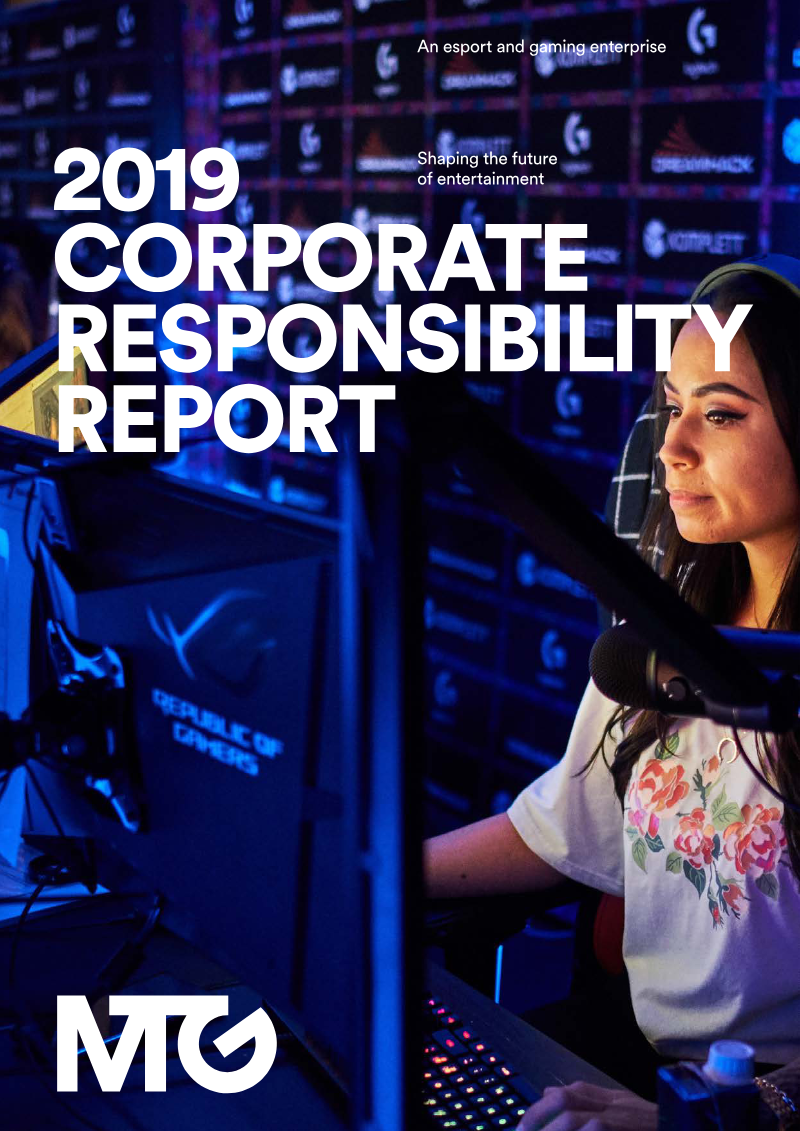
Corporate Responsibility Report 2019
The 2019 corporate‑responsibility effort positions Modern Times Group (MTG) as a dedicated gaming and esports holding that integrates environmental, social and governance (ESG) considerations into its core strategy. By framing responsible practice as a source of competitive advantage for millennial and Gen Z audiences, the company seeks to mitigate material risks—discrimination, event security, exploitation of minors, corruption, occupational and mental‑health concerns, irresponsible marketing and gaming addiction—while driving profitability.
A comprehensive materiality analysis informed a three‑tier priority pyramid that places health‑and‑well‑being and gender equality at its apex. Nine new group policies, including a Code of Conduct, whistle‑blower, anti‑bribery and data‑protection frameworks, achieved a 94 % employee
- Modern Times Group (MTG) has integrated ESG considerations into its core business strategy to mitigate material risks and drive profitability among millennial and Gen Z audiences.
- The company identified health and well-being and gender equality as the top-tier priorities within its three-tier materiality analysis.
- MTG implemented nine new group policies, including frameworks for anti-bribery, data protection, and whistle-blowing, to standardize corporate governance.
- The newly implemented group policies achieved a 94% employee adoption rate during the 2019 reporting period.
- Key risk mitigation efforts focus on addressing discrimination, event security, exploitation of minors, corruption, occupational health, mental health, irresponsible marketing, and gaming addiction.
+1
Modern Times GroupJan 2019
Report41 pages
Corporate Responsibility Report 2018
The 2018 corporate‑responsibility overview for Modern Times Group (MTG) reflects a year of strategic realignment following the spin‑off of its Nordic Entertainment and Studios businesses into the newly listed Nordic Entertainment Group. The core thesis is that MTG’s renewed focus on esports, gaming and broader digital ventures can be pursued responsibly through four pillars—media responsibility, social impact, business ethics and environmental care—underpinned by materiality analyses for both entities and a suite of stakeholder‑driven priorities such as gender diversity, inclusion, GDPR compliance and the protection of minors.
Financially, MTG reported net sales in the range of 15‑20 billion SEK and achieved an 89 % completion rate for mandatory ethics e‑learning. Risk management was strengthened by publishing event‑security guidance adopted by eight of twenty‑one partners, and by prioritising attendee safety at esports tournaments. Social contributions included a $18 k donation to UCSF, multi‑million‑dollar fundraising for Save the Children and the Diabetes Foundation, and the launch of education programmes targeting young gamers. Governance was reinforced through board oversight, external audits and memberships in more than a dozen industry bodies—including the IGDA, Esports Integrity Coalition and MESA—facilitating continuous stakeholder engagement via surveys, focus groups and board‑level dialogues.
Environmental reporting showed a total carbon footprint of 25,215 t CO₂e, a 7 % year‑on‑year increase, while energy intensity fell sharply from 66 GJ per employee in 2016 to 40 GJ in 2018. Scope 3 emissions from events are now being captured, and no fines were recorded for direct energy use,
- Following the spin-off of Nordic Entertainment Group, MTG realigned its corporate responsibility strategy to focus on esports, gaming, and digital ventures.
- MTG reported net sales between 15 and 20 billion SEK for the 2018 fiscal year.
- The company’s total carbon footprint reached 25,215 t CO₂e, representing a 7% year-on-year increase, despite a reduction in energy intensity to 40 GJ per employee from 66 GJ in 2016.
- Governance and compliance efforts included an 89% completion rate for mandatory ethics e-learning and the implementation of GDPR-focused policies.
- MTG strengthened event safety by publishing guidance adopted by eight of its twenty-one partners and prioritizing security at esports tournaments.
+1
Modern Times GroupMar 2018
Report48 pages
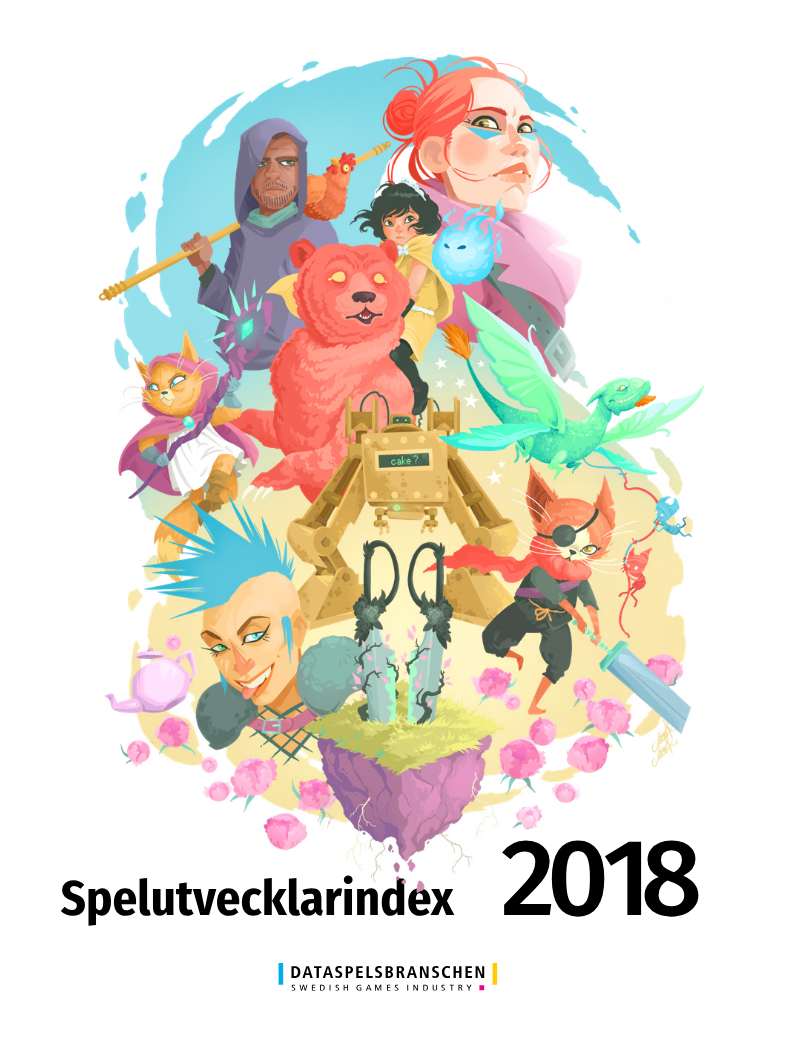
Spelutvecklarindex 2018
Framsida (collage) & fristående illustrationer: Anna Nilsson Text & analys: Johanna Nylander Dataspelsbranschen är en samarbetsorganisation för ANGI och Spelplan-ASGD. ANGI representerar förlag samt distributörer och Spelplan-ASGD representerar utvecklare Dataspelsbranschen | Swedish Games Industry Klara norra kyrkogata 31, Box 22307 SE-104 22 Stockholm Kontakt: [email protected] NYCKELTAL Förändring 2012-2017 Oms.
- The Swedish game industry's revenue reached 14,695 MSEK in 2017, continuing a strong growth trend from 3,715 MSEK in 2012.
- Employment in the Swedish game industry increased by 24% (1,047 full-time positions) in 2017, nearly doubling the 558 new positions from 2016, but companies still face recruitment challenges and a shortage of skilled developers.
- The number of women in the Swedish game industry has quintupled in six years, with women now making up 20% of all employees, and more women are taking leadership roles, such as Ebba Ljungerud becoming CEO of Paradox in August 2018.
- Swedish game companies are active in mergers and acquisitions, with notable examples in 2017 including THQ Nordic acquiring Black Forest Games and Pieces Interactive, and Starbreeze acquiring Dhruva Interactive and Enterspace AB.
- The industry benefits from diversified revenue streams like 'games as a service' (GaaS), microtransactions, and subscription models, leading to more stable income and higher valuations for publicly traded game companies.
+1
DataspelsbranschenJan 2018
Report47 pages
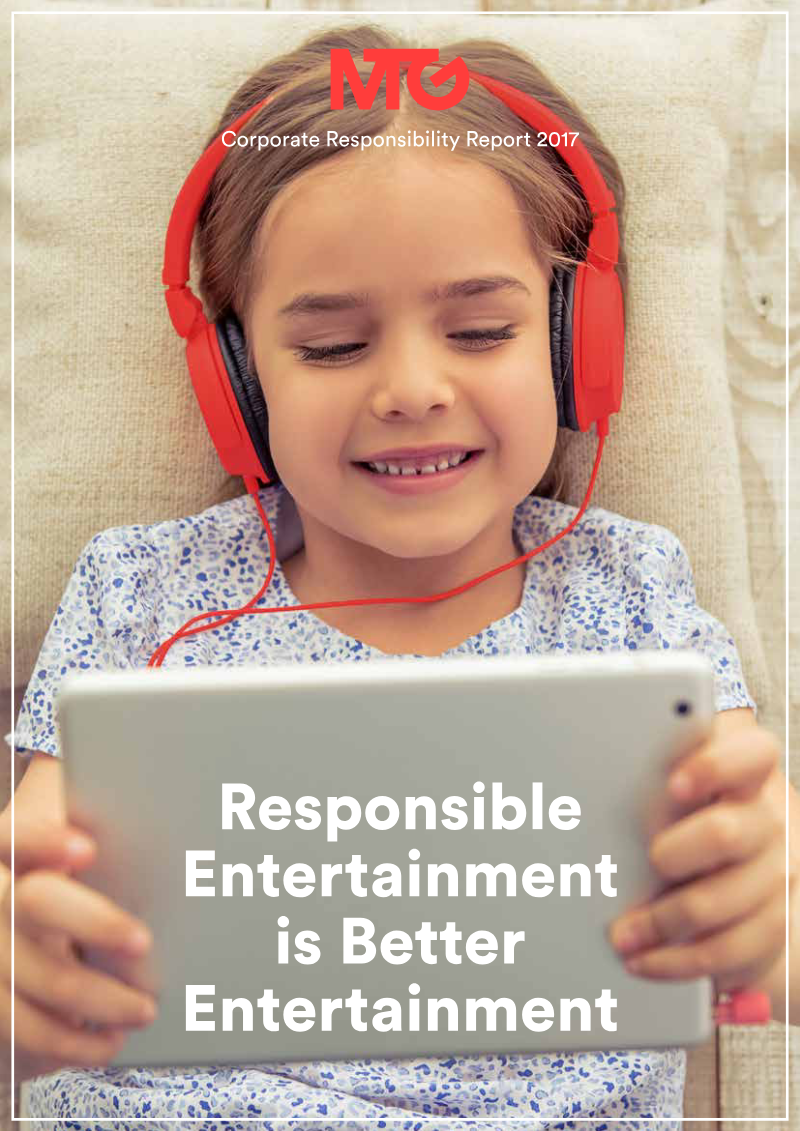
Corporate Responsibility Report 2017
Modern Times Group (MTG) presented a comprehensive overview of its corporate responsibility performance for 2017, positioning itself as a global digital‑entertainment leader with approximately 3,700 employees and net sales of €16‑17 billion SEK. The report emphasizes MTG’s commitment to “media for good,” detailing initiatives that safeguard children through parental controls, audio‑description (covering 15 % of output) and subtitles (89 % of output), and noting a decline in broadcast‑compliance complaints to 49, with none upheld by Ofcom. Recognition of its children’s programming was underscored by a Kristallen award.
Diversity and inclusion formed a central pillar of the strategy, with the workforce representing 59 nationalities and achieving near‑gender parity in Sweden and Finland (48 % women). The company set a 50/50 gender‑balance target for 2020, yet disclosed a persistent gender‑pay gap—women earned 66‑67 % of men’s basic salary, and female representation fell to 20 % at senior‑executive levels. Employee engagement remained high, reflected in an 84 % satisfaction rate and an 88 % sense of pride, while turnover stood at 16.5 %, driven primarily by male departures.
Environmental performance revealed a 49.7 % increase in total greenhouse‑gas emissions versus 2016, largely attributable to the inclusion of MTGx operations and air travel, which accounted for roughly 70 % of emissions. Excluding air travel, emissions declined 12 % year‑on‑year, and overall energy consumption dropped from 71,782 GJ in 2015 to 51,459 GJ in 2017. The group’s external gaming arm, alongside its esports and digital‑entertainment divisions, contributed to a diversified portfolio spanning Europe and North America.
Independent assurance by Ethos International confirmed compliance with GRI Core “in‑accordance” standards, identifying minor calculation errors and recommending enhancements in materiality analysis, equality and diversity focus, supplier code enforcement, and HR system integration. Stakeholder surveys and user testing were highlighted as effective mechanisms for aligning responsibility initiatives with customer expectations.
- MTG reported a 49.7% increase in total greenhouse-gas emissions in 2017 compared to 2016, with air travel accounting for approximately 70% of the company's total emissions.
- While MTG achieved near-gender parity in Sweden and Finland at 48%, female representation at the senior-executive level remained low at 20%, and women earned only 66–67% of the basic salary of their male counterparts.
- The company set a formal target to achieve a 50/50 gender balance across its workforce by 2020.
- MTG demonstrated strong broadcast compliance in 2017, recording 49 complaints with zero upheld by Ofcom, while 89% of output included subtitles and 15% included audio-description.
- Total energy consumption across the group decreased significantly from 71,782 GJ in 2015 to 51,459 GJ in 2017.
+1
Modern Times GroupJan 2017
Report62 pages
MTG Corporate Responsibility Report 2015
In 2015 the media group placed corporate responsibility at the core of its strategy, integrating ethical governance, sustainability and gender‑parity objectives across a global operation that spans 165 countries and includes broadcast, content localisation and e‑sports segments. The company achieved a 96 % compliance rate among 514 new hires—drawn from 38 nationalities—who signed a unified code of conduct, whistle‑blower and anti‑bribery policies aligned with the UN Global Compact and OECD guidelines, while stakeholder engagement was overseen by a dedicated board committee.
Environmental performance showed mixed results: total carbon emissions rose 13 % since 2010, driven largely by travel that accounted for 61 % of emissions, and overall energy use increased 3 %. Nevertheless, the firm earned a 95 C rating on the Dow Jones Sustainability Index for the third consecutive time, a CDP disclosure score of 95 C, and operates a “green” office equipped with more than 200 solar panels. Targets for 2016 include a 23 % reduction in employee energy use (baseline 2010), expansion of renewable energy, and comprehensive data‑privacy training in response to upcoming EU legislation.
Social impact was highlighted by a 91 % accessibility rate for
- MTG achieved a 96% compliance rate among 514 new hires across 38 nationalities regarding its unified code of conduct, anti-bribery, and whistle-blower policies.
- Total carbon emissions increased by 13% since 2010, with business travel accounting for 61% of the company's total emissions footprint.
- The company maintained a 95C rating on the Dow Jones Sustainability Index and a 95C CDP disclosure score for the third consecutive year.
- Energy use rose by 3% overall, prompting a 2016 target to reduce employee energy consumption by 23% relative to 2010 levels.
- Governance and stakeholder engagement were formalized through a dedicated board committee overseeing operations across 165 countries.
+2
Modern Times GroupJan 2015
Report43 pages
MTG Corporate Responsibility Report 2014
Modern Times Group positioned 2014 as a year of deepening corporate responsibility, linking its expanding digital portfolio to heightened standards in data‑privacy, child protection, freedom of expression and sanctions compliance. The narrative underscores a strategic shift toward embedding ethical, anti‑corruption and sustainability practices across a globally dispersed media operation.
Financially, the company recorded net sales of SEK 16.7 billion, up from SEK 13.3 billion in 2012, while operating income contracted, reflecting investment in new digital initiatives. Governance was reinforced through a dedicated corporate‑responsibility advisory group, multiple board committees and local representatives, ensuring that compliance mechanisms permeated all levels of the organization. A UN‑Global Compact‑aligned system saw 787 employees endorse an anti‑bribery policy, the launch of a sanctions‑risk register and an Interpol‑backed anti‑piracy project, alongside comprehensive updates to data‑protection protocols.
The workforce grew to 4,186 full‑time equivalents, achieving an 84 % appraisal completion rate and a zero‑fatality safety record, with work‑related accidents falling from ten to six. Diversity expanded to 44 nationalities and the gender‑pay gap narrowed to women earning 75
- Modern Times Group recorded net sales of SEK 16.7 billion in 2014, an increase from SEK 13.3 billion in 2012, though operating income declined due to investments in digital initiatives.
- The company expanded its workforce to 4,186 full-time equivalents, representing 44 nationalities, while narrowing the gender pay gap to women earning 75% of men's salaries.
- Governance and compliance were strengthened through a new corporate-responsibility advisory group, a sanctions-risk register, and an anti-bribery policy endorsed by 787 employees.
- Operational safety improved in 2014, with work-related accidents decreasing from ten to six and maintaining a zero-fatality record.
- The company launched an Interpol-backed anti-piracy project and updated data-protection protocols to align with its expanding digital portfolio.
+1
Modern Times GroupJan 2014
Report45 pages
MTG Corporate Responsibility Report 2013
In 2013 the media group embedded sustainability within its core strategy, aligning business growth with responsible practices and earning inclusion in the Dow Jones Sustainability Europe Index and FTSE 4Good. Financially, the company generated €14.1 billion in net sales and €1.9 billion in operating profit while employing 3,361 staff and expanding into new European markets through the launch of its digital platform MTGx. Its corporate‑responsibility framework is built on four pillars—media responsibility, employees and workplace, environment and community, and business ethics—each supported by concrete actions and measurable targets.
Compliance and societal impact were central to operations. A dedicated “C‑Team” ensured that broadcast and on‑demand content met EU, UK (Ofcom, ASA) and local regulations, with 85 % of programming already adapted for regional standards. The group leveraged its TV, radio and digital assets for charitable campaigns, delivering more than €4.3 million in media‑time value for Typhoon Haiyan relief, €438 k for the “Angels over Latvia” tour, €115 k for a Lithuanian zoo‑elephant project, and additional support for health, education and wildlife initiatives across Ghana, Estonia, Sweden, Bulgaria and other markets.
Environmental performance improved markedly. The new London headquarters attained a BREEAM “Excellent” rating and installed roof‑mounted solar panels that now supply the majority of its electricity, producing a quantifiable reduction in CO₂ emissions. The company’s CDP climate‑change score rose to 88, reflecting stronger governance and disclosure. A materiality analysis highlighted data integrity, privacy and child‑online‑safety as top concerns, prompting new internal policies, anti‑corruption training completed by all staff, and an updated Code of Conduct with 78 % e‑learning uptake.
Gender equity showed progress
- MTG achieved €14.1 billion in net sales and €1.9 billion in operating profit in 2013, supported by a workforce of 3,361 employees and the launch of the digital platform MTGx.
- The company earned inclusion in the Dow Jones Sustainability Europe Index and FTSE4Good by integrating sustainability into its core business strategy.
- MTG utilized its media assets to provide over €4.3 million in value for Typhoon Haiyan relief, alongside significant charitable contributions for various health, education, and community initiatives.
- A dedicated 'C-Team' ensured regulatory compliance across broadcast and on-demand content, with 85% of programming adapted to meet specific EU, UK, and local standards.
- The company’s London headquarters achieved a BREEAM 'Excellent' rating and transitioned to solar-powered electricity, contributing to an improved CDP climate-change score of 88.
+2
Modern Times GroupJan 2013
Report51 pages
Corporate Responsibility Report 2012
The 2012 Modern Responsibility report positions sustainability as a central driver of long‑term growth for MTG, outlining a strategic agenda that integrates environmental, social and governance objectives across its broadcast, radio and digital operations. The company set 2012 targets that focus on benchmarking training, revising supplier policies and tightening anti‑corruption controls, while maintaining net sales of roughly SEK 13 billion and seeing operating income decline to SEK 2.1 billion.
Corporate responsibility is organized around four pillars—Business, Community, Colleague, and Broadcast & Marketing—and is anchored in the UN Global Compact, OECD guidelines and local legislation. A publicly available Code of Conduct, anti‑corruption and whistle‑blower policies, and supplier principles support implementation across more than 30 broadcast markets. Content accessibility is emphasized, with 85 % of programming offered in subtitles, dubbing or voice‑over, and continuous e‑learning, including the MTG Academy’s sales and leadership programmes, is provided to staff.
Environmental performance improved markedly: CO₂ emissions fell 6 % per employee, surpassing the 5 % reduction goal, and 80 % of employees completed green‑thinking training. Power‑down measures limited standby consumption to under 0.5 W, while the Carbon Disclosure Project score rose from a D‑grade to a B‑grade. Partnerships with NGOs such as London Wildlife Trust, Earth Hour and Latvia’s “Big Clean‑up” mobilised 210 000 volunteers and removed 100 t of litter, illustrating the use of MTG’s media reach to promote greener consumer behaviour.
External assurance by Ethos International under AA1000AS granted a C+ rating, confirming overall confidence in the self‑reported data while noting minor data‑entry errors, incomplete site‑level reporting and a need for deeper stakeholder engagement and materiality analysis. The report therefore concludes that MTG largely met its 2012 sustainability targets, identified climate‑related risks, and instituted processes to mitigate them, reinforcing its commitment to responsible growth across a global, multi‑segment media portfolio.
- MTG maintained net sales of approximately SEK 13 billion in 2012, though operating income declined to SEK 2.1 billion.
- Environmental initiatives exceeded targets as CO₂ emissions per employee fell by 6%, surpassing the 5% reduction goal.
- The company improved its Carbon Disclosure Project score from a D-grade to a B-grade through power-down measures and staff training.
- MTG leveraged its media reach to mobilize 210,000 volunteers for environmental NGO partnerships, resulting in the removal of 100 tonnes of litter.
- Accessibility efforts resulted in 85% of programming being offered with subtitles, dubbing, or voice-over.
Modern Times GroupJan 2012
Report52 pages
MTG Corporate Responsibility Report 2011
The 2011 Modern Responsibility Report demonstrates how Modern Times Group (MTG) has integrated a comprehensive sustainability framework across its operations in 39 countries, targeting employee welfare, anti‑corruption, climate action and community engagement. By the end of 2011 the company achieved a 5 % reduction in carbon footprint per employee—equating to a 16 % total cut in emissions—and a 6 % per‑employee decline in CO₂ versus the 2009 baseline, while overall office energy use fell by the same 16 % margin. These environmental gains were accompanied by a record‑low incidence of work‑related accidents (zero) and consistently low absenteeism around one percent.
MTG’s expansion strategy in 2011 combined geographic and product growth, acquiring stakes in TV Prima, Darial TV and Balkan Media Group, launching Viasat HD, History HD and Nature HD in 22 Central‑ and Eastern‑European markets, and entering four African nations (Ghana, Uganda, Tanzania, Kenya). The broadcasting arm, including Strix, continued to produce and co‑produce TV formats sold in more than 80 territories, while its gambling subsidiary Bet24 remained a marginal revenue source subject to strict responsible‑gaming controls.
Stakeholder dialogue was institutionalised through a GRI‑aligned materiality analysis, enabling MTG to meet 14 of 15 short‑term sustainability targets for the year. Employee turnover averaged 18 % among 3,031 staff (mean age 34) and training participation rose, though the rollout of anti‑bribery e‑learning was deferred for policy refinement. The whistle‑blower system recorded only two operational reports, underscoring a relatively clean compliance environment.
Community contributions
- MTG achieved a 16% total reduction in carbon emissions and office energy use by the end of 2011, resulting in a 6% decline in CO2 per employee compared to the 2009 baseline.
- The company expanded its geographic footprint in 2011 by entering four African nations—Ghana, Uganda, Tanzania, and Kenya—and acquiring stakes in TV Prima, Darial TV, and Balkan Media Group.
- MTG maintained a strong safety record with zero work-related accidents and an absenteeism rate of approximately 1% among its 3,031 employees.
- The broadcasting division, including Strix, successfully produced and co-produced TV formats for distribution across more than 80 territories.
- MTG met 14 of its 15 short-term sustainability targets for 2011, supported by a GRI-aligned materiality analysis and a whistle-blower system that recorded only two operational reports.
+2
Modern Times GroupJan 2011
Report24 pages
MTG Corporate Responsibility Report 2010
The 2010 Modern Responsibility report presents Modern Times Group’s first GRI‑aligned disclosure, expanding the reporting perimeter to encompass all subsidiaries and leased assets that employ staff. It establishes a comprehensive materiality analysis, stakeholder survey, and a crisis‑support team, framing corporate responsibility as a strategic pillar that underpins responsible broadcasting across MTG’s television, radio and digital platforms. The document’s thesis is that transparent governance, measurable sustainability targets, and inclusive social initiatives can drive long‑term value for both the business and its broader stakeholder community.
Governance is overseen by a seven‑member board—six independent non‑executives, five men and two women—supported by audit, remuneration and Modern Responsibility committees. The report sets concrete performance goals, including training 50 % of relevant staff on compliance by the end of 2010 and achieving full coverage by 2012, reducing per‑employee CO₂ emissions by 5 % versus the 2009 baseline by February 2012, and extending a supplier self‑check system to half of MTG’s partners. Parallel gender‑equity objectives launch a women‑in‑leadership network in Sweden and benchmark gender‑pay gaps in Scandinavia by June 2011 and globally by February 2012.
Operational outcomes for 2010 demonstrate strong social and environmental stewardship. MTG achieved 100 % subtitling/closed‑captioning for Swedish output, delivered 110 hours of compliance training, recorded only 21 internal complaints and incurred no fines. Philanthropic activity leveraged media assets to donate roughly 111 million SEK of airtime and raise over €58 million for health, disaster relief and child‑health campaigns across more than 20 countries. The United for Peace football tournament engaged 130 youths from 12 nations, with 88 % reporting new friendships and a near‑universal endorsement of sport as a conflict‑resolution tool, while the Playing for Change initiative secured a Social Capitalist award and raised 160 k SEK.
Environmental performance shows a 7 % rise in total greenhouse‑gas emissions to 15,032 t CO₂e, driven mainly by facility energy (5,496 t) and business travel (8,727 t), raising per‑employee emissions to 5.6 t CO₂e. In response, MTG plans greener travel options, country‑specific green‑action lists, 80 % employee training in “green thinking,” and supplier CO₂ assessments to meet the 5 % per‑employee reduction target. The report thus captures a global, multi‑segment (broadcasting, digital, philanthropy, sports) snapshot of MTG’s 2010 responsibility performance and its forward‑looking commitments through
- MTG launched its first GRI-aligned corporate responsibility report in 2010, establishing a formal materiality analysis and crisis-support framework across all subsidiaries.
- Philanthropic efforts leveraged media assets to donate 111 million SEK in airtime and raise over €58 million for global health and disaster relief campaigns.
- Total greenhouse gas emissions rose 7% to 15,032 tonnes of CO2e in 2010, with business travel and facility energy as the primary drivers, leading to a new target of a 5% per-employee reduction by February 2012.
- Governance objectives include achieving 100% staff compliance training by 2012 and benchmarking gender-pay gaps globally by February 2012.
- Operational performance in 2010 included 100% subtitling for Swedish output, 110 hours of compliance training, and zero regulatory fines.
+1
Modern Times GroupJan 2010
Report42 pages
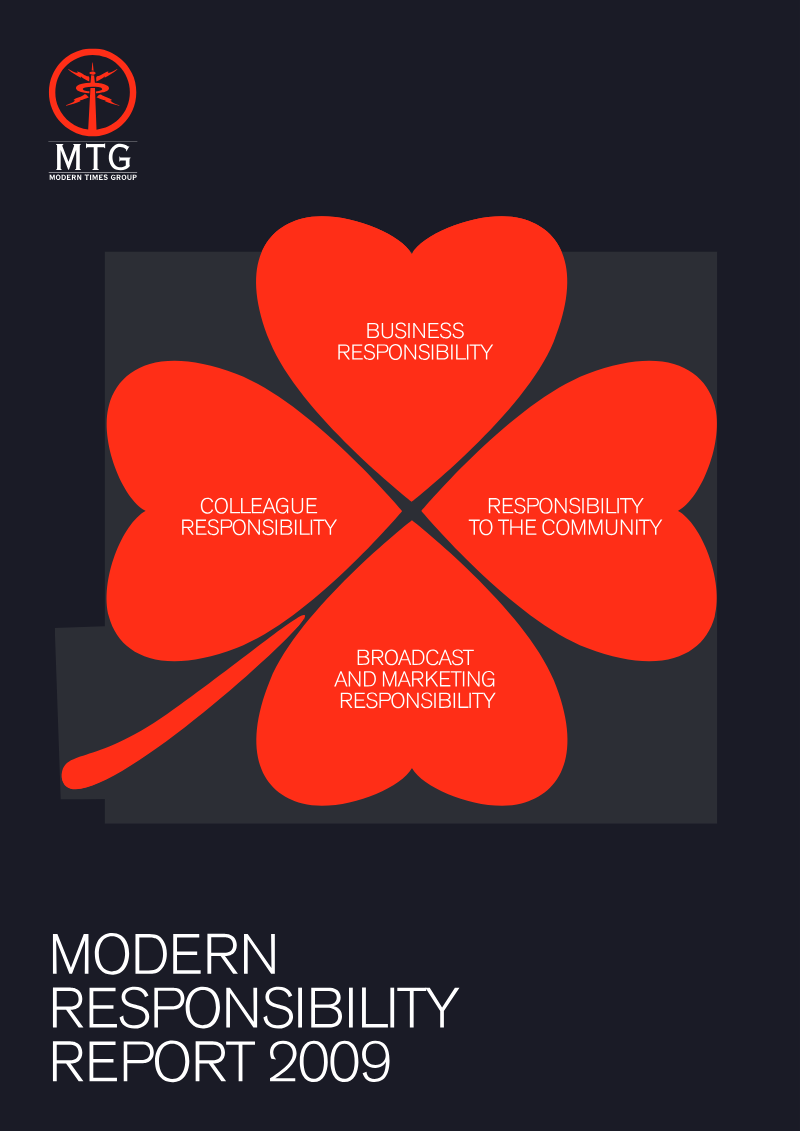
MTG Corporate Responsibility Report 2009
The 2009 Modern Responsibility Report presents Modern Times Group’s (MTG) effort to embed corporate responsibility across its broadcasting and media operations while navigating the aftermath of the 2008‑09 financial crisis. The report’s thesis is that a structured, multi‑pillar responsibility programme can coexist with commercial growth, even as the group expands its channel portfolio and geographic reach.
In 2009 MTG recorded net sales of SEK 14.2 billion and launched three new channels—TV3 Puls, Prima COOL and Viasat Hockey—while completing a major restructuring of its Bulgarian assets. Despite revenue growth, operating income fell to a loss of SEK 1.4 billion and basic earnings per share turned negative at ‑30.86 SEK. The responsibility framework, introduced in 2004, is now governed by the CEO, board directors, a central committee and local “Green Ambassadors,” with KPIs, internal audits and external consultancy guiding progress. Targets for 2010 include broader KPI coverage, reduced carbon emissions and enhanced stakeholder communication across business, broadcast‑marketing, colleague and community dimensions.
Employee engagement proved strong: 86 % of the 2,906 staff across 38 national markets completed the annual survey, 88 % expressed enthusiasm for their work and 90 % embraced the company’s three lead words. Gender balance approached parity overall (52 % male, 48 % female) though managerial levels remained skewed (63 % male, 37 % female). Internal recruitment accounted for 40 % of hires.
The carbon footprint for 2009 amounted to roughly 13 000 t CO₂e across 19 countries, split evenly between facilities and office‑supply material use, with an intensity of 4.2 t CO₂e per employee (0.9 t per MSEK turnover). ISO 14001 certification for the Swedish radio division and energy‑efficient headquarters illustrate concrete mitigation steps. Partnerships with WWF and Sweden’s BLICC, together with expanded carbon‑footprint audits, underscore MTG’s commitment to environmental stewardship within the
- MTG reported 2009 net sales of SEK 14.2 billion, though operating income resulted in a loss of SEK 1.4 billion and earnings per share fell to -30.86 SEK.
- The company expanded its portfolio during the 2008-09 financial crisis by launching TV3 Puls, Prima COOL, and Viasat Hockey, alongside a major restructuring of Bulgarian assets.
- Employee engagement remained high, with 86% of the 2,906-person workforce participating in the annual survey and 88% reporting enthusiasm for their work.
- Gender parity across the total workforce was nearly achieved at 52% male and 48% female, though management roles remained male-dominated at 63%.
- The company's 2009 carbon footprint totaled approximately 13,000 t CO2e, representing an intensity of 4.2 t CO2e per employee or 0.9 t per MSEK of turnover.
+3
Modern Times GroupJan 2009
Report13 pages
MTG Corporate Responsibility Report 2008
Modern Times Group’s Modern Responsibility programme, launched in 2004, is presented as a strategic framework for leveraging entertainment to create social and environmental value across the company’s global operations. The initiative is positioned as core to MTG’s mission to “maximise the power of entertainment,” with responsibility articulated through five measurable pillars: community, environment, colleagues, broadcasting standards, and marketing.
In 2008 the group reached 125 million viewers in 30 countries, operating 70 brands across television, radio, online retail and production. Financial performance showed net sales rising to SEK 13.2 billion and operating income to SEK 2.6 billion, while basic earnings per share more than doubled to SEK 43.25. Employee data indicate an average workforce of 2 810, with 35 % female representation, a 22 % turnover rate and 461 training days delivered to 46 % of staff. Community engagement generated 78 million SEK of donated airtime and raised 56 million SEK for charities, while environmental actions reduced office energy use by 28 % relative to national standards and produced a total carbon footprint of 4 223 tonnes CO₂ (3.0 t per employee), calculated under the Greenhouse Gas Protocol with external verification.
Stakeholder governance is overseen by senior management, a dedicated coordinator and a Modern Responsibility Committee, supported by local ambassadors in each market. Reporting draws on internal data, carbon accounting from Tricorona Climate Partner, and regular stakeholder feedback through surveys and focus groups. The 2008 snapshot underscores MTG’s expanding footprint, its commitment to ethical broadcasting, and its ambition to deepen responsibility reporting in subsequent years.
- In 2008, MTG achieved strong financial growth with net sales of SEK 13.2 billion, an operating income of SEK 2.6 billion, and basic earnings per share of SEK 43.25.
- MTG’s community engagement efforts in 2008 resulted in SEK 78 million worth of donated airtime and SEK 56 million raised for charitable causes.
- The company maintained a workforce of 2,810 employees across 30 countries, with 35% female representation and a 22% staff turnover rate.
- MTG reduced office energy consumption by 28% relative to national standards and recorded a total carbon footprint of 4,223 tonnes of CO2, averaging 3.0 tonnes per employee.
- The Modern Responsibility programme is governed by a dedicated committee and senior management, utilizing external verification from Tricorona Climate Partner to track carbon accounting.
+1
Modern Times GroupJan 2008