
Report46 pages
2025 Media & Entertainment Industry Predictions Report
The analysis projects that artificial intelligence will be the primary catalyst for change across the media and entertainment landscape in 2025, enhancing human talent rather than replacing it. Streaming services continue to dominate revenue streams, with global SVOD and AVOD income projected to surpass $165 billion despite a fragmented market of over 200 platforms. Consumer churn and escalating content costs drive consolidation, leading to bundled or aggregated subscription models that are expected to account for 60–70 % of purchases in mature markets. Traditional multichannel pay‑TV providers are forecast to lose half their U.S. subscriber base, falling below 50 million users, prompting a shift toward “stream‑hub” offerings that combine broadband with multiple streaming services at competitive prices. Video multichannel distributors such as YouTube TV are projected to peak and then decline due to rising costs, live‑sports migration to direct‑to‑consumer services, and intensified OTT competition.
Cloud gaming is set for a 44 % CAGR through 2030, driven by faster broadband, AI‑enhanced virtualization, and new commercial models. Console and PC sales are expected to wane as consumers redirect spending toward streaming devices, with subscription‑based monetization replacing one‑time purchases. The sector’s growth hinges on resolving commercial model constraints, particularly the need for more attractive storefront incentives to unlock mass adoption and realize a $64 billion market by 2030.
In creative media, firms will increasingly deploy proprietary large‑language models while navigating intellectual property risks and regulatory frameworks such as the EU AI Act. Eight core governance building blocks—risk management, training oversight, compliance, testing, and incident response—are identified as essential for mitigating AI‑related challenges. Retail media and search are undergoing rapid transformation, with retailers partnering with streaming and social platforms to manage fragmented ecosystems, privacy rules, and AI‑driven formats. Generative AI is eroding Google’s dominance by enabling conversational, multimodal search experiences from competitors like OpenAI, Perplexity, Amazon, and TikTok. Consequently, Google’s share of search advertising is projected to decline modestly worldwide (from 57 % to 55 %) and in the U.S. (51 % to 48 %), as shoppable content, live shopping, and AI query volume shift revenue toward alternative platforms. Marketers will adapt by optimizing for AI‑generated summaries, voice, and visual search to align with evolving consumer behavior.
- Global SVOD and AVOD revenue is projected to exceed $165 billion in 2025, with 60–70% of subscriptions in mature markets expected to shift toward bundled or aggregated models to combat churn.
- Traditional U.S. pay-TV providers are forecast to lose half their subscriber base, dropping below 50 million users as the industry pivots to 'stream-hub' models that bundle broadband with multiple streaming services.
- Cloud gaming is projected to grow at a 44% CAGR through 2030, reaching a $64 billion market as subscription-based monetization increasingly replaces traditional one-time hardware purchases.
- Google’s global search advertising market share is expected to decline from 57% to 55% by 2025, as conversational AI competitors like OpenAI, Perplexity, and TikTok capture revenue through multimodal and shoppable search formats.
- Artificial intelligence will serve as a primary industry catalyst in 2025, with firms required to implement eight core governance building blocks—including risk management and compliance—to navigate IP and regulatory challenges like the EU AI Act.
+1
AlixPartnersDec 2025

Report29 pages
Esports is Shaping the Future of Live Entertainment
Esports is rapidly evolving into a mainstream live‑entertainment sector, with viewership surpassing 100 million hours and prize pools doubling since 2018. The industry’s growth outpaces traditional sports, registering a 10 % year‑over‑year increase while leagues such as the NFL and NBA stagnate. Core titles—League of Legends, CS:GO, Mobile Legends: Bang Bang, Dota 2 and Valorant—concentrate 70 % of total viewing hours, yet an estimated $2.5 billion in untapped gamer audiences remains available, underscoring significant scalability potential.
Geographically, governments across France, Denmark, China and Japan are investing in infrastructure, tax incentives and athlete support, while the International Esports Federation seeks Olympic recognition. Sponsorship penetration has reached 45 % of non‑gaming brands, and universities now offer esports scholarships, indicating a blending of traditional sports support structures with the unique dynamics of game publishers. However, media‑rights monetisation remains constrained by fragmented licensing arrangements.
The absence of a unified regulatory body creates volatility for players; games and prize pools can collapse abruptly, as seen with Fortnite and Heroes of the Storm. Coordinated regulation, career pathways, post‑career support and state investment are identified as essential for legitimising esports as a sustainable profession. In sum, the sector demonstrates explosive growth and high engagement among younger, tech‑savvy audiences, but requires cohesive governance and media‑rights frameworks to unlock its full economic potential.
- Esports is outperforming traditional sports with a 10% year-over-year growth rate, while viewership has surpassed 100 million hours and prize pools have doubled since 2018.
- Five core titles—League of Legends, CS:GO, Mobile Legends: Bang Bang, Dota 2, and Valorant—account for 70% of total viewing hours, yet $2.5 billion in gamer audiences remains untapped.
- Non-gaming brand sponsorship has reached 45% penetration, supported by emerging institutional structures like university scholarships and government investments in infrastructure and tax incentives.
- The lack of a unified regulatory body and fragmented media-rights licensing remain the primary barriers to long-term economic stability and monetization.
- The industry faces significant volatility, as evidenced by the abrupt collapse of prize pools and professional ecosystems for titles like Fortnite and Heroes of the Storm.
+1
InvestGameDec 2025

Report38 pages
The Power of Play: Exploring the Growing Gaming Market
The Indian gaming market is projected to reach ₹8.6 billion by 2027, expanding at a 28 % CAGR from FY20‑23, while the global market is expected to hit $340 billion. A recent 28 % GST on total deposits—up from an 18 % tax on gross gaming revenue—has pressured real‑money gaming (RMG) firms to diversify geographically, slowed revenue growth, and triggered layoffs. These developments have spurred calls for tax reforms that align with international standards. Despite the fiscal headwinds, segments such as esports, indie studios, and mobile casual games continue to grow, with blockchain, AR/VR, and generative AI identified as high‑growth opportunities.
Indian online gaming firms are responding to the GST amendment and broader market dynamics by absorbing or passing on tax costs, consolidating through acquisitions, and diversifying into new genres such as hyper‑casual games and esports. RMG now accounts for approximately 82 % of India’s gaming revenue, yet monetization remains weak relative to download volumes; only 10 % of global gaming funding reaches Indian startups. These strategic shifts aim to improve unit economics and capture higher‑spending segments.
Investment activity underscores the sector’s resilience. Casual mobile games remain the most attractive category, with recent Indian titles raising between $1 M and $8.5 M in seed to Series A rounds, while blockchain‑based mobile titles have attracted a combined $396 M. The next three to four years are expected to be driven by AR/VR integration, generative AI, competitive multiplayer mobile titles, and blockchain‑enabled gameplay. Major venture funds—including Accel, Sequoia, and Lightspeed—are actively backing the full value chain, reflecting strong institutional confidence in the industry’s expansion.
- The Indian gaming market is projected to reach ₹8.6 billion by 2027, growing at a 28% CAGR, while the global market is expected to hit $340 billion.
- A shift to a 28% GST on total deposits has pressured real-money gaming (RMG) firms, leading to layoffs, revenue slowdowns, and a strategic push toward geographic and genre diversification.
- RMG currently dominates the Indian market, accounting for approximately 82% of total gaming revenue, though monetization remains low relative to total download volumes.
- Blockchain-based mobile titles have secured $396 million in funding, while casual mobile games continue to attract seed to Series A rounds between $1 million and $8.5 million.
- Institutional confidence remains high, with major venture funds including Accel, Sequoia, and Lightspeed actively investing across the gaming value chain.
+2
Basic Roots ConsultingDec 2025

Report18 pages
Leveling Up for the New Reality: The Gaming Report
The report examines the global gaming market’s evolution from 2017 to 2028, highlighting a post‑pandemic correction that has shifted growth expectations from double‑digit rates to modest expansion. Global revenue by type rose 1 % CAGR (2017–2023), with mobile, PC, and console segments contributing $1.2 trillion in 2023; cloud/VR sales remain niche but are projected to grow at 5 % CAGR (2023–2028). Emerging platforms such as cloud AR/VR and user‑generated content show market sizes of $939 million (2024) to $1.75 billion (2028), yet infrastructure constraints limit mass adoption.
Development economics reveal a widening gap: AAA development budgets increased 360 % (2012–2023 average) while sales and marketing costs rose 220 %, yet the number of AAA titles released fell by 73 %. Mobile publishers mirror this trend, with development costs up 54–92 % and releases declining. Console revenues are projected to outpace AAA budgets, with a 5 % CAGR in development spending versus 8 % in console revenue growth (2017–2028). Survey data indicate that most publishers expect to maintain or modestly increase budgets, with only 5–10 % planning reductions.
Monetization shifts are pronounced in consoles: subscription services and premium digital sales will dominate, while mobile revenue increasingly relies on in‑app advertising (up to 31 % of mobile share). Consumer willingness to accept ads varies by platform, with over half of core PC/console gamers open to advertising in premium titles. Geographic analysis shows Chinese players exhibit the highest willingness to pay, and emerging‑economy gamers spend more time playing than their developed‑economy counterparts. Age segmentation reveals younger cohorts favor action/adventure, whereas older players gravitate toward puzzles and casual games. The report concludes that technological advances, particularly generative AI, may enable cost efficiencies but will likely be leveraged to fund larger, higher‑quality titles rather than reduce overall budgets.
- AAA development budgets surged 360% between 2012 and 2023, while the volume of AAA title releases dropped by 73%, signaling a shift toward fewer, more expensive productions.
- Global gaming revenue grew at a 1% CAGR from 2017 to 2023, reflecting a post-pandemic correction that has moved the industry from double-digit growth to modest expansion.
- Mobile revenue is increasingly driven by in-app advertising, which now accounts for up to 31% of the segment's total share.
- While cloud and VR remain niche, they are projected to grow at a 5% CAGR through 2028, with emerging platforms like cloud AR/VR and user-generated content expected to reach $1.75 billion in market size by 2028.
- Console revenue is projected to grow at an 8% CAGR through 2028, outpacing the 5% CAGR in development spending for the same period.
+2
InvestGameDec 2025
Report26 pages
Predictions for the Digital Economy in 2026
The analysis projects a rapid expansion of the digital economy through 2026, driven primarily by generative AI applications and vertical video formats. Generative‑AI apps are expected to generate more than $10 billion in in‑app purchase revenue by 2026, with downloads projected to reach 4 billion and user engagement exceeding 43 billion hours. The genre will climb into the top five mobile categories across downloads, revenue, and time spent, surpassing established sectors such as shopping and movies. Short‑drama vertical video is forecast to overtake traditional OTT streaming in global downloads, narrowing the revenue gap and capturing 40 % of time spent by 2026.
Digital advertising spending is shifting back toward image‑based creatives, with a 35 % year‑over‑year increase in image ad spend and a projected acceleration of this trend by 2026, especially within social channels where Reels and similar formats dominate. Meanwhile, generative AI traffic to the top 1,000 U.S. websites is projected to rise by more than 130 % YoY, reaching a point where half of these sites receive higher traffic from AI than paid sources by the end of 2026.
Mobile game acquisition costs remain high, and the market is trending toward smaller, ad‑native titles that can monetize efficiently. Steam releases are accelerating, with 2025 already breaking records for new titles, indicating a shift toward faster, lower‑budget development cycles. Overall, the report underscores a digital landscape increasingly shaped by AI‑driven content and streamlined monetization models across mobile, web, and gaming sectors.
- Generative AI applications are projected to reach $10 billion in in-app purchase revenue, 4 billion downloads, and 43 billion hours of user engagement by 2026, becoming a top-five mobile category.
- Short-drama vertical video is forecast to surpass traditional OTT streaming in global downloads and capture 40% of total user time spent by 2026.
- By the end of 2026, half of the top 1,000 U.S. websites are expected to receive more traffic from generative AI than from paid sources, with AI-related traffic rising over 130% year-over-year.
- Digital advertising is shifting back toward image-based creatives, evidenced by a 35% year-over-year increase in image ad spend that is expected to accelerate through 2026.
- The gaming market is trending toward smaller, ad-native mobile titles to combat high acquisition costs, while Steam is seeing record-breaking release volumes driven by faster, lower-budget development cycles.
+3
Sensor TowerDec 2025

Report112 pages
Square Enix Next: That Excitement Once Again
Square Enix’s recent performance review exposes a persistent decline in revenue growth and profitability over the past three years, with operating income falling 32 % and ROE dropping 61 %. The downturn is driven primarily by weak margins in both high‑definition (HD) and small‑dungeon (SD) game segments, excessive portfolio fragmentation, sub‑optimal product design and promotion, and escalating development costs. While the MMO licensing arm remains the sole growth driver (+11 %), overall gaming revenue has slipped, with HD and SD titles declining 4 % and 5 % respectively. Operating margins for these segments hover around 35–40 %, noticeably higher than the industry average of 28 % but still lagging behind competitors, indicating inefficiencies that are not being adequately addressed.
The company’s medium‑term “Reboots” plan offers only high‑level directions without concrete key performance indicators or quantitative targets. Critical gaps include a lack of clear business‑portfolio strategy, insufficient disclosure on non‑core business rationales, and no defined mechanisms for monitoring progress or maximizing shareholder value. Capital allocation disclosures are similarly weak: cost‑of‑capital calculations, ROE and ROIC targets, and hurdle rates are absent, while share‑buyback authorization remains unused despite a sharp price decline. SG&A costs exceed peer norms by 5–6 ppt, driven largely by an oversized sales force, further eroding profit margins.
Geographically, SD game revenue is almost entirely domestic; the Japanese market has contracted 2 % annually since 2020, and overseas growth remains only 3 %. The company’s global SD strategy is inert, with a 7 % overseas expansion rate falling short of projected growth and flagship titles such as FFVII Ever Crisis deriving 70 % of revenue from Japan. Non‑core Amusement and Publishing businesses are undervalued, with a significant conglomerate discount relative to peers and declining sales and margins. Limited cross‑synergy between game and publishing arms further hampers value creation.
In summary, Square Enix faces a multifaceted challenge: declining core game performance, weak strategic direction and KPI setting, high SG&A costs, and an underperforming non‑core portfolio. Addressing these issues through tighter cost control, clearer performance metrics, aggressive overseas expansion, and potential portfolio optimization is essential to restore corporate value and achieve sustainable growth.
- Square Enix has experienced a significant financial decline over the past three years, marked by a 32% drop in operating income and a 61% decrease in return on equity (ROE).
- Core gaming segments are underperforming, with HD and SD game revenues falling 4% and 5% respectively, while MMO licensing remains the only growth driver at +11%.
- Operating margins for HD and SD segments remain inefficient at 35–40%, and SG&A costs exceed industry norms by 5–6 percentage points due to an oversized sales force.
- The company's 'Reboots' medium-term plan lacks concrete KPIs, quantitative targets, and clear capital allocation strategies, such as defined hurdle rates or ROIC goals.
- Square Enix’s SD game revenue is heavily reliant on the contracting Japanese market, with flagship titles like 'FFVII Ever Crisis' generating 70% of their revenue domestically.
+2
InvestGameDec 2025

Report26 pages
Video Gaming Report 2026: How Platforms Are Colliding and Why This Will Spark the Next Era of Growth
The global video game industry is currently transitioning from a post-pandemic period of stagnation toward a new era of growth defined by the convergence of hardware-agnostic ecosystems and decentralized distribution. The primary thesis posits that the industry is evolving into a collection of independent, platform-agnostic environments where traditional barriers—such as closed app store models—are being dismantled in favor of direct-to-consumer web stores and alternative distribution channels. This shift is designed to improve developer margins and provide greater control over monetization strategies, including tiered pricing and subscription models, to better serve a price-sensitive global player base.
Technological and creative innovation serves as the catalyst for this transformation, with Generative AI accelerating development cycles and the expansion of user-generated content (UGC) fostering deeper intergenerational engagement. Cloud gaming is projected to become a cornerstone of this evolution, with revenues expected to reach $18.3 billion by 2030. These advancements, while promising, necessitate a strategic pivot toward robust content curation and the resolution of complex intellectual property challenges. As games increasingly function as community-driven platforms, stakeholders must prioritize engagement over legacy hardware dependencies to remain competitive.
A significant opportunity for expansion lies in the correction of a persistent monetization imbalance. Although gaming commands 12.5% of total media consumption time, it currently captures only 3% of global advertising spend. By integrating sophisticated advertising models alongside AI-driven development and UGC, the industry is positioned to capture this latent value. Ultimately, the future of the sector depends on the successful navigation of market saturation through strategic windowing and the adoption of flexible, multiplatform ecosystems that prioritize community-led discovery and long-term player retention.
- The industry is shifting toward platform-agnostic ecosystems and direct-to-consumer distribution to bypass traditional app store fees and improve developer margins.
- Gaming currently accounts for 12.5% of global media consumption time but captures only 3% of total advertising spend, representing a significant opportunity for revenue growth.
- Cloud gaming is projected to reach $18.3 billion in revenue by 2030, serving as a critical infrastructure component for the industry's transition.
- Generative AI and user-generated content are being leveraged to accelerate development cycles and drive deeper intergenerational player engagement.
- Future competitiveness depends on moving away from legacy hardware dependencies toward community-driven platforms that prioritize long-term retention.
+1
Boston Consulting GroupDec 2025

Report34 pages
Cross-Platform Gaming: Bridging Mobile and PC/Console 2025
The global gaming landscape in 2025 is defined by a strategic synergy between the accessibility of mobile platforms and the immersive depth of PC and console ecosystems. Mobile serves as the primary engine for discovery and user acquisition, generating over 52 billion annual downloads and $82 billion in in-app purchase revenue. Meanwhile, PC and console platforms, led by storefronts like Steam, anchor brand loyalty and drive high-value engagement through seasonal peaks and premium content. By leveraging mobile’s massive reach to feed into high-fidelity ecosystems, publishers maximize total franchise growth and ensure long-term revenue stability.
Publishers are increasingly bridging these distinct markets through four primary models: companion apps, "lite" versions for mass-market discovery, adapted experiences, and full cross-platform progression. Success stories such as the EA SPORTS FC companion app, which reached 78 million downloads, demonstrate how mobile accessibility sustains franchise loyalty. Furthermore, titles like PUBG Mobile and Delta Force illustrate that mobile engagement frequently drives corresponding spikes in PC player activity. This interconnectedness is particularly effective for RPGs and Shooters, which utilize unified ecosystems and shared progression to significantly increase player lifetime value and retention.
Ultimately, a successful cross-platform strategy balances high-volume mobile genres, such as Simulation and Puzzle, with the prestige and monetization intensity of blockbuster PC and console releases. Adapting complex intellectual properties into accessible mobile formats allows franchises to capitalize on broader cultural trends, as seen with the resurgence of the Fallout brand. By treating mobile as a discovery engine and PC/console as the anchor for brand identity, publishers can effectively navigate the global market to capture both broad audiences and high-spending core players.
- Mobile platforms function as the primary discovery engine for the gaming industry, generating over 52 billion annual downloads and $82 billion in in-app purchase revenue.
- Publishers maximize franchise growth by using mobile to feed into high-fidelity PC and console ecosystems, which anchor brand loyalty and drive high-value engagement.
- Cross-platform progression and unified ecosystems are most effective for RPG and Shooter titles, significantly increasing player lifetime value and retention.
- Companion apps are a proven strategy for sustaining franchise loyalty, evidenced by the EA SPORTS FC companion app reaching 78 million downloads.
- Mobile engagement frequently correlates with increased player activity on PC, as demonstrated by titles like PUBG Mobile and Delta Force.
+1
Sensor TowerDec 2025

Report48 pages
Digital Market Index: Q3 2025
Global mobile app consumer spending reached a record $43.2 billion in the third quarter of 2025, representing an 11.3% year-over-year increase. This growth was primarily fueled by a 20% surge in non-game revenue, particularly from Generative AI tools which generated $1.5 billion during the period. While total global downloads remained stable at 37.6 billion, a clear divergence emerged between sectors; non-game downloads grew by 5.5%, while gaming installs continued a post-pandemic decline. Geographically, the United States maintained its market leadership with $15 billion in revenue, though Brazil emerged as the fastest-growing major market with a 29% revenue increase. India simultaneously reached a two-year high in downloads, surpassing 6.5 billion.
The digital advertising landscape saw significant expansion, with U.S. spend rising 12% to $35.9 billion. Social media remains the dominant channel, capturing 72% of the market, but mobile app advertising is the fastest-growing segment at 42% year-over-year. Within specific industries, the gaming sector entered the top five spending categories for the first time following a 28% increase in investment. Strategic shifts were also evident in the insurance and consumer goods sectors, where companies like Geico and Procter & Gamble executed massive quarterly spending spikes to capitalize on premium fluctuations and seasonal demand.
Retail media has become a critical pillar of the digital economy, dominated heavily by Amazon. Generating over 80 billion impressions, Amazon’s reach surpassed the combined total of the next thirty major retailers. Outside of Amazon's ecosystem, retail media impressions grew 7% year-over-year, though performance was inconsistent across platforms; Target and Best Buy saw double-digit growth while Walmart experienced a decline. Personal care remains the most competitive retail category, driven by high-volume co-branded partnerships between major manufacturers and established retail platforms.
- Global mobile app consumer spending reached a record $43.2 billion in Q3 2025, an 11.3% year-over-year increase driven by a 20% surge in non-game revenue.
- Generative AI tools emerged as a significant revenue driver, contributing $1.5 billion to the mobile app market during the third quarter.
- U.S. digital advertising spend rose 12% to $35.9 billion, with mobile app advertising identified as the fastest-growing segment at 42% year-over-year.
- Gaming sector investment in digital advertising grew by 28%, securing its position as a top-five spending category for the first time.
- Amazon dominates the retail media landscape with over 80 billion impressions, exceeding the combined total of the next thirty major retailers.
+1
Sensor TowerNov 2025

Report56 pages
Digital Marketing Index Report: Q4 2025
The analysis evaluates global digital‑marketing dynamics for the final quarter of 2025, emphasizing shifts in channel performance, the rise of generative‑AI as a discovery source, and the concentration of retail‑media reach among dominant platforms. Growth patterns reveal a stark regional divide: India stands alone among the five largest markets as the only one posting positive overall change, while other leading economies recorded declines or stagnation.
In the United States, retail‑media impressions expanded 13 percent quarter‑over‑quarter to reach 123 billion, with Amazon accounting for the entire volume and delivering more than six times the impressions generated by Walmart. This concentration underscores Amazon’s expanding role as the primary conduit for retail‑media exposure in North America. Across the same period, generative‑AI referrals, although still representing less than one percent of total traffic, surged dramatically—up 133 percent year‑over‑year in the United States, United Kingdom and France, and 126 percent in Canada. The rapid acceleration signals that chat‑based assistants such as ChatGPT, Claude and Gemini are emerging as significant discovery engines despite their modest share of overall visits.
Conversely, traditional organic search experienced the only decline among major acquisition channels, falling four percent year‑over‑year. Paid advertising, email marketing and other performance‑driven tactics continued to post gains, reinforcing a broader transition toward paid and AI‑augmented pathways for user acquisition. The findings collectively illustrate a digital‑marketing ecosystem increasingly dominated by platform‑centric retail media and AI‑driven referral mechanisms, while legacy search channels lose ground in mature markets.
- India was the only major global market to record positive overall digital marketing growth in Q4 2025, while other leading economies experienced stagnation or decline.
- Generative AI referrals surged by 133% year-over-year in the US, UK, and France, signaling their emergence as significant discovery engines despite currently accounting for less than 1% of total traffic.
- US retail-media impressions grew 13% quarter-over-quarter to 123 billion, with Amazon capturing the entire volume and delivering six times the impressions of Walmart.
- Traditional organic search was the only major acquisition channel to decline in Q4 2025, falling 4% year-over-year.
- Digital marketing strategies are shifting toward paid advertising and AI-augmented pathways as legacy search channels lose market share in mature economies.
+2
Sensor TowerOct 2025

Report35 pages
Video Game Market Update: Q3 2025
The global video game industry experienced a notable resurgence in growth during the third quarter of 2025, driven by a rebound in mobile in-app purchases and robust performance across PC and console platforms. The launch of the Nintendo Switch 2 served as a primary catalyst for console sector strength, reinforcing the enduring value of established intellectual property. While the broader capital markets faced significant headwinds, characterized by multi-year lows in public fundraising and subdued early-stage venture activity, the industry’s transaction landscape was defined by high-value consolidation. The $55 billion public takeover of Electronic Arts stands as the definitive event of the period, signaling a strategic shift toward large-scale mergers and acquisitions as the primary mechanism for growth.
Market dynamics currently favor established entities, with diversified publishers and PC and console developers commanding significant valuation premiums due to their proven profitability and market stability. This environment has concentrated investment power among a select group of firms. BITKRAFT emerged as the most active participant in the early-stage ecosystem over the past twelve months, leading the sector with 16 deals totaling $113 million. Alongside other prominent investors like Bessemer Venture Partners and Menlo Ventures, these firms continue to deploy capital despite the broader contraction in private investment.
Ultimately, the industry is transitioning into a phase of maturity where scale and intellectual property ownership are paramount. While early-stage funding remains constrained, the surge in total transaction value through megadeals indicates that institutional confidence remains high for proven assets. The current landscape suggests a bifurcated market where high-growth, established publishers attract significant capital, while smaller, early-stage ventures face a more challenging environment for securing liquidity and growth funding.
- The $55 billion public takeover of Electronic Arts highlights a strategic shift toward large-scale consolidation as the primary driver of industry growth in Q3 2025.
- The launch of the Nintendo Switch 2 acted as a major catalyst for console sector strength, reinforcing the market value of established intellectual property.
- The global video game industry saw a Q3 2025 resurgence fueled by a rebound in mobile in-app purchases and strong performance across PC and console platforms.
- BITKRAFT led the early-stage investment ecosystem over the past twelve months with 16 deals totaling $113 million, despite a broader contraction in private venture activity.
- The market is currently bifurcated, with diversified publishers and established developers commanding valuation premiums while smaller, early-stage ventures face significant liquidity and funding challenges.
+2
Aream & CoSept 2025
Report67 pages
2025 Global Games Market Report
The global games market is entering a period of moderate maturation, with total revenue projected to reach $188.8 billion in 2025, a 3.4% increase over the previous year. The industry now serves 3.6 billion players, reflecting a 4.4% year-over-year expansion. While mobile gaming maintains its dominance, accounting for $103.0 billion or 55% of total revenue, console gaming is poised for the strongest growth at 5.5%, reaching $45.9 billion. PC gaming remains a stable pillar with $39.9 billion in revenue. Despite the growth in player counts, average spend per payer is experiencing a slight decline, signaling a strategic pivot toward maximizing engagement and retention within saturated markets rather than relying solely on aggressive monetization.
Strategic success in this environment increasingly depends on long-tail engagement and the effective management of post-launch content. Data indicates that releasing single-player titles during the second quarter yields 34% higher engagement compared to the saturated holiday season. Furthermore, simultaneous multi-platform launches significantly outperform staggered releases, and titles exiting Early Access after a six-month window demonstrate superior acquisition results. Developers are also increasingly leveraging remakes and remasters to mitigate rising development costs, while user-generated content platforms like Roblox continue to expand as foundational ecosystems for daily active users.
Geographically, the market continues to diversify, with Latin America emerging as a notable growth region projected to reach $8.3 billion, driven primarily by mobile adoption. The industry’s analytical framework, which focuses on consumer spending on software and services, highlights that player attrition typically stabilizes after 12 weeks. Consequently, long-term commercial viability is now inextricably linked to aligning content updates and discounting strategies with this post-launch retention curve, ensuring that community support remains as critical as initial sales performance.
- The global games market is projected to reach $188.8 billion in 2025, a 3.4% year-over-year increase, driven by a player base that has expanded to 3.6 billion people.
- Mobile gaming remains the industry leader with $103.0 billion in revenue (55% of the total), while console gaming is expected to see the highest growth rate at 5.5%, reaching $45.9 billion.
- Average spend per player is declining, forcing a strategic shift toward long-tail engagement and retention rather than aggressive monetization in saturated markets.
- Releasing single-player titles in the second quarter yields 34% higher engagement than holiday-season launches, and simultaneous multi-platform releases consistently outperform staggered strategies.
- Developers are increasingly utilizing remakes and remasters to offset rising production costs, while platforms like Roblox are becoming essential ecosystems for maintaining daily active users.
+4
NewzooSept 2025
Report2 pages
Square Enix Special Feature: Erdrick Trilogy Reimagined
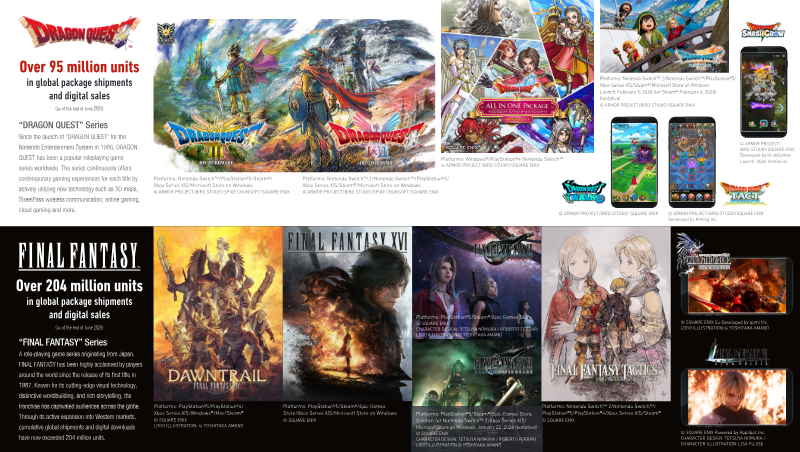
The Dragon Quest franchise continues to expand its global footprint, reaching over 95 million units in total shipments and digital sales as of June 2025. A central focus of the current release strategy is the reimagining of the foundational Erdrick Trilogy through HD-2D remakes. Dragon Quest I & II HD-2D Remake is scheduled for a February 5, 2026, launch on a wide array of platforms, including the Nintendo Switch 2, PlayStation 5, Xbox Series X|S, and PC via Steam and the Microsoft Store. This multi-platform approach reflects a broader commitment to utilizing contemporary technology to modernize classic role-playing experiences for a global audience.
Beyond the core Dragon Quest series, the broader portfolio demonstrates significant market penetration across several flagship intellectual properties. The Final Fantasy franchise has surpassed 204 million units globally as of mid-2025, supported by the ongoing expansion of Final Fantasy XIV: Dawntrail and the continued rollout of Final Fantasy VII Rebirth across various ecosystems. Additionally, the Kingdom Hearts series, a collaborative effort with Disney, has achieved over 38 million units in sales, with new entries currently in development for unspecified launch windows.
The strategic roadmap emphasizes cross-platform accessibility and the revitalization of legacy content. By targeting next-generation hardware like the Nintendo Switch 2 alongside established consoles and PC storefronts, there is a clear intent to maximize reach across diverse geographic markets. This strategy is complemented by a robust pipeline of mobile and niche titles, including Dragon Quest Tact and various entries in the Bravely Default and Octopath Traveler series, ensuring a steady cadence of content across the role-playing game segment through 2026.
- The Dragon Quest I & II HD-2D Remake is scheduled for release on February 5, 2026, across Nintendo Switch 2, PlayStation 5, Xbox Series X|S, and PC.
- The Dragon Quest franchise has reached 95 million units in total shipments and digital sales as of June 2025.
- The Final Fantasy franchise has surpassed 204 million units globally as of mid-2025, driven by Final Fantasy XIV: Dawntrail and Final Fantasy VII Rebirth.
- Square Enix is prioritizing a cross-platform strategy that targets next-generation hardware alongside established consoles and PC storefronts to maximize global market reach.
- The Kingdom Hearts series has achieved over 38 million units in sales, with new entries currently in development.
+3
Square EnixSept 2025

Report20 pages
Global Gaming Report Q3 2025
The third quarter of 2025 underscores the continued premium placed on hardware and platform players within the global gaming ecosystem, as investors assign a wide spectrum of valuation multiples that reflect divergent growth narratives and market positioning. Enterprise‑valued firms such as Dell and HP trade near a 1‑times EV/EBITDA ratio, indicating modest expectations for earnings expansion, while high‑growth entities like Nvidia and AppLovin command multiples exceeding 25‑times, with the latter reaching 42.8‑times, highlighting the market’s appetite for cutting‑edge processing power and mobile advertising integration. Across the board, most companies in the segment posted double‑digit year‑over‑year revenue increases, confirming robust demand for both traditional PC hardware and emerging cloud‑based gaming services.
Equity performance further illustrates the split between established hardware manufacturers and platform‑centric developers. Roblox delivered the strongest year‑to‑date appreciation at 136.9%, driven by expanding user engagement and monetization initiatives, while Unity recorded a 77‑percent gain, reflecting its pivotal role in cross‑platform development tools and the growing adoption of real‑time 3D content. These returns contrast sharply with the more muted trajectories of hardware‑only firms, suggesting that investors are rewarding firms that blend hardware capabilities with scalable software ecosystems.
Overall, the data portray a gaming market in which valuation is increasingly tied to the ability to integrate hardware performance with platform services, and where growth‑oriented companies enjoy markedly higher multiples and stock appreciation. The findings span a global landscape, covering major North American, European, and Asian players, and focus on the quarter ending September 2025, offering a snapshot of valuation dynamics and performance trends that are likely to shape strategic investment decisions throughout the remainder of the year.
- Investors are heavily favoring platform-centric companies over traditional hardware manufacturers, with high-growth firms like AppLovin and Nvidia commanding EV/EBITDA multiples exceeding 25x, compared to roughly 1x for legacy hardware firms like Dell and HP.
- Roblox led equity performance with a 136.9% year-to-date appreciation, driven by successful user engagement and monetization strategies.
- Unity recorded a 77% year-to-date gain, underscoring the market's high valuation of cross-platform development tools and real-time 3D content adoption.
- AppLovin reached a 42.8x EV/EBITDA multiple, reflecting strong market confidence in the integration of mobile advertising with gaming ecosystems.
- Most gaming companies reported double-digit year-over-year revenue growth in Q3 2025, confirming sustained demand across both PC hardware and cloud-based gaming services.
+1
Drake Star PartnersSept 2025

Report46 pages
Digital Market Index: Q2 2025
The global digital landscape reached a significant milestone in the second quarter of 2025, as in-app purchase revenue hit a record $40 billion. This period marked a historic structural shift in the mobile economy, with non-gaming applications accounting for 52% of total consumer spending, surpassing mobile games for the first time. While total downloads stabilized at 37 billion, the market displayed clear signs of maturation; gaming downloads contracted by 6.8% year-over-year, while AI-driven productivity tools and short-drama streaming platforms emerged as the primary engines of growth. The United States maintained its position as the premier revenue market at $15 billion, though emerging regions such as Brazil and various African nations are increasingly vital for download volume and monetization expansion.
Within the gaming sector, Strategy titles overtook RPGs as the highest-grossing category, achieving a 23% year-over-year increase. However, the most significant individual performance came from ChatGPT, which became the fastest application to reach one billion downloads and secured a position among the top five global revenue earners. This surge in AI utility was mirrored in the advertising sector, where U.S. digital ad spend rose 12% to $34 billion. Major technology firms including Microsoft, Google, and Adobe significantly increased their marketing budgets to promote AI integrations like Copilot, contributing to a landscape where social media maintains a 72.5% share of total ad spend.
Retail media has solidified its role as a critical advertising channel, with U.S. impressions rising 29% to 65 billion across various retailers. Despite this broad growth, Amazon remains the undisputed leader in the space, generating nearly 80 billion impressions and outperforming all other tracked retailers combined. These findings are supported by expanded tracking capabilities across key Asian markets and diverse digital channels, though the data specifically excludes certain year-over-year Amazon metrics due to recent tracking implementation. Overall, the quarter reflects a pivot toward high-utility AI applications and a diversifying advertising ecosystem dominated by social and retail platforms.
- In Q2 2025, non-gaming applications surpassed mobile games for the first time, accounting for 52% of the record $40 billion in total in-app purchase revenue.
- Global mobile gaming downloads contracted by 6.8% year-over-year, while Strategy titles replaced RPGs as the highest-grossing gaming category with a 23% increase.
- ChatGPT became the fastest application to reach one billion downloads and secured a top-five position in global revenue, signaling a major shift toward AI-driven utility.
- U.S. digital ad spend rose 12% to $34 billion, driven by increased marketing budgets from firms like Microsoft, Google, and Adobe to promote AI integrations.
- Retail media continues to expand, with U.S. impressions rising 29% to 65 billion, though Amazon remains the dominant leader with nearly 80 billion impressions.
+1
Sensor TowerAug 2025

Report18 pages
The State of PC Game Distribution
The study aims to map the contemporary PC game distribution ecosystem and evaluate whether Steam functions as a de‑facto monopoly, while outlining alternative channels, associated risks, and growth opportunities for developers and publishers. It positions Steam’s dominance against emerging storefronts, physical media, and gray‑market platforms, offering strategic guidance for navigating a fragmented market beyond 2025.
Steam’s market power is evident: 2024 revenue reached $10.8 billion and concurrent active users rose from 25.4 million in 2021 to 40.5 million by September 2025. Eighty‑eight percent of surveyed studios report that Steam delivers over 75 % of their revenue, with 37 % relying on it for more than 90 %. Consequently, 72 % of respondents view Steam as a monopoly and 53 % express concern over this reliance. Nonetheless, diversification is growing—48 % have launched titles on the Epic Games Store, a similar share on the Xbox PC store, while 10 % and 8 % have used GOG and itch.io respectively. Physical releases persist, with 32 % of developers still issuing boxed copies and 72 % of consumers indicating a continued appetite for them.
Alternative distribution via e‑stores (e.g., Humble, Fanatical) and marketplaces (e.g., G2A, Kinguin) is gaining traction: 38 % of developers sell through e‑stores and 30 % through marketplaces. Seventy‑five percent anticipate at least a 10 % revenue uplift from these channels, and 80 % expect them to become
- Steam maintains a dominant market position, generating $10.8 billion in 2024 revenue with concurrent users increasing from 25.4 million in 2021 to 40.5 million by September 2025.
- Developer reliance on Steam is extreme, with 88% of studios deriving over 75% of their revenue from the platform and 37% relying on it for more than 90%.
- Despite 72% of developers labeling Steam a monopoly, diversification is underway, with 48% of studios utilizing the Epic Games Store and the Xbox PC store for distribution.
- Alternative distribution channels are gaining significant traction, as 38% of developers now sell through e-stores like Humble or Fanatical, and 30% utilize marketplaces like G2A or Kinguin.
- Financial projections for alternative channels are optimistic, with 75% of developers anticipating at least a 10% revenue uplift and 80% expecting these platforms to become increasingly vital.
+2
RokkyJun 2025

Report16 pages
Mobile Game Feature Impact Spotlight
Sensor Tower introduces Game IQ Deep Tags, a taxonomy of 70 specialized markers designed to analyze the impact of specific mobile game features on market performance. These tags are categorized into gameplay, monetization, engagement, and social elements, providing developers with a framework to benchmark competitor roadmaps and identify high-value feature sets. The analysis covers the top 1,000 mobile games globally from Q2 2024 through Q1 2025, a segment representing 16 billion downloads and $67 billion in consumer spend.
The findings reveal that feature density does not always correlate with market dominance. In the casual puzzle genre, titans like Royal Match and Candy Crush Saga utilize fewer luxury features, such as voice acting or cinematic cutscenes, compared to competitors like Gardenscapes, suggesting that core gameplay often outweighs feature volume. Conversely, in the mid-core RPG and strategy sectors, comprehensive monetization and engagement systems are standard. For instance, Age of Empires Mobile demonstrates high revenue per download by utilizing nearly all available monetization tags, while top RPGs leverage IP collaborations and recurring task systems to maximize player retention and session length.
The research identifies significant growth opportunities in the hybridcasual segment, where features like in-app purchase (IAP) bundles remain underutilized despite correlating with a $1.77 increase in lifetime revenue per download. Additionally, portfolio analysis of top publishers like Tencent, Scopely, and King shows a universal prioritization of login systems to track player data, while specific mechanics like "monetized retries" remain niche to casual puzzle specialists. Ultimately, the data suggests that strategic feature implementation, rather than exhaustive adoption, is the primary driver of commercial success across different mobile gaming verticals.
- Strategic feature selection, rather than exhaustive feature adoption, is the primary driver of commercial success across the top 1,000 mobile games globally.
- In the hybridcasual segment, implementing in-app purchase (IAP) bundles correlates with a $1.77 increase in lifetime revenue per download.
- Casual puzzle leaders like Royal Match and Candy Crush Saga maintain market dominance with lower feature density, proving that core gameplay often outweighs the addition of luxury elements like cinematic cutscenes.
- Mid-core strategy titles, such as Age of Empires Mobile, maximize revenue per download by utilizing a comprehensive suite of monetization tags.
- Top publishers including Tencent, Scopely, and King universally prioritize login systems to track player data, while mechanics like 'monetized retries' remain niche to the casual puzzle genre.
+1
Sensor TowerJun 2025
Report1 pages
Video Game Business Snapshot: Q2 2025
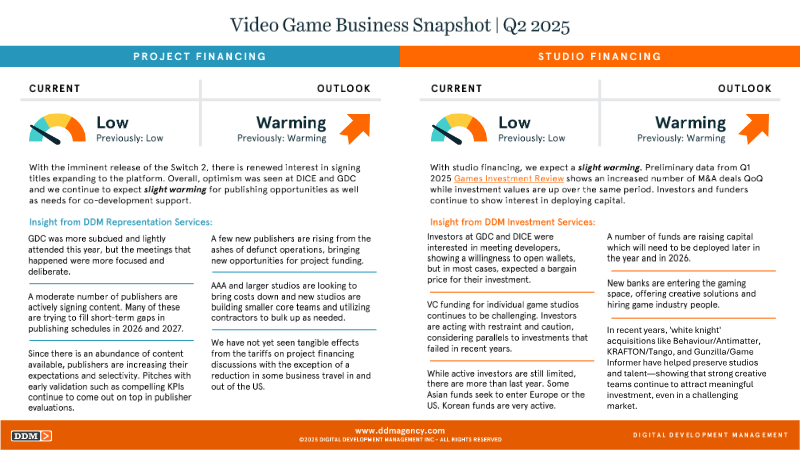
The second quarter of 2025 highlights a strategic shift in the video game industry’s mergers and acquisitions landscape, characterized by a rise in rescue-style investments often referred to as white knight acquisitions. These transactions involve established global entities stepping in to acquire studios or media outlets that might otherwise face closure or significant downsizing. Notable examples include KRAFTON’s acquisition of Tango Gameworks, Behaviour Interactive’s absorption of Antimatter, and Gunzilla Games’ involvement with Game Informer. These moves suggest that despite broader economic volatility and a contraction in traditional venture capital, high-quality creative talent and established intellectual properties remain highly valuable assets for diversified gaming conglomerates.
The current market environment reflects a transition where strategic preservation is prioritized over speculative growth. Large-scale publishers are increasingly focused on securing proven development teams to bolster their long-term pipelines, viewing these acquisitions as opportunities to integrate specialized expertise at a time when independent sustainability is difficult. This trend underscores a broader industry sentiment that while the capital market remains challenging, the underlying value of experienced human capital continues to drive significant deal flow. These developments indicate that the industry is moving toward a more consolidated but stable structure, where the survival of key creative hubs is facilitated by the strategic interests of larger market players.
- Q2 2025 is defined by a surge in 'white knight' acquisitions, where major conglomerates are purchasing studios facing closure or downsizing to preserve creative talent and intellectual property.
- Notable rescue acquisitions this quarter include KRAFTON’s purchase of Tango Gameworks, Behaviour Interactive’s absorption of Antimatter, and Gunzilla Games’ involvement with Game Informer.
- The industry is shifting away from speculative growth toward strategic preservation, as large publishers prioritize securing proven development teams to stabilize long-term production pipelines.
- Despite a contraction in traditional venture capital and broader economic volatility, experienced human capital remains a high-value asset driving deal flow.
- The current market environment is trending toward a more consolidated industry structure, where the survival of independent creative hubs is increasingly dependent on the strategic interests of larger market players.
+1
DDMJun 2025
Report9 pages
Q2 2025 Gaming Ad Snapshot
The snapshot presents a mid‑year overview of mobile gaming advertising activity, emphasizing the scale of creative assets, audience composition, and platform performance in the second quarter of 2025. Leveraging MarketIQ’s ad‑intelligence engine, which indexes more than three billion ads, the analysis groups campaigns by image, video, and playable formats to surface benchmark performance and creative inspiration for marketers. A core finding is the gender split of the active audience, with males accounting for roughly 61 % and females 38.5 %, while an insignificant 0.8 % remain unclassified. Google Ads dominates the network landscape, followed by Facebook Ads, reflecting the primary channels through which gaming promotions are delivered.
Creative trends highlighted include senior‑focused Mahjong titles, free‑to‑play shooters, and swipe‑based games, illustrating a diversification of themes and monetisation cues such as “No Wifi Needed” and “Get Free Robux.” Campaign metrics reveal a typical lifecycle of 13 million impressions expanding to 47 million, underscoring the rapid scaling potential of high‑performing assets. The data set draws from approximately 250 000 active campaign ads, providing a robust sample for benchmarking.
Overall, the snapshot underscores the importance of data‑driven creative optimisation in mobile gaming, recommending that advertisers exploit MarketIQ’s extensive repository to identify top‑performing formats, refine copy, and align with the prevailing gender distribution and platform preferences observed in Q2 2025.
- Google Ads and Facebook Ads remain the dominant platforms for mobile gaming promotion in Q2 2025.
- The active mobile gaming audience is composed of 61% males, 38.5% females, and 0.8% unclassified users.
- High-performing mobile gaming ad assets demonstrate rapid scaling, with impressions growing from an average of 13 million to 47 million over their lifecycle.
- The Q2 2025 analysis is based on a robust sample size of approximately 250,000 active campaign ads indexed from a total repository of over three billion ads.
- Current creative trends in mobile gaming emphasize diverse themes including senior-focused Mahjong titles, free-to-play shooters, and swipe-based mechanics.
+1
MarketIQJun 2025

Report28 pages
The Xsolla Report: State of Play Q2 2025
Mobile gaming has become the dominant engine of the global video‑game market, now accounting for more than half of total industry revenue and projected to exceed $126 billion in 2025, with an overall forecast of $150 billion for the segment. The surge is driven by unprecedented user engagement—4.2 trillion hours of app usage in 2024—and a rapid shift toward direct‑to‑consumer (D2C) commerce following the April 2025 court order in Epic Games v. Apple, which obliges iOS platforms to permit external web‑shops and allows developers to retain up to 95 % of transaction value. Early adopters report revenue recoveries measured in millions and a 60 % increase in user engagement for high‑volume titles.
Regulatory reforms across the EU, United States, Japan, South Korea and China are dismantling traditional app‑store monopolies, mandating alternative storefronts, transparent odds disclosure and the elimination of hidden fees. Despite tighter oversight, the mobile ecosystem remains robust, with the United States generating roughly $52 billion in in‑app‑purchase sales, while emerging markets in Latin America, Southeast Asia and Saudi Arabia expand the geographic footprint. Hybrid monetisation—combining in‑app purchases, advertising and subscriptions—is employed by 72 % of developers and now represents about three‑quarters of mobile revenue; live‑ops‑driven hybrid‑casual titles are delivering a 30 % year‑over
- Mobile gaming is the industry's primary revenue driver, projected to reach $126 billion in 2025 with a total segment forecast of $150 billion.
- Following the April 2025 Epic Games v. Apple court order, developers can now utilize direct-to-consumer web-shops to retain up to 95% of transaction value, with early adopters seeing millions in revenue recovery.
- Hybrid monetization models—combining in-app purchases, advertising, and subscriptions—are used by 72% of developers and account for approximately 75% of total mobile revenue.
- Global mobile user engagement reached 4.2 trillion hours in 2024, while the United States market alone generated $52 billion in in-app purchase sales.
- Regulatory reforms in major markets including the EU, US, Japan, South Korea, and China are mandating alternative storefronts and increased transparency to dismantle traditional app-store monopolies.
+2
XsollaJun 2025