Tokimeki Memorial
Game
2 documents in the library are about Tokimeki Memorial, from writers such as DiGRA. Each has a summary and key insights with the page they come from.
Connections
Each row is a game or company named alongside Tokimeki Memorial, each column a document, oldest first. A mark means that document names it. Select a row to see those documents.
Documents about Tokimeki Memorial
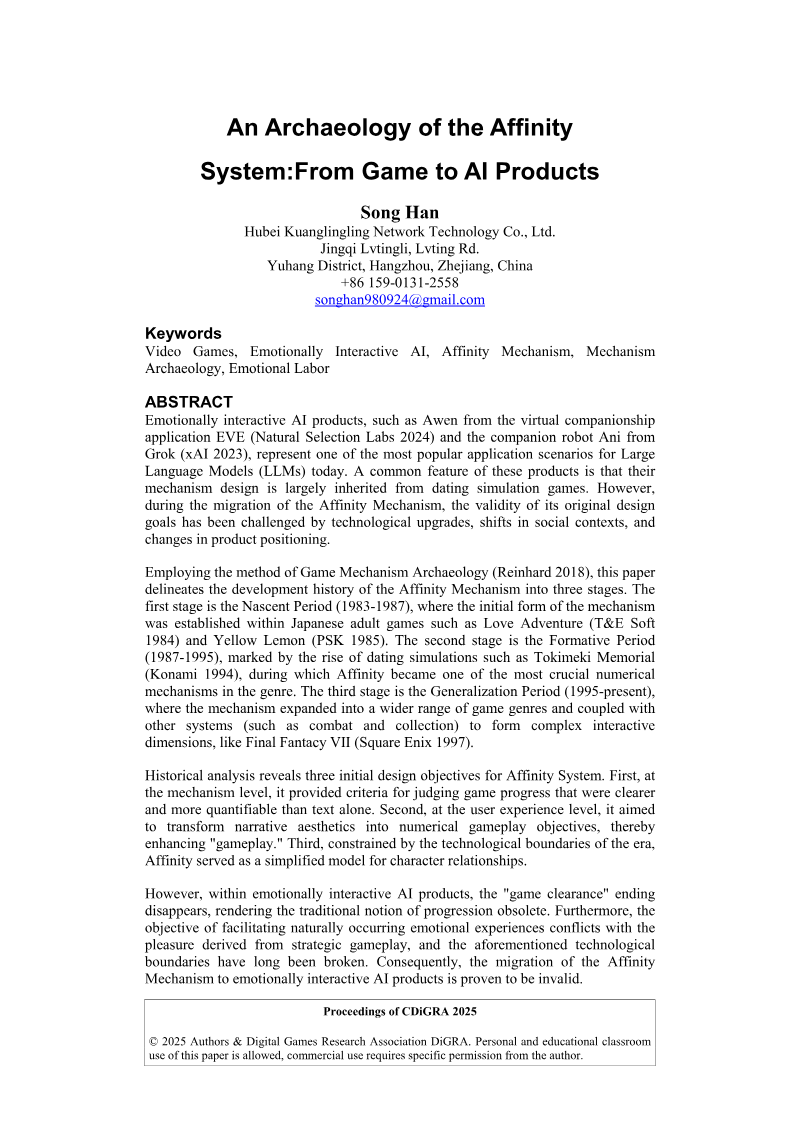
An Archaeology of the Affinity System: From Game to AI Products
The document analyzes the historical development and migration of the Affinity Mechanism from video games to emotionally interactive AI products, concluding that its application in AI is largely invalid due to fundamental shifts in design goals and technological capabilities.
- The paper argues that the Affinity Mechanism, a numerical relationship system from Japanese dating sims, should not be migrated to emotionally interactive AI products such as EVE and Grok's Ani, concluding that such migration is not valid.
- The author's analysis uses Game Mechanism Archaeology to divide Affinity's history into three phases: a Nascent Period (1983–1987) in adult games like Love Adventure and Yellow Lemon, a Formative Period (1987–1995) centered on Tokimeki Memorial-style dating sims, and a Generalization Period (1995–present) where it combined with combat and collection systems as in Final Fantasy VII.
- Affinity's three original design goals were providing quantifiable progress criteria, converting narrative aesthetics into concrete gameplay objectives, and simplifying character relationships within the technological limits of the era.
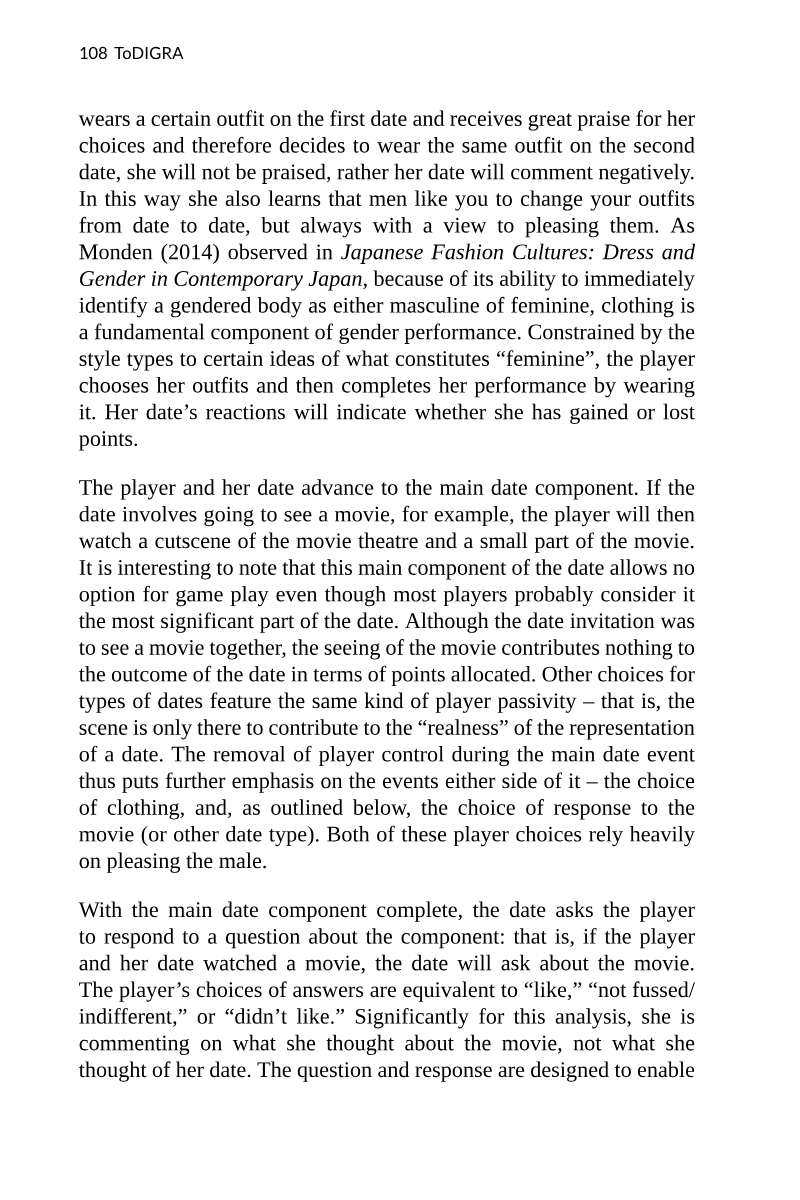
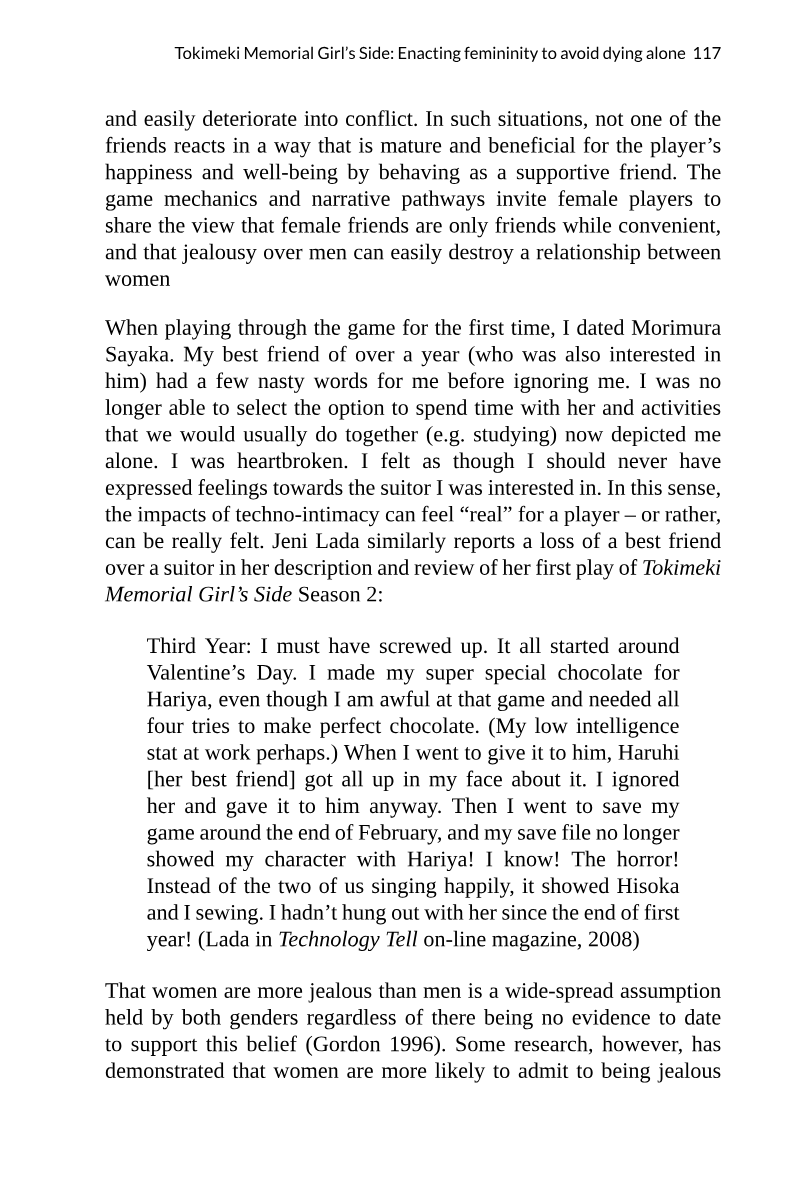
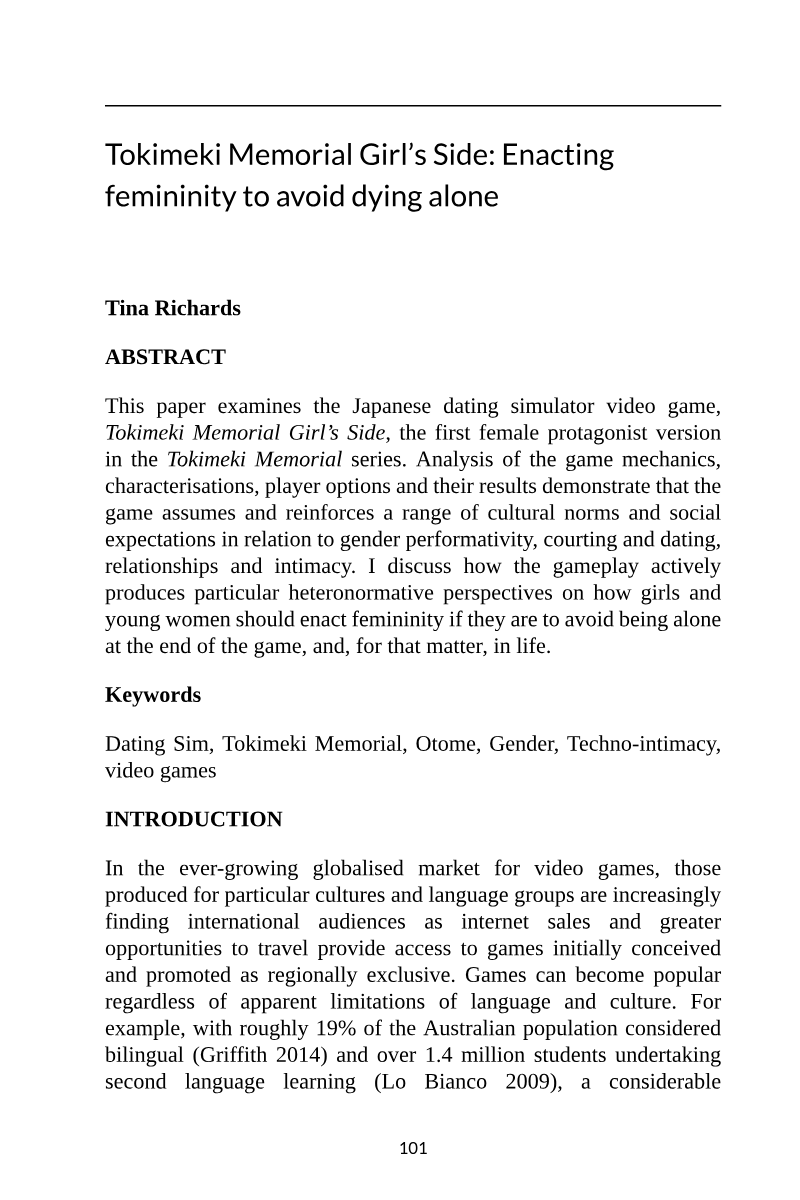
Tokimeki Memorial Girl's Side: Enacting Femininity to Avoid Dying Alone
Tokimeki Memorial Girl’s Side functions as a digital training ground that reinforces heteronormative social expectations and traditional Japanese gender roles.
Companies behind it

As the documents state it.