Titanfall 2
6 documents in the library are about Titanfall 2, from writers such as Game Developers Conference, Deconstructor of Fun and The Game Business, the newest from 2025. Each has a summary and key insights with the page they come from.

Titanfall 2 is a first-person shooter with both a single-player campaign and competitive multiplayer. The campaign follows a Militia rifleman who bonds with a Titan, a large bipedal mech, after his pilot is killed. Gameplay combines fast-paced infantry movement, including wall-running and double-jumping, with sections where the player controls the Titan in combat. Multiplayer features team-based modes with players fighting as both Pilots and Titans on the same battlefield.
- Released
- Oct 28, 2016
- Developer
- Respawn Entertainment
- Publisher
- Electronic Arts
- Genres
- Shooter, Adventure
- Platforms
- PlayStation 4, PC (Microsoft Windows), Xbox One
- Links
- Official site, Wikipedia
Game data from IGDB.com
Documents about Titanfall 2
Battlefield 6 Reclaims No.1: EA Dominates the European Charts
Electronic Arts (EA) currently dominates the European video game market, with Battlefield 6 reclaiming the number one position in both unit sales and revenue for the week ending October 26, 2025.
- Electronic Arts dominates the European market for the week ending October 26, 2025, holding the top two spots in unit sales with Battlefield 6 and EA Sports FC 26.
- Battlefield 6 reclaimed the No. 1 position in European unit sales despite experiencing a 55% week-on-week decline in sales volume.
- Pokémon Legends: Z-A dropped to No. 3 in the charts following an 84% week-on-week decline in physical unit sales.
Efficient Texture Streaming in Titanfall 2
Optimizing texture streaming in Titanfall 2 centers on a sophisticated prioritization system that moves beyond simple distance-based metrics to ensure high-fidelity visuals within strict hardware constraints.
- Titanfall 2 optimizes texture streaming by using a cost-benefit metric that divides pixel coverage by texel count, allowing for dynamic mip level management beyond simple distance-based metrics.
- The engine utilizes a dynamic memory buffer that achieves a 9:1 compression ratio to manage high-fidelity assets within strict console hardware memory constraints.
- Runtime performance is maintained through asynchronous I/O and a dedicated texture creation thread, which effectively minimizes driver-related hitches.
Designing Unforgettable Titanfall Single Player Levels with Action Blocks
The development of the single-player campaign for Titanfall 2 relied on the implementation of action blocks, which are rapid, low-fidelity gameplay prototypes designed to test specific mechanics in isolation.
- Respawn Entertainment utilized a rapid-prototyping technique called 'action blocks' to develop the single-player campaign for Titanfall 2, resulting in approximately 45 distinct gameplay prototypes over a six-week period.
- Action blocks are defined as short, focused design experiments—typically taking no more than one to two weeks to complete—that prioritize testing specific gameplay mechanics like platforming, combat, or puzzles over high-fidelity art or animation.
- The action block process allowed designers to solve complex technical challenges, such as interacting with moving geometry or time-travel mechanics, before committing to full-scale production, thereby preventing costly rework of assets and rigging.
The Evolution of Rodeo in Titanfall 2
The rodeo mechanic in the Titanfall series serves as a critical design bridge between agile pilot movement and armored Titan combat, aiming to capture a cinematic David versus Goliath dynamic.
- The 'rodeo' mechanic in Titanfall 2 was fundamentally redesigned from a long-duration damage-over-time process into a short-duration event centered on stealing and delivering batteries to create a dynamic 'cat-and-mouse' gameplay loop.
- In Titanfall 1, the rodeo sequence lasted 15 to 20 seconds to provide a cinematic experience, but this was shortened in the sequel to prevent the mechanic from feeling like a disconnected minigame.
- The introduction of the 'battery' system in Titanfall 2 allowed for increased team coordination, as pilots could insert stolen batteries into friendly Titans to restore health or shields.
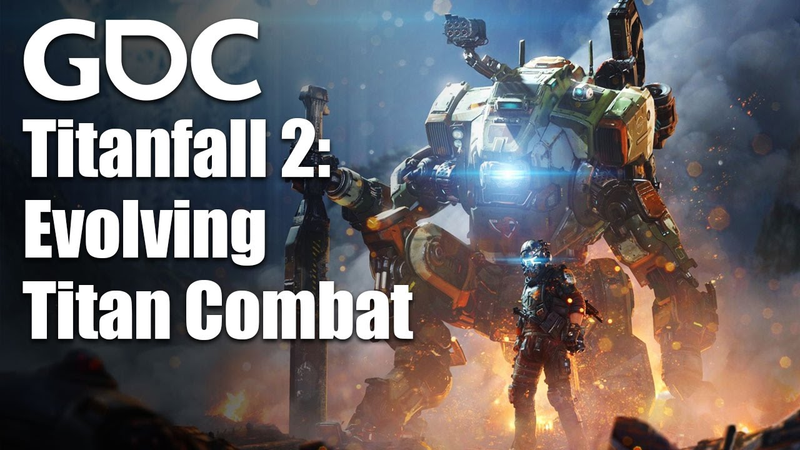
Solving Titan-Sized Problems: Evolving Titan Combat in Titanfall 2
The evolution of Titan combat in Titanfall 2 centers on transforming high time-to-kill (TTK) gameplay from a repetitive, bullet-sponge experience into a dynamic, skill-based system.
- Titanfall 2 transitioned from generic, customizable loadouts to distinct, role-based Titan classes inspired by fighting games and MOBAs to foster complex ability synergies.
- The combat model shifted to a high time-to-kill (TTK) system by replacing hit-scan weapons with low-frequency, high-impact projectiles to reward mechanical precision and positioning.
- Developers mitigated the risk of stagnant, unkillable team compositions by removing automatic health regeneration and enforcing unique, character-specific loadouts.
Titanfall 2: The Titan That Almost Was
The gaming industry underwent a period of profound transformation between 2022 and 2026, characterized by shifting monetization models, the integration of generative AI, and significant volatility in user acquisition.
- Mobile gaming success is increasingly driven by older, established titles, requiring developers to focus on long-term retention and quieter, sustained growth strategies rather than explosive launches.
- Performance marketing strategies frequently collapse at scale, often due to a failure to adapt creative assets to a privacy-centric environment where traditional targeting is less effective.
- Studios founded by alumni from major companies like Activision, Blizzard, and King possess a distinct competitive advantage in launching and scaling new gaming startups.