The Last Guardian
Game
3 documents in the library are about The Last Guardian, from writers such as DiGRA and Game File. Each has a summary and key insights with the page they come from.
Connections
Each row is a game or company named alongside The Last Guardian, each column a document, oldest first. A mark means that document names it. Select a row to see those documents.
Documents about The Last Guardian
Fumito Ueda: An Interview on Design and Development
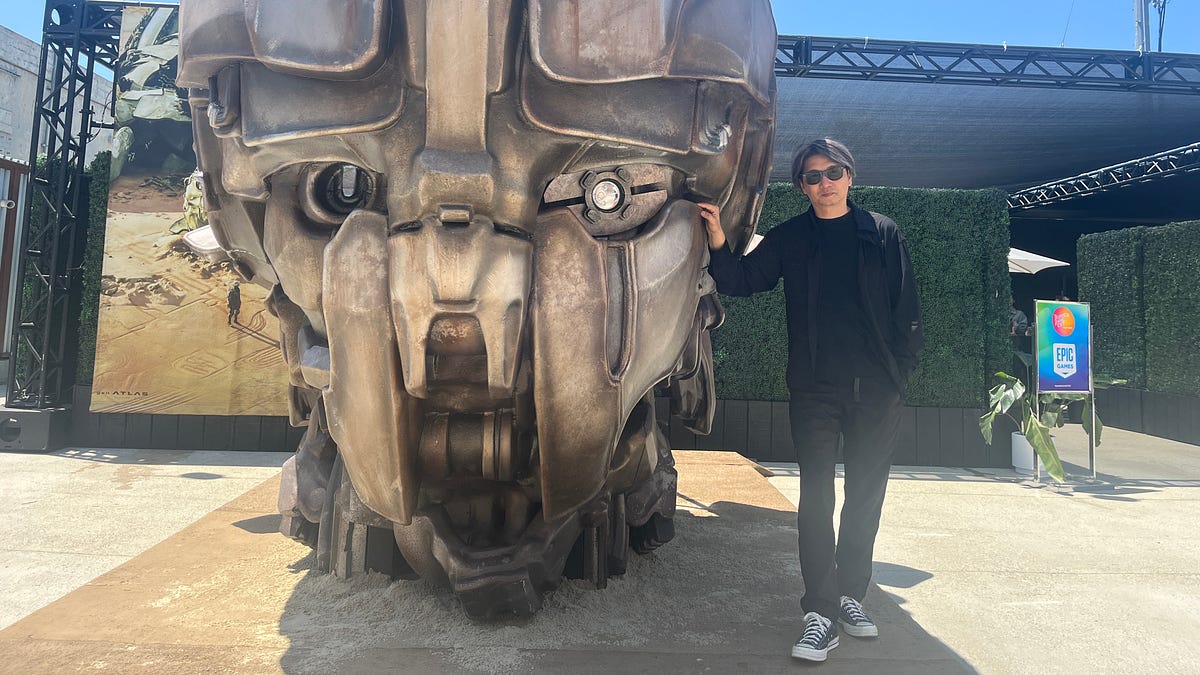
The interview reveals that Fumito Ueda, renowned for Ico, Shadow of the Colossus and The Last Guardian, is promoting his latest title, Gen Atlas, at Summer Game Fest in Los Angeles.
- Fumito Ueda's new game, "Gen Atlas," published by Epic Games, features a giant robot head that can fly and connect to a larger robot body, and, for the first time in an Ueda-directed game, includes shooting mechanics, though it is not primarily a shooting game.
- Ueda designed the robot head for "Gen Atlas" early in the game's conception, aiming for a neutral aesthetic that is neither heroic nor dilapidated, with hidden "gimmicks" like ears that flip out for flight.
- Despite the inclusion of guns, Ueda emphasizes that "Gen Atlas" maintains his signature design philosophy of realistic movement and pacing, where characters and robots move with believable limitations rather than superhuman speed, to create an immersive experience.
Animal Ethics in Digital Games
This extended abstract examines how animal ethics are represented in digital games, arguing that the depiction of animals is shaped by anthropocentric cultural hegemony in which humans alone produce and control the cultural artefacts that define non-human life.
Bonding with Horses and Other Animals in Breath of the Wild
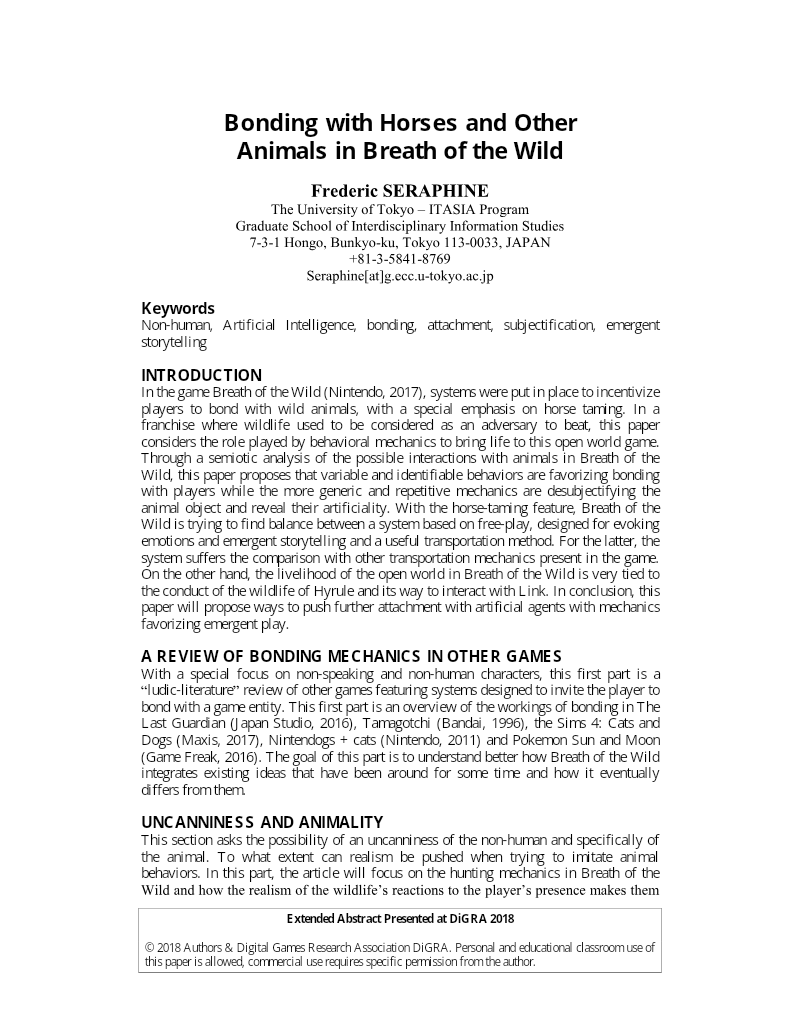
This extended abstract, presented at DiGRA 2018 by Frederic Seraphine of the University of Tokyo, examines how the animal and horse systems in Breath of the Wild (Nintendo, 2017) foster player attachment to non-human artificial agents.
- Imperfect, variable animal behavior, such as a horse's delayed readiness for riding and unpredictable control responsiveness, gives animals a sense of personality, while fully trained, predictable behavior risks making them feel impersonal.
- Generic and repetitive animal mechanics strip creatures of subjectivity and expose the game's artificiality, undermining player attachment to non-human agents.
- Naming and accessory customization function as appropriation mechanics that let players project personality onto animals and support emergent, player-authored narrative.