Teardown
Game
3 documents in the library are about Teardown, from writers such as DiGRA, Embracer Group and Game Maker's Toolkit. Each has a summary and key insights with the page they come from.
Connections
Each row is a game or company named alongside Teardown, each column a document, oldest first. A mark means that document names it. Select a row to see those documents.
Documents about Teardown
Nostalgic Development Practices: Fantasy Consoles and DIY Game Engines
This paper examines a growing movement among game developers who reject readymade engines such as Unity and Unreal in favor of custom-built engines or "fantasy consoles" that impose deliberate technical constraints.
- The paper examines a movement of game developers who reject readymade engines like Unity and Unreal in favor of custom-built engines or 'fantasy consoles' with deliberate technical constraints.
- Billy Basso's homebrew engine for Animal Well (2024) is the central case study, with critics and the developer himself framing it as key to the game's success.
- Developers of Factorio, Teardown, and Sokoban are cited as using bespoke tooling to signal technical skill, intentional design, and artistic uniqueness.
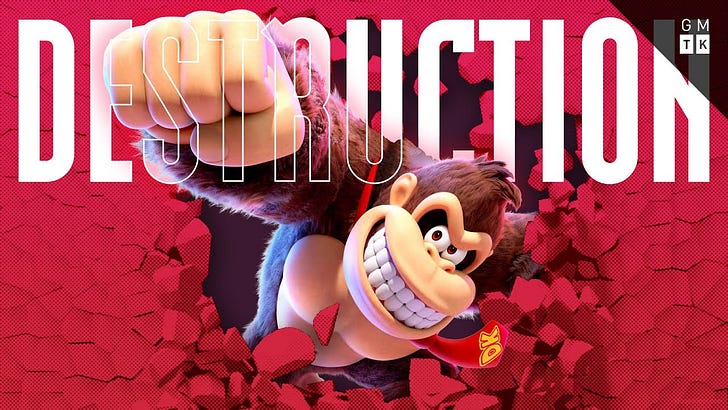
How Games Do Destruction
Real-time, gameplay-driven destruction is difficult because it must handle unpredictable physics, particles, and debris without wrecking frame rate or memory budgets.
- Modern game design is shifting from pre-canned animations to real-time, procedural destruction to enhance player agency, allowing for emergent gameplay like creating new paths or altering tactical lines of sight.
- Developers balance performance constraints by using asset swapping, as seen in Control and Battlefield: Bad Company 2, or real-time mesh slicing, utilized in Astro Bot and Rainbow Six: Siege.
- High-fidelity, free-form destruction is achieved through voxel-based systems, such as those in Teardown, which treat environments as clusters of independently removable blocks.
Embracer Group Annual General Meeting 2025: Presentation
The Embracer Group 2025 Annual General Meeting presentation outlines a comprehensive corporate restructuring strategy aimed at transitioning the organization into a more resilient, IP-focused entity.
- Embracer Group achieved a net cash position of SEK 5.4 billion by the end of the 2024/25 fiscal year, driven by the divestment of major assets including Easybrain, Saber, and Gearbox, and the spin-off of Asmodee.
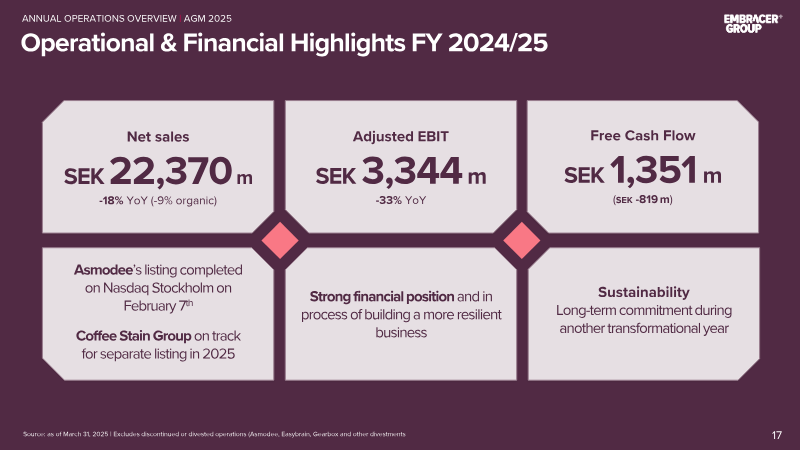
- Financial performance for the 2024/25 fiscal year saw net sales decline 18% year-over-year to SEK 22,370 million, with adjusted EBIT falling 33% to SEK 3,344 million.
- The company significantly improved free cash flow by reducing annual capital expenditure from SEK 8 billion to SEK 3 billion and streamlining its development pipeline to 116 projects.
Companies behind it

As the documents state it.