Super Mario Maker 2
Game
Documents about Super Mario Maker 2
Whitepaper8 pages
From Player to Level Designer: Exploring Design Thinking Through Mario Maker 2
This study by Jennifer Jenson, based at the University of British Columbia, examines how playing and designing digital games can support design thinking among school-aged students in a small, rural community on Canada's west coast.
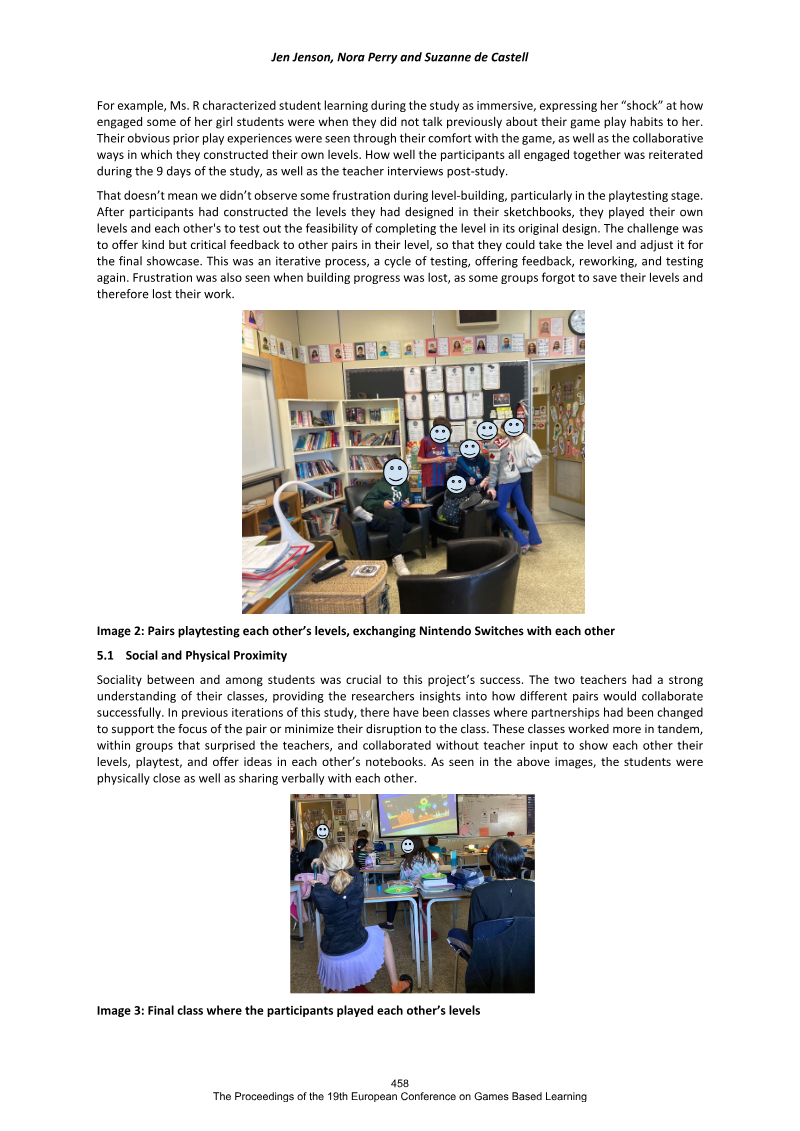
- Over nine days in April 2025, 53 students in three rural west-coast Canadian elementary classes (grades 5–7) played WarioWare: Get It Together!, sketched game designs, and built levels in Super Mario Maker 2; of 56 students who did level design, 34 levels were completed, 22 were playable, and 5 were judged exceptionally complex.
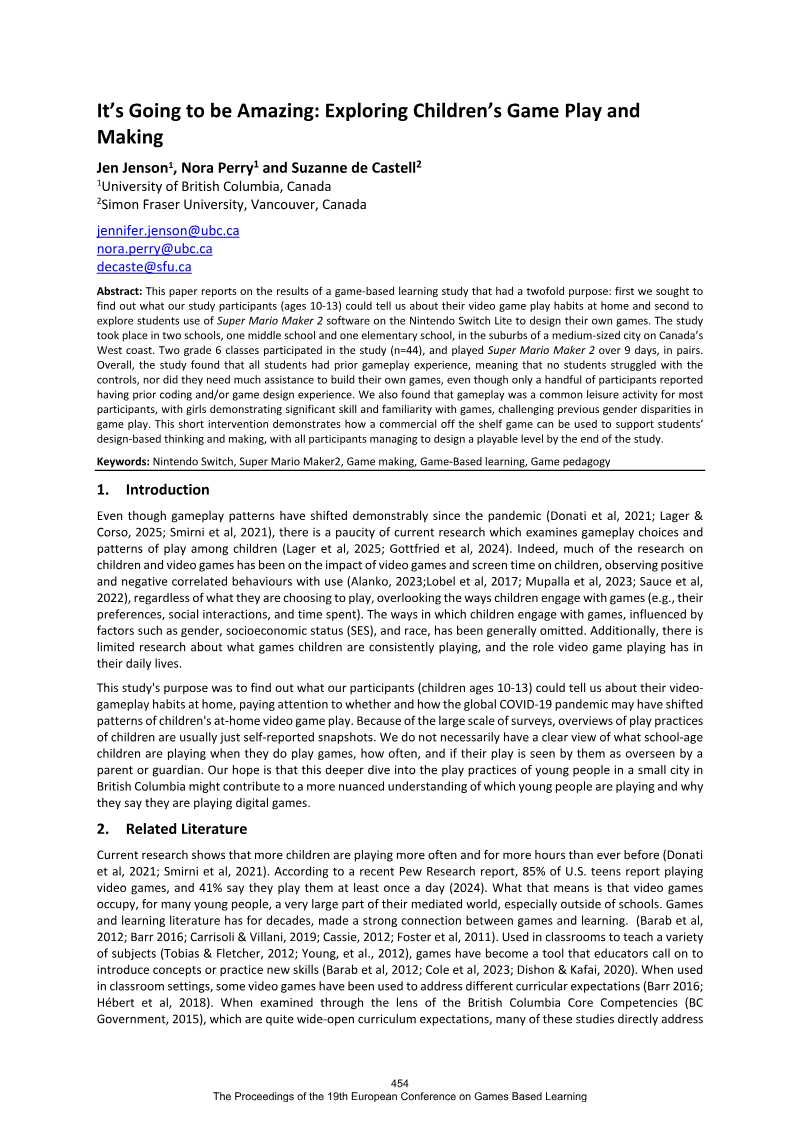
- Play-centered, low-barrier game design fostered high engagement, laughter, peer cooperation, and iterative practices like testing and revision, with teachers noting that students who normally struggled to focus were more on task and participatory.
- Game-making shifted classroom social dynamics: typically marginalized students, such as an avid Nintendo player and a usually quiet reader, became sources of expertise and moved to the center of classroom activity.
European Conference on Games Based Learning (ECGBL)Sep 2026
Whitepaper8 pages
It's Going to be Amazing: Exploring Children's Game Play and Making
This study examines how children aged 10 to 13 engage with video games both at home and in the classroom, pairing an investigation of their gaming habits with a hands-on game-making project.
- Every one of the 44 grade 6 participants (ages 10–13, two classes in a small West Coast Canadian city) had prior gameplay experience on a Nintendo Switch and reported regular home play, averaging about five days a week for roughly two hours per session.
- Over nine one-hour sessions using Super Mario Maker 2, students with little formal coding training designed playable levels through iterative sketching, testing, and revision, and many developed an understanding of player movement and game logic on their own.
- Girls were as engaged and skilled as boys in the game-making project, a finding the authors contrast with earlier research documenting gender gaps in play.
European Conference on Games Based Learning (ECGBL)Sep 2025
Whitepaper5 pages
Super Memory Makers: Livestreaming and/as Videogame Play Archives
This paper examines livestreamed and player-produced gameplay of Super Mario Maker as a source of "incidental archives" of videogame play, using the game's rise and eventual decline as its case study.
- The paper argues that the vast volume of high-performance content in Super Mario Maker, such as speedruns and virtuosic feats, risks obscuring the more exploratory, autotelic forms of play the game encourages, producing a distorted historical record of how the game was actually played.
- Super Mario Maker launched on the Wii U in September 2015, with Nintendo reporting 2.2 million player-created courses within the first month and 7.2 million within eight months.
- Nintendo discontinued the upload features of the original Super Mario Maker in March 2021, while existing courses remained accessible at the time of writing, raising questions about what happens to player-produced content once a service ends.
DiGRAJun 2023
Companies behind it

As the documents state it.