
Left 4 Dead 2
GameBy Turtle Rock Studios · Released Nov 17, 2009
Left 4 Dead 2 is a cooperative first-person shooter video game, the sequel to Valve Corporation's Left 4 Dead. The Game builds upon cooperatively focused gameplay and Valve's proprietary Source engine, the same game engine used in the original Left 4 Dead.
Connections
Each row is a game or company named alongside Left 4 Dead 2, each column a document, oldest first. A mark means that document names it. Select a row to see those documents.
About the game
- Released
- Nov 17, 2009
- Developers
- Turtle Rock Studios, Valve
- Publisher
- Electronic Arts
- Genres
- Shooter
- Platforms
- Linux, PC (Microsoft Windows), Mac, Xbox 360
- Links
- Official site, Wikipedia
Game data from IGDB.com
Documents about Left 4 Dead 2


State of Gaming 2026
The 2026 State of Gaming analysis demonstrates a shifting landscape in which mobile gaming remains the largest driver of downloads—approximately 50 billion in 2025—but its growth rate is slowing.
- PC and console platforms are seeing record revenue growth, highlighted by a 32% increase in Steam’s premium segment and the strong market performance of Battlefield 6.
- Mobile gaming growth is slowing despite reaching 50 billion downloads in 2025, with hybrid-casual titles now serving as the primary drivers of incremental revenue.
- Shooter games on PC and console have reached a download plateau, indicating that new releases are cannibalizing existing player bases rather than expanding the total market.
Helldivers 2 Sales and Co-op Market Analysis
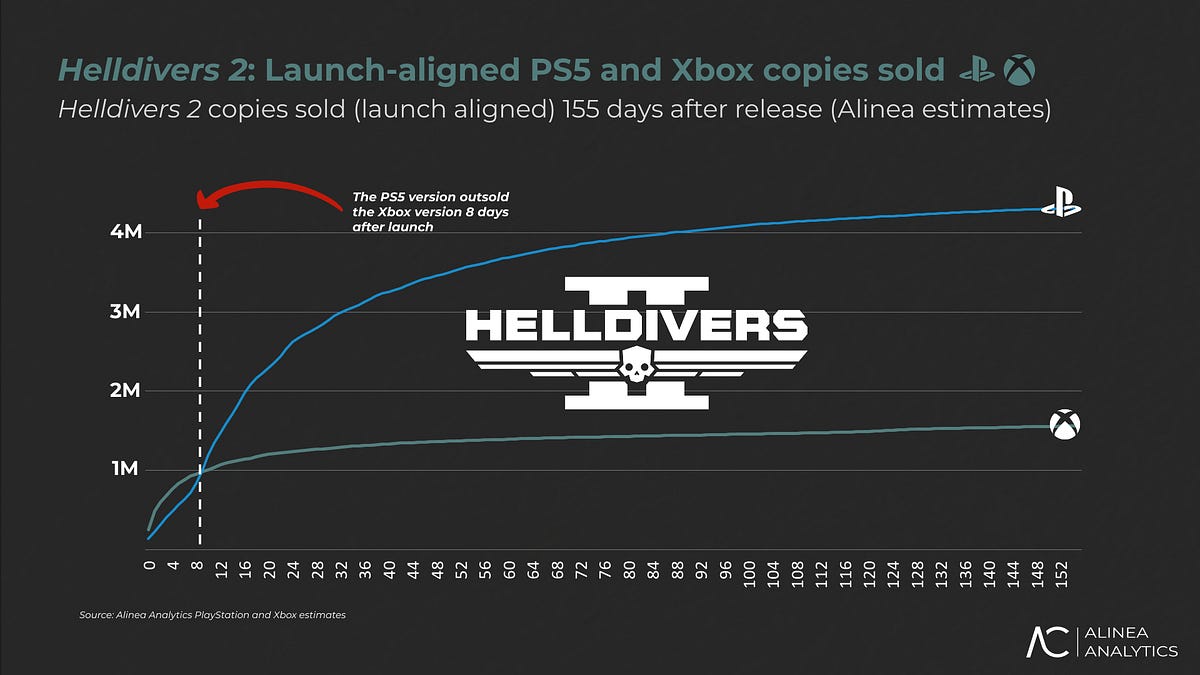
Helldivers 2 has achieved significant commercial success, reaching 20 million copies sold across Steam, PlayStation 5, and Xbox as of January 2026. This performance has generated over $700 million in gross revenue.
- Helldivers 2 has surpassed 20 million copies sold across all platforms, generating over $700 million in gross revenue.
- Steam is the primary driver of the game's success with 13.1 million copies sold, significantly outperforming the 5.6 million units sold on PS5.
- The August 2025 Xbox launch contributed 1.6 million units to the total, helping the title reach its 20 million milestone.
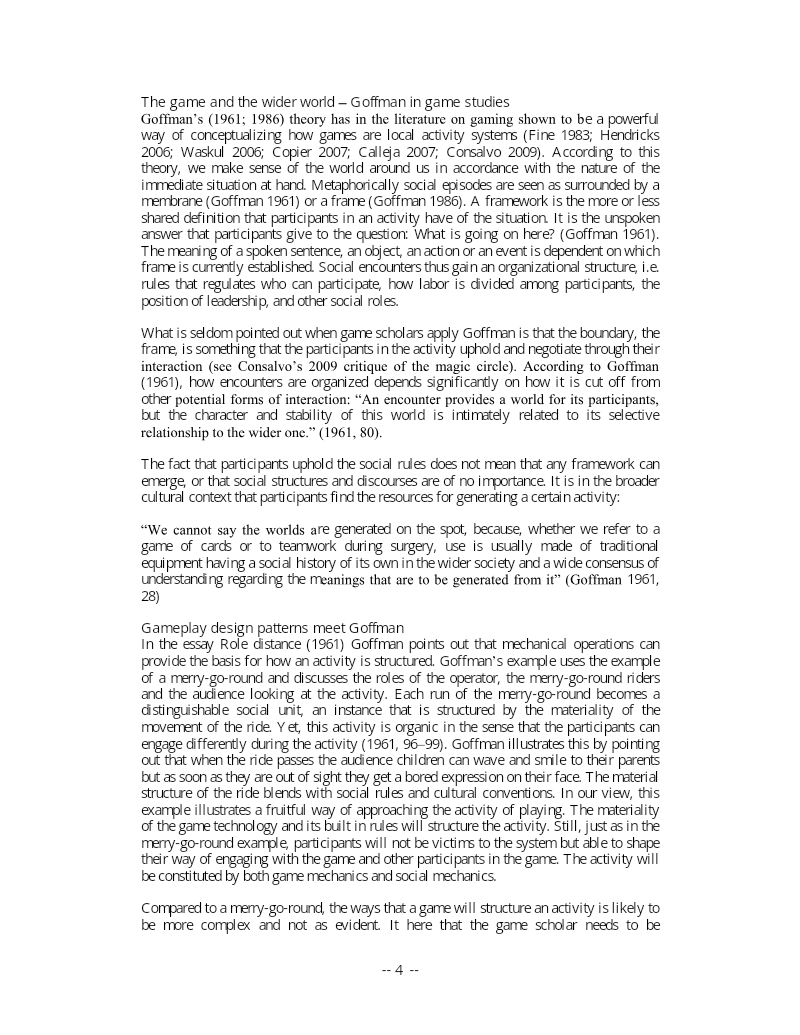
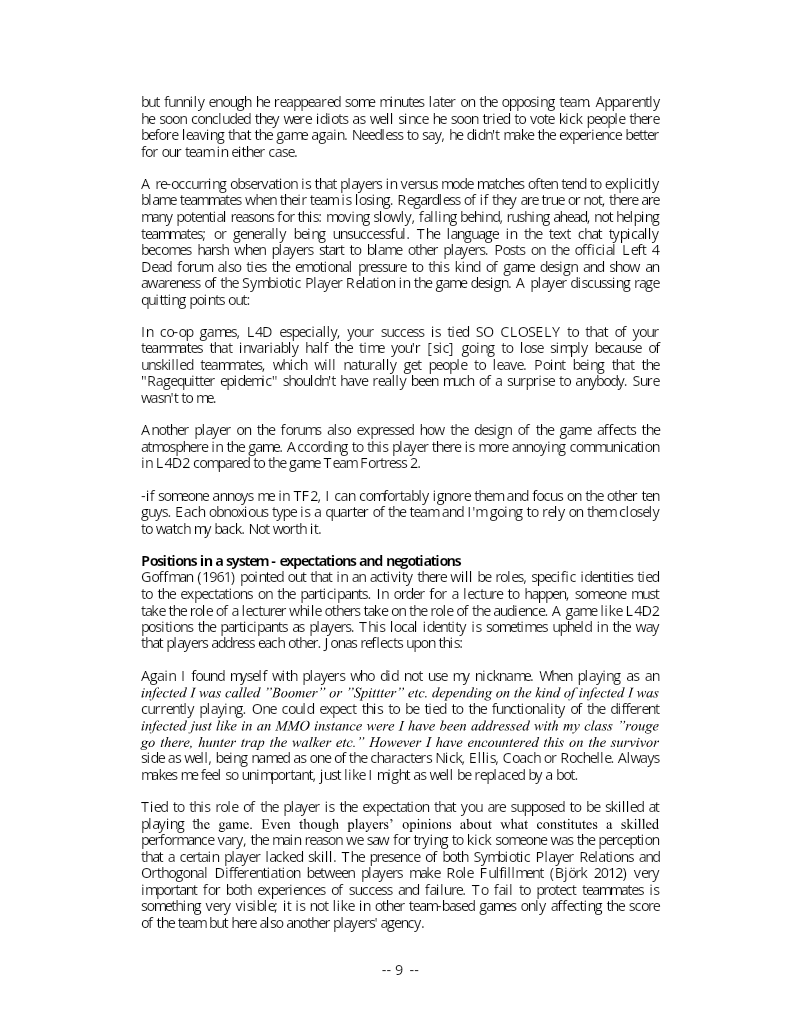
Should I Stay or Should I Go: Boundary Maintaining Mechanisms in Left 4 Dead 2
Linderoth, Björk, and Olsson's study examines how players of Left 4 Dead 2 manage the boundary between their in-game identities, defined by gaming skill, and their social identities outside the game.
- The study is autoethnographic, based on roughly 200 hours of observed public, anonymous, short-session pick-up matches in Left 4 Dead 2, with the researchers participating as observers.
- Players continually negotiate the game's frame through informal soft rules, such as waiting for teams to fill and improvised tactics like "go before they all drop," to manage the risk of collapse from dropouts and bot substitution.
- Design patterns Symbiotic Player Relations and Helplessness generate emotional pressure that drives rage-quitting and blame, while players use face-saving excuses such as citing "lag" or calling others "noob" to avoid the loser role, consistent with Goffman's frame analysis.
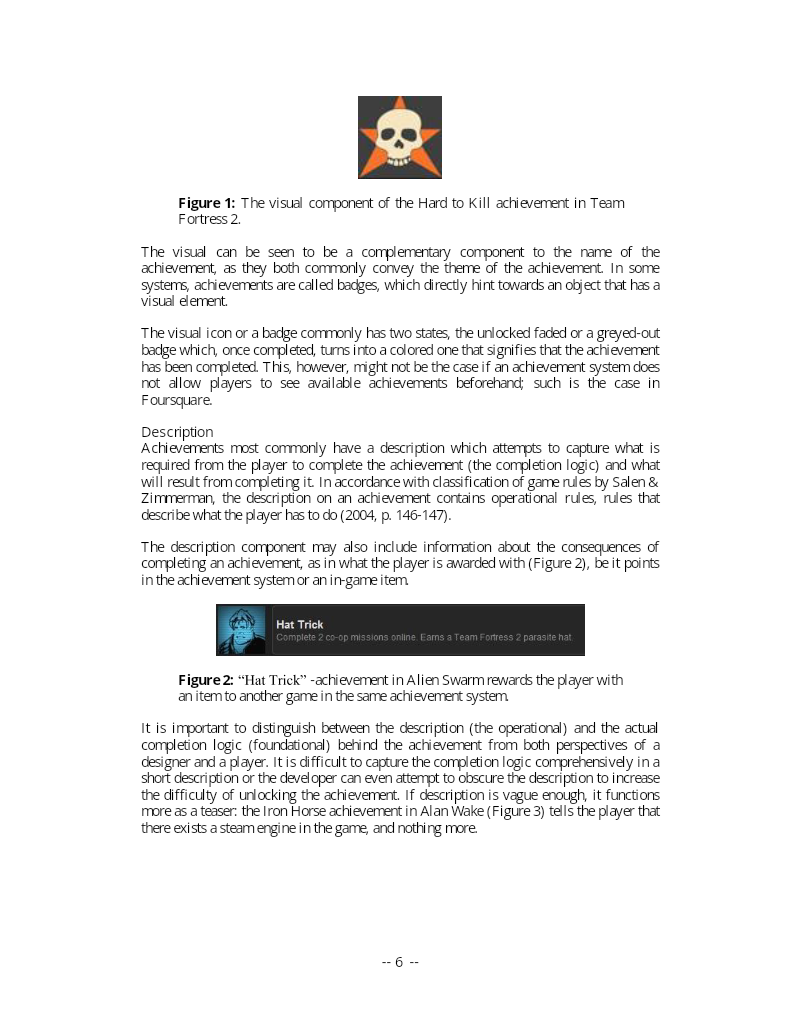
Framework for Designing and Evaluating Game Achievements
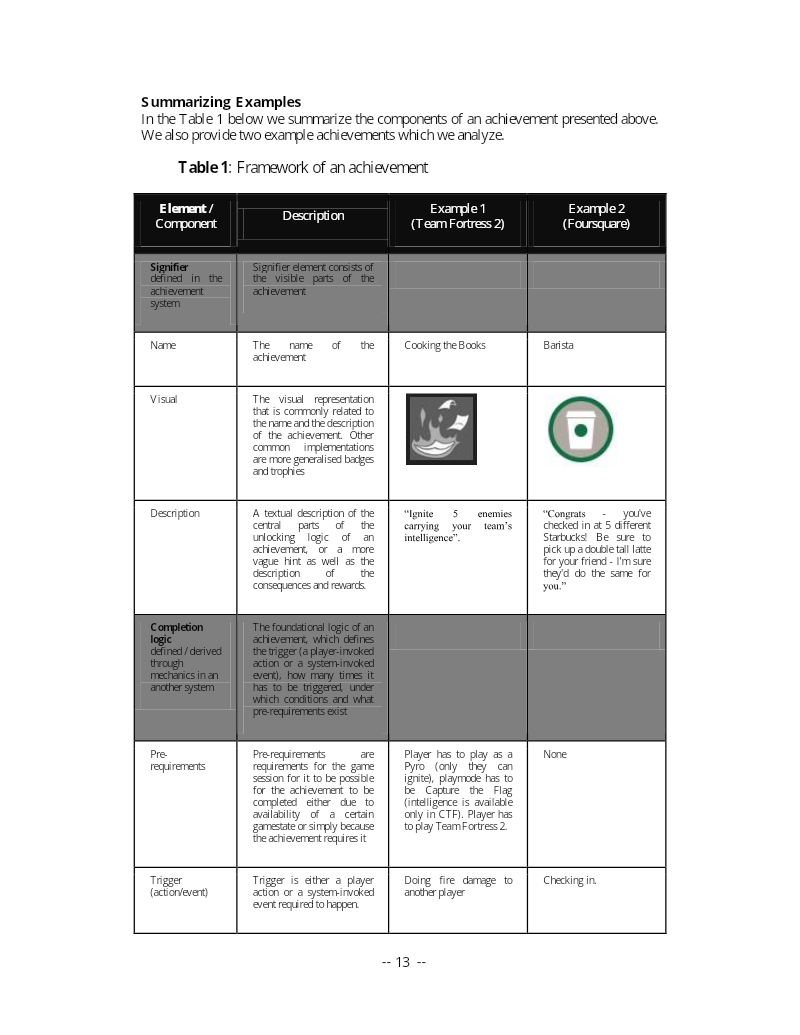
Hamari and Eranti's framework proposes a design-independent model for game achievements, defining them as goals within a separate reward system whose fulfillment is triggered by events in the core game.
- Achievements have a dual nature: they exist simultaneously in a meta-game layer separate from the core game and within the individual game where their completion conditions are met, which the authors argue explains why earlier definitions and compilations have been inconsistent or disruptive to core gameplay.
- The authors propose treating achievement systems as games in their own right, since players who pursue every badge stop treating achievements as optional or secondary.
- Across nine Steam titles (475 of 720 achievements completed) and examples from Xbox Live, Foursquare, World of Warcraft, Team Fortress 2, Left 4 Dead 2, and Call of Duty: Modern Warfare 2, achievements share a consistent structure of signifier, completion logic, and reward.