Katamari Damacy
Game
Documents about Katamari Damacy
Report3 pages
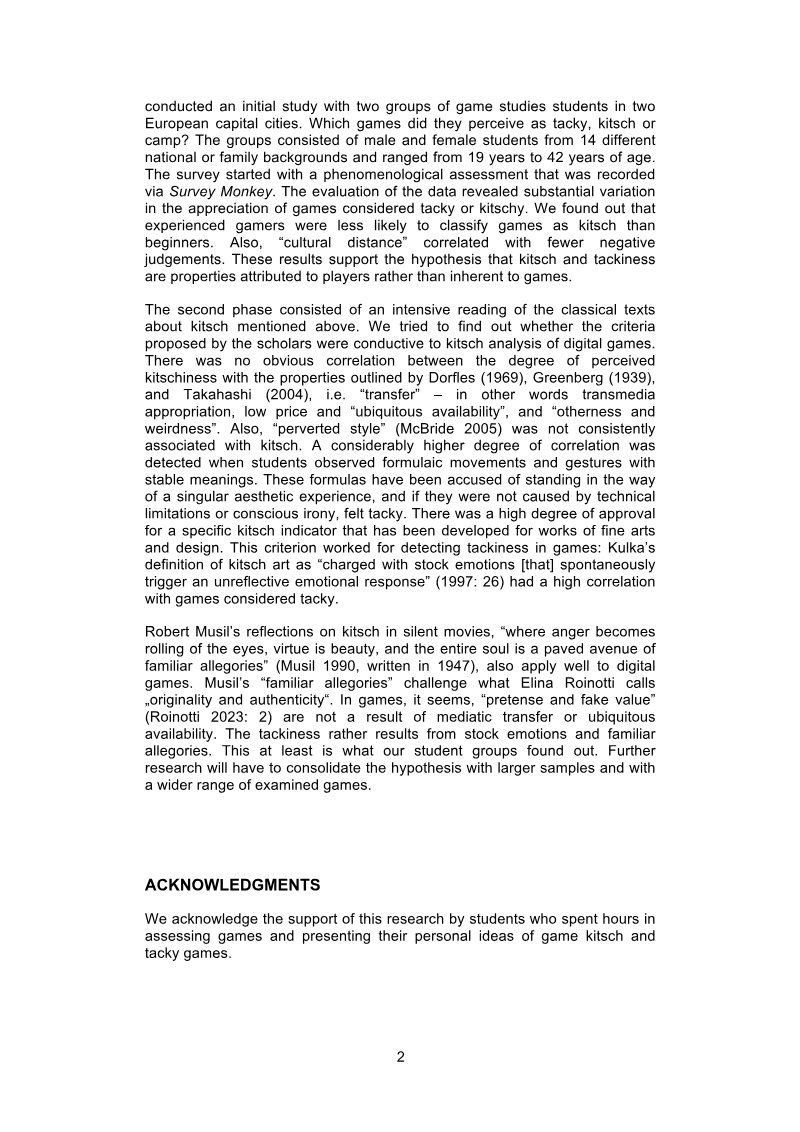
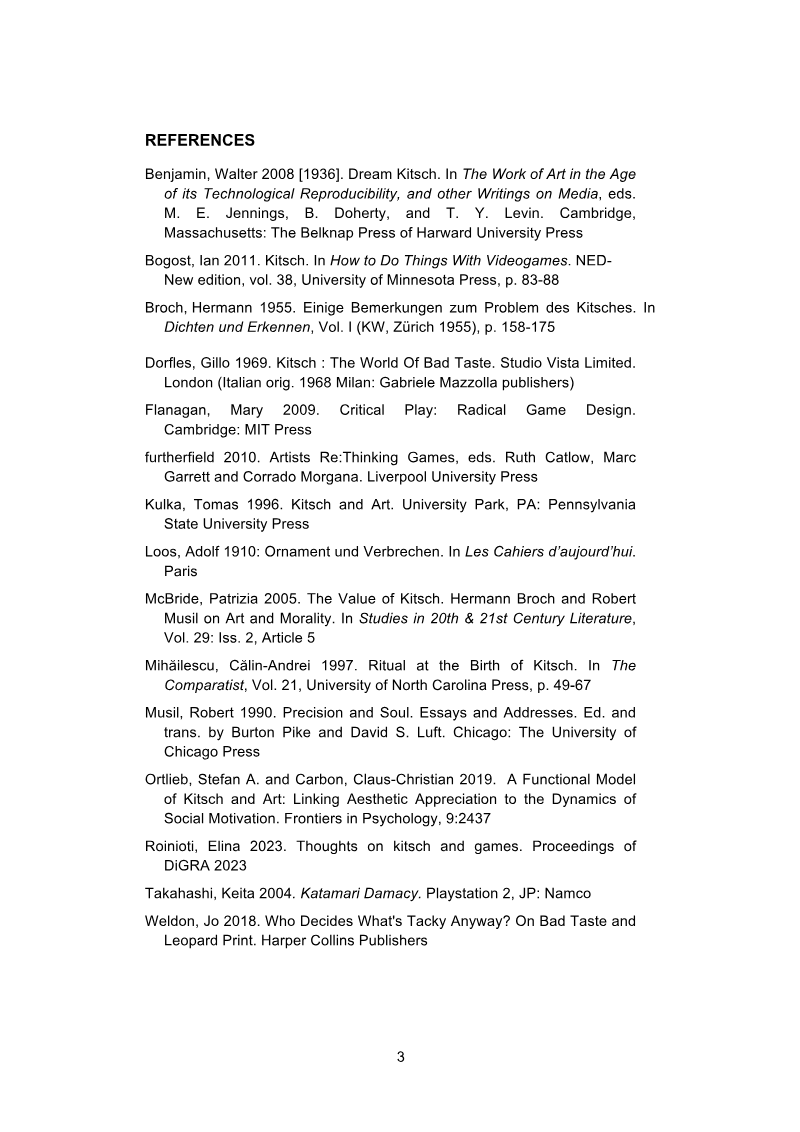
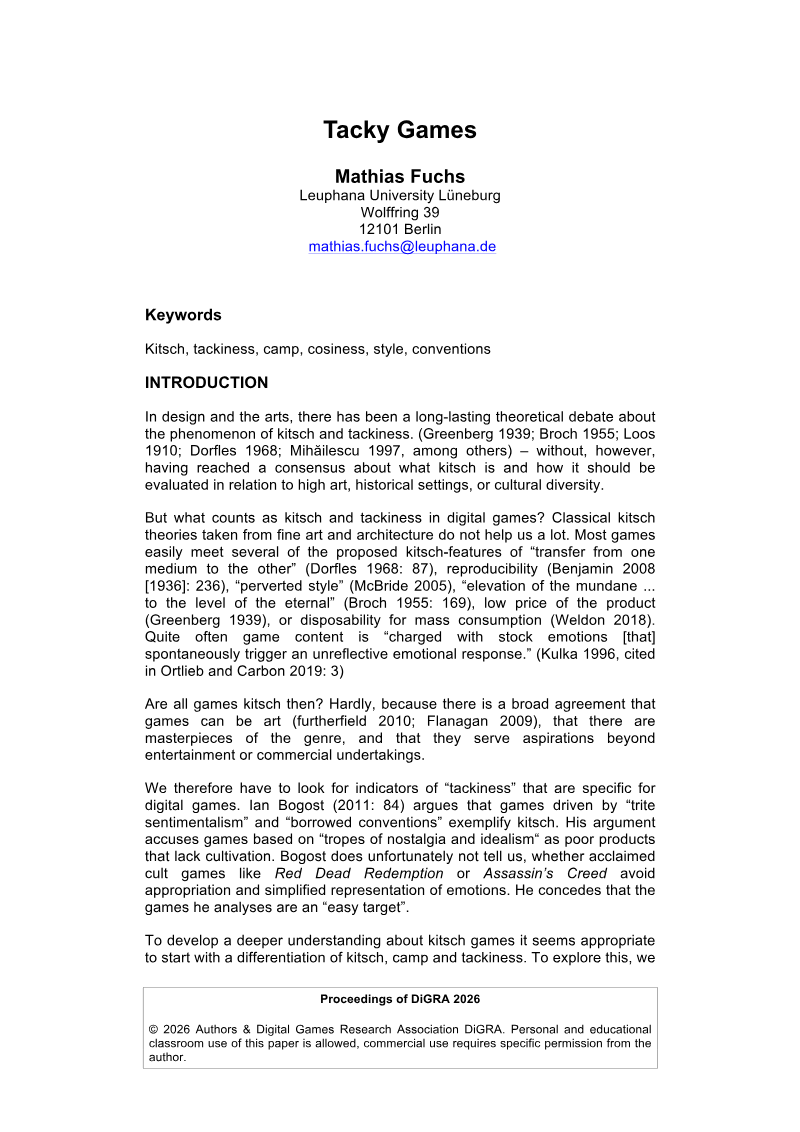
Tacky Games
The document explores the concept of "tackiness" and "kitsch" specifically within digital games, arguing that traditional art and design theories of kitsch are insufficient for this medium.
- Most digital games meet several traditional kitsch criteria (mediatic transfer, reproducibility, low price, mass disposability), yet games can also be art and contain masterworks, so classical kitsch theories offer limited help when applied to games.
- The strongest correlation with perceived kitschiness was found in formulaic movements and gestures carrying stable meanings, and in Kulka's definition of kitsch as art charged with stock emotions that trigger unreflective responses.
- No consistent link emerged between perceived tackiness and transmedia transfer, low price, ubiquitous availability, otherness, or "perverted style," challenging the view that these properties define game kitsch.
DiGRAJun 2026
Whitepaper3 pages
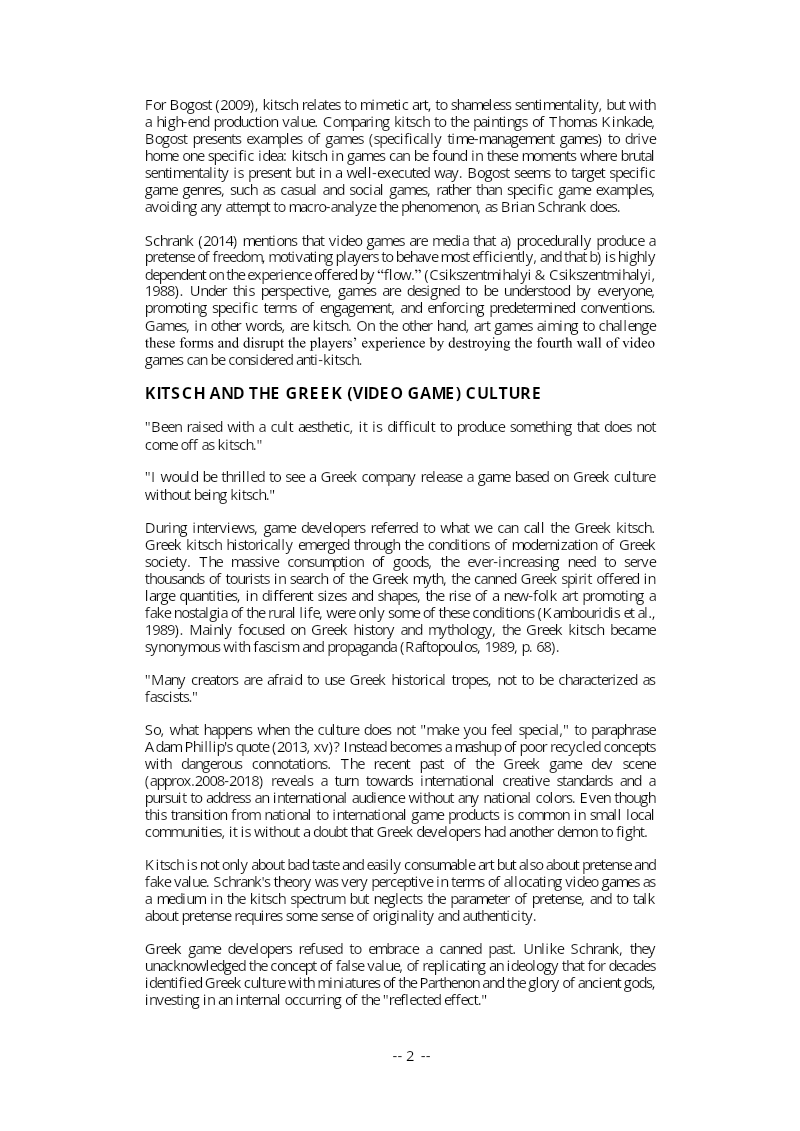
Thoughts on Kitsch and Games
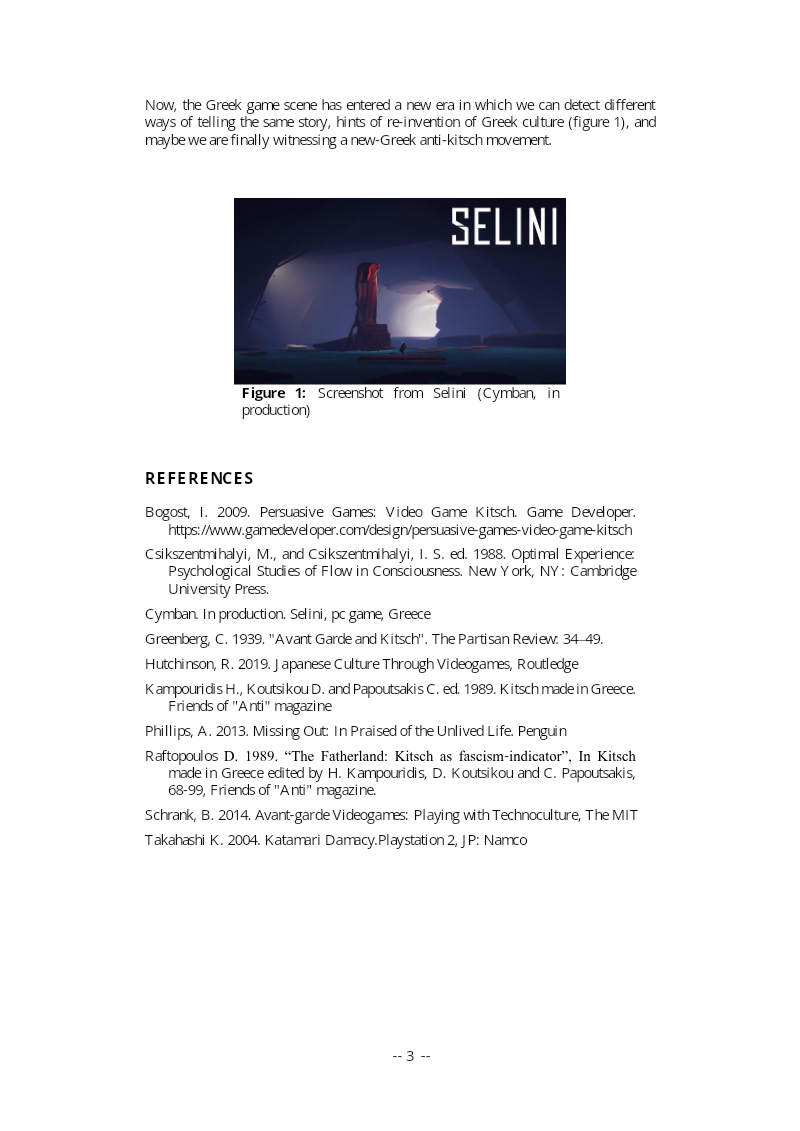
The document explores the concept of kitsch within the context of the Greek video game development community, examining how local creators express national identity and navigate the perception of "Greek kitsch."
- Greek game developers frequently describe Greek culture itself as kitsch, shaped by modernization, mass tourism, and a commodified folk aesthetic historically entangled with nationalist propaganda.
- The paper frames kitsch through Clement Greenberg's 1939 definition: mass-produced, easily consumed culture offering a direct "reflected effect" to audiences without time or training for avant-garde art.
- Between roughly 2008 and 2018, Greek developers moved toward international standards and away from explicitly national aesthetics, partly to avoid associations with fascism and propaganda.
DiGRAJun 2023