Home Safety Hotline
Game
2 documents in the library are about Home Safety Hotline, from writers such as DiGRA and Thomas Brush. Each has a summary and key insights with the page they come from.
Connections
Each row is a game or company named alongside Home Safety Hotline, each column a document, oldest first. A mark means that document names it. Select a row to see those documents.
Documents about Home Safety Hotline
Thomas Brush60 min
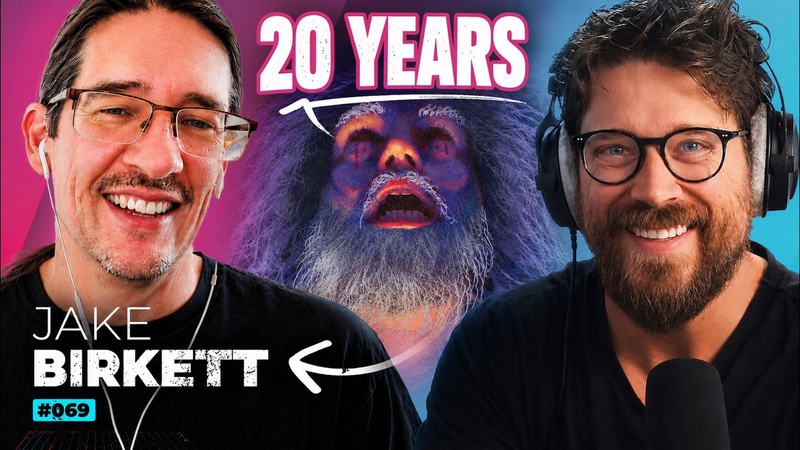
He Made Games For Twenty Years... And Finally Went Viral (w/ Jake Birkett) — Ep 69
Achieving breakout success in the independent game industry requires a transition from solitary development to a data-driven, collaborative strategy.
- To validate a game concept before full production, create a 'smoke and mirrors' trailer combining gameplay and real-life footage to test audience interest and prevent spending years on a 'dead duck'.
- Demos serve as critical marketing and testing tools; using AI to summarize player feedback from demos allows developers to identify sentiment and make necessary adjustments before the 1.0 launch.
- Managing player expectations is vital for high review scores; by clearly defining the game genre and avoiding misleading labels, developers can filter their audience to ensure the game reaches players who actually enjoy that specific type of experience.
Thomas BrushJul 2026
Whitepaper4 pages
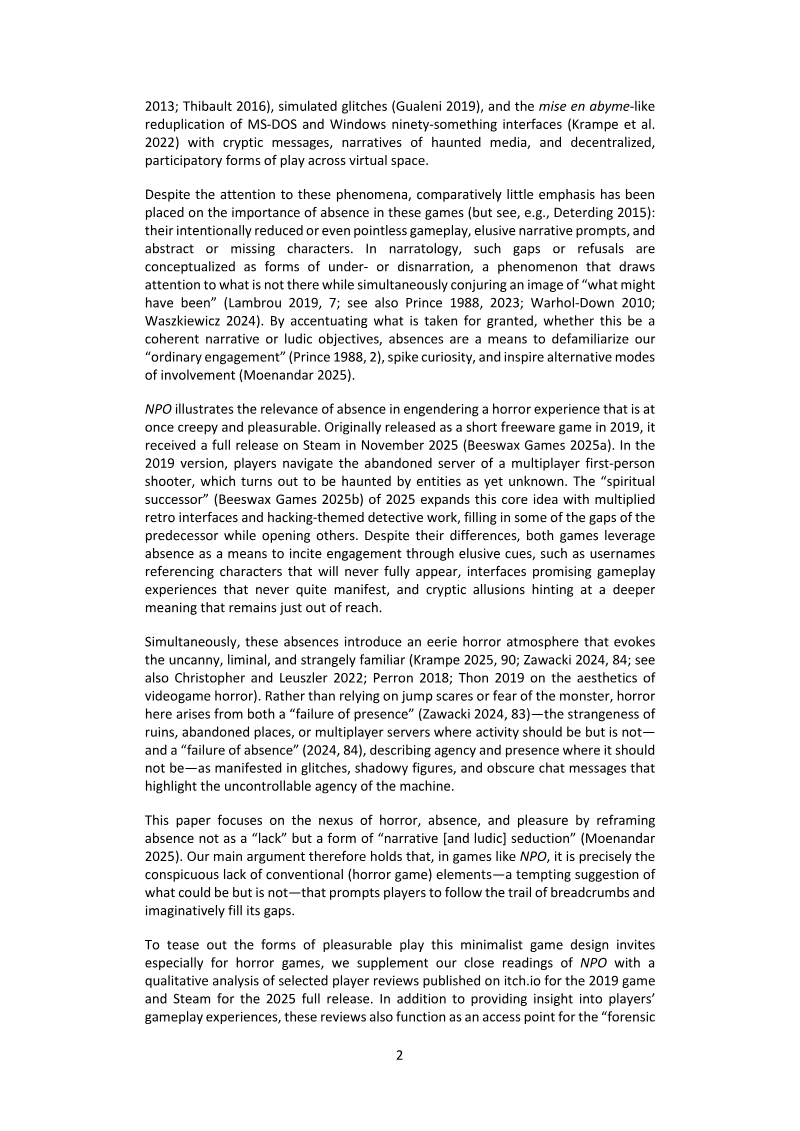
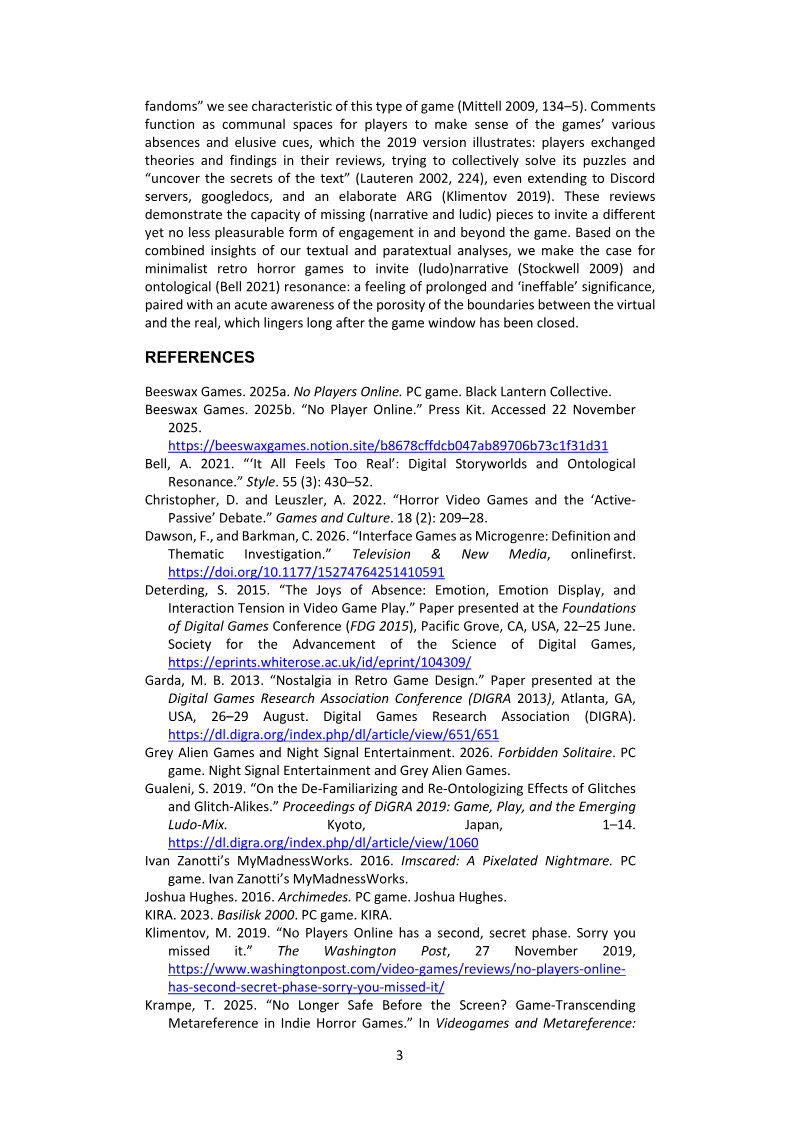
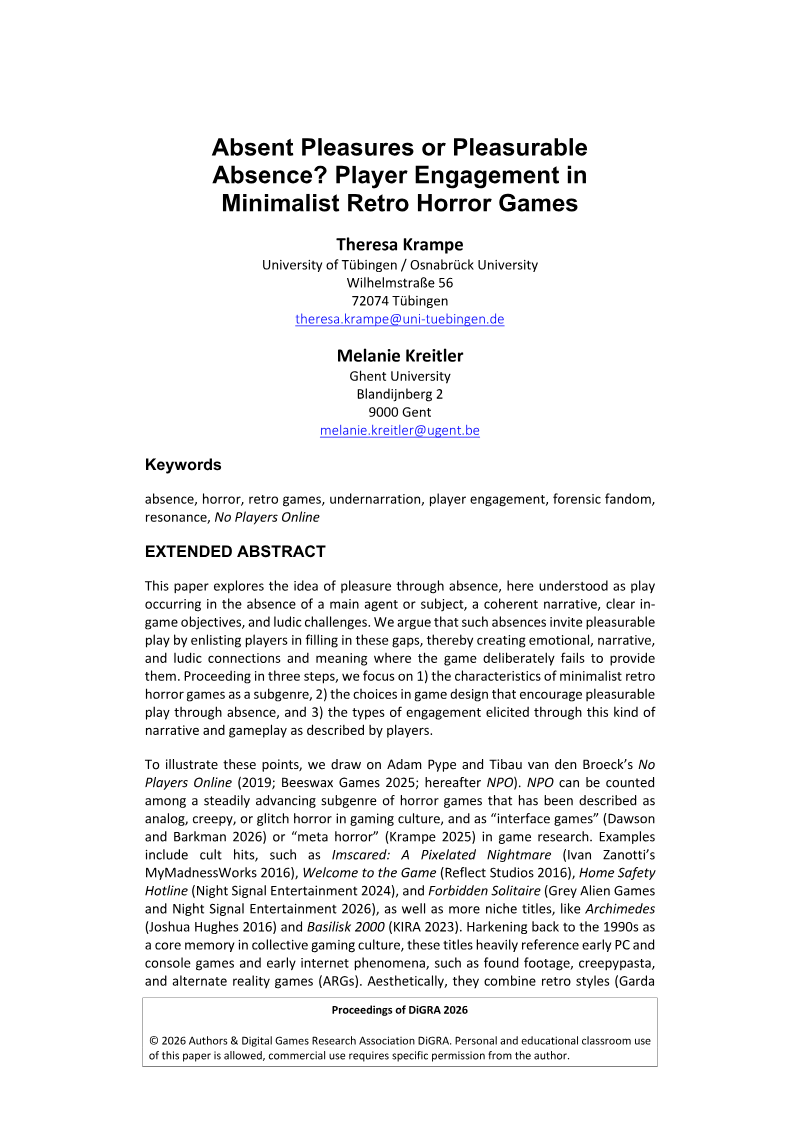
Absent Pleasures or Pleasurable Absence? Player Engagement in Minimalist Retro Horror Games
This paper examines how absence functions as a source of pleasure in minimalist retro horror games, using the 2019 freeware and 2025 full release of No Players Online as its central case.
- The paper uses the 2019 freeware and 2025 full release of No Players Online as its central case to argue that deliberately withholding conventional elements (coherent narrative, clear objectives, a central protagonist) invites players to imaginatively fill gaps, reframing absence as a source of engagement rather than a deficiency.
- Drawing on narratological concepts of undernarration and disnarration, the authors describe absence as a form of narrative and ludic seduction that sustains curiosity.
- The subgenre (labeled analog, creepy, glitch, interface, or meta horror) is linked to 1990s-era references such as early PC and console interfaces, found footage, creepypasta, and alternate reality games.
DiGRAJun 2026
Companies behind it
As the documents state it.