Fallout 2
Game
3 documents in the library are about Fallout 2, from writers such as DiGRA and Jason Schreier. Each has a summary and key insights with the page they come from.
Connections
Each row is a game or company named alongside Fallout 2, each column a document, oldest first. A mark means that document names it. Select a row to see those documents.
Documents about Fallout 2
The Cruelest Part Of Xbox's Layoffs
The recent restructuring at Xbox, characterized by a massive reduction in workforce and the divestment of five studios, has created a climate of profound instability and anxiety for remaining employees.
- Microsoft has announced a major restructuring of its Xbox division, involving the layoff of 3,200 employees and the divestment of five game studios.
- Beyond the primary layoffs, Xbox is cutting its vendor spend by 50%, which will result in significant job losses for contract workers who are not included in the official 3,200-person headcount.
- Employees across Xbox, Blizzard, and ZeniMax are facing prolonged uncertainty, as a second wave of approximately 1,250 layoffs remains pending with no clear timeline for implementation.
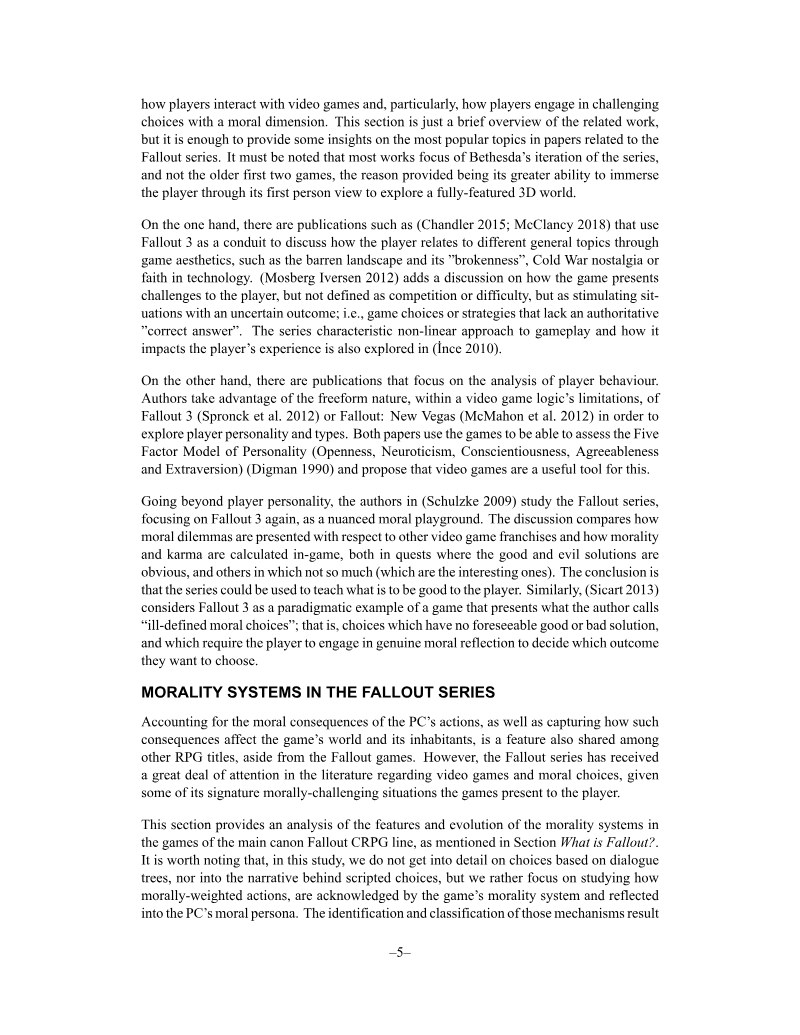
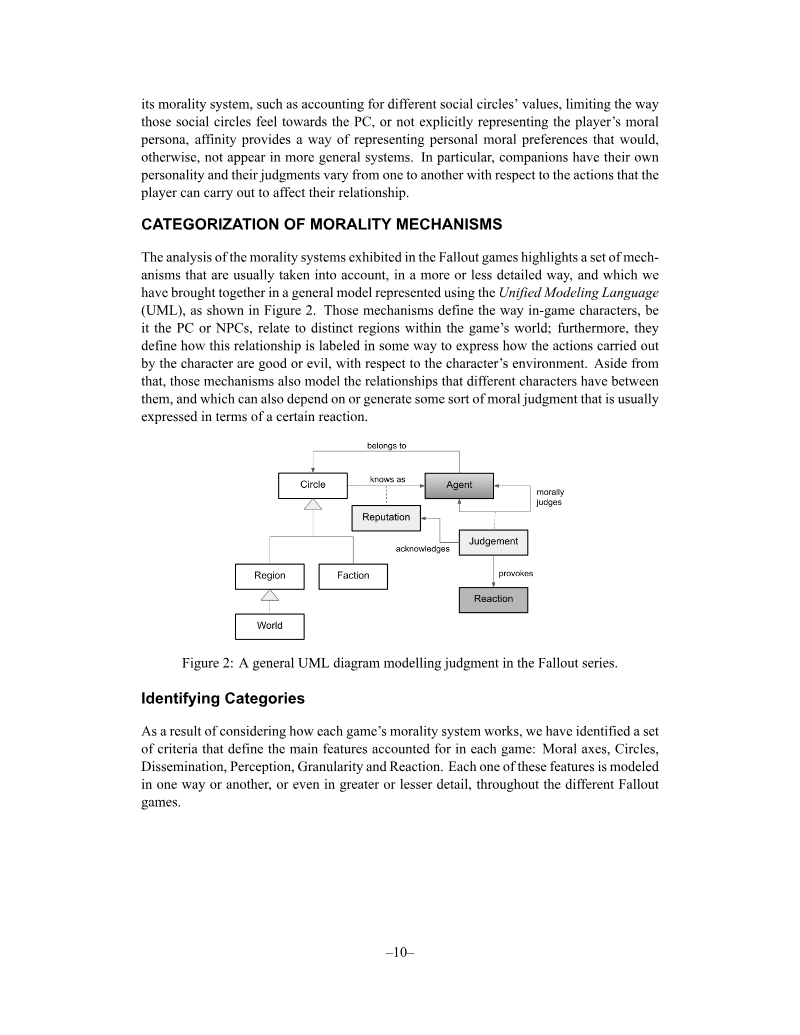
Categorizing Morality Systems Through the Lens of Fallout
The paper examines how morality systems in the canonical Fallout CRPG series track a player character's moral persona, focusing on how in-game actions shift moral alignment and how non-player characters respond to that alignment.
- The paper analyzes how the five canonical Fallout CRPGs (1997, 1998, 2005, 2010, 2015) model moral weight, excluding spin-offs and Fallout 76 because it lacks NPCs, shifting focus from prior player-experience scholarship to the games' own mechanics.
- The authors argue that Fallout: New Vegas has the most comprehensive morality system in the series because it tracks good and evil on separate axes, so deeds do not cancel each other out.
- New Vegas tracks Fame and Infamy per faction and town, reflecting that different social circles hold different values, a design that the authors identify as the most nuanced in the series.
How Videogames Express Ideas
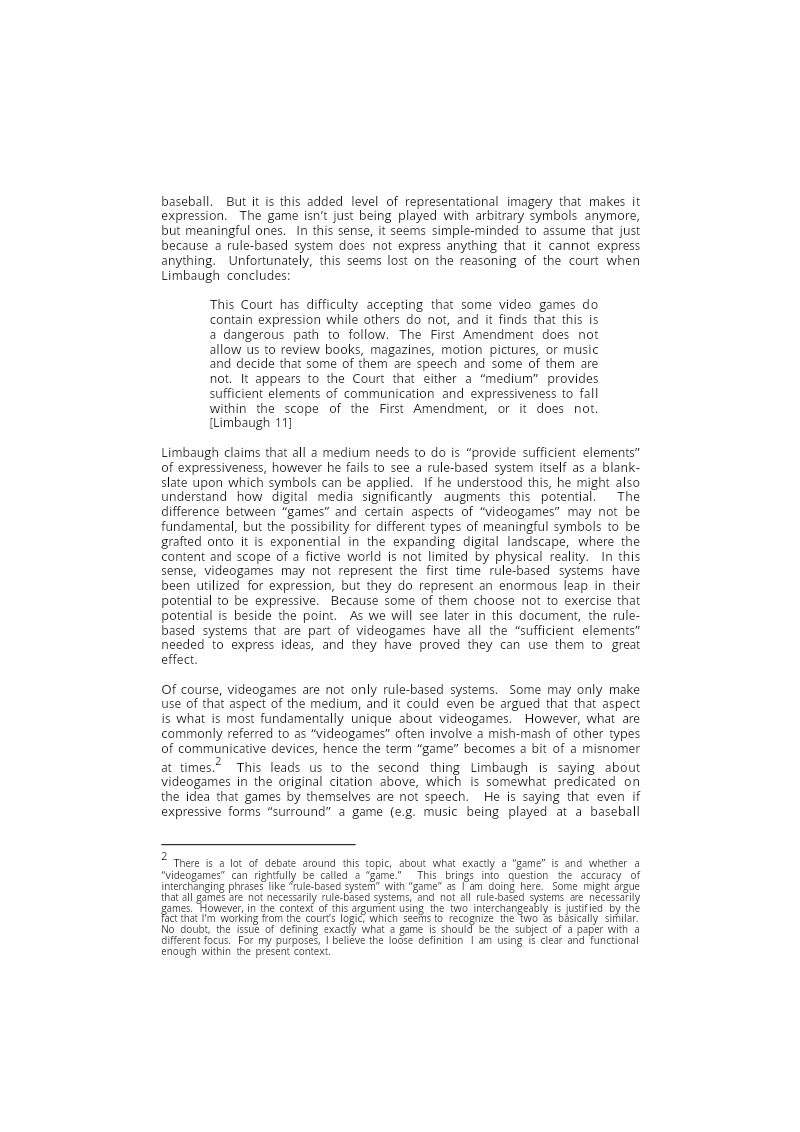
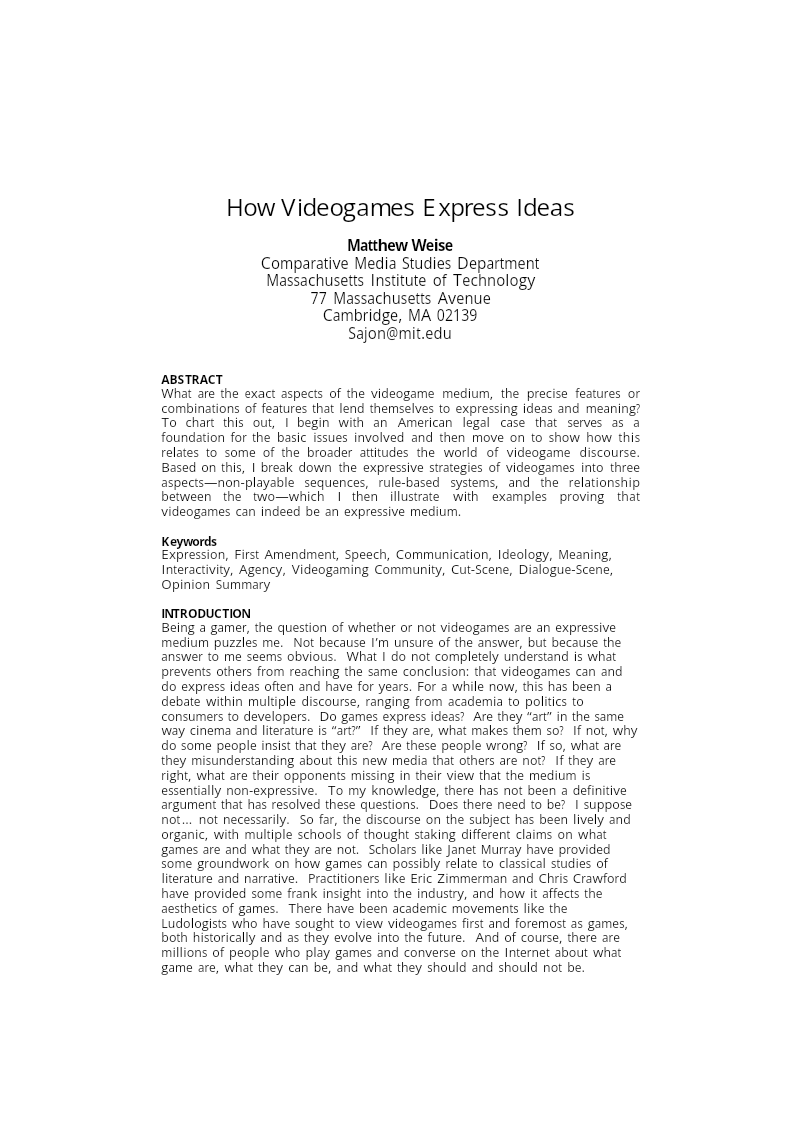
Matthew Weise's essay "How Videogames Express Ideas" argues that videogames are a legitimate medium of expression deserving constitutional protection, and it takes as its starting point the 2002 U.S.
- The essay takes as its starting point the 2002 U.S. District Court ruling in the Limbaugh case, which held that videogames are not protected speech under the First Amendment, and argues that this ruling rested on two misconceptions: that rule-based gameplay cannot carry expressive meaning, and that non-playable narrative sequences are arbitrary additions.
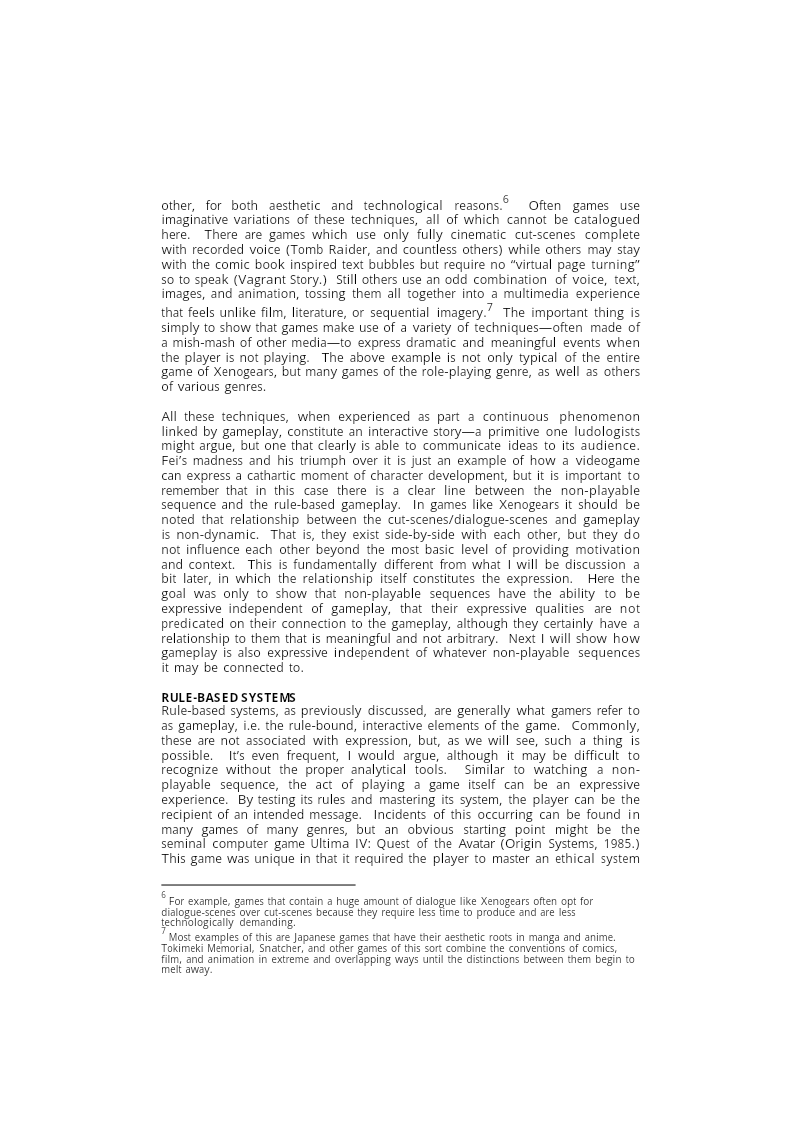
- Weise rejects both premises by drawing an analogy to improvisational theater, arguing that rule-governed systems can communicate ideas when layered with symbolism.
- The analysis is organized around three expressive strategies: non-playable sequences, rule-based systems, and the interaction between them, with the combination considered most powerful because mechanics can reinforce narrative meaning in ways non-interactive media cannot.
Companies behind it

As the documents state it.