F.E.A.R.
3 documents in the library are about F.E.A.R., from writers such as Extra Credits, Game Developers Conference and Game Maker's Toolkit, the newest from 2025. Each has a summary and key insights with the page they come from.

"F.E.A.R." (First Encounter Assault Recon) is a critically acclaimed first-person shooter game released in 2005, developed by Monolith Productions and published by Sierra Entertainment. Blending psychological horror with intense combat, "F.E.A.R." puts players in the role of a point man in a special forces team tasked with containing a mysterious and powerful paranormal threat. The game's advanced AI, atmospheric storytelling, and impressive graphics create a deeply immersive experience. Players must navigate through dark, foreboding environments, battling both human enemies and supernatural entities while uncovering the dark secrets behind the paranormal phenomena. Renowned for its tense atmosphere, dynamic firefights, and haunting narrative, "F.E.A.R." stands out as a landmark title in the horror shooter genre.
- Released
- Oct 17, 2005
- Developer
- Monolith Productions
- Publishers
- Sierra Entertainment, Vivendi Universal Games
- Genres
- Shooter
- Platforms
- PC (Microsoft Windows)
- Links
- Wikipedia
Game data from IGDB.com
Documents about F.E.A.R.
Why Monolith Mattered
The recent closure of Monolith Productions by Warner Bros. marks the end of a significant, three-decade-long career for a studio recognized for its consistent technical and design innovation.
- Warner Bros. has closed Monolith Productions, a studio established in 1994 that spent three decades driving innovation in first-person shooter and action game design.
- The closure reflects a broader industry trend of corporate consolidation, occurring within a 2024 landscape where approximately 14,000 game developers have been laid off.
- Monolith is best known for the Nemesis System in Middle-earth: Shadow of Mordor, a patent-protected narrative tool that generated unique, player-driven stories.
Games You Might Not Have Tried - ep 16 - Spooky Scary Game Recommendations - Extra Credits
This collection of game recommendations serves as a curated guide for players seeking unique, atmospheric, and unsettling experiences during the Halloween season.
- Effective horror design often relies on subverting player expectations and leveraging the player's own imagination rather than relying solely on jump scares.
- Environmental storytelling and ambient audio are critical tools for building tension, as demonstrated by the tactical shooter F.E.A.R.
- Horror can be successfully integrated into diverse genres, ranging from the tactile puzzle mechanics of The Room to the samurai combat of Onimusha Warlords.
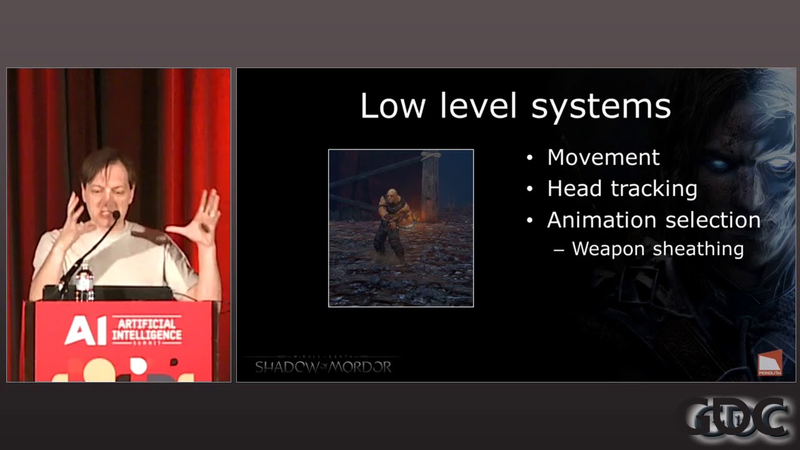
Goal-Oriented Action Planning: Ten Years of AI Programming
Goal-Oriented Action Planning (GOAP) serves as a robust framework for creating reactive, intelligent non-player characters by utilizing A search algorithms to navigate sequences of world-state variables.
- Goal-Oriented Action Planning (GOAP) utilizes A search algorithms to replace rigid, hard-coded scripts with dynamic, state-driven NPC behaviors.
- Performance in complex environments like F.E.A.R., Shadow of Mordor, and Ryse is maintained by focusing computational power on the 20 percent of actions that drive 80 percent of AI behavior.
- Scalability is achieved by offloading low-level tasks, such as animation or weapon equipping, to external systems while using hierarchical blackboards for group-level coordination.