
Dying Light
GameBy Techland · Released Jan 26, 2015
Documents about Dying Light

Game Developers Conference26 min
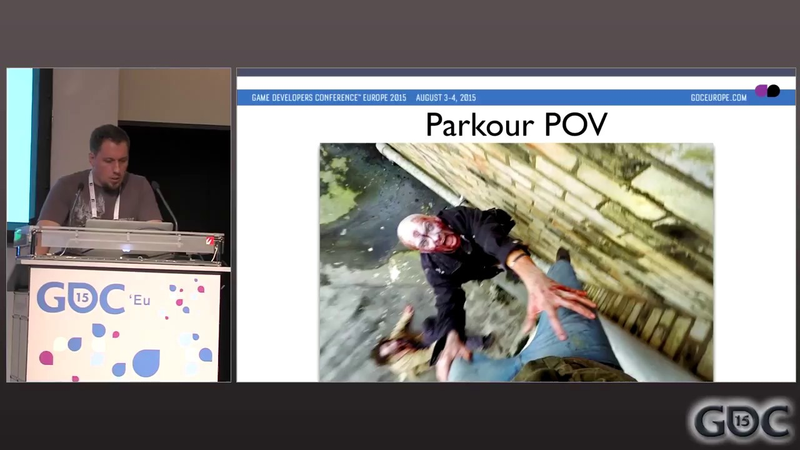
Parkour: How to Improve Freedom of Movement in First-Person Games in 20 Simple Steps
The development of parkour mechanics in the first-person game Dying Light required a shift from manual level design to a dynamic, runtime-based ledge detection system.
- To detect climbable ledges in 3D space, Techland used a series of forward traces to identify obstacles, validated the space above and below for player fit, and performed vertical traces to pinpoint the exact climbable edge.
- Techland optimized performance for complex parkour environments by implementing a 'carpet of traces' algorithm, which reduced computational overhead by batching geometry and processing traces with identical lengths and directions.
- To solve precision issues in first-person jumping, the developers implemented a 'coyote time' mechanic that allowed players to jump even when slightly off an object, effectively extending the jump window by approximately 20 centimeters.
Game Developers ConferenceNov 2019
Game Developers Conference25 min
4.5 Million Players in 100 Days: Lessons from Dying Light
The success of the open-world survival game Dying Light, which reached 4.5 million players within its first 100 days of release in 2015, is attributed to a strategic combination of pre-launch feature communication and aggressive post-launch community engagement.
- Techland achieved 4.5 million players within the first 100 days of Dying Light's release by focusing on clear communication of core game pillars, such as melee combat, the day-night cycle, and co-op play.
- The development team maintained pre-release momentum by releasing weekly 'Dying Highlights' gameplay videos rather than traditional marketing trailers, showcasing specific features and humorous scenarios.
- Post-launch engagement was driven by a robust telemetry system that tracked player behavior, resulting in a high 35-40% completion rate for the PC version.
Game Developers ConferenceMar 2017