1 free read left. Create a free account for unlimited reading + AI research.
Create free account
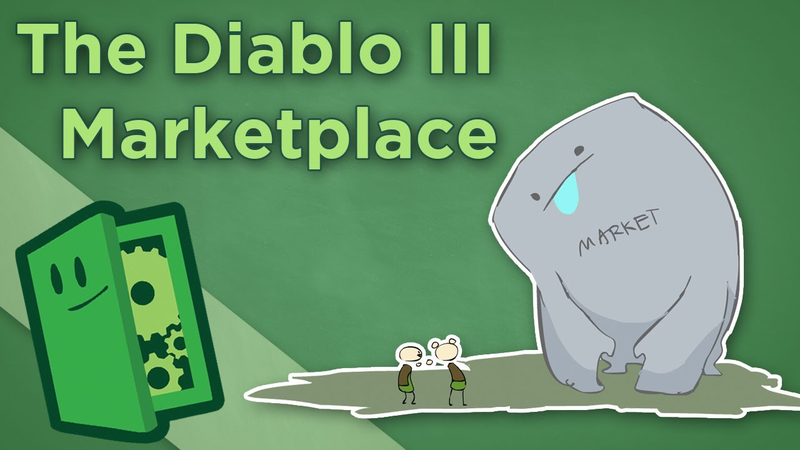
The Diablo III Marketplace - Economy Design in Games - Extra Credits
Key insights
6 takeaways- 01The Diablo III real-money marketplace shifts the business model from one-time retail sales to a sustainable, player-driven revenue stream that reduces the need for constant new content production.
- 02The implementation of a real-money marketplace necessitates a persistent internet connection to ensure transaction security, a trade-off that sacrifices potential sales in regions with limited connectivity for projected transaction fee revenue exceeding tens of millions of dollars.
- 03By formalizing the global gray market for virtual goods—an industry estimated to reach hundreds of millions of dollars annually—developers can capture significant revenue through transaction fees.
- 04Financial incentives to drive item turnover may accelerate power creep, where constant scaling of gear statistics renders previous player achievements obsolete.
- 05The commoditization of in-game items risks transforming leisure into labor, potentially undermining the core gaming experience of engagement and escapism.
- 06This economic model fundamentally alters the player-game relationship by introducing professionalized income opportunities for some players while simultaneously threatening the long-term integrity of the game's design.
Ask AI about this video
Transcript
Diablo III is poised to usher in a new era into video gaming, but not because of the mechanics, the systems, the narrative, or even the technology behind it. I'm sure those will all be well polished and awesome. I mean, it's a Blizzard game. But none of those things are really revolutionary. No, what's revolutionary about Diablo III is that it's poised to finally give us an empirical test for the question, what if normal people could make a living playing video games? If you haven't been following Diablo III news, Blizzard is planning to include a real money marketplace for players to sell their goods to one another. Think of it as the World of Warcraft auction house, but with real dollars instead of gold. This means that the average player will have a venue for selling for real money whatever loot they pick up in the game. Now sure, you can argue that the gray market has always existed and gold farmers have always been selling gold in MMOs, but the barrier to entry here was much higher. Most players never made a cent off of their WoW account, and the only interaction most players had with gold farmers was receiving their spam. The idea of actually making money off of
this never entered most players' minds. And so, even though the gray market exists in traditional MMOs, it's never really had a big impact on most players. But that won't be the case with Diablo III, and Diablo isn't even a traditional MMO. But really, how much of an effect is this going to have? How big is this real money marketplace going to be? Well, it's difficult to say, but we can get a rough idea by looking at some of the other decisions they've made with Diablo III. Most notably, the decision to force players to be connected at all times while playing. This decision has to be motivated by that marketplace. Even if you argue that they're trying to make a better play experience for the end user by creating a cheating-free environment, there's no reason to make it mandatory. They could just as easily have the game's default mode be online, and then also offer the option of an offline mode and just not allow characters to be transferred between the two. You know, the same way Diablo II works. So long as only characters made in the online mode can sell in the marketplace, there's no reason not to. No reason unless you want everyone using the store. And that's a big decision to make based entirely on on new feature. Besides stirring up the mob and getting some grumblings in the press, this is a real money issue for them. Remember,
Diablo III isn't just a North America, Japan, and Western European game. This is going to see a truly global release. Normally, you could expect a Diablo III to get localized for every country with a per capita GDP greater than that of Angola, but now because of this decision, a lot of those countries are off the table. Even today, globally, you lose a substantial number of sales by requiring a stable internet connection, even on a game requiring a relatively high-end computer like Diablo III. So, how much money's that decision going to cost them? Let's make a conservative guess and assume that they only lose 100,000 sales, which is just a drop in the bucket for a game that's going to be as big as Diablo III. My gut says that number is probably going to be closer to 500,000, but just play it safe for now. Since they're wholly owned by the publisher, we can assume that about half of that is actually going back to them. So, if we do a little math, let's figure that by requiring a constant internet connection, they're losing at least $3 million. Now, that's not too big a loss for a game that'll probably sell at least 10 million copies, but it's still a lot of money. And remember, we're being generous with the numbers here, so the real losses will probably be even higher. But, Blizzard is no doubt well aware of that fact, which means the number they expect this new marketplace
to bring in has to be substantially larger than $3 million. And honestly, they're probably right. In fact, I would guess their internal estimates place the value of the real money marketplace at north of 10 times that. The latest figures I've seen put the value of current gold farming activities in China alone at $300 million a year. Now, you got to figure that once we decriminalize the selling of equipment, so you're not going to get banned for doing it, and make it easy to do from within the game itself, and then factor in the global market, that number goes up substantially. If $300 million passes through the marketplace, that means Blizzard only has to take 1% of every transaction to make up for their lost money per year. If I had to guess though, I'd say they'll be taking 5%, ensuring the same return on a much smaller transaction base. But, did you catch the important part of that sentence? Per year. That's the part that really matters. As games get more and more expensive to make, and they are getting really expensive, publishers and developers have been looking for ways to increase the amount they bring in. Now, we're all pretty much agreed that $60 plus tax is already a pretty steep initial investment for a game. So, developers are instead looking to ongoing revenue with things like DLC. But, this real money marketplace is the
best form of ongoing revenue. The developer builds nothing, and the community keeps generating money for them. This also helps to cover the cost of a dedicated team to patch and add content to the game, which is becoming an increasing burden for multiplayer releases. In a perfect world, this eventually goes to its logical conclusion of high-quality games being released for free with nothing in them sold by the developer, and all revenue being generated from taking a percentage from the player-driven economy. But, I think we're a while away from someone taking a gamble on that sort of free-to-play game. So, what does all this mean for us? Well, if Blizzard is successful with this, the real money marketplace will become more common, and you'll start seeing it crop up in games ranging from Call of Duty to Madden. Really, anything with a persistent element they can use to justify it. This, in turn, will mean a few things for the average player. First, it'll mean that there'll be people out there who are able to make a moderate living as a professional video game player. Not in an e-sports capacity, but in a much more regular workaday job fashion. I hope this turns out to be an awesome lifestyle, but I'm a little afraid that when you commoditize games, you may lose the reason you played from the first place, to be engaged. Nothing kills engagement faster than turning it into work. Second, this will also lead to power creep. Power creep is when each
expansion raises the general power level of the game, and I don't just mean raising the level cap. The combat numbers, the economy, everything scales up dramatically. World of Warcraft players will be well familiar with this. It tends to render pointless some of your previous content and trivialize much of the hard work players have done up to that point. Worse still, it often forces developers to create ever more over-the-top content to the point where they eventually break their own systems with things that are either ridiculous or simply outside the scope of what the original designers ever planned for. You see this a lot with MMOs and collectible card games, but it's a bad design practice that becomes even more common when money's involved, since there's an incentive to force the player to acquire all the new gear. We should talk a little more about power creep sometime later. But mostly, I'm concerned about what a real money marketplace will do to the spirit of playing games. Games are a place to be free of the mundane, to engage in ways you otherwise couldn't, or just to kick back and enjoy. Once we introduce a real system of commerce and we start tying play to one of the more stressful, banal, and often base aspects of our real world lives, I'm concerned that we may shatter the fantasy that games create for us and take ourselves out of the optimal mindset for playing games. But, I don't know. Maybe I'm
completely wrong with that one. Hopefully I am. And it's not all doom and gloom by any means. A real money marketplace is certainly going to make games a cheaper investment for anyone for whom buying games is starting to get a little out of their price range. And hey, when you're done with the game, you'll be able to sell off all your gear and have a little pocket change to put toward your next game purchase while giving back to the developer in the process. That's kind of nice. And even though there's always the fear that developers may start making games that you need to buy the best items in to enjoy in the way that the worst free-to-play games do. At least we can take comfort in the fact that this simply doesn't work in a system where players have to acquire the items in the first place, like in Diablo 3. It's an interesting problem to think through. I guess we'll see if we're right in a few months or so. Hopefully. Anyway, thank you for watching. Try not to get buried under that flood of holiday releases and we'll see you next week.
Summary
The introduction of a real-money marketplace in Diablo III represents a significant shift in game industry business models, moving beyond traditional retail sales toward sustainable, player-driven revenue streams. By allowing players to trade in-game items for real currency, the developer creates a system where the community generates ongoing value without the need for constant new content production. This model serves as a potential solution to the rising costs of game development, offering a viable alternative to traditional downloadable content or subscription fees.
The implementation of this marketplace carries substantial strategic implications, most notably the requirement for a persistent internet connection to ensure a secure, cheat-free environment for transactions. While this requirement likely results in the loss of hundreds of thousands of potential sales in regions with limited connectivity, the projected revenue from transaction fees—potentially exceeding tens of millions of dollars—justifies the trade-off. By formalizing the gray market, the developer captures a percentage of the massive, pre-existing global trade in virtual goods, which is estimated to reach hundreds of millions of dollars annually.
However, this transition introduces risks to the player experience. The commoditization of gameplay threatens to transform leisure into labor, potentially eroding the engagement and escapism that define gaming. Furthermore, the financial incentive to drive item turnover may accelerate power creep, where constant scaling of gear and combat statistics renders previous player achievements obsolete. While the model offers benefits such as potential income for professional players and increased affordability for the broader community, it fundamentally alters the relationship between the player and the game, raising concerns about whether the pursuit of profit will ultimately undermine the integrity of the gaming experience.

















Comments