1 free read left. Create a free account for unlimited reading + AI research.
Create free accountArticle Eludamos: Journal for Computer Game Culture
1 free read left. Create a free account for unlimited reading + AI research.
Create free accountArticleEludamos: Journal for Computer Game Culture
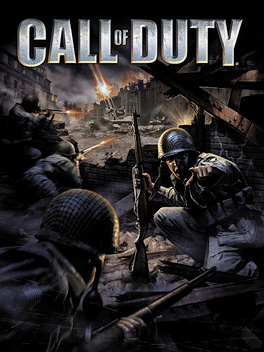
Jaimie Baron argues that Call of Duty: World at War uses archival World War II footage to create what she calls an 'archive effect'. The footage is tightly controlled through editing, animated graphics, and voiceover.
Jaimie Baron's analysis examines how Call of Duty: World at War deploys embedded archival World War II footage to generate what she calls an "archive effect," lending its cut-scenes a powerful sense of historical authenticity. Her central argument is that this authenticity rests on temporal and intentional disparity between the original footage and its new context, yet the game tightly controls that footage through editing, animated graphics, and voiceover. The result, she contends, is a linear, teleological account of history in which the player's interactivity cannot alter the outcome, reinforcing a conservative historiographic model under the banner of "digital historicism."
The study weighs the game against the Labyrinth Project's experimental work Tracing the Decay of Fiction, which employs untimed, reflective interactivity, chance, and layered archival material to present history as multiple, unstable, and responsive to user choice. The author argues that the game's rapid, militaristic cut-scene rhythm forecloses reflection, presenting history as predetermined and implicitly legitimizing the player's violence. Such reflective alternatives, however, reach a far smaller audience. Call of Duty: World at War had sold over 11 million copies by June 2009, a commercial reach that underscores the stakes of its historiographic choices.
The comparison also exposes a design tension. The author observes that Tracing's refusal of narrative teleology renders it less engaging, leaving users uncertain and disempowered, whereas the game's clear goals and linear progression sustain player desire. The proposed resolution is a hybrid form that pairs reflex-based gameplay with reflective interactivity, using archival footage that shifts according to player decisions to surface multiple, even contradictory, histories. The author concludes that such work could cultivate a more skeptical understanding of how history is written and what images signify, though digital historicism as a field remains young.
Each row is a game or company this document names, each column a document, oldest first. A mark means that document names it. Select a row to see those documents.

Eludamos: Journal for Computer Game Culture · 2026

Eludamos: Journal for Computer Game Culture · 2026

Eludamos: Journal for Computer Game Culture · 2026

Eludamos: Journal for Computer Game Culture · 2026

Eludamos: Journal for Computer Game Culture · 2026

Eludamos: Journal for Computer Game Culture · 2026

Eludamos: Journal for Computer Game Culture · 2026

Eludamos: Journal for Computer Game Culture · 2025

Eludamos: Journal for Computer Game Culture · 2025

Eludamos: Journal for Computer Game Culture · 2025

Eludamos: Journal for Computer Game Culture · 2025

Eludamos: Journal for Computer Game Culture · 2025
Game Developers Conference · 2022