ArticleVideo Games Industry Memo
Young Male Gamers and Conspiracy Theories: UK Public Perspective
25 Jun 20261 pages~18 min full read
Key insights
4 slides
Key number
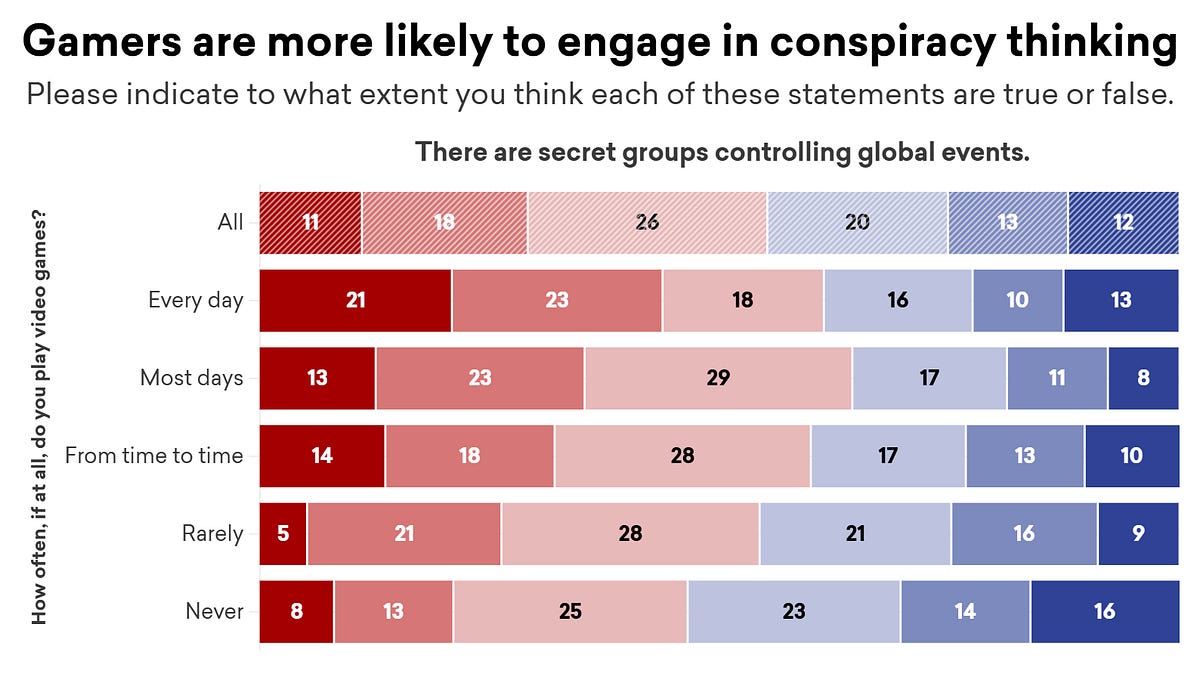
Young male gamers are twice as likely to endorse conspiracy theories.
The study compares 16-24 UK male gamers with the broader population.
twice as likely
Young male gamers aged 16-24 in the UK versus the broader population
Who they are
Sceptical Scrollers are a low-income, urban segment that distrusts mainstream media.
The segment comprises 10% of the UK population and is predominantly young men who play video games. They get information from trusted individuals on YouTube, podcasts, and social media.
The friction
Directly educating gamers about misinformation can be ineffective.
Many young male gamers value games as an escape from political ideology. They feel 'betrayed' when games attempt to influence their thinking, making overt educational approaches less effective.
The opportunity
Games that subtly encourage critical thinking may counter misinformation.
Video games provide community and empowerment for Sceptical Scrollers.
Strategic direction. Targeted, game-centric strategies are essential for mitigating conspiracy belief among this influential demographic group.
- 01Treat games as a distinct information ecosystemDevelopers and industry stakeholders can create engaging titles that encourage critical thinking without sounding didactic.
- 02Harness community and agencyUse the aspects of gaming that provide community and a sense of agency to counter misinformation.
- 03Contest conspiratorial contentRun campaigns within gaming communities to help Sceptical Scrollers reconnect with broader societal discourse.
1 / 4
Ask AI about this report