1 free read left. Create a free account for unlimited reading + AI research.
Create free accountArticle American Journal of Play
1 free read left. Create a free account for unlimited reading + AI research.
Create free accountArticleAmerican Journal of Play
The Source ran from July 8 to August 16, 2013, on Chicago's South and West Sides and was designed to teach STEM, twenty-first-century literacies, and social-justice awareness.
"Worlding Through Play" argues that alternate reality games can support learning by inviting players to collaboratively shape a shared game world, a process the authors call "worlding through play," rather than merely completing gamified tasks driven by extrinsic rewards. The study centers on The Source, a five-week transmedia ARG run from July 8 to August 16, 2013, on Chicago's South and West Sides. Designed to teach STEM, twenty-first-century literacies, and social-justice awareness, the game engaged 144 mostly African American and Latino youth aged 13 to 18, with 133 included in the evaluation.
Findings drawn from focus groups, surveys, interviews, and an external evaluation by the University of Chicago's Outlier Research and Evaluation team suggest that players strongly identified with the culturally specific urban realist narrative, reported emotional engagement, and perceived gains in critical thinking, teamwork, and problem-solving. Participants also went beyond designed challenges to produce their own work, including short stories, web pages, and social media posts on cryptography and youth violence, which the authors frame as "critical making." The authors attribute this co-production to the game's visible, unpolished "seams," which invite players to shape the experience.
The authors conclude that what can scale is not a fixed game form but a mode of responsive, interest-driven play with open-ended structure and multiple player pathways. Design lessons include the value of longer mentor training, the drawbacks of points and leaderboards, and the benefit of separating play from a follow-up game-design workshop. Because the sample is small and the evidence largely qualitative, the authors present these conclusions as provisional, calling for further research on culturally tailored educational ARGs.
American Journal of Play · 2025
American Journal of Play · 2025
American Journal of Play · 2024
American Journal of Play · 2024
American Journal of Play · 2024
American Journal of Play · 2023
American Journal of Play · 2022
American Journal of Play · 2022
American Journal of Play · 2021
American Journal of Play · 2020
American Journal of Play · 2020
American Journal of Play · 2019
European Conference on Games Based Learning (ECGBL) · 2026



European Conference on Games Based Learning (ECGBL) · 2026
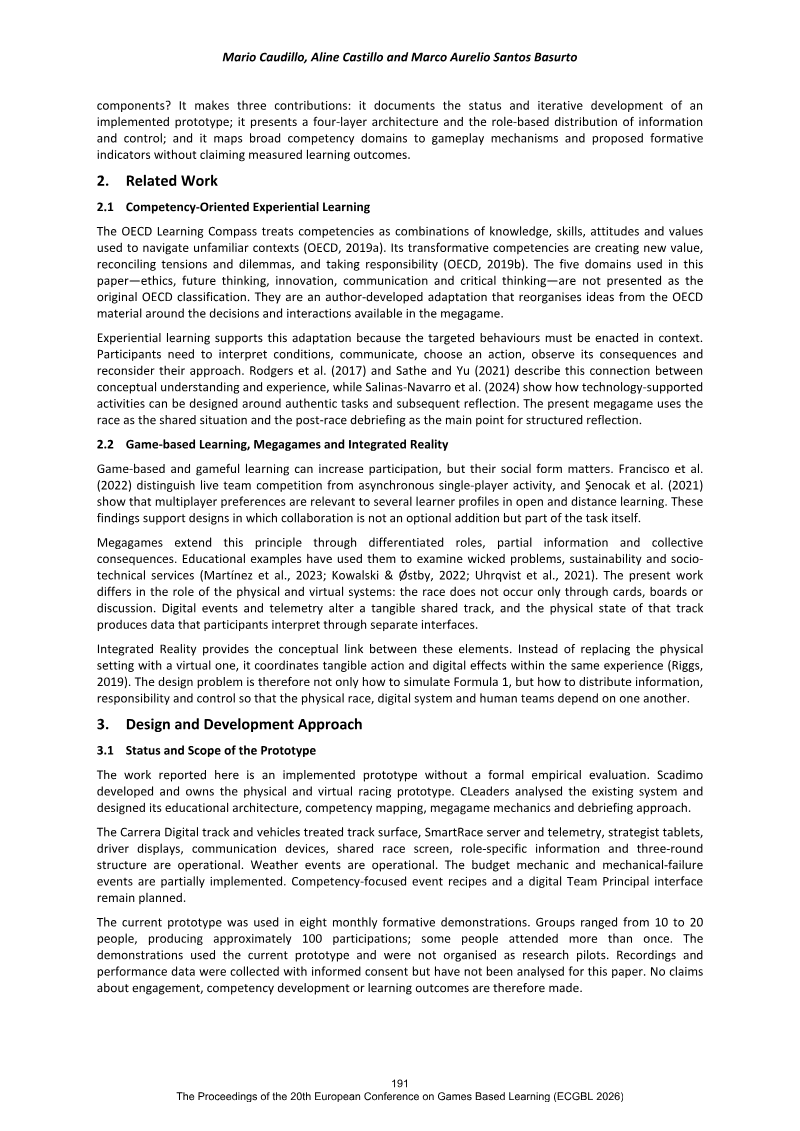
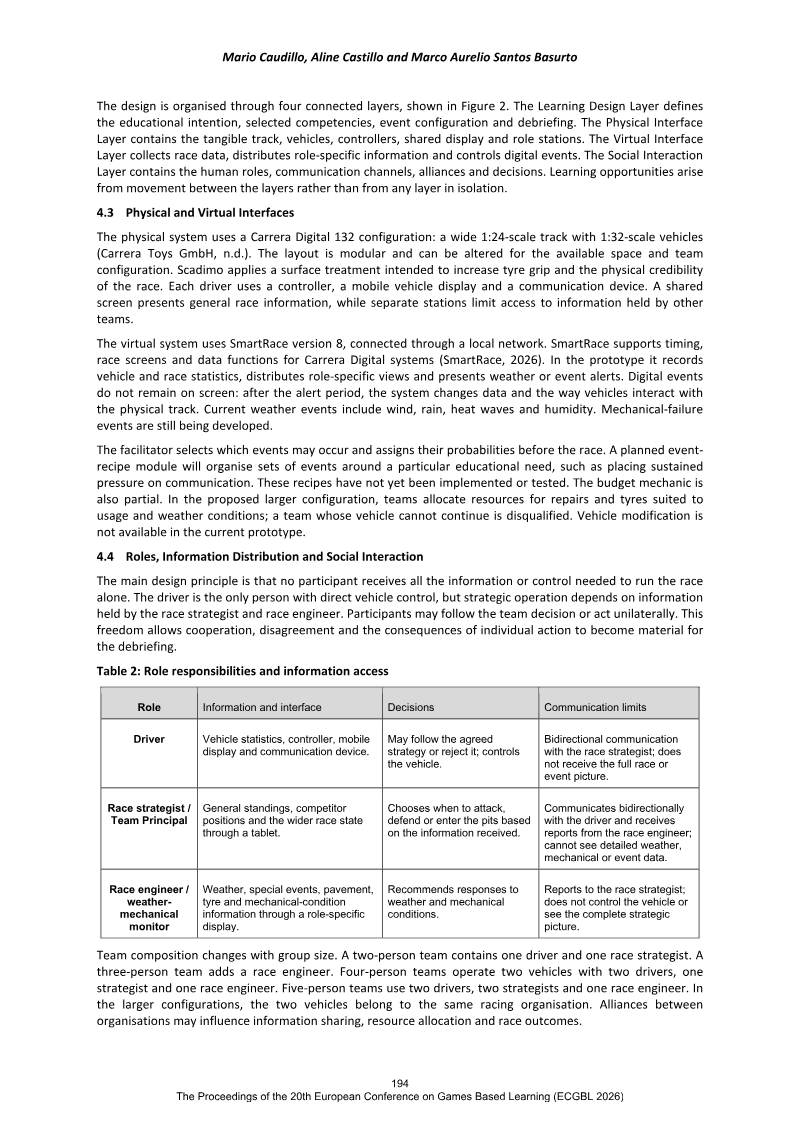
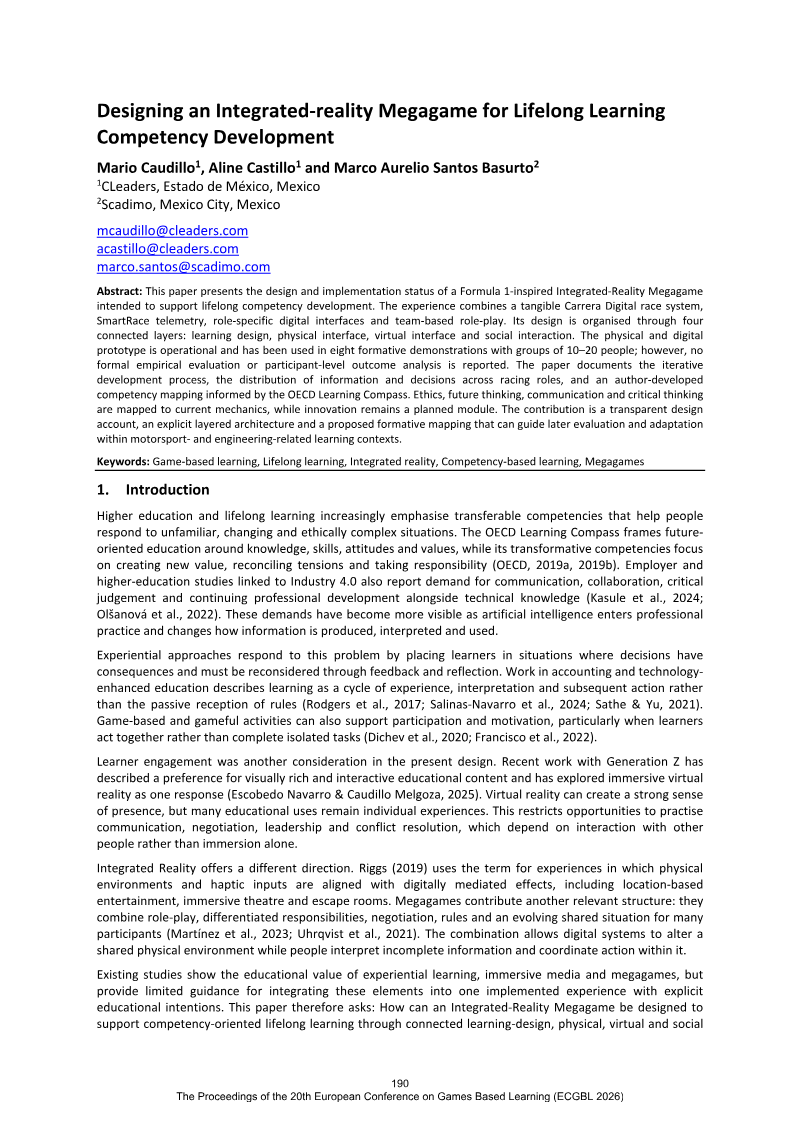
European Conference on Games Based Learning (ECGBL) · 2026