1 free read left. Create a free account for unlimited reading + AI research.
Create free accountWhitepaper European Conference on Games Based Learning (ECGBL)
1 free read left. Create a free account for unlimited reading + AI research.
Create free accountWhitepaperEuropean Conference on Games Based Learning (ECGBL)
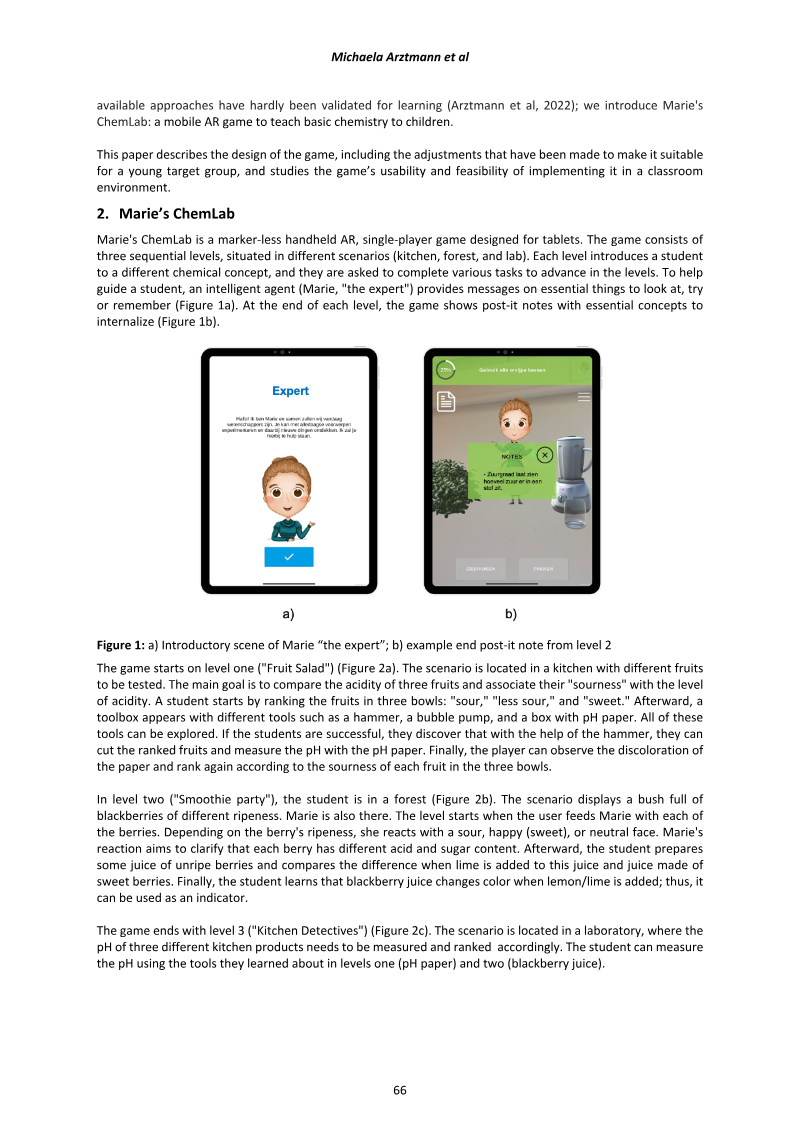
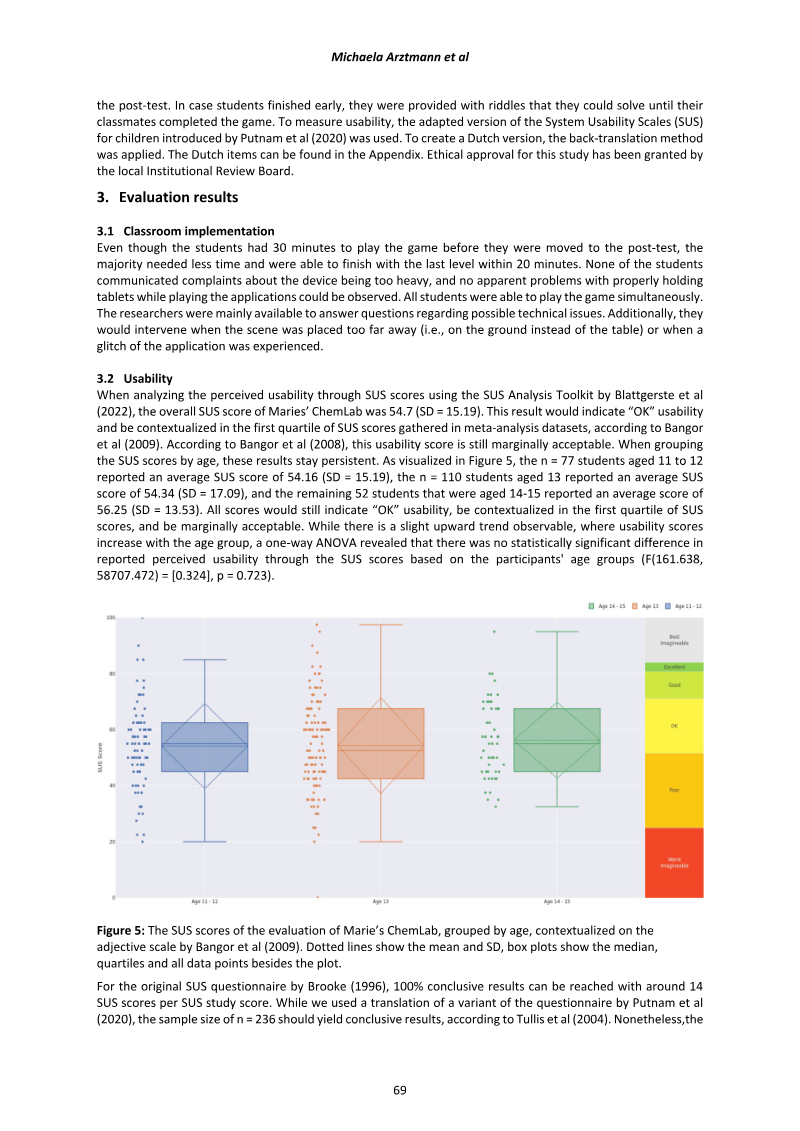
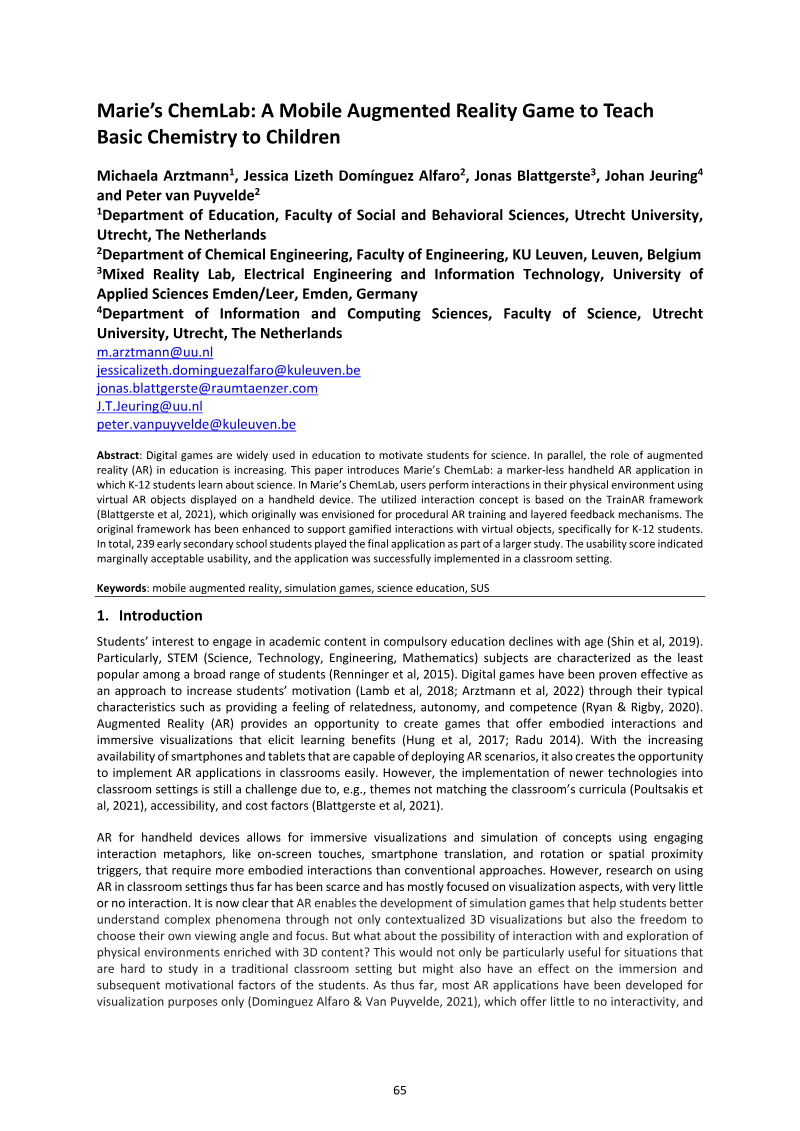
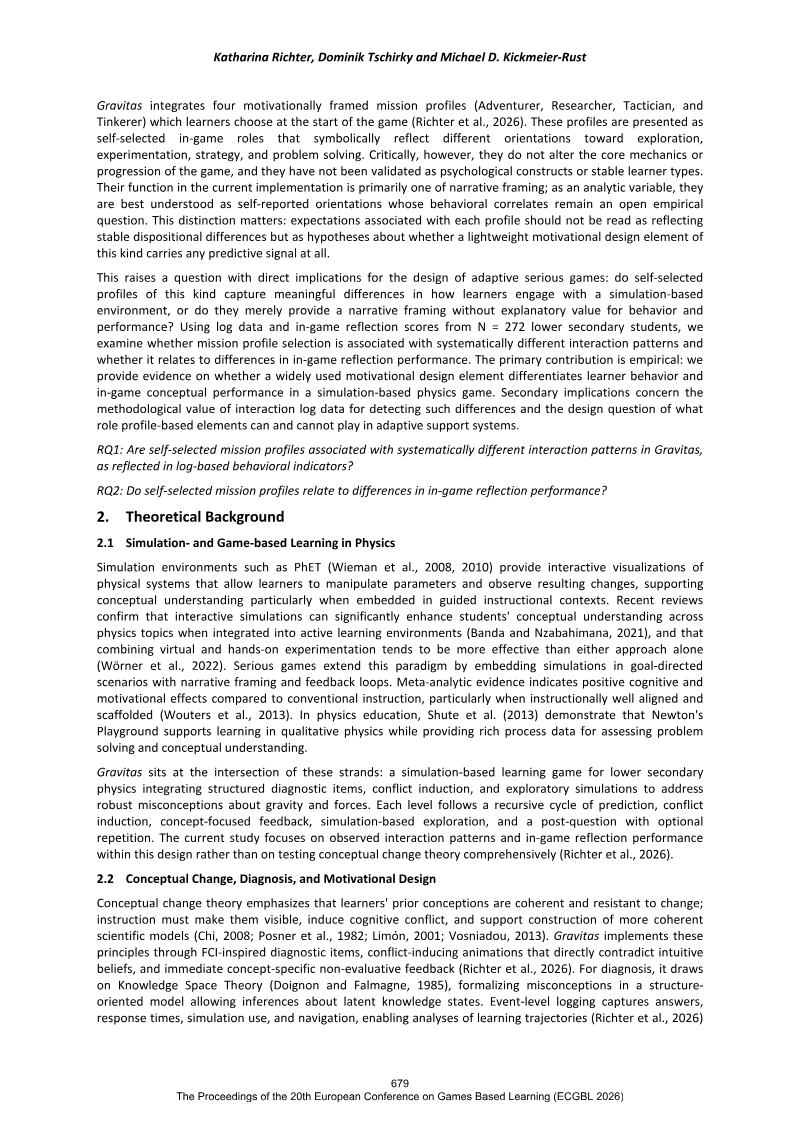
Space Codyssey combines physical components with Augmented Reality, delivered through QR-coded cards scanned by a smartphone or tablet app.
The paper presents Space Codyssey, a phygital educational board game designed to develop algorithmic thinking in preschool and early primary children, roughly ages five to nine. The game combines physical components with Augmented Reality, delivered through QR-coded cards scanned by a smartphone or tablet app built in Unity3D with the Vuforia SDK. Its curriculum targets sequence, repetition, and selection structures along with debugging, and it uses a symbolic, graphical "Visual Programming Language" so that children who cannot yet read can take part. Learning outcomes include understanding basic algorithmic structures, developing programming logic, improving debugging skills, and strengthening spatial perception.
The design process was participatory and iterative, involving 28 primary school teachers across disciplines through semi-structured interviews, concept presentations, and five successive trial versions. Teacher feedback led to concrete changes: the track moved from spherical to cubic planet representations for clarity, the dice was reduced to numbers up to four to suit younger players, and the robot assistant's audio debugging explanations were refined. The authors describe these revisions as expected to improve accessibility and game flow, though the paper reports no measured effects of them.
The study's evidence base is limited to qualitative educator feedback, and the paper contains no empirical data on learning gains. The authors explicitly position the planned next step as a pre- and post-test study with 5- to 9-year-old pupils in Western Macedonia, Greece, which will be analyzed statistically to assess effectiveness. The game was developed for a doctoral thesis, and the paper's contribution is therefore best understood as a design description and formative evaluation rather than a validated intervention.

European Conference on Games Based Learning (ECGBL) · 2026



European Conference on Games Based Learning (ECGBL) · 2026

European Conference on Games Based Learning (ECGBL) · 2026



European Conference on Games Based Learning (ECGBL) · 2026



European Conference on Games Based Learning (ECGBL) · 2026



European Conference on Games Based Learning (ECGBL) · 2026



European Conference on Games Based Learning (ECGBL) · 2026



European Conference on Games Based Learning (ECGBL) · 2026



European Conference on Games Based Learning (ECGBL) · 2026



European Conference on Games Based Learning (ECGBL) · 2026



European Conference on Games Based Learning (ECGBL) · 2026



European Conference on Games Based Learning (ECGBL) · 2026



European Conference on Games Based Learning (ECGBL) · 2026
European Conference on Games Based Learning (ECGBL) · 2026



European Conference on Games Based Learning (ECGBL) · 2026