1 free read left. Create a free account for unlimited reading + AI research.
Create free account
Why mobile games publishers should help carry the technical burden
Key insights
6 takeaways- 01The collaborative model functions as a partnership where the developer provides the initial momentum and the publisher manages the technical environment to ensure the game reaches its target audience.
- 02Publishers should assume responsibility for non-core technical tasks like SDK integrations, crash reporting, and build management to allow developers to focus exclusively on game design and mechanics.
- 03Publishers can accelerate development timelines by providing dedicated engineering support for urgent infrastructure tasks, such as implementing video advertisements.
- 04By managing backend infrastructure, including server hosting, performance monitoring, and on-demand test environments, publishers shield developers from the operational strain of maintaining live services.
- 05Leveraging a publisher’s existing user network for cross-promotion can drive a substantial percentage of a new game's initial user base, significantly increasing launch success.
- 06Publishers provide critical value by offering sophisticated toolsets for user segmentation, A/B testing, and purchase validation, which are essential for optimizing game performance and revenue.
Ask AI about this video
Transcript
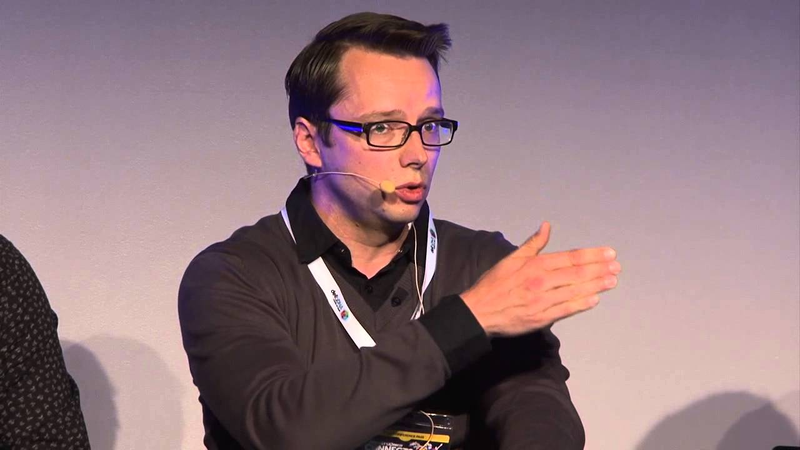
[Music] okay so good morning everyone I'm really happy to be here today and indeed I want to speak a bit about developers publishers and how they work together or at least how they should work together in my opinion especially when it comes to technical stuff first I will speak a bit about myself actually so my name is Nicola Xhosa it won't be a surprise for anyone to learn that I'm French I'm a software engineer and gifted with laziness that means I like automation I like sharing knowledge with my colleagues I like thin code basically I like everything that makes my work a bit easier my company is a German company flag games we are a free-to-play mobile game publisher we have published more than 15 games we own two studios and you
may know some of our games like why we've all two non-stop night zombie gunship and the very recently published super spy heroes so yeah let's talk a bit about publishers and developers it's actually a very interesting relationship they share one goal they want the success of the game and to achieve this goal they both have very specific roles so the developer obviously is making the game while the publisher is using knowledge and experience to work around the game and to boost the potential of the game so if you think of an analogy you can think about curling right so for those of you we don't know curling is a sports about throwing a stone in the middle of a target on ice and if the game is the stone the developer could be
the one throwing the stone which is a very good start but then you need actually the publisher to wrap the ice and make sure that this stone will land in the middle of the target so it's really about working together about communicating as much as possible to achieve together one common goal so what does this actually means most of the time you can divide the task among them the developer will handle working on the game obviously game design assets so everything that is directly concerning the game while the publisher will do everything that is around the game like marketing monetization abstraction ization financing obviously QA support and so on so that's everybody knows already and if you look at that you can actually think yeah that's cool like the publisher they don't need tech people they don't need
to care about tech they can just let the developer care about the technology and they will do everything around that obviously it doesn't have to be that way and obviously given the subjects of this stone that's not my opinion so why should publishers care about tech in the in the first place well first I said already that the role of the publisher is to boost the potential of the game and that can mean monetization but that also means boosting everything that is tech related because they have experience in that so they should care about that too then the more the publishers care about tech the more tech tasks they take over the more time the developer actually has to work on the game itself and finally publishing means having tools obviously because you will want to do user segmentation you will want to do a/b testing and try different
variations of monetization and so on and you need tools for that if you ask the developer as a publisher to do that then the developer will have less time to work on the game so what does it mean in practice so I will use my company fly games as example and I will just show what we do to enable the developer to have more time working on the game itself well the very first example is kind of obvious it's the most simple one you probably know the world's fail fast which is pretty popular in technology and it's basically based on the idea that in tech you will fail which is true in my experience at least so you should fail as fast as possible to be able to learn as fast as possible and if you're good to learn from your mistakes to improve and so on but there is actually an alternative to that you can find someone who failed
already for you and just learn from this someone in that case this someone is the publisher because the publisher has launched a lot of games already and did a lot of mistakes certainly already so they can actually help on that okay then what do we also do we can provide game experts so game developers to boost the capacity of a team I'll just give one simple example the game we recently featured had to be ready for games come and of course it's game development so it was not ready in time we added some developers to their team to implement video ads in the game it's actually a good example because it's not really related directly to game mechanics but it's needed and we didn't want the developer to lose time on that so we did it for them then another thing we try to do is to take over generic tasks so once
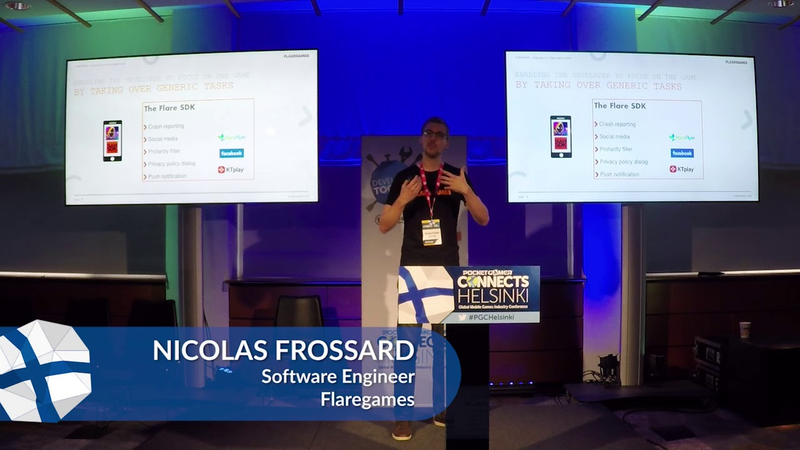
again we don't want to work on the game mechanics themselves that's obviously the responsibility of the game developer but what we can do is handle social media SDK integration to handle crash reporting profanity filter push notification tokens handling and so on that's a lot of technical tasks that you basically need in every free-to-play game but we don't want the developer to lose time on that I learned this morning during my first talk actually that on average a game has up to 16 SDKs to integrate well we do it ourselves and then we have only one SDK for the developer to integrate of course three improve its all the time that means each time we add one new feature or SDK all the games that we have using it and can benefit from it then one another example is build management so in video games
you always have a lot of pills sometimes every day and it can be a nightmare to manage them to know which one is which and where to find them someone to you want to assign them as well in the case of iOS because you may have an external QA and you want them to be able to test this build so we hand out that's all we have a service fetching artifacts from a git repository we assign them if needed and then we have a small interface providing all the bills for all the games maybe a bigger topic something that we take over is back-end infrastructure because most of the time for the developer it's the first game they launch and they have to to ensure scalability of the back-end infrastructures and obviously that's a big challenge and we don't want them to lose time on that to hire maybe DevOps
people and to learn a lot about scalability so we do that for them obviously they provide the code of the servers but we host them we ensure that they will scale as they should we ensure that we handle pre-warming maybe before featuring for example we have full availability we do monitoring ourselves so if during the weekend something is wrong with the servers the developers won't have to wake up in the middle of the night we will so I'm sure they appreciate that we can even generate on-demand test environments like it takes us up to 15 minutes to generate test environments that they can use to test a release and of course we handle security updates so that's a lot of stuff that the developer doesn't have to care about then I said already that for good publishing you need good publishing tools we have a platform for that it has
a lot of features like segmentation customizing the tool on-demand messaging we'll be testing and so on unfortunately I don't have time to show them all so what I will do instead is just show a quick example like let's say we have a new user installing one of our game the first thing the publishing platform will do is to establish a user profile like is this iOS Android what's the country is it a user that we know already maybe this user played another game of us and if so then we will fetch information we will know if it's a player user if his casual or hardcore user and so on also if the user installed the game via a campaign we will take note about that so we will know which campaign we won was successful then if the user finishes the tutorial we will use our customization
tools to balance the game according to what the user did during the tutorial if the user opens the shop we will apply promotions and address the prices maybe there is an events ongoing so we will adjust the prices according to that and again we support a be testing for everything so we can test different variations if the user buys an item we will validate the purchase obviously in free-to-play is extremely important to validate every purchase so we handle that so the developers don't have to do it if the user has a request maybe the user lost his phone and want to recover his account we have administration tools to write tickets to communicate with the users and so on and finally if the user stops playing the game we will automatically be able to send push notifications to try to get the user back in the game so
that's all handled by the publishing platform that's connected to all our games used by all our games and that's something the developer don't have to work on ok and finally the secret weapon so everything that we've seen for now could be done by the developer in theory like a developer choosing to self publish to do that himself could hire dev ops engineer could maybe use existing publishing tools that exist of course one thing the developer doesn't have is the portfolio so we have a big portfolio of games we know a lot of use already and we can use them as a leverage to ensure the success of a game just giving you one simple example the last game we published superheroes 20% of the users who are known to us already either because we have a lot of games already so the probability that they played one of them is actually pretty
high we cross promoted some users to this game to ensure its success ok so that would be it to sum it up a bit why should publishers actually care about tech well first their job is to boost the success of the game and that also means boosting tech related aspects the more they do on the tech aspects the less it is to be done by the developer so it's actually more time to work on the game itself it enables better publishing with better publishing tools and finally the secret weapon the portfolio they actually have a lot of users that they know already and they can use it to boost the success of the game okay then that would be its thanks a lot and you
Summary
Mobile game publishers should actively assume a greater share of the technical burden to maximize the success of their titles. By offloading complex, non-core technical tasks from developers, publishers allow creative teams to focus exclusively on game design and mechanics. This collaborative model functions similarly to the sport of curling, where the developer provides the initial momentum, and the publisher manages the environment to ensure the game reaches its target audience effectively.
Publishers provide significant value by leveraging their historical experience to help developers avoid common pitfalls, effectively accelerating the learning curve. Key technical responsibilities that publishers can absorb include managing third-party SDK integrations, handling crash reporting, implementing profanity filters, and overseeing build management. Furthermore, publishers can provide dedicated engineering support to assist with urgent tasks, such as implementing video advertisements, ensuring that developers remain focused on core gameplay rather than infrastructure maintenance.
Infrastructure management represents a critical area for publisher intervention, particularly regarding backend scalability and security. By hosting servers, monitoring performance, and managing on-demand test environments, publishers protect developers from the operational strain of maintaining live services. Additionally, publishers offer sophisticated toolsets for user segmentation, A/B testing, and purchase validation. These tools, combined with the publisher’s existing portfolio of users, create a powerful ecosystem for cross-promotion. By utilizing data from previous titles, publishers can significantly boost the launch success of new games, as evidenced by instances where a substantial percentage of a new game's initial user base is derived from the publisher’s existing network. This holistic approach to technical support ultimately creates a more efficient development cycle and a more robust, scalable product.
















Comments