ArticleGame Discovery Now
What Happened to Early Access Graduates in 2026
19 May 20261 pages~11 min full read
Key insights
4 slides
The core finding
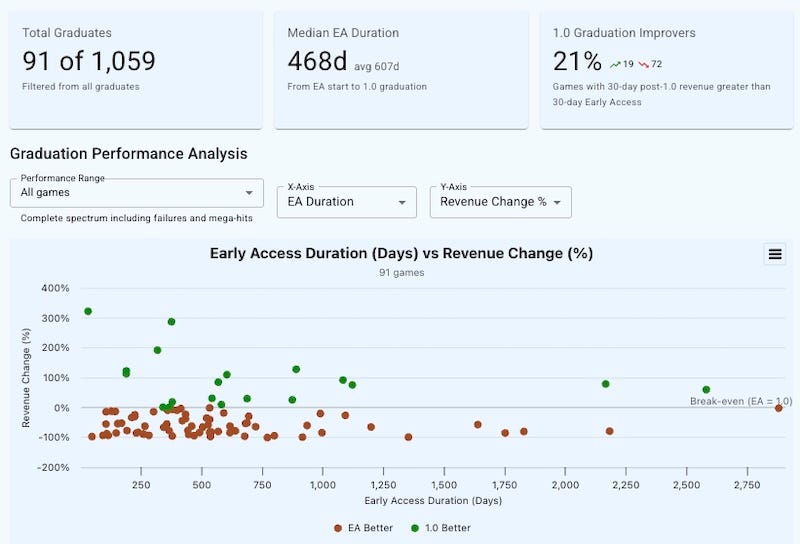
Only 21% of tracked titles earned more at 1.0 launch.
The analysis found that 21% of tracked games achieved higher revenue at their 1.0 launch compared to their initial Early Access debut.
Genre and design
Expandable, feature-rich gameplay loops drive successful 1.0 launches.
Successful graduates often feature expandable, feature-rich gameplay loops, such as strategy or simulation titles, that allow for continuous content layering. Games like Timberborn, Shapez 2, and Terra Invicta are often driven by strategic, expandable genres that benefit from community-driven development and feature layering.
The quality gap
Genuine unfinished products fail to meet 2026 consumer expectations.
There is growing industry skepticism toward the model, as many developers enter Early Access with truly unfinished products that fail to meet the higher quality expectations of 2026 consumers. The 'pot of gold' upside at 1.0 is rare.
Discovery channels
Short-form video and platform updates shape game discovery.
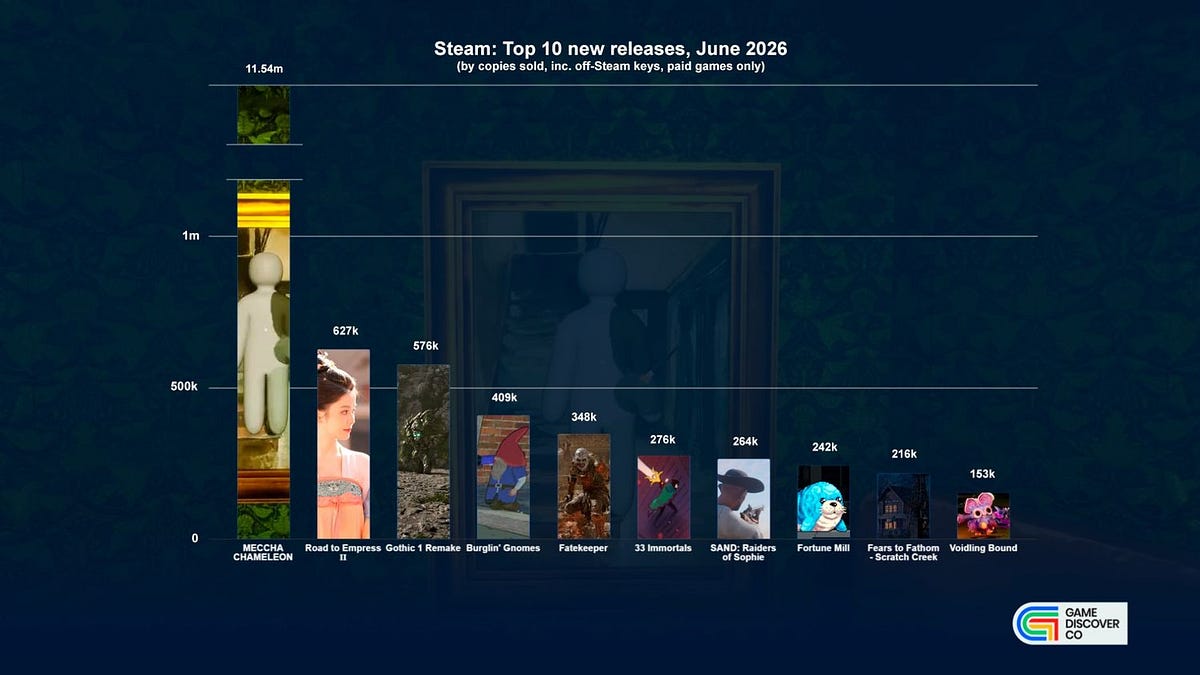
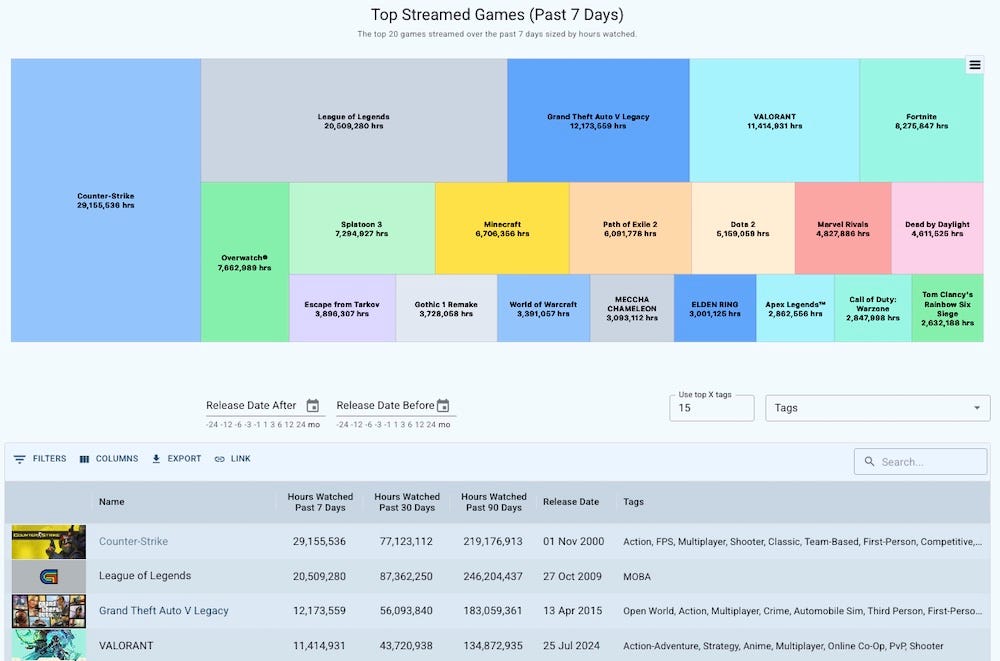
Short-form video promotions based on viral concepts are trending for game discovery, with unreleased titles like KingFish and Meccha Chameleon topping 'trending' wishlists due to their unique hooks. Steam recently updated its tag system, adding 17 new tags, removing 28, and merging others.
1 / 4
Ask AI about this report