1 free read left. Create a free account for unlimited reading + AI research.
Create free accountWhitepaper ETC Press
1 free read left. Create a free account for unlimited reading + AI research.
Create free accountWhitepaperETC Press
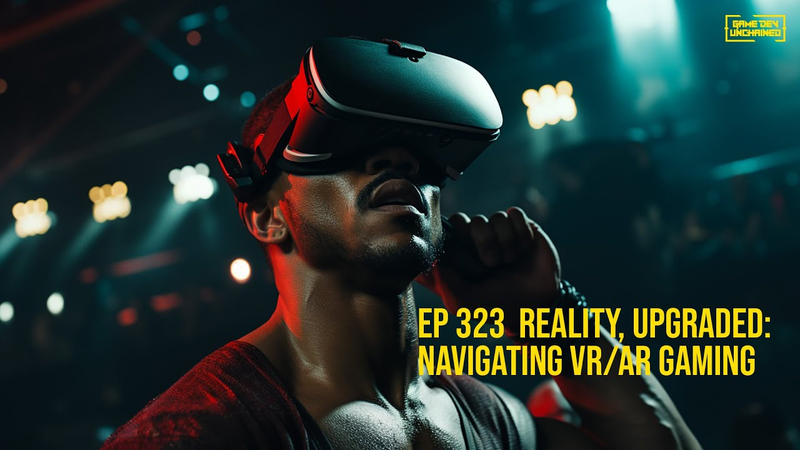
The development of immersive media requires a fundamental shift in design philosophy, moving away from traditional gaming paradigms toward solutions that prioritize physical presence and spatial embodiment. By examining post-mortems of various virtual and mixed reality projects, it becomes clear that successful immersive experiences depend on aligning control schemes with the specific physical constraints of the avatar. For instance, research into non-human, quadrupedal embodiment demonstrates that mimetic, arm-swinging locomotion significantly outperforms standard joystick or teleportation methods by synchronizing physical movement with in-game actions, thereby reducing cybersickness and deepening user immersion.
Beyond locomotion, the integration of advanced artificial intelligence and iterative spatial design proves essential for creating believable virtual environments. The use of reinforcement learning to generate non-scripted, reactive AI opponents offers a pathway to more organic NPC behavior, surpassing the limitations of deterministic animation. Simultaneously, projects focused on spatial interaction, such as voxel-based sculpting, highlight the necessity of balancing technical performance with ergonomic accessibility. These findings suggest that developers must prioritize qualitative, designer-focused research and iterative playtesting to address the unique challenges of VR, such as player fatigue, varying skill levels, and the complexities of blending virtual elements into unpredictable real-world spaces.
Ultimately, the evolution of immersive media relies on a commitment to open knowledge sharing and experimental design methodologies. By documenting the successes and failures of specific development cycles, the industry can better navigate the technical hurdles of mixed reality and the uncanny valley. This collaborative approach, supported by open-access publishing models, ensures that the design principles required to foster presence and intuitive interaction remain accessible, ultimately driving the maturation of virtual and augmented reality as sophisticated, user-centric mediums.
ETC Press · 2023
ETC Press · 2023
ETC Press · 2022
ETC Press · 2022

ETC Press · 2022

ETC Press · 2022

ETC Press · 2021
ETC Press · 2021

ETC Press · 2021
ETC Press · 2021
ETC Press · 2021

ETC Press · 2020