1 free read left. Create a free account for unlimited reading + AI research.
Create free accountArticle GameRefinery
1 free read left. Create a free account for unlimited reading + AI research.
Create free accountArticleGameRefinery
It allows for identifying scalable assets more effectively.
Testing focus. Marketers should prioritize testing specific visual hooks rather than conducting expensive, full-concept A/B tests.
Generative AI is fundamentally transforming mobile advertising by enabling marketers to accelerate creative production, enhance testing efficiency, and optimize campaign performance. The primary thesis is that while generative AI provides powerful tools for ideation and rapid iteration, its success in the mobile ecosystem depends on high-quality data inputs, clear strategic objectives, and robust brand safety protocols.
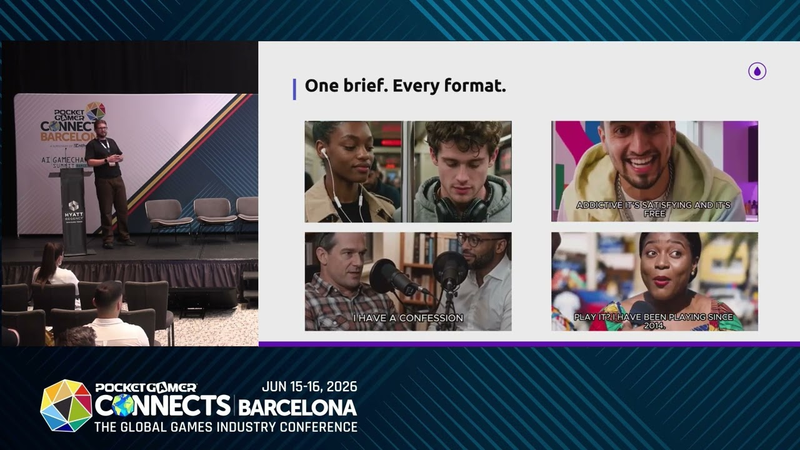
Industry experts emphasize that generative AI allows for the cost-effective production of hundreds of creative variations, including adjustments to text, backgrounds, and visual elements. Rather than relying on traditional, expensive A/B testing for entire concepts, practitioners are increasingly utilizing AI to test specific components, such as visual hooks within the first three seconds of a video. This modular approach allows algorithms to identify scalable assets more efficiently, ensuring that resources are focused on high-performing elements.
To maintain brand integrity while scaling, experts recommend modularization—treating narrative and visual building blocks as distinct units for separate approval—and utilizing custom AI gateways to enforce brand guidelines and tone of voice. Furthermore, the effectiveness of these tools is directly tied to the quality of proprietary data. Marketers are encouraged to prioritize data collection and process automation to create a continuous feedback loop of production, testing, and analysis.
The insights presented reflect a consensus among mobile user acquisition professionals that generative AI is not a replacement for human strategy but a force multiplier. By focusing on prompt engineering and data readiness, organizations can better navigate the competitive mobile landscape. The findings underscore that the most successful adopters are those who integrate AI into a structured, data-driven workflow that prioritizes scalability and measurable performance outcomes.

GameRefinery · 2026

GameRefinery · 2026

GameRefinery · 2026

GameRefinery · 2026

GameRefinery · 2026

GameRefinery · 2026

GameRefinery · 2026

GameRefinery · 2026

GameRefinery · 2026

GameRefinery · 2026

Liftoff · 2026

GameRefinery · 2025