1 free read left. Create a free account for unlimited reading + AI research.
Create free accountArticle gamevironments
1 free read left. Create a free account for unlimited reading + AI research.
Create free accountArticlegamevironments
Its cyclical, nuclear-family-centred story associates violence, heroism and fatherhood with men and confines women to supportive or victim roles.
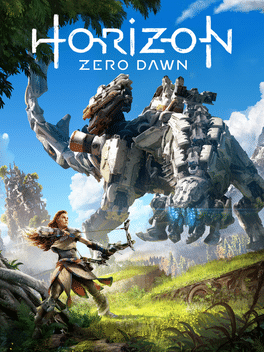
Marie-Luise Meier's article examines how post-apocalyptic roleplaying games handle gender, arguing that the apocalypse's "reset" of society offers a rare opportunity to challenge hegemonic gender norms, an opportunity the genre rarely takes up. Drawing on cultural studies and procedural rhetoric, the analysis holds that most post-apocalyptic narratives reinstate traditional hierarchies without critique and that technology and science remain strongly male-coded. The study centers on two critically acclaimed titles, Fallout 4 (2015) and Horizon Zero Dawn (2017), treating them as contrasting case studies in how different apocalyptic framings shape gender representation.
The central finding is that Fallout 4 reinforces binary oppositions and naturalizes gender roles through both gameplay and narrative. Its cyclical, nuclear-family-centered vision associates violence, heroism, and fatherhood with men while confining women to supportive or victim positions, and its binary character creation, with gendered hairstyles and body options, enforces a strict gender system. Horizon Zero Dawn, by contrast, is framed as a "post-post-apocalyptic" setting in which the ancient collapse has largely been forgotten. Its pre-apocalyptic world depicts gender-equal research teams, and its present-day societies, including the matriarchal Nora and diverse frontier settlements, subvert stereotypes more substantially. Its heroine Aloy reclaims traditionally male domains such as violence and technology while emphasizing diplomacy and cross-cultural unity.
The analysis is not uncritical of Horizon Zero Dawn. Meier notes limitations including a combat-heavy gameplay loop, skill systems that constrain the depth of its transformation, and narrow cutscene coverage. Overall, the article positions the two games as opposing approaches: one reinforcing a nostalgic, androcentric past, the other using the apocalypse as a vehicle for reimagining gender.
DiGRA · 2026