Loading the document
1 free read left. Create a free account for unlimited reading + AI research.
Create free accountWhitepaperJMIR Publications
Current rehabilitation efforts are often hindered by patient disengagement and systemic service constraints.
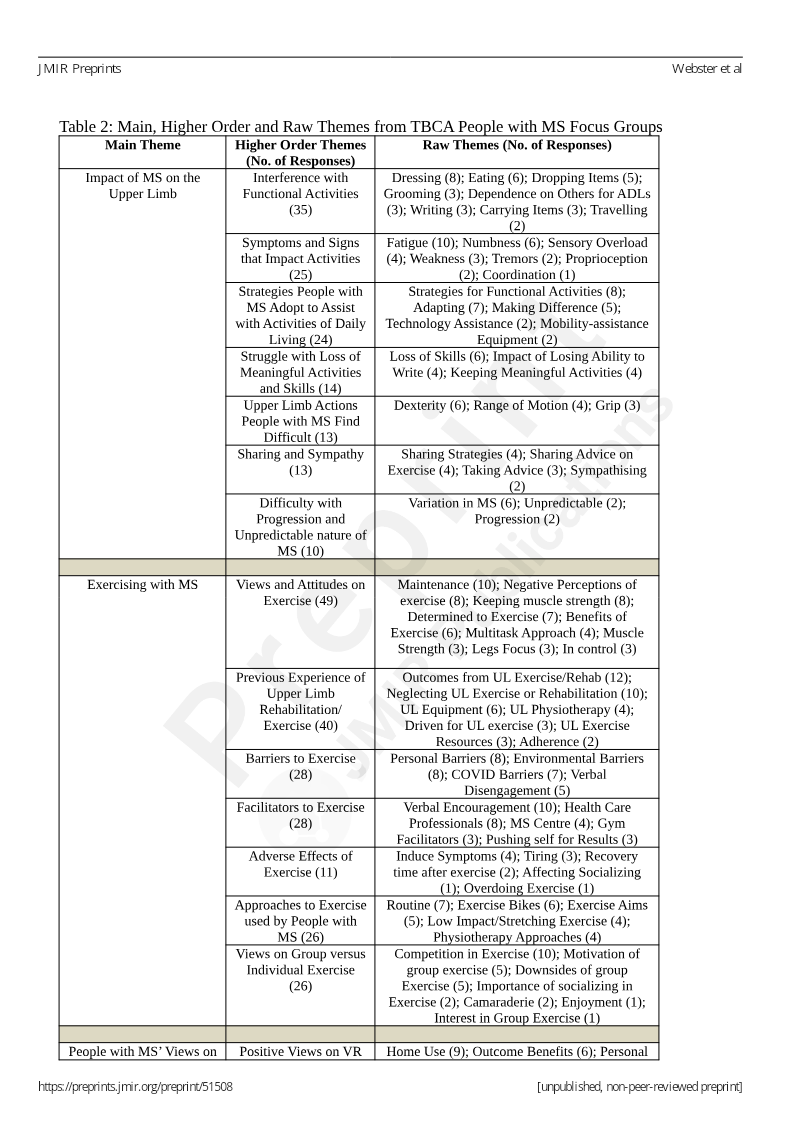
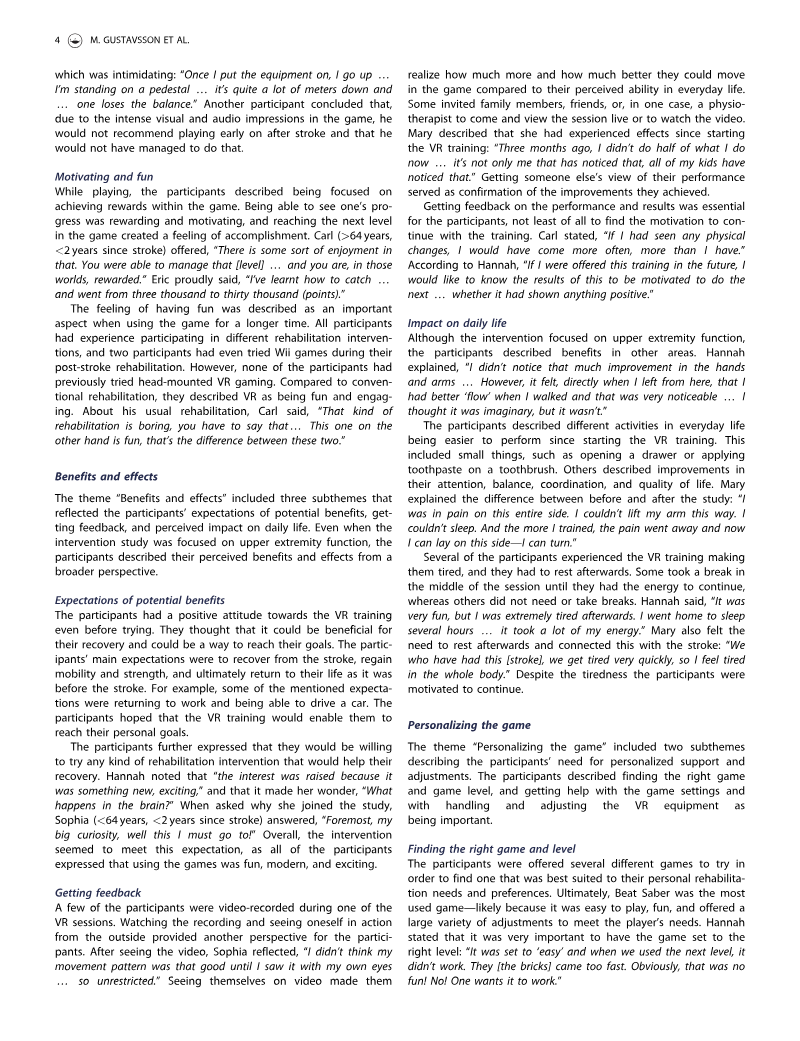
Upper limb impairment significantly impacts the quality of life for individuals with multiple sclerosis, yet current rehabilitation efforts are frequently hindered by patient disengagement and systemic service constraints. Virtual reality emerges as a transformative solution, offering an immersive and engaging platform to disguise repetitive therapeutic exercises as goal-oriented, interactive tasks. By shifting the focus from traditional, often monotonous physical therapy to personalized digital experiences, virtual reality holds the potential to improve long-term adherence and motor skill maintenance for patients navigating the unpredictable progression of the disease.
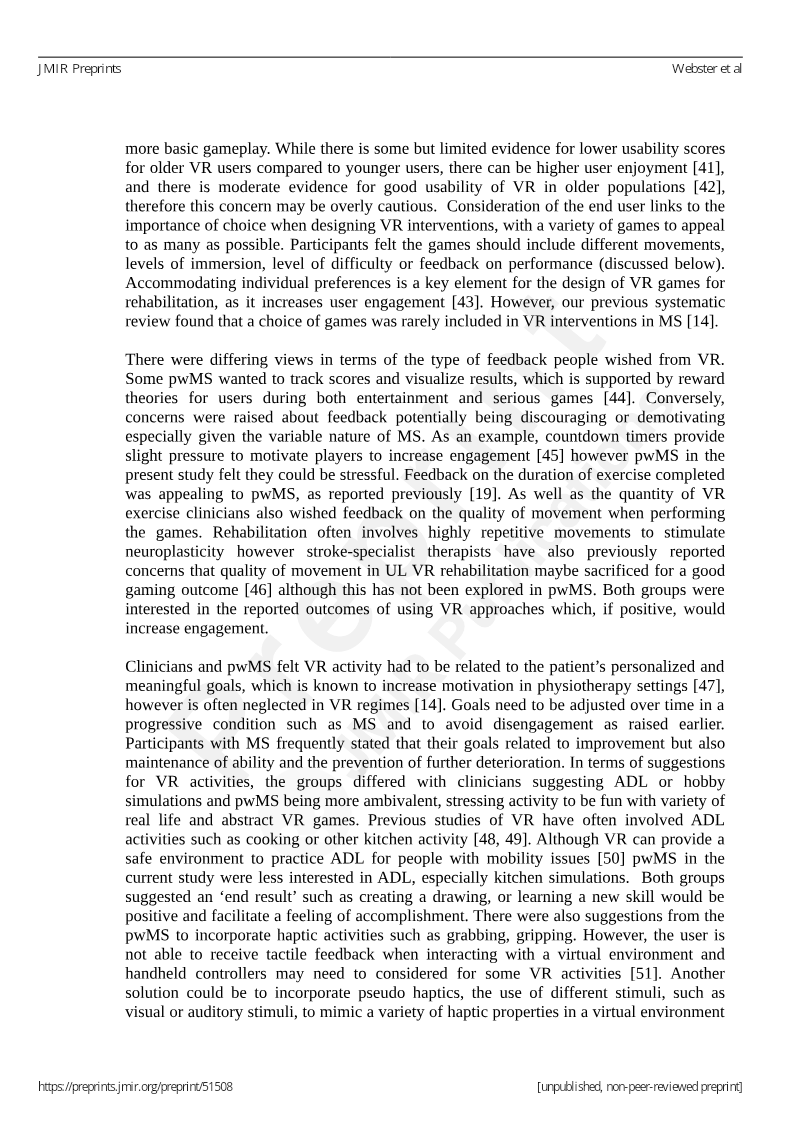
The successful integration of these technologies requires a collaborative design process that bridges the distinct preferences of clinicians and patients. While clinicians prioritize functional activities that mirror daily living tasks and provide qualitative feedback on movement quality, patients often favor abstract, entertaining gaming experiences that offer a reprieve from the clinical nature of their condition. Developers must reconcile these perspectives by creating adaptable, customizable interventions that account for individual physical limitations while mitigating common technical barriers such as hardware discomfort and cybersickness.
Ultimately, the transition toward virtual reality in multiple sclerosis rehabilitation necessitates a move away from generic commercial exercise games toward specialized, therapist-supervised tools. These systems must be capable of tracking both the quantity and quality of movement to ensure therapeutic efficacy. By addressing accessibility, motivation, and the specific psychological barriers faced by those with multiple sclerosis, virtual reality can evolve into a robust, home-based rehabilitation standard that empowers patients and optimizes clinical outcomes.
JMIR Publications · 2025
JMIR Publications · 2024
JMIR Publications · 2024
JMIR Publications · 2023
JMIR Publications · 2019
JMIR Publications · 2018
National Research Council Canada · 2025
Comments