More from JMIR Publications
View allArticle
Mobile Exergames to Reduce Sedentary Time in Patients With Heart Failure: What Do Health Care Professionals Expect?
JMIR Publications · 2025
Article
The Rationale Behind the Design Decisions in an Augmented Reality Mobile eHealth Exergame
JMIR Publications · 2024

Whitepaper
Upper Limb Impairment and the Potential Role of Virtual Reality in the Rehabilitation of the Upper Limb in Multiple Sclerosis: Views of Specialist Clinicians and People With MS
JMIR Publications · 2024
Whitepaper
An Escape Game on University Student Mental Health During the COVID-19 Pandemic: A Co-Creation Approach
JMIR Publications · 2024
Whitepaper
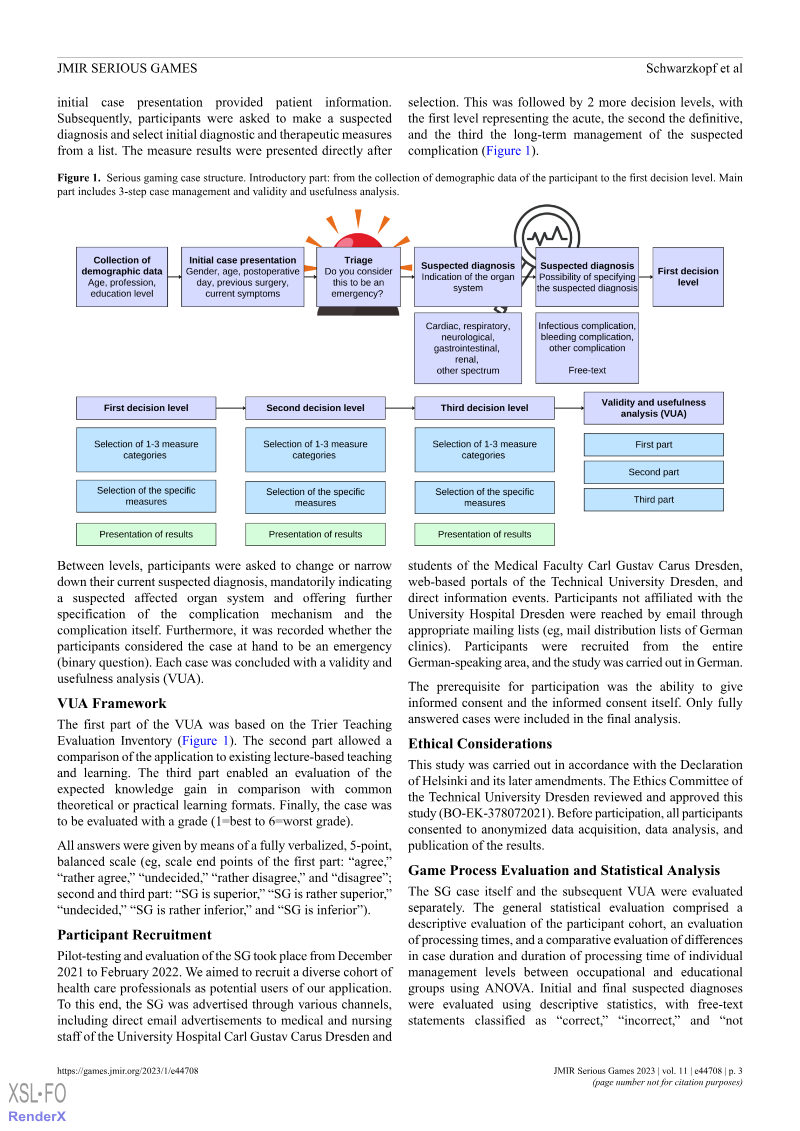
Case-Based Serious Gaming for Complication Management in Colorectal and Pancreatic Surgery
JMIR Publications · 2023
Whitepaper
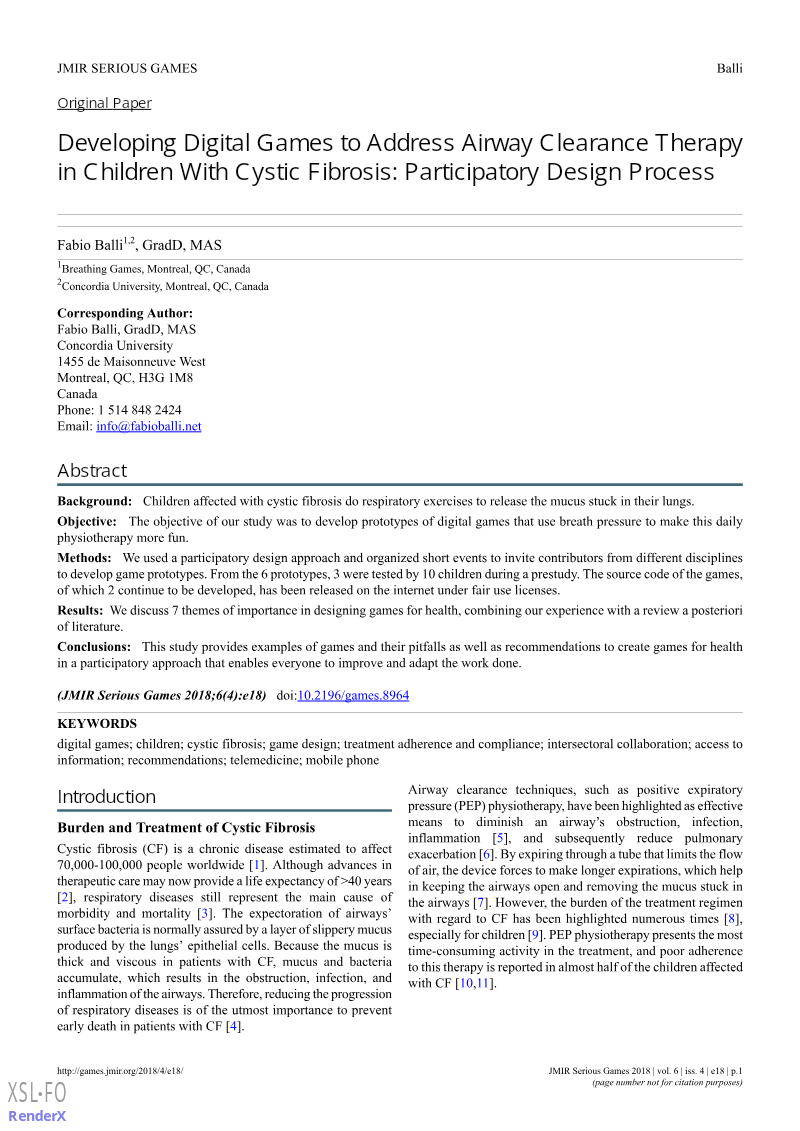
Developing Digital Games to Address Airway Clearance Therapy in Children With Cystic Fibrosis: Participatory Design Process
JMIR Publications · 2018