1 free read left. Create a free account for unlimited reading + AI research.
Create free account
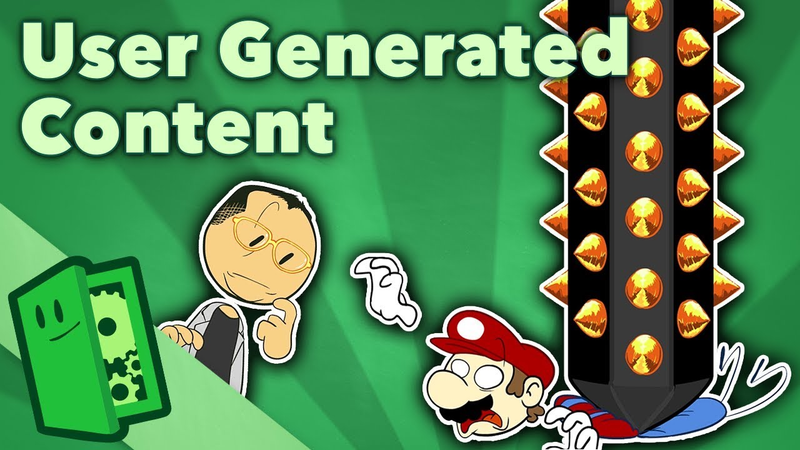
User Generated Content - The Upsides and Pitfalls to Level Editors - Extra Credits
Key insights
6 takeaways- 01Effective UGC ecosystems require a balance between accessibility and depth, as overly complex tools discourage participation while overly simple tools lead to low-quality content.
- 02User-generated content (UGC) extends a game's lifespan by decoupling its longevity from the size of the active player base, allowing small communities to sustain interest for decades.
- 03The primary operational cost of UGC is the necessity for robust curation and moderation systems to prevent low-quality or offensive material from alienating the player base.
- 04Developers must implement discovery systems, such as rating algorithms and manually curated lists, to ensure high-quality content remains visible to the community.
- 05Human moderation teams and effective reporting systems are essential to mitigate the risks of malicious content and maintain a positive user experience.
- 06Developers can maintain quality control by occasionally seeding platforms with their own content to set a standard for the community.
Ask AI about this video
Transcript
Okay, quick question up top. After combat, what's the number one way you would say that games engage with players? Maybe? Kind of? Uh, you know, whatever floats your boat. Uh, I was going to say creation. There's some innate drive many of us have to make something of our own, whether it be in Minecraft, Mario Maker, or Morrowind. Level editors and other creation tools have been around since the early days of games, from custom Excitebike courses to Wolfenstein maps, because we quickly realized how powerful these tools can be. But, enabling user-generated content also comes with a price. This episode is brought to you by Skillshare, an online learning community where you can fuel your curiosity, creativity, or even your career. For a 2-month free trial, click the link in the description below. So, what's the advantage of enabling user-generated content in a game? The answer's pretty simple: replay value. This accomplishes the same goal as procedurally generated content, but whereas procedural generation is forever
bound by the constraints of its algorithm, level editors allow thousands of players to bring their own unique perspectives into their games, and this means a potentially unlimited supply of zany, out-there levels that the dev team couldn't possibly invest the time to create, or might never even think of. But, even Mr. Tezuka, the producer of Super Mario Maker, expressed surprise how popular punishing courses turned out to be, because what professional level designer would ever create a Mario level that becomes unwinnable the second you eat a mushroom, or a level in Portal that literally doesn't allow you to place any portals? Even if the pros did make something like that, playtesting usually shuts down such bonkers ideas for either being too confusing or out of place compared with the rest of the game's content. But, with editors, players are free to be as weird or masochistic as they want. Additionally, user-generated content doesn't require the community to be online at the same time in order to interact. One big disadvantage of cooperative, and especially competitive multiplayer, is that that requires a large amount of people to be playing simultaneously. A dwindling community spells death for
multiplayer games. But on the other hand, a small dedicated group of content creators can keep games alive years after their original release. For instance, Doom is predominantly single-player with four sequels, but the original game still has a vibrant modding community. Even one of its original creators, John Romero, is still dropping level packs 25 years in. So, why don't all games just ship with a level editor? Well, there's a common misconception that it's because supporting user-generated content is hard. But I actually don't think that's it. What's difficult is making level creation fun. I mean, think about it. Almost every professional development team has a level editor they use to create the worlds that their game ships with, but they're meant for efficiency, not enjoyment. Those tools are powerful, but usually clunky, hard to learn, and include advanced features that would let unscrupulous people break the game in pretty dangerous ways. Even modding tools like Bethesda's Creation Kit are not for the faint of heart. But in-game editors have to be easy enough for any player to pick it up and start creating right away. They need a broad enough feature set that players feel like they
can do anything with them, but also be limited enough so that players aren't completely overwhelmed. If you want a great example of an editor done right, check out Portal 2's. You'll be glad you did. Okay, tough animated room. But if you're going to make content creation easy, you have to be prepared. If the tools are so simple that anybody can publish anything without effort, they most certainly will. And it's definitely not good for a game's continued success if the overwhelming majority of user-made content is mediocre or actively bad. Also, user-generated content can have somewhat of a stigma, and many players are hesitant to play random content by other users as opposed to the content made by professionals that they know is good. And if most people's first experience with a piece of player-made content is bad, they're probably not going to go back and play anymore. So, this means you need a good way for users to find quality content, And that can be incredibly expensive, incredibly time-consuming, and a pretty big gamble. It requires a system for users to rate content in a way that not only means
that good content rises to the top, but that players also see things relevant to their interests. For instance, if Mario Maker only shows people impossible levels, a large part of the community is going to take one look at that and never come back. At the same time, you also need to have your algorithms help you detect bad faith content, such as people trying to add extremist symbolism to your game, or even turn it into pornography. And the real kicker is, those algorithms are never actually going to be good enough to do it on their own. So, you're also going to need a team of human beings to appeal bad bans and watch the top-rated content list to fend off waves of trolling upvotes. And this is by far the biggest cost when it comes to user-generated content, because bad content really does destroy all the hard work you put into your user-generated content system. For example, Sucker Punch noticed a sharp drop in engagement with Infamous 2's user-generated missions. When they dug into it, they found out that the first mission that everyone encountered was sub par. But then, once they replaced it with a better one, engagement went back up. Another way to ensure a player's
initial experience is positive is even to cheat a little bit and add some user-made levels that were really created by the game's designers. You've probably even played some of those without ever knowing. So, the key to good and successful user-generated content is to balance making the creation tools fun enough that people want to use them without your user-generated content list being filled with empty levels or trolling content. And if you can pull this off, your game can have infinite replayability and find an audience of content creators to keep it alive for decades. Even if just a handful of dedicated creators are still making stuff, other players will have a reason to keep coming back. And speaking of dedicated creators, you can learn from tons of them via our sponsor for this episode, Skillshare, where you can join classes and communities that are just right for you. For instance, a bunch of us at EC are writers. So, I've been checking out Skillshare's creative writing courses, such as Writing for Self-Discovery by Yasmine Cheyenne, that taught me some relaxing brain dumping exercises. And also, Writing Suspense by Ben Percy,
where I learned all about story math and the turn style of mysteries. Ooh. Not to mention, Skillshare is also super affordable when compared to in-person courses, and an annual subscription begins at less than $10 a month. But, if you sign up with the link in the description below, you'll get a 2-month free trial that can help you create content that thrives.
Summary
User-generated content serves as a powerful mechanism for extending a game's lifespan and fostering player engagement. By providing tools for creation, developers can transcend the limitations of procedural generation, allowing players to introduce unique perspectives and unconventional gameplay experiences that professional designers might overlook or reject during standard playtesting. This approach effectively decouples a game’s longevity from the need for a large, simultaneously active player base, as even a small, dedicated community of creators can sustain interest in a title for decades.
However, the implementation of these tools presents significant challenges. A primary hurdle is the design of the interface; while professional development teams utilize efficient but complex internal tools, consumer-facing editors must balance accessibility with depth. If tools are too difficult to learn, they discourage participation, but if they are too simple or unconstrained, they risk flooding the game with low-quality or malicious content.
The most substantial cost associated with user-generated content lies in curation and moderation. Because the prevalence of poor-quality or offensive material can quickly alienate players, developers must invest heavily in robust discovery systems, rating algorithms, and human moderation teams to ensure high-quality content remains visible. Strategies such as manually curating top-rated lists, implementing effective reporting systems, and occasionally seeding the platform with developer-created content are essential to maintaining a positive user experience. Ultimately, the success of a user-generated content ecosystem depends on the delicate balance between empowering creative freedom and maintaining rigorous quality control to prevent the degradation of the player experience.



















Comments