Key insights
7 slides
Key number
62% of U.S. adults aged 18 to 65 are active gamers.
The gaming landscape in 2024 has solidified as a mainstream entertainment pillar. This audience is characterized by high engagement across multiple devices.
Page 7 of the report62%
of U.S. adults aged 18 to 65 are active gamers
- of players utilize multiple platforms
- 77%
- play across PC, console, and mobile combined
- 40%
Demographic profile
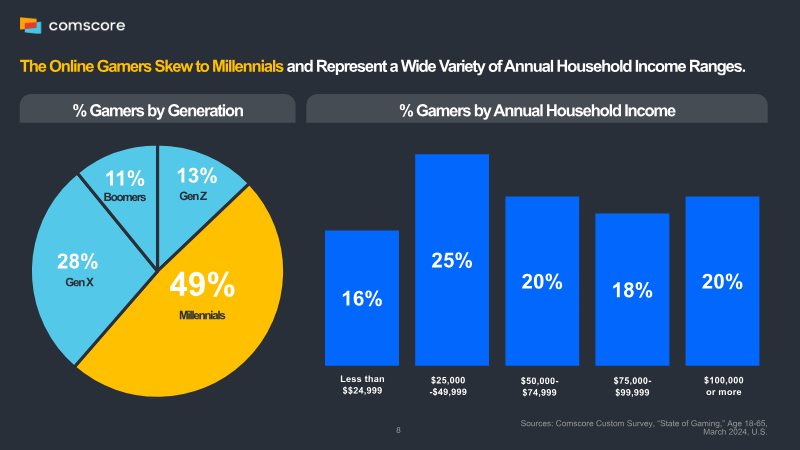
The U.S. gaming audience skews toward Millennials.
The demographic profile of the U.S. gaming audience skews toward Millennials. It spans a wide range of household income levels.
Willingness to pay
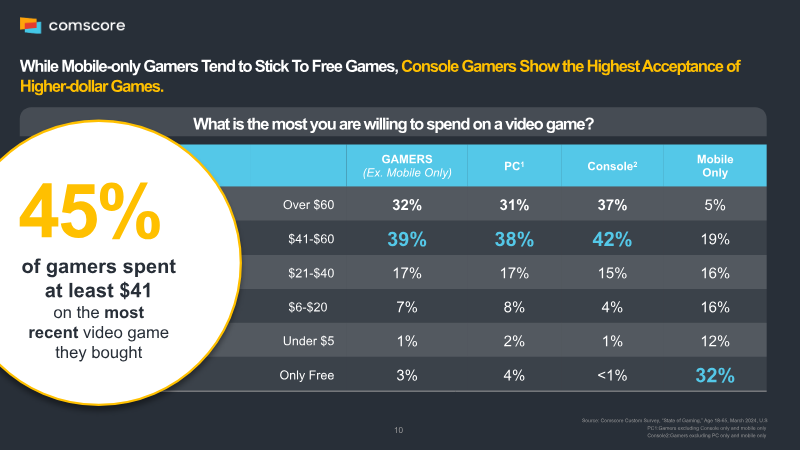
45% of all gamers spent over $40 on their most recent purchase.
Console and PC players demonstrate a high willingness to invest in premium content. Mobile-only gamers typically prefer free-to-play titles.
Platform preferences
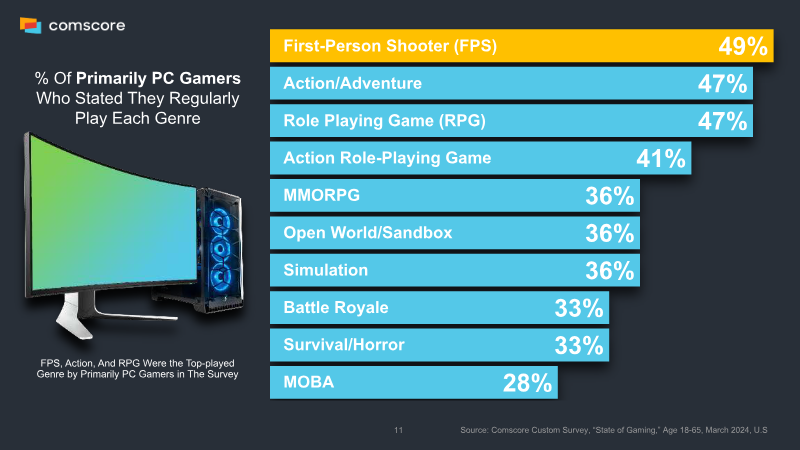
Genre preferences vary by platform among U.S. gamers.
PC gamers favor first-person shooters, action, and role-playing games. Console players show a strong preference for action-adventure, sports, and racing titles.
Ad reception
Approximately two-thirds of gamers view ads as positive or neutral.
Product placements can enhance realism for a portion of players.
Ad acceptance. Approximately two-thirds of gamers view advertisements as having a positive or neutral impact on their gaming experience.
Page 15 of the reporttwo-thirds
of gamers view advertisements as having a positive or neutral impact
- state that product placements can enhance realism
- 34%
Measurement and impact
Non-intrusive in-game ads can drive measurable brand lifts.
Case studies show that non-intrusive in-game ads can drive substantial lifts in brand favorability, recommendation, and purchase intent. Partnerships now allow advertisers to quantify incremental reach.

Strategic fit
Gaming offers significant opportunities for brand growth.
The gaming ecosystem presents significant opportunities for brand growth through specialized digital environments. Advertisers can better quantify the incremental reach provided by these environments.

1 / 7
Ask AI about this report