Transcript
Welcome to the Naavik Gaming Podcast, where it is our mission to explore the business and future of video games. We bring together the industry's brightest builders, investors, and thinkers to keep a pulse on current events, dissect emerging trends in games, share lessons learned, and have a great time. This podcast is also part of Naavik's growing ecosystem, which ranges from free and premium research to consulting and advisory services. For more information, visit www.naavik.co. This episode is brought to you by our partners at GameSite. GameSite provides full-service campaign management, taking charge of consulting, influencer discovery, relationship management, billing, and reporting, leaving you free to focus on your core business. With their measurement platform and creator-focused programs, GameSite helps
brands grow, increase revenue, and ensure player satisfaction worldwide. And since the company draws from almost a decade of battle-tested experience, including with notable customers like Bungie, Capcom, Ubisoft, and hundreds more, GameSite's attribution platform meets the unique needs of PC, console, and Web3 games. Notably, GameSite brings display, social, influencer, and affiliate marketing into one dashboard for easy comparison. Marketing attribution for PC and console games is complicated, but whether your game is free-to-play, premium, or supported by DLCs, GameSite has you covered. To learn more about how GameSite has served other games teams and how it can help yours, simply visit gamesite.io or check out the link in the show notes. And with that, let's jump into the episode. Hello, and welcome to the Naavik Gaming Podcast. I'm your host, Nico Vouri. We have a great episode for you today. Our topic is the intersection of
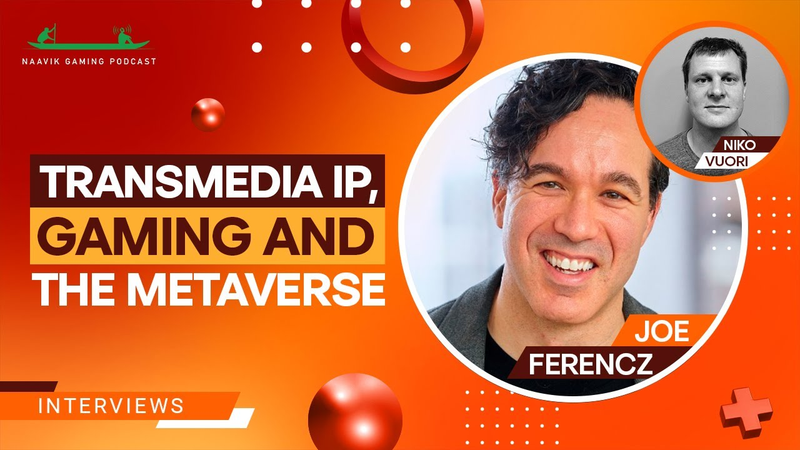
transmedia IP, gaming, and the metaverse. As metaverses gain in prominence and more gameplay and indeed more social interaction in general happens inside these metaverses, brands, advertisers, and IP owners are of course going to want to be there. Wherever there is consumer attention and engagement, there will always be brands wanting to get in front of those engaged audiences. But how should brands engage with consumers in these spaces, these metaverses that are still fairly alien to them? What does a successful transmedia IP strategy look like? How can brands which typically know nothing about gaming or the native interactions and the unwritten codes of conduct of each of these various metaverses, how can they get in front of these consumers? Does every brand need a transmedia strategy? To answer all these questions and more, we have a great guest. Our guest today is Joe Ferencz, the founder and CEO of Gamefam, a company seeking to unleash the potential of metaverse gaming for brands and creators. I'll let Joe talk more about his background and what Gamefam does, but in a nutshell, they work with brands and IP owners to get in front of gamers inside
Roblox, Minecraft, and Fortnite. They've worked with the actual gaming IP of Sonic the Hedgehog. They've hosted virtual concerts with artists like The Chainsmokers. They've brought athletes like Neymar and apparel brands like Puma to the metaverse. And most recently, they have partnered with Mattel to bring Barbie to Roblox. Joe, welcome to the pod. Thank you for having me. Love the podcast. Happy to be here. Awesome. All right, well with that out of the way, let's get right into it. Uh and we always like to start off with our guest background and how they got to where they are today. Uh can you walk us through your career journey as well as give a quick introduction to what Gamefam does? Sure. So, I've been in the gaming and pop culture business for my entire career. So, a little bit over 20 years now. I started as a graphic designer on sports licensed t-shirts and posters out of undergrad. I went back to business school, interned at Disney, post-graduate internship at Nintendo, 2 years at Ubisoft, 3 years at Mattel,
then I went into the startup world about going on 9 years ago. I worked on a Star Wars related project. I worked on Subway Surfers as a consultant for a year. Then I went back to Mattel where I was consulting on Hot Wheels video games, helping put Hot Wheels into Forza, into Rocket League, into Need for Speed, launching Hot Wheels on mobile games, launching what's become a console franchise in its own right, Hot Wheels Unleashed, the sequel just is coming out. I just saw it on on LinkedIn, so very excited to have been part of that journey there. And during that time actually back in 2016, I became aware of Roblox and I thought this is a really fascinating new platform, a fascinating new type of digital entertainment experience, a new type of video game that no one has ever seen and maybe nobody my age even knows about who doesn't already work at Roblox, which I think was was probably the case. And I loved it and so I started making
my first Roblox game in 2018. In 2019, I started Gamefam with the intention of bringing kind of professionalized best practices in live services and content creation to these new platforms. We started with let's say 25 players in in the first game that we acquired and today we have a one of the biggest portfolios Roblox, 150,000 concurrent players across Roblox, Fortnite, and Minecraft playing our games as we speak here on a Monday afternoon. We have licenses with Sega, with Paramount, with Mattel, with the NFL, and we have a huge advertising network that we run where we help bring brands into the space and help them meet their engagement and messaging goals in this new media. So, that's a a bit of what we do here at Gamefam and and how we got here. That is awesome. And what a great background as well. I love the fact that
you've been on both sides of the table, um you know, actually being an IP owner and then of course a developer. And that's part of the reason why we wanted to have you on the pod today. Um and I will also echo haha that the demystification of these metaverses, uh Roblox, uh you know, Minecraft, places like that, people our age, yeah, they they're kind of a mystery at times. And so, I think it'll be really interesting for our listeners today to kind of demystify what is it What does it mean to be in the metaverse, right? Um depending on who you talk to, metaverse either has a positive connotation or sometimes a negative connotation depending on who you talk to and which metaverse you're talking about. Um and so, we're going to get into all of that and much more in this episode. Uh and congratulations, 150,000 concurrent players right now. Let's just, you know, take a moment to note that down. Monday afternoon. On Saturday at 10:00 a.m. we had 310,000 concurrent players. Right, that's weekday usage versus weekday usage for you, time of day, etc. But, yeah, we're having a a great We're having a great fall
um on the back of the PS5 release from Roblox, which has just been massive, and on the back of our Barbie release, which is a huge uh huge hit, actually. So, very exciting last few weeks for us. Yeah. Fantastic. Well, congratulations. We're going to get into all of that. Um but I do And by the way, we're going to throw out some numbers and you know, Joe, you'll keep me honest and make sure that those those numbers are accurate. But, some of these numbers that we're going to talk about are going to be mind-boggling to people who haven't actually paid attention to Roblox or Minecraft, but especially Roblox. So, let's start with a a very kind of 30,000-ft view of what is metaverse gaming? What is the metaverse gaming scene, broadly speaking? Who does it? How would you describe it? Uh how did it happen? Yeah, sure. I'm very excited to speak about this because metaverse has become a a very confused word, a very confused part of the industry nomenclature. We have a pretty clear point of view on what a metaverse is here at Gamefam. And and and I I think the first thing I want to
say, if I may step up on my soapbox here for a moment, is that the idea of the metaverse seems to be a bit of a unrealistic notion of how business has historically worked in any business, in any segment with the exception of utilities that such as water and electricity. There are very few very few natural monopolies in the market and that is both by the natural basis of competition as well as by government antitrust regulation. So, this idea that there is going to be this big interoperable one metaverse to rule them all seems almost preposterous to me. And I think we're much better served thinking about metaverse, the idea of a metaverse as a type of media format, the same way that online video or free-to-play gaming is a
type of entertainment format. That that is I think a fundamental principle that I believe in currently. Happy to be proven wrong, but that is where my head is currently at. And if you look at the landscape, right? There's clearly metaverse platforms. There's a metaverse segment. And today that segment is really comprised of Roblox, by far the leader, Fortnite making humongous strides and gaining humongous share in the space right now. And to much lesser extent, I would argue Minecraft. And there's a number of up-and-coming platforms, right? Zepeto, dotbigbang, the new Everywhere platform that is launching that looks incredible. So, the whole segment is heating up and what is a metaverse? A metaverse is, in my opinion, a platform where anyone can create experiences. And so, creators make all kinds of different types of games and different types of digital hangouts, concerts, shopping, socialization, education, business
meetings. You can do anything in these 3D spaces, right? That's the verse. And the meta is your you, your avatar moving across this verse as a singular identity for the most part. To me, this is what it means a metaverse. Meta is the you crossing things and the verse is the content. And so, I think that those are the metaverse platforms today and I'm not sure, frankly, here on a industry podcast that covers a lot of topics. For me, I am not sure where the whole web three situation got mixed up into the idea of metaverse and how those became conflated between the Robloxs and Fortnites of the world and the Decentralands and Sandboxes of the world. I'm not really sure what what the uh similarities really are there. They're pretty distinct to me. Yeah, I would agree with that. I I work in web three and obviously I host the web three segment along with the metaverse segment and to me they're also very different. Web three is a set of
technologies that allows you to build metaverses, but they're not the same thing. They should not be conflated with Robloxs or Minecrafts or Fortnites of the world and the if you will, metaverses that just don't use that decentralized set of technologies that that web three enables. Um so, I think you you answered a lot of what I was going to ask you next which is what are the up-and-comers? And I think you you listed a lot of those those folks out there. How How How have you seen this space evolve over the years that you've been working there? You know, it used to be that it was, you know, just Robloxs and Minecrafts. Now, Fortnite obviously has opened up their creator program and sounds like they're seeing a great deal of success there and there are a whole bunch of others that are that are coming up. How realistic is it to think that all of them can consume the same amount of mind share or can grow to consume that amount of mind share as Roblox currently is doing? Well, I think that they all are offering very different experiences and I think I I've used this analogy before. I'll use
it again. It reminds me a lot of online video. For a long time there was only YouTube for short form content, right? And now there's YouTube, Snapchat, Instagram, TikTok. Very different types of short form user generated content for very different types of audiences with different entertainment and engagement needs. I think that this idea of these user generated content gaming platforms where anyone can make stuff, they fill a need for social play, they fill a need for variety play, and they allow for new ideas that could never have existed in a traditional gaming system to come up and find massive audiences. If you look at our game Twilight Daycare, for example, which had 30,000 people playing it over the weekend, 15,000 people playing it when I checked on it last this morning, this is a game where you play as either a caretaker or a baby. Everyone on the server, every
avatar you see is a real person. There's no NPCs. There's nothing controlled by by computers or AI, and you interact with each other and you gain points through doing your role if you're a caretaker or through getting your needs met if you're a baby. It's absolutely delightful. Would anyone in the traditional gaming space have invested in an idea this, you know, imaginative and unconventional? I I don't think that would have happened and and and and also how many people have tried it before we got it right before the creator that we Aqua hired into the company who made the game figured this out, right? We saw countless attempts at this type of game. So I think that's what UGC gaming really offers is just the complete spectrum of human imagination unleashed across story, PVP, role play, adventure, any type of idea.
Some of these creators are going to figure out how to make it and make it well. And then it's going to find an audience through TikTok, through YouTube, through platforms where open-minded gaming entertainers are looking for and meeting new content to make entertainment from. So the whole ecosystem is swirling and kind and and uh you know kind of pushing with a force towards the future of this medium and through it gaining share from anywhere and everywhere, right? Through linear TV. It's dying, right? It's You ask a 10-year-old where they watch something, ask a 16-year-old where they watch something, they're going to say Netflix, YouTube. They don't even know what a network is anymore. So the whole world is changing. You know, theatrical is changing, home entertainment is changing, console gaming is changing, free-to-play gaming is changing and user-generated content
has continued to be an unstoppable force of creativity and engagement in the entertainment space. So what I'm hearing from you, Joe, is a tremendous amount of creativity, energy, uh essentially creators coming to a series of platform, not just one platform, but a series of platforms that are all enabling different kinds of creativity and it could be a one-man show like, you know, the the person you acquire to create this what sounds like a very quirky game to me, but it sounds like it's a real hit with the players. Um or obviously you can have big teams uh producing higher quality, you know, larger, more um uh engrossing content for lack of a better phrase. Um so it to me it sounds like there's just there's no single metaverse. I buy your argument there. I don't see how there can ever be a set of interconnected metaverses where you can magically walk between the different worlds uh that are serving our different needs. So it brings me to a very important question here um which I hope
you'll indulge me on here. Uh it strikes me that we're at the point in time where there's no single metaverse and we need a collective noun for what a group of metaverses is. And I can tell you that nobody's coined this term yet, so we have an opportunity here. The internet failed me totally. ChatGPT is telling me I should either coin my own term or try something playful. It calls uh like a multiverse of metaverses, which I'm generally not feeling. So I feel like it's time for us to add the collective noun for a group of metaverses into the Oxford English Dictionary and Joe, you are the man to do so. I feel like you you you deserve the honor of coining this term. It's clearly got to be a meta metaverse. The meta meta The meta meta The meta metaverse it is is my opinion. Look, we call it internally we call it the metaverse industry or the metaverse segment, um but meta metaverse, the meta metaverse is uh pretty self-explanatory if you ask me. All right. Well, there you have have it listeners. You heard it here first. The collective noun for a group of metaverses is a meta metaverse. Uh I I appreciate that, Joe. Thank you
for for being game for that one. Okay. Now for a more serious question. Um game fam, you obviously you're working across multiple metaverse properties. Obviously you've got Fortnite, Minecraft and of course Roblox. Um but I would actually like to focus on Roblox just to give our listeners a little bit of a focus for today's episode so we're not across all the different places. Roblox is the biggest by far, I believe. Um what made what made you decide to build on Roblox? And and how do you see Roblox differing from some of these other players in the space? So, Roblox is the biggest by far, and you can see that on Game Fam's website, romonitor.com, where it will show you all day long the amount of people playing on Roblox and the amount of people playing on the next biggest metaverse platform, which is Fortnite. I think that the reason we decided to build on Roblox was I was at a point in my career in 2018 where I had worked in corporate on the gaming side. I had watched inside of
Ubisoft and Mattel as free-to-play mobile went from being you know, uh pixel games on a flip phone, uh and not a noticeable part of the video game business, to the single largest segment by revenue in the video game business within 10 years. And I was at a stage where I was thinking, "Okay, I've worked on the NFL, I've worked on Assassin's Creed, I've worked on Star Wars, I've worked on Hot Wheels. I want to try making the stuff myself. I want to try running original IP. I want to continue working with world-class brands, but I want to be on the innovation side, actually deciding how to make these things instead of strategizing on what should be made. I want to actually try my hand at making them. I'm a I'm a career maker of things. I love being hands-on. I love making those difficult calls and bringing as much logic and creativity
from both sides of the brain to those decisions as possible. So, I knew there was going to be another platform shift at some point in the gaming business, right? There had been the Steam indie revolution, then there had been the mobile free-to-play revolution, and the pace of innovation, the pace of change is so fast these days. And I said, "Whenever there's the next thing, I want to throw my hat in the ring. I want to be part of it. I want to be a leader in it." And so, when I saw Roblox starting to, you know, hockey-stick up in users and revenue in 2018 and 2019, and no one else even knew what the heck it was, I said, "I think this is where I'm going to put a flag down. I think this is going to be a lot of fun, and I think we're going to be able to make some really special things here." And that is what excited me as a creator and as a business person at that point in my career. So, that was why we decided to do it, and I think we've been very
right. And when I look at Roblox, we're generally somewhere between the number two and number four leader in terms of concurrent users every day as a developer, which is which is pretty amazing 3 years after starting the company. We're competing with some incredible developer talents that has grown up making Roblox games for 10, sometimes 15 years since the founding of the Roblox platform. To me, what makes Roblox special is uniquely multiplayer experiences. That is where Roblox shines. And if you go on RoMonitor, and you look at the top studios of all time, you know, where you'll see Game Fam, for example, is number three in total visits to our games and you know, in Roblox history. And you look at the other top five. If you look at the top 20, top 30 games on the daily basis in terms of concurrent users, what you are going to see is they are all deeply social in nature. And not only
that, but they represent new types of gaming, new genres that don't exist in that same way anywhere else in the gaming space. And that is why Roblox has been so massively successful is it is, simply put, meeting unmet gamer needs in a way that no one else can. I think where Fortnite really shines is in a totally different set of multiplayer mechanics, right? Fortnite is arguably the best tech stack in the world for running, jumping, shooting, climbing, building, right? That That is what made Fortnite the number one game, arguably, of of of all of of the decade, anyway, right? So, that is what you see people building around in Fortnite. You see people
building around the inherent mechanics that make Fortnite special. And on Roblox, you see people building around the inherent mechanics that make Roblox special, which is your avatar, which is your self-expression, which is your socialization with other players. Yeah, I think once you start looking into this, you know, again, we as as uh of a certainly of an older generation than the the current kids and and teens playing in Roblox. If you start looking at this, you know, these kids, these teens are the future of the gaming industry. And I do think that they are creating content, creating types of gameplay that we haven't seen in our history up until this point. And they will be now creating, once they get into the gaming industry, they're not just going to be gamers and players, they'll be creating some of these these games that are based on what they grew up as kids, right? That Isn't that how all game developers essentially get into the industry? You play what you, you know, enjoyed as a kid, and then you bring those memories and those experiences that you had, because that's your frame of reference, to the industry and and make more games like that. I think we're on the the of seeing something maybe in
the next 5, 10, 15, 20 years certainly where we're going to be seeing games that we can't even imagine right now because of the experiences of the kids and teens who are playing in Roblox, Minecraft, places like that today. Um love to hear your kind of reaction to that. I mean, you know, I'm a 40-something year old man and I am blown away by the creativity of the Gen Z creator community across all platforms. I mean, I I spend time on TikTok mostly for professional reasons, although I enjoy it personally as well. And I cuz I do enjoy just being completely entertained and surprised. Um and TikTok if you don't like it, move on to the next one until you find something that entertains and surprises and delights you. And I think Roblox is the same the same thing in a lot of ways. It's a lot of hey, I'm going to try this. Am I having fun? Okay, I'll stick with it. If not, I won't. And I think that that mentality
started 10 plus years ago on Roblox. And so a lot of the top developers grew up engaging in gaming in that way, right? Where those of us who are in that, you know, in you know, Gen you know, Gen uh I think it's Y. Gen Y. Gen Y, millennials. Sorry, millennials. Thank you. They like to be called millennials. So those of you know, millennials and us you know, kind of the tail end of Gen X, we grew up in a very different gaming environment, right? We had to go to the store. We had to buy a box with a game in it. We had to bring it home. We had to have a friend sit next to us on the couch to play. I mean, it's just a whole different world where you can have 30 people in a game each customized um running around playing together in real time. And I think that, you know, if you look at for example Arsenal game, which is the number one branded game in Roblox history by far, you know, 200
million visits more than the next game down the list. In that game, you can live out this totally meta fantasy of I'm in one Sonic outfit, my friend is in another Sonic outfit, you know, I'm I'm in I'm Sonic classic, my friend is Sonic Riders. Over here we've got Treasure Hunter Knuckles. Over here we've got Tails from the Sonic film, and we're all doing a race together, or we're all doing a boss battle together. And then over there is some guy just in his normal avatar with a baseball hat and a pair of raver pants on. And everyone is is playing Sonic together. That's what really makes this platform so unique, and something that people who didn't grow up playing this way, they're not ready to vibe like that, you know, there it just isn't a different mentality around what a game is and what the entertainment experience of a video game is. We've
been able to adapt it, right? Those of us who are in leadership at the company, those of us who have been in the business for 10, 15, 20 years, who are helping the studio scale, who are building those partnerships with the Segas of the world, we have fully immersed ourselves in this format. We've adopted it. We know if we're having fun playing one of these games. But I'm going to tell you, you know, Barbie is a huge moment for us. It's our second hit branded game. And it took a long time to not just be trying to interpret these genres, but being confident that we can contribute to these genres. And I think we finally have now really crossed that threshold as a studio. We have a SpongeBob game that's in development right now that is the first massively multiplayer SpongeBob game ever made. So, it's in beta right now and you've got a you've got a player walking out as Caveman SpongeBob and another player walking around as their, you know, normal avatar
with the bacon hair, you know, the classic Roblox bacon hair and then you got another avatar walking around as as Patrick and another walking around as Squidward and they're all exploring together, playing together, helping each other accomplish goals within the game, but it's not clear what this genre is. If you're not used to these genres, you'll come into this game and you'll be like, "How do I play this? What am I supposed to do next?" But if you're a Roblox player, you'll come in and you'll be like, "This is the greatest version of this genre that has ever been made." That is what a lot of players have been saying to us in the chat. I go in the chat and I go, "Is game good?" That's how you talk on Roblox. You don't use proper grammar. You just go, "Is game good?" All right? Yes. Yes. Yes. I do this on all our games. And let me tell you, the SpongeBob game and the Barbie game were getting responses that were, you know, overwhelmingly positive. If if people say it's okay, that means the game is terrible. Okay? If people say it's fun, that means the game is terrible. The only thing that will
suffice is, "Oh my god, this is incredible. Incredible. Incredible. Incredible." So, it took us years though to get to a point where we had the confidence creatively to try to make something incredible. And now we're there and it and it's happening and it's it's an incredible feeling. Yeah, we're going to get to the the brand side of things and actually Barbie and and and any other stuff you want to talk about there in a second and this is the perfect time to do that, but I wanted to just I promised at the start and so I'm going to do it now, talk a little bit about the stats on Roblox. And Joe, keep me honest here cuz I got this from Vista and various other online sources, but it looks it looks legit. So, for those who don't actually play in Roblox, this is this came to me as almost a surprise. I knew kids were spending a lot of time in there, but I just didn't realize how much until I actually started digging into it. So, the time spent by kids and teens in Roblox, uh, is is mental, truly. So, according to Statista, kids are spending 200 minutes in Roblox every single day. Uh, I almost can't believe that, but you're going to tell me whether that's true or not. Um, and that's four times more than
in Minecraft, um, which according to to at least this study was was the second one up. And more than in YouTube or Netflix or social media. And so, I'm going to put aside what this actually says about our society and the state of modern parenting for just a second. Um, the reason I bring this up is because if kids and teens, which is the next generation of consumers, is spending that much time on an online property in an online property, then surely that's where the brands want to go to try and capture this engagement. But, I think the challenge for brands is it's very hard for them to do in a native kind of true to the the form factor kind of way because they just don't get it. And so, I'm curious to hear from you, what is that mentality of IP owners and brands and advertisers wanting to reach this metaverse audience, you know, this relatively young audience? How has that evolved over time? And is a minute now spent in Roblox worth the same as a minute spent on YouTube or Instagram or my Instagram or Minecraft? Um, are are brands and advertisers realizing what
they have on their hands here, or is there still some kind of like mystique that they just don't quite get? So, the answer is yes to all of it, uh, and I'll elaborate. The easy thing The easy question is is a minute spent on Roblox worth more or less or the same as a minute spent on engaging on Instagram or YouTube. And to me, the answer is very clear that interactive engagement is is the highest form of of engagement. It requires the most attention, and it provides by far the most telemetry to measure. You know, our our chief business officer, Ricardo Briceño, one of the smartest people I've ever had a chance to work with, he came up with something really sharp as as marketers do. He said that advertising on Roblox provides all of the depth of experiential marketing with the massive scale of digital marketing. I said, "Wow, that's that's pretty smart." And I think it's true. In terms of how brands are
understanding the space, the space is still very new. I think we're seeing a lot of highly innovative brands that are very digitally focused and very Gen Z focused immediately trying to move into the space and doing it in ways that are really intelligent. And then I think we're seeing a lot of brands that are more legacy brands and that don't really understand gaming as a whole trying a lot of new ways to engage that are not working and not going to work. And this is a lot like the App Store was in 2010, 2011, 2012, right? Every brand needed an app and every campaign needed its own app and every marketer wanted an app. I think that this is a gaming platform and it runs on entertainment value. And so if your brand can't support a game on Xbox or couldn't support a profitable mobile free-to-play game, there's no chance your brand is going to be able to
support an ongoing live service Roblox game at scale. It's not it's it's you know, incredibly unlikely. Of course, history is full of full of some surprising uh some surprising twists in this. I think there was a Pepsi game on on the original Xbox or something that that people love because it's so kitchy and hilarious. So, there are moments where brand where one in you know, one in 100 brands can can break through and do something really funny and unique. But overall, Roblox runs on the algorithm and the algorithm runs on long-term engagement. Long-term engagement runs on entertainment value. So, to And and that entertainment value exists in a savagely competitive attention economy. So, what we advise brands first and foremost is, "Look, we've got whatever, 200 million plus minutes of consumer engagement, um you know, that we can uh deliver on
uh you know, in in a week. Um we have um you know, uh sorry, in a day, right? We have 20 million visits a day, 10 10 minutes visit on average, right? That's 200 million minutes of engagement per day is our current inventory at Game Fam, and we have been highly successful at working brands into that in ways that deliver for the brands, and most importantly, deliver for the players. I think a great example of that is our game Super NFL Tycoon presented by Intuit. So, Super NFL Tycoon, you build a NFL stadium, you build NFL facilities, you choose the team you want to represent as, and then, of course, you've got to pay your players, you've got to spend money to build the next thing, and all of that happens through the Intuit suite of products. It's a very organic fit, and the game has a 10 plus minute session length. It's had 10 million plus visits since the Super Bowl, and it's got a 92% player rating.
So, people love the game, they take the brand integration kind of as a organic fact of this world, and that is the ideal. Now, for a brand like Sonic, that is a massive entertainment and gaming brand in its own right, one of the biggest of all time, and one of the best of all time. Of course, that is a worthwhile brand to invest in on a potentially commercializable basis. But just like any free-to-play game, you've got to execute, or it doesn't matter what brand you bring to the space. You won't have an ongoing audience, and you won't have monetization. Intuit and Gen Z, who who would have guessed? Um interesting interesting Hey, they're going to have to pay unless something changes. They're going to have to pay taxes, too. But, also I I actually think it was a really smart move because this creator economy there's a lot of 14, 15, 16-year-olds who are making
an Hey, good question. unspeakable amount of money And they need to account for that. they they need to they need they need to you know, they need to keep track of their finances and learn financial literacy. And so, Intuit is a great made a great move by getting in front of these uh Gen Z, you know, business people. Yeah, you know, that's actually not crazy at all. Like, I I buy it a lot more now, you know, because we said that Thank you. Not crazy at all is what it is what it says on my business card. Thank you. There you go. Uh yeah, I mean, the next we know, we said the next generation of of uh you know, consumers, and of course the next generation of game makers is coming from this world. This is also the next generation of entrepreneurs and business leaders of the future. And yes, of course, they need they need accounting software, and they need to do their taxes uh every year, too. So, uh so yeah, not not as not as crazy as as it initially sounds. And and I actually I I buy it. I buy it. Um okay, so you've made a very strong case for um brands wanting to get in front of this this this audience. And in fact, I I it's almost a given, right? Given how much time and how much engagement is happening um in these metaverse
experiences, especially Roblox. Now, I I think uh what I want to do the flip side of this, uh you kind of alluded to this a tiny bit, but what is the benefit for the games in these metaverse experiences? How do they benefit for being associated with uh these brands and IP owners? Now again, on the brand side of things, makes total sense. But, I would have expected developers who want to put their products and their IP in front of a new audience, wouldn't they rather own their own IP and build that from the ground up then essentially piggyback off the success of, you know, Sonic or uh the NFL or or other brands that are recognizable. Barbie, we'll get to that in a second. So, I'm just curious to hear what what's the the mutually symbiotic relationship here um that is driving this this flywheel around? So, I think that this is about overall developer economics and ensuring that there are enough there's enough value creation throughout
the ecosystem to support the teams to make the ongoing highest quality AAA content in the space. And that's where the advertisers really come in for a company like Gamefam. Roblox was initially created by developers who were not compensated at all, right? The original developers on Roblox, there wasn't Robux, there wasn't a earnout system. That earnout system came online and it was originally meant to make it fun for developers to spend time developing Roblox games and allow people to start thinking about how this could supplement their income. And then over time, because the platform has become so huge in users, the revenue potential has become absolutely humongous at the upper echelon of the platform. But, to make a commercially viable Roblox game that can support a team of professional developers, you still have to be playing in the top, let's call it 50
earning Roblox games to have a true live services team of top quality people and be able to have those people earn at a competitive level within the industry. This is where advertising comes in. There can only be, let's call it 50 100 games in the top earning segments, and once you get below that, you need to find other ways to supplement the in-app transaction revenue, and advertising is a way that makes a ton of sense for everybody in the ecosystem. Brands want to reach players, developers need to be able to afford to make high-quality content, and players, of course, want that high-quality content, and they want it every week refreshed, new, exciting. So, that is where the advertiser revenue becomes so meaningful to professional studios, and that is why we had that as a pillar of Gamefam from the outset. We always knew we were going to build an advertising network in the space, and of
course, we were the first people to do it. Now, we're Now, we're the first people who are doing it on Fortnite. We were the first people to ever sell a brand integration into an existing Fortnite game. We did it for a horror movie called Talk to Me in our game Dead Times, which is a zombie survival game. Hugely successful campaign for that film, and this is really the future of media. Brands that are not gaming brands, brands that are not entertainment brands, which is most brands, need to reach consumers to make them aware and interested in their offerings. Roblox, Fortnite, these are the new cable providers of this generation. This is People don't People aren't watching these Gen Zs, they're not turning on their Comcast box, they're not going to their DirecTV. They're going to TikTok,
they're going to Roblox, they're going to Fortnite. That is where brands need to be if brands want to reach today's consumers. Yeah, I mean, 3-plus hours a day for Roblox players. I mean, that you cannot deny the power uh of that, and of course, the attractiveness to brands and and advertisers. Okay, well, let's you go back, I just want to add, if you go back 20 years, kids were watching 3 hours of TV a day after school. Totally. Yeah, they were watching the cartoons, and they were seeing ads on those, and they were buying their, you know, Frosties, and Tony the Tiger is great. You know, I still remember that. Um, absolutely. No, of course. I mean, this is this the concept is not new, right? But what is new is the sheer level of interactivity that's possible, right? Putting somebody, you know, your kids in front of the TV as as the nanny, um, it that's a very passive, lean-back experience, of course. This is a very lean-in experience. Um, and so, it comes with all all kinds of positive aspects, but it also comes with all kinds of dangers, too, which we're not going to get into now. Uh, that's that's not the really the focus of this episode. But I do want to now dive into some specifics, um, around transmedia IP. Uh, so, we want to
make this concrete for our listeners. And so, we're going to talk about the Barbie, um, game that you guys made. You guys released it. Uh, and uh, you've alluded to it. You've kind of dropped a couple of nuggets here and there, but I want to kind of get the cohesive story here. Can you tell us more about the Barbie game that you guys have launched, and how it came to be? Yes. Uh, so, as you as I mentioned, I had worked at Mattel full-time for 3 years earlier in my career. Then, I'd come back as a consultant to help Hot Wheels build out its gaming business. And it's kind of funny to think about now, but back when I started on that consultation engagement in 2015, Hot Wheels had had almost nothing notable in the gaming space for for years. And myself and the other amazing colleagues that I had a chance to work with at Mattel were really passionate about how do we make this relevant? How do we make this cool in the gaming space? And I think we built a humongous track record there over those years, and went from
nothing to a brand that was generating literally hundreds of millions of dollars in retail business in the gaming. It had its own Xbox console bundle in 2017. So, really, uh, just an incredible uh, journey there. So, well, I also would love to be part of finding a way to do that for Barbie. I was no longer internal at Mattel, but we love the Barbie IP. The movie was out of this world. They knocked it out of the park. I couldn't believe how how much fun I had watching it beyond my wildest expectations, and we wanted to we thought Barbie was a great fit with the Roblox platform. Now, when we first got the license, which was not, you know, which was over a year ago when we started on the project, as I said, we really were still learning what makes a great Roblox game. And I think if you look at the history of professionalized studios in the space, hardly any of them have been able to
find commercial traction even with some really impressive IPs that have been brought to the space. And so, with Barbie, we we spent a lot of time strategizing, prototyping, iterating, what should this game really be? Where does Barbie really offer something special in the Roblox universe? And a lot of people thought, "Oh, well, it should just be a pure dress-up game." Well, there's already a bunch of great dress-up games, and Barbie Well, Barbie is an iconic fashion brand. What is Barbie's iconic wardrobe pieces? I don't think that that's not what I think of when I think of Barbie. You know, people say, "Oh, it should just be a pure role-play game." Well, the role-play genre is very well spoken for in Roblox, but what is so true to Barbie that no other brand
in the world can offer is the Barbie Dreamhouse. So, after months of prototyping, of designs on paper, of healthy debate between the team. We said, you know, house building games are popular on Roblox and Barbie has the most famous house in pop culture, the Barbie Dream House. So, let's build a game about having your own Barbie Dream House. And And if I if I can interrupt very quickly, it's so famous that the New York Times did an inter- I'm sure you saw this article. The New York Times did an incredible interactive Barbie Dream House history that was researched by I don't even know how big that team must have been and their graphics team. That is how iconic it is. It gets a full-on spread, full-on interactive treatment at The New York Times, right? So, yes, you you couldn't really pick a better piece of iconic IP that's attached to Barbie than the Dream House. And especially as
a father Thank you. Thank you. She's 12 now, so she's kind of past the Barbie phase, but she had one of the the most ginormous Dream Houses as a Christmas present one year and she she played the out of that, let me tell you. Anyway, sorry to interrupt, but I I just I just wanted to kind of it hits so viscerally for me as a as a father of a daughter and a reader of The New York Times to to see those pieces and just realize like how many decades has that survived. It's not just the Barbie brand, it's the Dream House brand. And that's really unique. So, anyway, please continue. I just wanted to add my my first Well, and I think no, thank you for that. And I think that's the thing is that, you know, character-based brands, story games, that is really not a a huge genre on Roblox. And and despite, you know, Barbie being an incredible story brand, having the number one direct-to-DVD series of all time from a sales perspective, at least that's the stat they used to give it, Mattel, having an incredible show on Netflix for the last years, Barbie Life in the Dream House, and now having a massive theatrical success, that is not what plays at scale on Roblox. And we have
learned uh to play where, you know, play where the game is at. And so, you know, Mattel was a very patient partner in helping us ensure that we were able to find the right concept here. And then once we decided on bringing the Dreamhouse to Roblox, what does that mean from an aesthetic perspective? What does that mean from a a side features perspective? For example, as you build the Dreamhouse, you unlock a new piece of Barbie fashion for your avatar every room you complete, right? So, we're still paying off fashion. As you build the garage, you get Barbie's classic convertible. So, we're still paying off the idea of, you know, Barbie's dream car. And we set it in this beautiful Malibu-style environment. So, but that core of it had to be right. And then we also set out to set a new standard for execution. Whenever we approach a genre, whether that's Sonic as a
uh idle RPG running game or Barbie as a house-building game or SpongeBob as a uh a collection RPG that we're working on, right? We set the same benchmark, the same goal. How can we deliver in an authentic way at the highest production values and creativity the Roblox platform has ever seen? How do we raise the bar? If we can't do that as multi-decade professionals in the gaming industry, right, who can? So, with Barbie, we scrutinized every pixel of this game for months, every interaction, every angle and corner and piece of furniture in the Dreamhouse. And then you got to get ready to launch the game. You got to get ready to launch the game, and it's it's always it's always a an emotional roller coaster launching a video game. If you care, if you love the work you do, if your heart is is is in delighting gamers and audiences, launching a game no matter how good the KPIs are in a
beta, no matter how good your focus group responses are, you just don't know until it gets out there. We launched the game less than 10 days ago. It's already got almost 20 million play sessions. You know, I see people go on LinkedIn, they go, "Our Roblox game hit a million play sessions after its first month. What a huge success." And yeah, that's great. When a Roblox game takes off, it gets millions of play sessions a day. That's a hit Roblox game. It's in the top 20 games on the platform in terms of users right now, and we're just getting started. We have a humongous road map for the game. Uh we've got new houses, we've got new cars, we've got whole new feature sets coming, and for us to now have, you know, the number one branded game of all time, Sonic, and what will likely become the number two or or surpass Sonic eventually in Barbie, um I you know, it's it's it's it's a race where I'm I'm I'm I'm uh rooting for both contestants. Um but um you know, it's
it's really a special moment for the company to have proven that we can develop as well as these incredible Gen Z developers who've been doing it for for 10, 15 years non-stop in their bedrooms at their parents' house, then in their dorm rooms, then in their apartments with their their their dev houses that they live in. For us to be able to compete head-to-head with them, look, these these young developers are incredible. And we came in from as outsiders, and we set a goal to learn this craft and contribute to it, and and we're delivering on that goal, and it's it feels great. Nice, nice. Well, congratulations on all the success, and obviously uh that's a lot of play sessions uh by any by anybody's standards. Um but I do have a question here about longevity. Um and again, you're the Roblox expert, I am not. What I do know about young people is that they have very short attention spans um and you know the hot hotness is gone pretty quickly. That's why TikTok is so successful with them is because you can always find the next thing.
That's why Roblox as a platform has been so successful is because you can always find these new experiences. So you mentioned you've got some live ops planned for this. I want to ask a kind of a clarifying question beforehand which is what are the most successful games on Roblox that have had the longevity that we typically associate with free-to-play you know mobile games where Clash of Clans is still one of the top grossing games. My goodness me what 13 is it 15 years now? I can't even keep track like at least a decade plus right? So that success in the free-to-play kind of older mid-core slash core market. Sure. What does success look like on the longevity front inside of Roblox? Yeah, I mean I think it's it's very similar really to to overall free-to-play and live service gaming. Some genres have an inherent life cycle to them. Those are more of your linear progression genres, right? Like it's very hard to keep a linear RPG at peak usage ongoing but it's a lot
more achievable to create a PvP game like Clash Royale or Clash of Clans ongoing at scale. So I think we're seeing the same thing on Roblox. If you look at the top games of all time on Roblox, you know, your Brookhaven, Adopt Me, you know, a few of a few of our games that that are in that space for example Twilight Daycare now coming on 2 and 1/2 years at scale 2 billion visits in 2 years. Um there is no reason that these inherently social games if they're well made and well serviced have any kind of longevity duration, right? They're indefinitely serviceable IPs and games exactly the same way as they are on other platforms. Yes, there is a fad element to Roblox. There are games that come and go, but if you show me a
game that, you know, and to ask me, is this game going to sustain at scale long-term? I my hit rate is going to be very high because there's certain genres that there's no reason they should decay and they don't. And there's certain genres that and you can see exactly why they would decay and they do. Mhm. Okay. Uh that's a fair answer. Um so, uh live ops. You you mentioned you teased a couple of things and more content. Uh what's the plan for keeping this game live operated? Uh you know, is the team scaling back now that you've launched or are you actually now scaling up now that you're live and you've got some success and you want to see the live ops road map um ramp up? I mean, I think when you're looking at Roblox games, they are a lot less horizontally featured than kind of mid-core free-to-play games, right? There are There are You can only scale the team up so much. You're never, you know, we're we're we're far from a world
where you would ever want to have a 30-40 person live services team on Roblox right now. If you have a team of eight, 10 people for a live services game, that really is the upper limit that we've seen be even close to successful and sustainable on Roblox. So, on Barbie, you know, we had a a significant team getting the product ready for launch, uh huge amount of art needs. In terms of programming, a lot of the features are in place. Now, it's really about finding what does the audience want to continue doing from a building, you know, and role play perspective. This weekend we're launching the beach house, right? So, you built the classic dream house, now you can build the dream house, then you You decide which of those houses you want to equip in order to role play and invite friends over to hang out with you in your digital dream house. With the beach house, we'll have some surf boards that you can kind of paddle around on on the ocean. We'll have a sail boat you can go in. This is the type of live services we do. Every every game has a different live services plan. You know, one of our
greatest successes is a game called War Tycoon. We call it build and battle. You build a military base. As you build that base, you unlock new vehicles, new weapons. We had 35,000 people playing it on Saturday afternoon. We've more than I think seven x'd it since we took it over with the original creator in tow. And that game live services revolves around a lot of it revolves around new types of war vehicles to earn through events. So, every game is different and every game has a different live services strategy within the platform or at least every kind of genre and subgenre has a different live services strategy. With Sonic, it's historically been very much about character collection, right? Which how many different Sonics can we find? We just launched classic world as a co-promotion with the new Sonic Superstars game. So, we had never had classic Knuckles and classic Amy in the
game. Now, you can go to classic world, run and earn currency in classic world to earn classic Knuckles and classic Amy. We had one of the biggest weekends we've had in, you know, in a few months because that is content that players are hungry for and that will be evolving that game into a much deeper collection economy over the next quarter and we're very excited about. Now, we made Sonic in 10 weeks to get started. It was the biggest launch in Roblox history. Barbie's taken more of the the approach we wanted, right? Cracking into the top 20 games in its first week and now we grow it from here. With Sonic, we had wanted this trajectory. We wanted to start in the top 20, top 50, ship, update, deepen. Instead, Sonic blew out the gate as the biggest launch in Roblox history, getting up to be the number two game on the platform in its seventh day out. Um and we were not fully We were not fully prepared. We made the game in 10 weeks to meet the movie date, very high quality, but very small amount
uh quality not quantity, right? 10 weeks of development time. So, um we've learned from that, and now we're building much longer road maps with much more robust launch products as well. So, to bring this back to the transmedia IP strategy for brands and for for game developers, uh it sounds like there's a lot of learnings going on on both sides, both as developers learn what works with the audience and brands and IP learn what doesn't work and what does work. And of course, we're still very very early uh in terms of where we are with metaverse gaming. What do you see the future of brands and transmedia IP in gaming being? Does every brand need a metaverse strategy uh just the same way that, you know, when social media came out, you know, Facebook launched, every brand did need a social media strategy, right? Like they really did. And do to this day. Um but maybe it's not quite the same as what everybody thought was needed when
free-to-play mobile and the App Store opened, maybe the brands don't need to have their own apps um for for every single use case. So, I'm curious to hear where you see metaverse gaming land on that spectrum. Is it more akin to I must have a social media strategy if my customers can't reach me on social media where they are, then I'm dead in the water, or is it more like, "Actually, it depends" uh it would be the answer. It depends on what kind of brand you are, what kind of IP uh owner you are. So, every brand needs a metaverse strategy because this is where Gen Z and Gen Alpha are hanging out and it's where they're going to keep hanging out. The metaverse segment, these platforms, Roblox, Fortnite, they're going to continue to evolve. Just last week Roblox opened up on the PS5. And, you know, Roblox on Xbox has been a not highly relevant amount of users. Roblox on the PS5, they got the client right and it is massive. I can't believe
the numbers we're seeing. PS5 is now our number one platform on a number of our top games. In one week this happened. So, these metaverse platforms are going to continue to be the place where Gen Zs and Gen Alphas want to spend the most of their entertainment time. And the fact is these 3D environments can eventually accommodate almost everything except for, you know, playing physical sports. You know, you can do so much for entertainment value. You can co-watch eventually in these places. You'll be able to sit in a in a shared living room and all watch the same show at the same time while you're on chat together. You'll be able to shop for your avatar. We're already doing concerts. We've shipped three of the top-rated concerts including the number one rated concert in Roblox history right here from Gamefam. So, these 3D platforms, there's a reason Meta, despite their challenges in bringing this to life, there's a reason Epic, uh who are getting traction, right? There's a reason these
huge companies led by, I think, you know, very future-thinking CEOs who have been right about a lot. It's the reason that they're betting so big on this space. This is where people are going to be spending their time in the coming decades. Um we only have a couple of minutes left here. So, I I want to kind of leave you with this question about the future. I always like to do the future looking thing at the very end. Uh What are you most excited by? I mean, I can tell by the passion in your voice that you are really all in on this future and I it's it's very infectious. I'm feeling it, too. I know my kids are already my son is 10, my daughter 12. Daughter's not so much in the video games, but my son is and he's very good at it, too, by the way. Extremely good. It's shocking how good kids can be. And I can see that that is exactly where they're hanging out, they're spending their time, they're making their friends, they're bringing their real life friends in there, too, which I think is a very positive and healthy
behavior. What are you most excited by over the next, you know, 5 10 years about about the metaverse in particular in gaming, of course, in particular particular. Where is it going and what is the most revolutionary thing you think we're going to see over the next 5 or 10 years or so? I think that we're going to continue to see the evolution of Roblox and Fortnite games into more and more sophisticated products. I mean, if you look at War Tycoon, go Google it on RoMonitor, look at its growth curve over the last year. It's been an incredible success story for the company. It's now in the top 25 earning games on Roblox. Um it is huge on TikTok. It is a totally new style of game and where are games like that going to lead to? How do we continue to deepen that game? That game had over the weekend a 35-minute session length across platforms. That's an
incredible amount of engagement. That's where you get to those 200 minutes of daily engagement. Two sessions of that a day, which is the average, that's already 70 minutes a day playing one multiplayer Roblox game. So, to see how these immersive multiplayer games will continue to evolve from a product sophistication standpoint, from a place where 2 years ago a 12-minute session length was considered amazing on Roblox, and now we're looking at a 25-30 minute session length to be top of the top of the line, right? So, the quality is improving, the immersion is improving, the graphics are improving all on Roblox. What will come out of the creator community? We'll continue to do stuff at the highest caliber production values, like Barbie and SpongeBob. We'll continue to set that bar here at Gamefam, but we'll also continue to partner with the creator community when people have something incredible on their hands, like War Tycoon, and they need
that professionalized level of live services support, analytics to understand how to make it from an idea into a business, how to build a community across multiple social media platforms. You know, we'll continue to do that, and I think those two things, combined with bringing brand advertisers into the space, that is what Gamefam really is about, partnering with amazing creators, building world-class games for world-class IPs, and bringing the most innovative advertisers into the space in innovative ways. Those are going to continue to grow linearly for the next 5 years. And from 5 years from now, I predict we're all going to be wearing MR headsets all day and sleek one-piece all-white body suits All right. uh to boot. That is quite a prediction, and I think that is the exact right place where we should end uh today. Joe, thank you so much for coming on the pod today. I really love the energy, I love the
passion for what you're doing. Uh I'm very excited about this space, and I really enjoyed our conversation. Thank you so much for having me, and hope to speak with you again soon. Absolutely. And of course, as always, a big thank you to all of our listeners. We'll be back next week with more interviews, more insights, and more analysis from the weird and wonderful world of Web3 and the metaverse. So, until next time, friends, stay crypto-curious, check out the metaverse, go play Roblox, feel young again, and feel free to send questions, guest recommendations, and comments to me. My email is [email protected]. Links in the show notes. If you enjoyed today's episode, whether on YouTube or your favorite podcast app, make sure to like, subscribe, comment, or give a five-star review. And if you want to reach out or provide feedback, shoot us a note at [email protected] or find us on Twitter and LinkedIn. Plus, if you want to learn more about what Navic has to offer, make sure to check out our website, www.navic.co. There, you can sign up for the number
one games industry newsletter, Navic Digest, or contact us to learn about our wide-ranging consulting and advisory services. Again, that is www.navic.co. Thanks for listening, and we'll catch you in the next episode.
Auto-generated captions from YouTube — names and numbers may be misheard.















Comments