1 free read left. Create a free account for unlimited reading + AI research.
Create free account
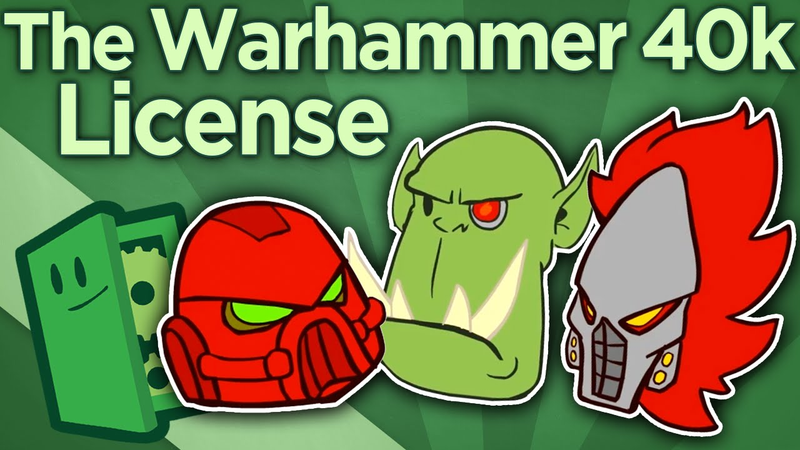
The Warhammer 40k License - A Total Change of Strategy - Extra Credits
Key insights
6 takeaways- 01Games Workshop shifted from a model of exclusive, high-budget partnerships—historically held by companies like SSI Mindscape and THQ—to a decentralized 'shotgun' licensing strategy.
- 02The current strategy involves licensing specific segments of intellectual property to numerous developers simultaneously to flood the market with a high volume of diverse titles.
- 03The strategy prioritizes immediate revenue and market presence over the maintenance of a unified, high-end digital brand identity.
- 04This approach functions as a marketing vehicle for the core tabletop business, effectively offloading advertising costs to third-party developers.
- 05The high-volume model serves as a vetting mechanism to identify potential long-term partners while gambling that the visibility of a surprise hit will outweigh the reputational risks of lower-quality releases.
- 06The shift represents a departure from traditional industry wisdom, which holds that strict quality control is essential for preserving long-term brand equity.
Ask AI about this video
Transcript
So, for a few months now, we've been fascinated by what's going on with the Games Workshop licensing. James talked about it a bit on James recommends back when that was a thing, but it's so interesting from a games business perspective that we figured we talk about it here. And a special thank you to our pal Lily for returning to help as our guest artist this week. Yay, Lily. For those of you who aren't in the Games Workshop games like Warhammer or Blood Bowl or 40K, don't worry, this episode is less about specific games and more about one's approach to taking physical IP and making it digital. What's really fascinating here is that there are basically two main ways to think about licensing and Games Workshop has moved from one of those ways directly to its polar opposite. In fact, it has done so so drastically and with such rapidity that it makes it the perfect example case for us to follow. Now, I should say before we dig into this, we are not here to make any judgments on the Games Workshop games. James swears that if he retires before he dies, we are all going to have an EC Blood Bowl league. And we
aren't here to judge their business practices, either. They know their business far better than we do and they may well be making the right calls. This is just a look at a rare in practice example of two different theories on licensing. So, let's look at that example. Now, a lot of this is educated guesswork, but here's how I see it. Throughout the '90s, Games Workshop dabbled in licensing their games, mostly working with SSI Mindscape until the demise of SSI around 2000. These were the halcyon days of tabletop gaming. Magic the Gathering had vastly expanded the player base, hobby game stores were popping up everywhere, White Wolf had brought darker, grittier experiences to the fore. It was a golden time for Games Workshop. So, their core business was clearly their focus. Now, it's my guess that back in the mid-'90s, Games Workshop gave SSI Mindscape a fairly exclusive license to their two main universes, Warhammer and Warhammer 40K. But, when SSI Mindscape fell apart, the license probably reverted to Games Workshop and they realized that the value of their intellectual property had
grown a great deal in the last half dozen years. So, they went out looking for much bigger game companies to partner with and here is where our story begins. Many of you probably remember the Dawn of War series and perhaps even the elegantly titled Warhammer 40K Space Marine for the Xbox 360 and PS3. Now, these were some decent games, some better than others, but all with fairly high production values and all seemed to at least be trying to do more than simply cash in on the Warhammer license. They were also all THQ games. When Games Workshop got their license back from SSI, from the looks of it, it appears they made an exclusive deal with THQ handing them the keys to the Warhammer 40K universe. And note that I say universe here cuz that's going to come up again later. Now, there seemed to have been some sort of agreement that the strategic goal here was to grow the value of the core Warhammer 40K license by turning out solid games thereby benefiting both companies in the long term. The games were an end in and of themselves rather than just an advertising vehicle for the other Games Workshop products. The games could be
revenue generators for Games Workshop by themselves and if they were good enough long enough, they could probably lead some players back toward the tabletop games. Okay, now hop forward 10 years. THQ collapses for a host of other reasons. This time though, Games Workshop takes the exact opposite ideological approach to licensing. You may have noticed the recent slew of mobile and downloadable games that have been tied to Games Workshop franchises. All of them from different developers, all of them with wildly varying standards of production and gameplay quality. Instead of giving an exclusive license to one developer and setting a high bar of quality, Games Workshop now appears to be aiming broad. Remember how I mentioned that the THQ license was probably for the Warhammer 40K universe? Well, it looks like they've been chopping up the license, no longer handing out the universe as a whole, but rather licensing specific campaigns, Marine chapters, and tabletop game spin-offs separately to allow more game companies to work on their products at once. So, why the about-face? From a
consumer perspective, it may seem like having a smaller number of developers who the license holder can work with to ensure very high-quality standards is the way to go. And from a long-term IP value perspective, I'm inclined to agree. But, we might be wrong here, which is what makes the Games Workshop licensing so fascinating. Watching how things turn out for them will inform our thinking on licensing in the future. So, back to the question. Why the about-face? Well, first off, the hobby game market simply is not as strong as it was back when Games Workshop made their deal with THQ. Games Workshop has been struggling a bit of late. Their stock has been in a slump, and they've had some shake-ups in management. This undoubtedly plays a part in the recent change in their licensing approach. And one potential answer is that they need to bring in some short-term revenue. Giving out as many licenses as quickly as possible to teams who are working on games which can be developed in as short a time frame as possible certainly does more for short-term revenue than working with one large partner who might not get a game to market for two or three years. But, let's look at the other ramifications. Part of this strategy
could be a return to using video games to drive their core products. If their tabletop sales are slipping, the idea may be simply to use the video game tie-ins as advertisements. If you can get as many disparate games out there as possible, and if they represent a broader swath of the products you sell, you may be able to bring more people into the core games you yourself develop. Even with a bad licensed video game, you may get players who say, "I really love the world, but I just wish this game was better." Who then stumble upon the better games that title was based on. And in the long run, they may just not care about the value of their IP in the video game world as much. The bad product may reduce the value of their IP on the video game side of things, but if you're Games Workshop and you decide that video games just aren't your core business, and they're not where you're going to pivot to in the near future, then you don't really care about reducing the value of your license there. And licensing the game to other people, even at a cut rate, is essentially getting them to make big interactive ads for you on their own dime. It might also function as a
vetting process. If you don't know what developers you want to work with in the long run, you could always let a few dozen of them take a crack at your license, and use that to find the best ones to work with in the future. This is actually kind of brilliant, but my worry here is in how the sub licenses are divvied up. After licensing so many parts of the Warhammer and 40K worlds, I have no idea if they have the legal capacity to give an exclusive license to that universe anymore, if they find a developer they really want to work with. This decision could also be based on confidence in their core audience. They may have decided that no number of bad video games is going to make a Warhammer tabletop player stop playing the tabletop game. Therefore, their risk is essentially zero, and if any of these games bring in a new audience, or turn out to be a miraculous hit, then win-win for them. Or, last possibility, they might just have come to the conclusion that the shotgun approach is simply better. That the bad games won't stick in people's minds for very long, but the great games will. So, if they just fire off a ton of games, they're more likely
to get a few surprise hits, and the value of those surprise hits will outweigh the loss of any horrifically bad games that happen to get turned out. Because a hit will be seen by a lot of people, while the terrible games will probably only inbitter a few. So, whatever their reasoning, this new, broader, slightly less quality focused approach is not arbitrary. There is rationale behind it. And this is why I'm so curious to see where it leads them in a few years, because I really don't know what tactic is right. And this experiment comes at an interesting time, a time when major license holders like DC and Hasbro and Lego have come to realize that their brands need games that are about reinforcing how awesome the brand is. Is that better achieved by opening up the fire hose, or by carefully handpicking the developers you're going to work with and choosing what products ever see the light of day. To find that out, I think we had all best keep an eye on Games Workshop. See you next week.
Summary
Games Workshop has undergone a fundamental shift in its video game licensing strategy, moving from an exclusive, high-quality partnership model to a broad, decentralized approach. Historically, the company relied on long-term, exclusive agreements with single publishers—such as SSI Mindscape in the 1990s and THQ in the 2000s—to produce high-budget titles that treated the Warhammer universe as a core product. Following the collapse of THQ, Games Workshop pivoted to a "shotgun" strategy, licensing specific segments of its intellectual property to numerous developers simultaneously, resulting in a wide array of games with varying production standards and gameplay quality.
This strategic reversal is likely driven by a need for short-term revenue and a desire to use digital titles as marketing vehicles for the company’s core tabletop business. By flooding the market with diverse, lower-cost titles, Games Workshop effectively offloads the cost of advertising its brand to third-party developers. This approach may also serve as a vetting mechanism to identify potential long-term partners or a calculated gamble that the high visibility of a surprise hit will outweigh the reputational risk of lower-quality releases.
The shift highlights a broader industry debate regarding the management of valuable intellectual property. While traditional wisdom suggests that maintaining strict quality control is essential for long-term brand equity, Games Workshop’s current experiment tests whether a high-volume, broad-exposure model can effectively sustain a brand in a shifting market. By fragmenting its licenses, the company has prioritized immediate market presence and potential discovery over the preservation of a unified, high-end digital brand identity. The long-term success of this strategy remains an open question for the industry.
















Comments