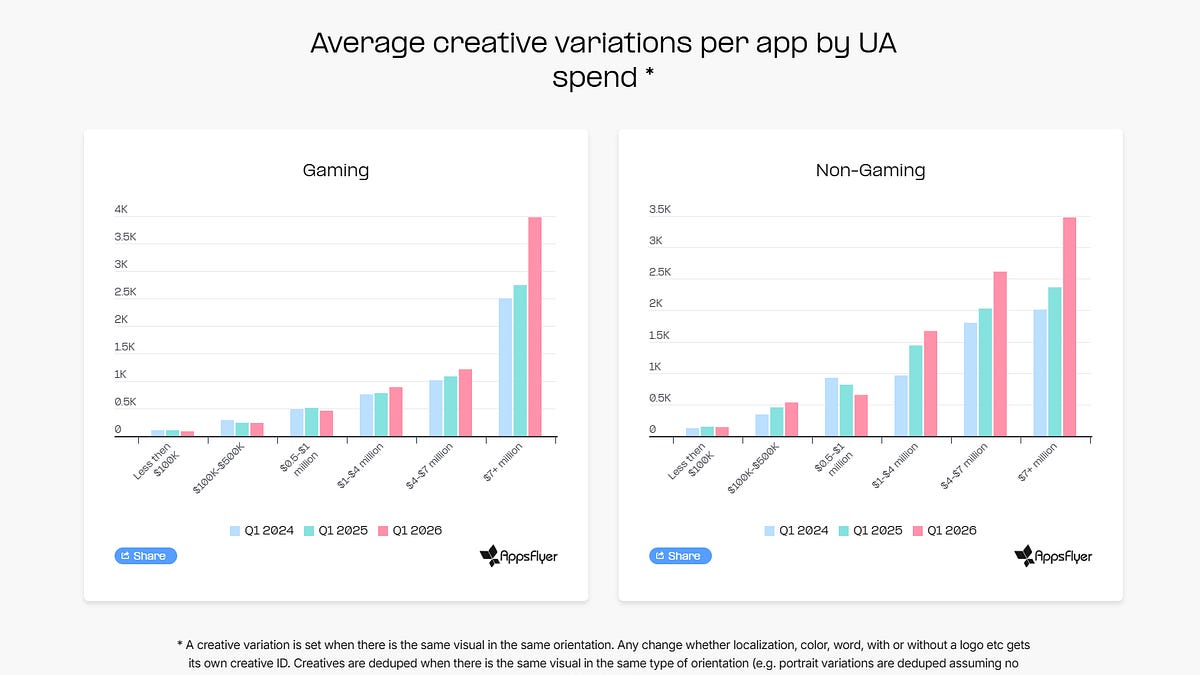
The mobile advertising landscape in 2026 is defined by an intense focus on creative optimization, where the ability to scale production through artificial intelligence has become a prerequisite for market competitiveness. High-spending advertisers, specifically those investing over $7 million per quarter, have increased their creative variation output by 46% year-over-year. This surge is driven by a market reality where success is highly concentrated; the top 2% of creative variations command more than half of all advertising expenditure. Consequently, a high-volume testing strategy is essential for brands to identify the specific assets that drive engagement and return on investment.
Performance data across both gaming and non-gaming sectors reveals a critical divergence between video and static image formats. Winning attributes in one medium rarely translate to the other, meaning that tone, call-to-action, and thematic emphasis must be meticulously tailored to the unique strengths of each format. Because these formats function as independent bets, marketers must move beyond broad campaign analysis and adopt granular, component-level evaluation to isolate the elements that resonate with target audiences.
To maintain this level of operational rigor, industry leaders are increasingly relying on AI-assisted production tools to manage the sheer volume of assets required for effective testing. As the industry moves toward more sophisticated creative management, the emphasis remains on balancing high-frequency experimentation with data-driven refinement. By treating video and static assets as distinct strategic pillars, advertisers can better navigate the current market, where the efficiency of creative deployment is the primary determinant of long-term growth and audience acquisition.